In 1911, Justin Ring found himself in court for divorce. It was a rather nasty case, and the reasons for it were different than I had expected. For once in his life, Fred Hager was nowhere to be found. This story nearly completes the life story of Justin Ring, and it certainly makes him out to be more complicated than the quiet old man that his grandson has described.
Back in November of 1903, Justin Ring, at age 27, decided to marry a rather random young woman named Alice Davis. Soon Justin and Alice settled in an apartment in the south Bronx, near Hager and the rest of the band’s musicians. By the time of the 1905 census, it was just the two of them living in their little room at 138th street. You wouldn’t think things were amiss at this point, but things would soon fall apart. 1905 was a turbulent year for Justin and Fred Hager. Hager moved to his own publishing firm with J. Fred Helf, leaving Justin on his own. At some point in that year, he and Hager stopped writing music together, which was strange and sudden, as they had been so prolific together since 1902.

By the middle of 1907, Justin was hired to play the piano in the pit orchestra for the popular new operetta The Chocolate Soldier. It was during the rehearsals that he met Elsie. To him she was perfect. Surely when he inquired about her, he also likely learned that her father was one of the prominent cornetists of Gilmore’s original band. This certainly added attraction. He soon felt so attached to her that they soon eloped and had a full-fledged affair. They moved into a rooming house that Elsie’s sister was running in Harlem. Justin even started addressing Elsie to others as his wife. In this time Justin seemed to forget poor Alice, who for months sat at home alone. Soon she started to receive money from him, but he never came back.
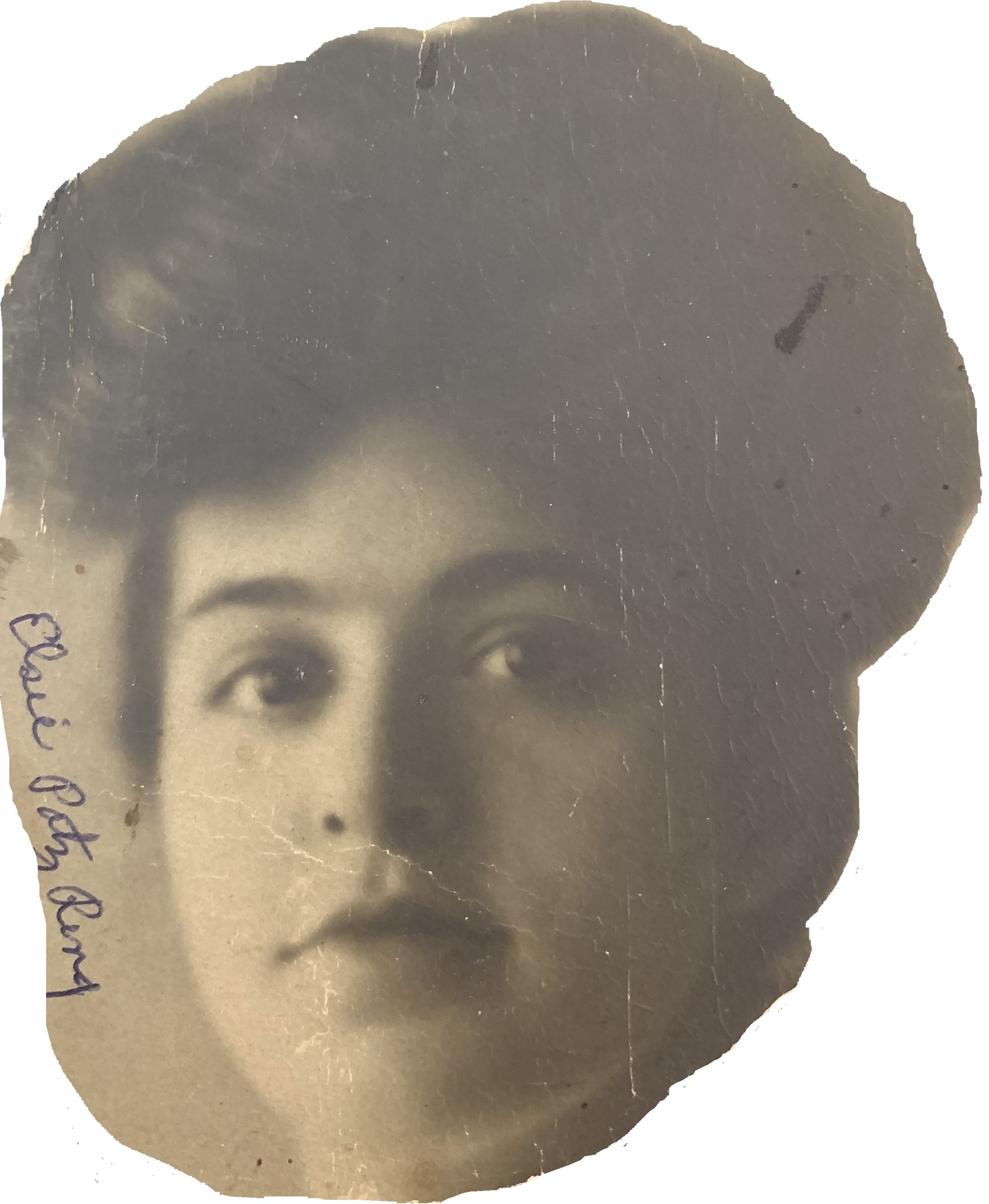
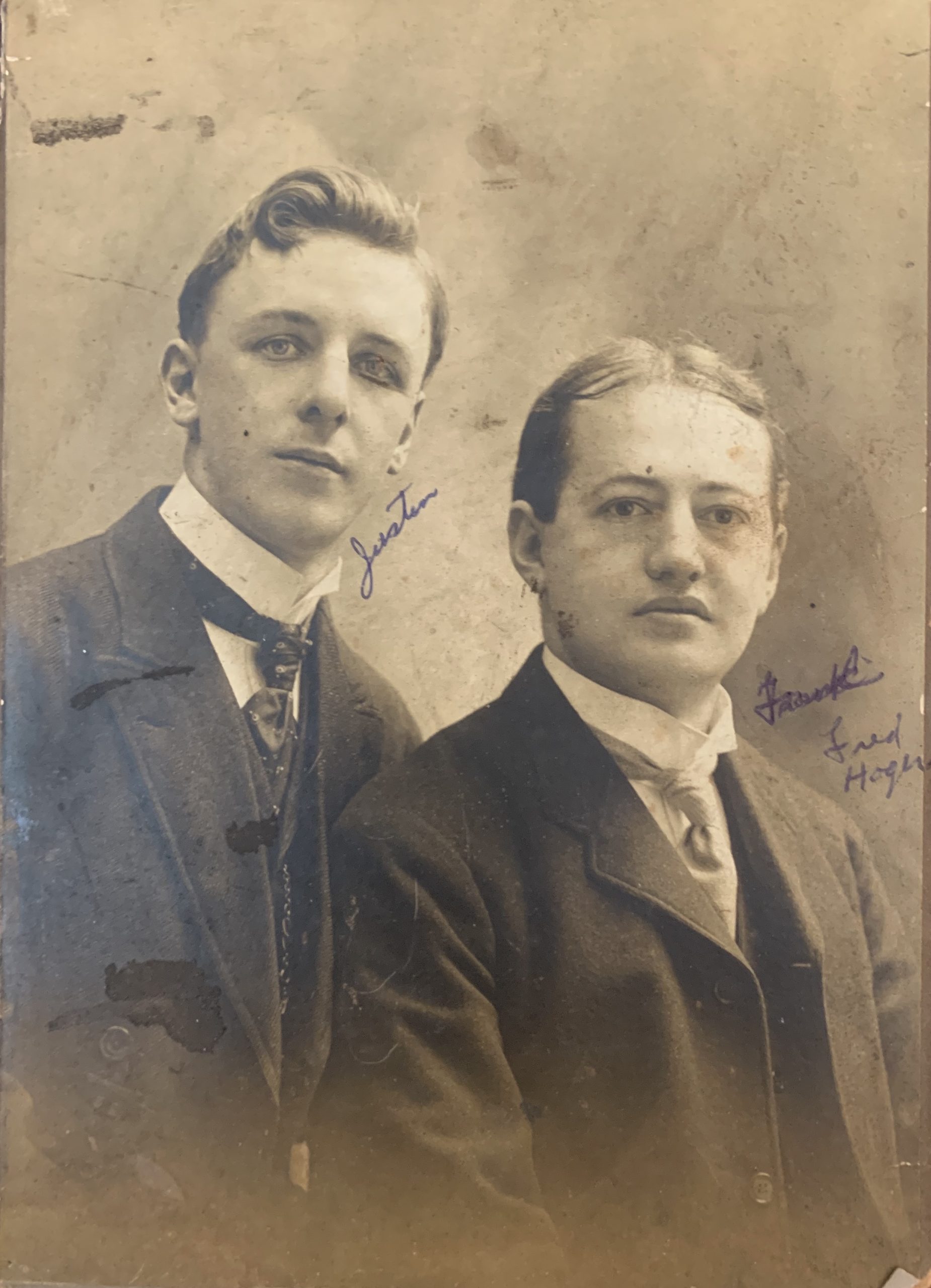
(author’s collection)
Eventually Alice figured out where he was and sued for divorce. Things got nasty from here, as Justin was required as the defendant to have some sort of defense lined up for the court date. He gathered a few witnesses, including his brother in law Eugene. Justin and his witnesses had no defense. There was no defending what he did. What made matters more complicated and damning was that by the court date Justin and Elsie had a baby together. All of his witnesses laid everything out clearly for the judge and the court. One of the witnesses was fellow bandleader William J. Keating, who had a band of his own in New York at the time.

Justin with no pretense nor consent up and left Alice. The rage and frustration in everyone’s words is palpable when reading the transcript. In the end, Justin himself didn’t say much. He kept his quiet demeanor even when being questioned directly by the judge, sometimes giving witty and rather snide remarks. He was eager to get this over with, and thankfully for him, right after his own testimony, the judge closed the case with some snide words for Justin and the court:
Here is a man living in notorious adultery now…
Finally the hard part was done, but he now had to pay many fees to Alice and the court system from here.
It’s not a very long case to read, only about 40 pages in all, including all of the payment paperwork dating to as late as 1917. There wasn’t too much said, but there is a lot to read between the lines. From many accounts, Justin seemed like a quiet and modest musician, but this situation challenges that. After reading this, one would have more questions than answers regarding this situation. This would seem out of character for Justin. We could also if Hager was at all involved in this, though he wasn’t present. Hager at the time this was going on was in Boston with the crusty crew of Phono-Cut.
Justin Ring in his own writing called Hager his “promoter.” Justin was a great musician and composer, but not the best at advertising his talents, and making money. When they met in 1900, both of them learned that Hager could do this effectively for Justin. Hager likely handled most of Justin’s finances and provided for him when needed, as Hager was quite successful in the recording and publishing world, even by as early as 1903. At a certain point, around 1905, Hager cut off Justin’s assistance. For what reason he did this it is not known, but it was likely something related to what ended up happening with this divorce. Justin and Hager did not write music again together until at least 1916-17. Hager was known for being severe and disciplinary, not settling for nonsense, so his cruel cutting off of his beloved Justin so suddenly isn’t too surprising.

While Hager cut him off, Justin had to initiate himself into Elsie’s family, which he did quite well, as his new father in law Gustav rather liked him. They accepted him, even if he pulled their innocent daughter into such a scandal. Everything ended up working out ok in the end. That being said, Justin did actively try to bury this whole thing later on in life. By the 1930 and 1940 census, he and Elsie claimed neither of them had been married before. This was the narrative that was passed down to his two daughters and later grandchildren. This is exactly why his descendants were unaware of this first marriage and divorce until recently. There is so much more to unpack with this story, but this is just a sample of what could be said regarding it.
With this information, a book on Justin Ring is now closer to becoming reality.
R. S. Baker has appeared at several Ragtime festivals as a pianist and lecturer. Her particular interest lies in the brown wax cylinder era of the recording industry, and in the study of the earliest studio pianists, such as Fred Hylands, Frank P. Banta, and Frederick W. Hager.