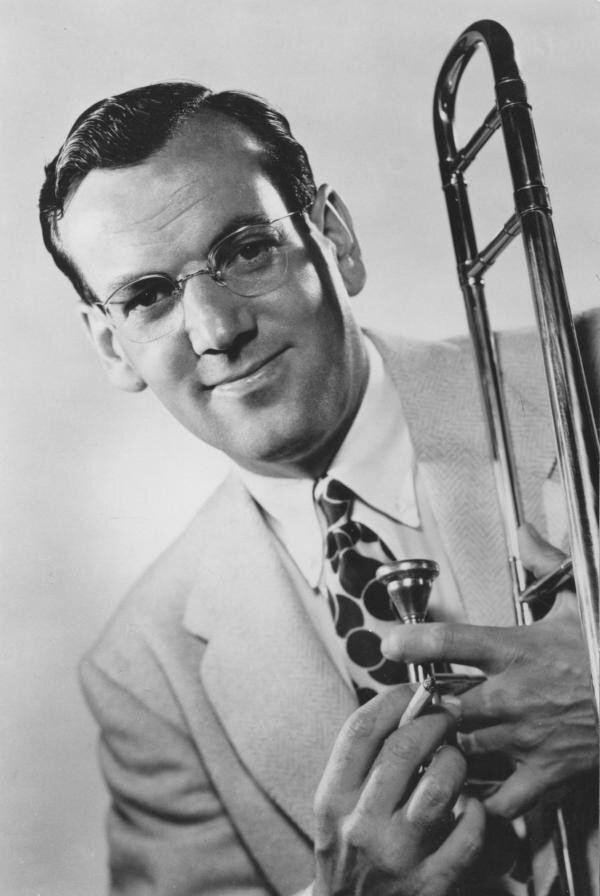
Glenn Miller’s legacy continues to spark debate among historians and musicians alike. His orchestra’s polished sound captivated wartime audiences, yet not everyone viewed it fondly. Saxophonist Al Klink, who had played under Miller, once remarked after the bandleader’s disappearance over the English Channel, “We were all too scared to swing: Glenn should have lived, and the music should have died.”
His words capture a long-standing criticism within jazz circles—that Miller’s strict pursuit of precision and popularity came at the expense of true swing. Clarinetist Willie Schwartz, whose tone helped define the signature “Miller sound,” later admitted that the group “was commercial and didn’t really swing and became a bore.” Indeed, leading jazz critics of the 1940s faulted Miller for shifting public taste away from the “hot bands” of Benny Goodman and Count Basie towards more formulaic arrangements.
Still, it’s impossible to overlook how successful the Glenn Miller Orchestra became. By the early 1940s, Miller’s earnings had soared to around $20,000 a week—more than $400,000 in today’s money. His orchestra dominated the charts, turning out 17 hits in 1939, 31 in 1940, and another 11 in both 1941 and 1942. Songs like “In the Mood” and “Moonlight Serenade” didn’t just sell records—they defined an era. One contemporary observer even called Miller “the smartest businessman of any bandleader since John Philip Sousa,” a title that underscored how firmly he had bridged art and enterprise.
Given these contrasting viewpoints, what was it about Glenn Miller, his music, his life, and his orchestra that allowed his influence to endure, effectively countering such pointed criticisms? This article takes a closer look at Glenn Miller’s influence across twentieth-century music. It traces how his work shaped military ensembles, patriotic expression, and the evolution of both dance and popular music. It also considers his approach to instrumentation and arranging, the paths taken by his former band members, and the reputation that continues to surround his name in the music world.
Without Glenn Miller, American pop music’s post-World War II optimism and the esteemed military music programs we know today might never have materialized in the same way. He provided meticulously rehearsed music for a public eager to dance and escape their worries, prioritizing entertainment and financial success over virtuosic solos.
From Sod Huts to the Bandstand: The Formative Years
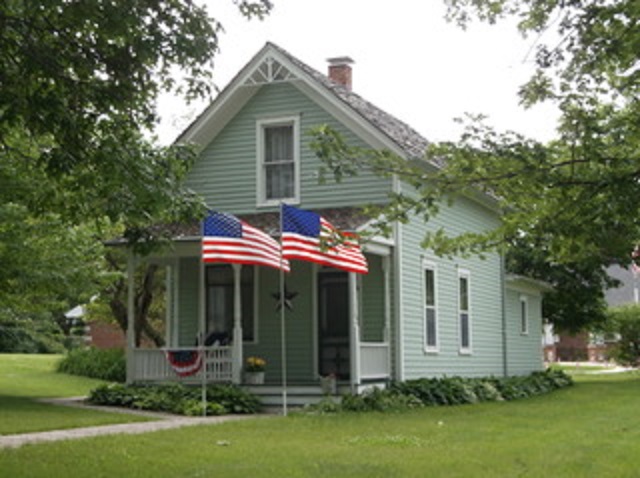
Alton Glenn Miller was born in rural Iowa in 1904, and his rise to musical prominence was anything but predictable. He often described himself as an average trombonist and a less-than-stellar theory student during his college years. His childhood was defined by constant movement—his family relocated several times, even living for a period in a sod hut on the plains of Nebraska. Music became a source of comfort amid those humble circumstances.
While living in North Platte, Nebraska, he began forming the earliest version of what would later evolve into a Miller band. After another move to Grant City, Missouri, the young Glenn, who showed little promise as a singer, gravitated toward the trombone and soon joined the local town band. Although he once dreamed of becoming a baseball player, his attention eventually turned to performing in clubs, even as he modestly viewed himself as only a passable musician during those early years.
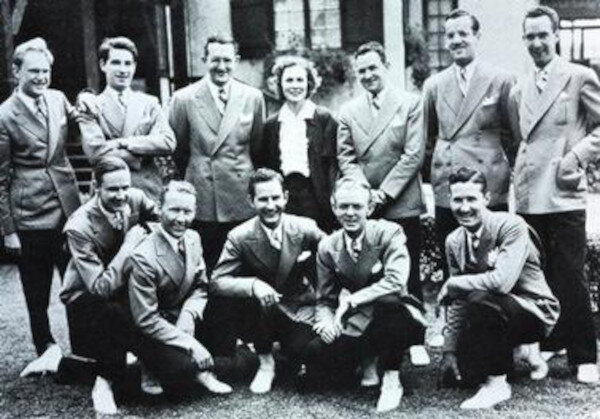
By the time he was in high school in Ft. Morgan, Colorado, his passion for music had intensified, leading him to skip his graduation for a gig. His mother, Mattie Lou Miller, instilled in him a strong work ethic and high standards, traits that would profoundly shape his career.
Finding His Voice: The Birth of the “Miller Sound”

In the period between high school and his brief stint at the University of Colorado, Miller secured his first full-time trombone job. College proved secondary to his musical pursuits; he spent only three semesters and ironically failed his freshman harmony class. A turning point came in 1924 when Ben Pollack hired him as an arranger and trombone player. It was in Pollack’s band that he befriended and roomed with the future clarinet virtuoso, Benny Goodman.
Throughout the late 1920s and early 1930s, Miller’s reputation as an arranger grew as he worked with Pollack, Red Nichols, Ray Noble, and the Dorsey brothers. By 1937, he ventured out to form his own orchestra. This initial attempt, however, struggled to find its niche and disbanded in early 1938. This setback, though challenging, spurred Miller to cultivate his distinctive “sound,” which would ultimately propel him to the forefront.
Even during his college years, Glenn Miller was convinced that a band should sound like no one else, insisting that “a band ought to have a sound all of its own—it ought to have a personality.” His now-famous “Miller sound” grew out of a creative reshaping of the woodwind section. Instead of relying on the standard, saxophone-heavy voicing common to swing orchestras, Miller placed the lead alto on clarinet, an octave above the tenor sax, with the other three saxophones forming tight harmonies beneath.
This design wasn’t just about adding a clarinet—many bandleaders like Benny Goodman, Artie Shaw, and Woody Herman did that. The difference was how Miller used it: the clarinet wasn’t a soloist standing apart but part of the reed section’s overall color. The result was a lush, blended tone that proved nearly impossible for others to duplicate. That sound quickly became the hallmark of Miller’s orchestra.
Even in an era filled with distinctive voices—Basie’s drive, Ellington’s sophistication, Goodman’s sparkle—Miller’s tone was immediately recognizable, even to the untrained ear. His careful attention to arrangement and his insistence on polish gave the music its crisp precision, while the steady pulse of his dance rhythms kept audiences coming back and promoters eager to book the band.
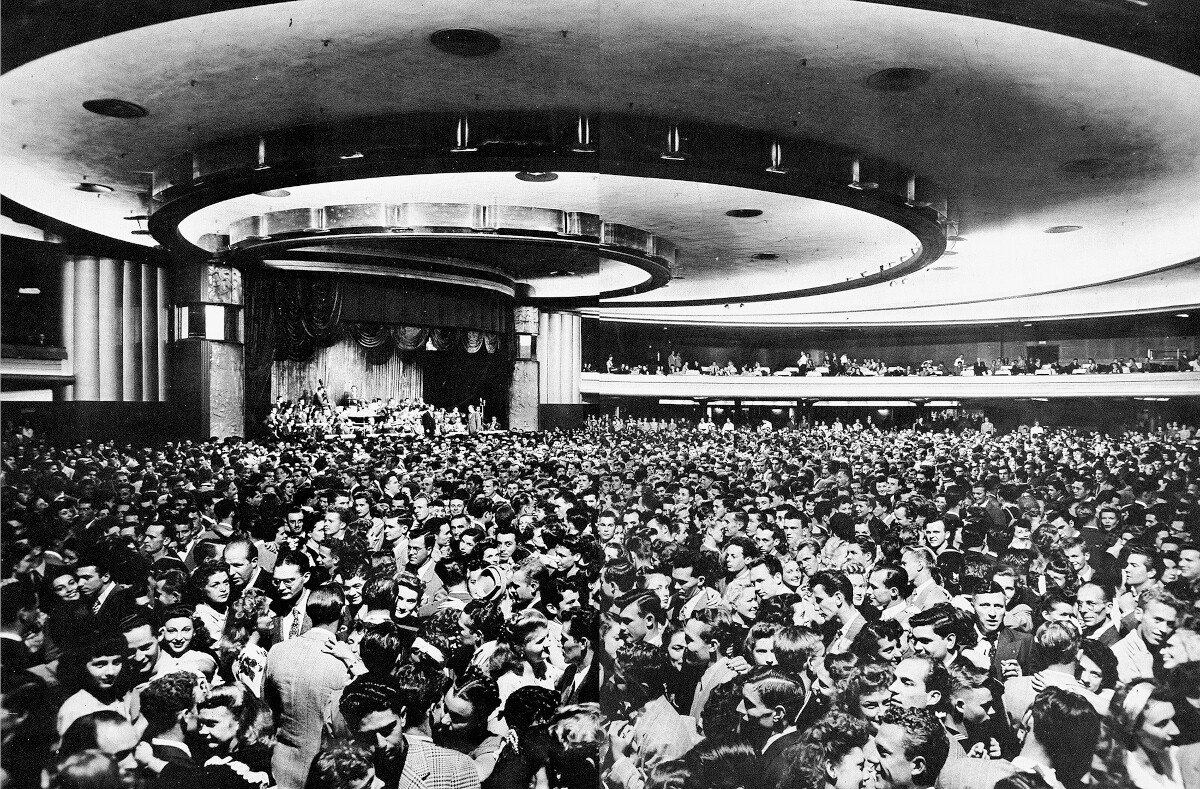
Chart-Topping Success: Defining an Era
The year 1939 marked the beginning of a significant residency at the Glen Island Casino in New York, providing invaluable national radio exposure. This period saw the Glenn Miller Orchestra achieve 17 Top Ten hits, including original compositions and arrangements like “Sunrise Serenade,” “Moonlight Serenade,” “Stairway to the Stars,” “Over the Rainbow,” and “Blue Orchids.” His Moonlight Serenade radio show aired three times a week on NBC Radio. By 1940, record sales soared, including “Tuxedo Junction,” which sold 115,000 copies in its first week. That year also brought an unprecedented 31 Top Ten hits.
In 1941, another 11 Top Ten hits followed, and in a pivotal moment, his classic “Chattanooga Choo Choo” became the number one song in the United States on December 7, 1941, coinciding with the attack on Pearl Harbor and America’s entry into World War II. The song held the top spot for nine weeks, selling 1,200,000 copies by February 1942. This remarkable achievement made it the first recording to be certified Gold Record status.
Although the standards for earning a Gold Record have shifted over time, reaching a million sales in 1942—long before mass distribution or digital platforms—was an extraordinary achievement. The fact that Miller managed to craft a sound instantly recognized as his own while selling records on such a scale remains one of the most impressive aspects of his career.
Miller’s reach went far beyond his recordings. His orchestra appeared in two major motion pictures that helped cement his place in popular culture. The first, Sun Valley Serenade (1941), brought “Chattanooga Choo Choo” to the silver screen alongside Milton Berle and the Nicholas Brothers; the song went on to earn an Academy Award nomination for Best Song in 1942.
Miller’s second film, Orchestra Wives (1942), brought audiences another enduring hit, “I’ve Got a Gal in Kalamazoo,” which earned an Oscar nomination the following year. In just a few short years, he had gone from an unremarkable trombonist to one of America’s most recognizable musical figures. His influence even stretched across the Atlantic—German youths, later called the “Swing Kids,” risked punishment to hear his records, and Luftwaffe pilots were said to tune in to BBC broadcasts just to catch the sound of his band.
Beyond the Instruments: The Vocal Dimension
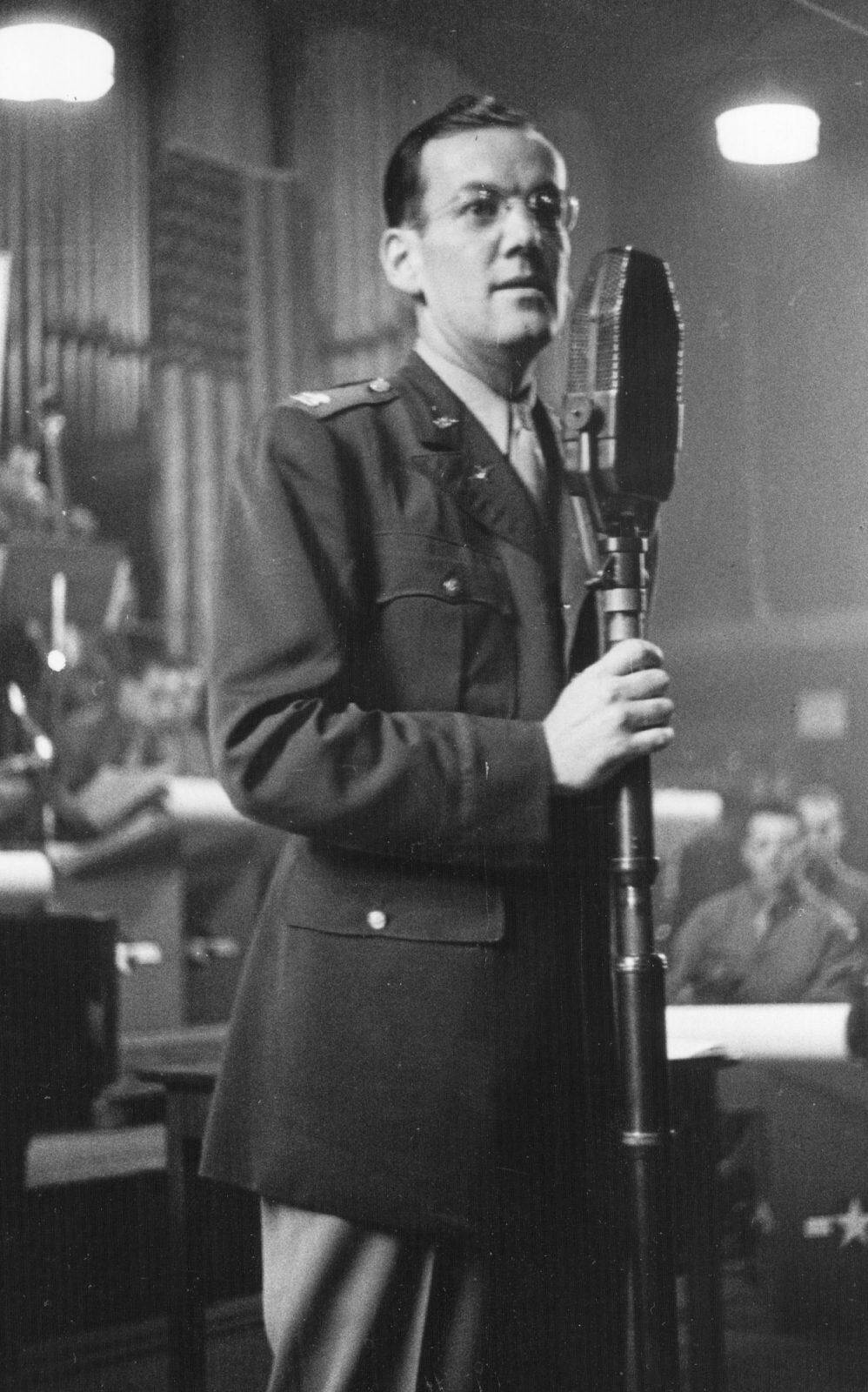
Although Miller is best remembered for his instrumental sound, his influence on vocal music was equally important. His civilian orchestra showcased a lineup of talented singers, including Tex Beneke, Ray Eberle, and Marion Hutton. Just as notably, he brought in The Modernaires—a vocal harmony group already familiar to audiences from Paul Whiteman’s radio broadcasts—which added a fresh, polished dimension to the band’s overall sound. In the fall of 1940, they recorded “It’s Make Believe Ballroom Time” with Miller. By 1941, their unique harmonies became integral to the Glenn Miller Orchestra, featuring in Sun Valley Serenade and on “Chattanooga Choo Choo.”
Even after Miller’s enlistment, The Modernaires thrived—their vocal style shaped 1950s and 1960s pop groups like The Four Freshmen, who would profoundly influence a young Brian Wilson of the Beach Boys. The Modernaires also left a lasting impression on The Beatles. Their induction into The Vocal Group Hall of Fame in 1999, alongside iconic groups like The Andrews Sisters and The Temptations, underscores their significance.
A Patriot’s Sacrifice: Music in Wartime
At the height of his success, Glenn Miller made an unexpected choice. In 1942, at age thirty-eight, he joined the U.S. Army, giving up his $20,000-a-week income and the easy comforts that came with fame. His final civilian concert took place on September 27 of that year in Passaic, New Jersey. Once enlisted, Miller grew frustrated with the military’s traditional approach to music and began pushing for change. He imagined a modern marching ensemble and a swing band that could lift soldiers’ spirits—especially those who had once danced to his records.
Though his ideas met resistance at first, he eventually became Director of Bands Training for the Army Air Forces Technical Training Command, where he formed a “super band” that included several of his former sidemen. On July 28, 1943, at a war-bond rally in the Yale Bowl, Miller presented a swing band on Jeeps, a stark departure from traditional marching bands, which was met with enthusiastic cheers from the soldiers.
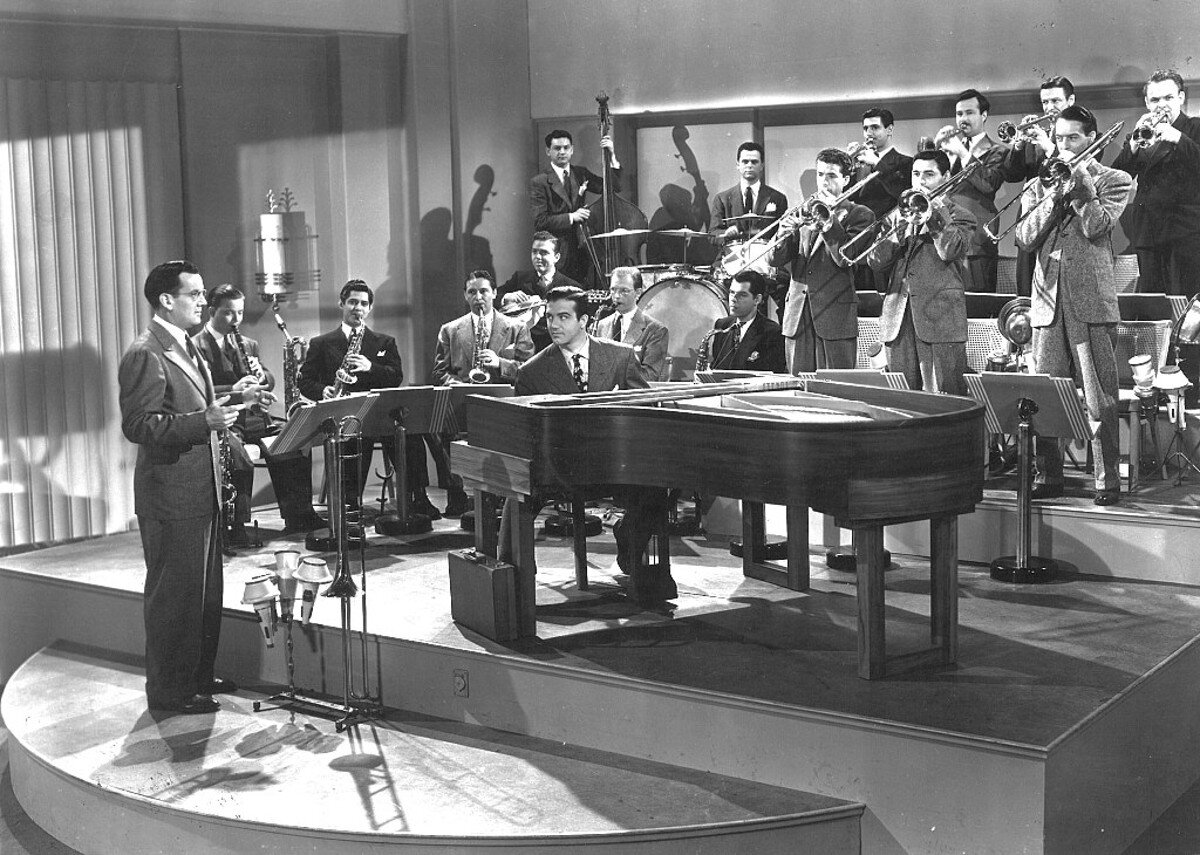
Dedicated to the war effort, Miller aimed to bring his band to Europe. After lobbying Colonel Ed Kirby, a supporter with ties to General Eisenhower, he secured permission to set up a band for the European Theater of Operations. By mid-1944, he was in England with his 50-piece band, performing over 800 shows for the troops. His focus was to bring a touch of home to those serving overseas.
Tragically, in December 1944, impatient to reach Paris for a Christmas Eve broadcast, he boarded a defective plane that crashed into the English Channel. No wreckage was ever found, overshadowed by the onset of the Battle of the Bulge. For the remainder of the war, his band continued with substitute leaders. After the war, a “ghost” band led by Tex Beneke toured until 1950. Miller’s selfless service and ultimate sacrifice solidified his status as a true American hero.
The Echoes Continue: A Legacy Endures
When The Glenn Miller Story premiered in 1953, it reignited public fascination with Miller’s life and music. The film became a box-office hit, earning an Academy Award for Best Sound and sending its soundtrack to the top of the charts. Nearly ten years after his disappearance, audiences were reminded why his music had once dominated the airwaves. The renewed interest led to the creation of a new Glenn Miller Orchestra in 1956. This officially sanctioned “ghost band” still tours extensively—performing more than 300 concerts each year and earning the nickname “the busiest band in America.”
Its longevity rests largely on the precision and durability of Miller’s original arrangements, which continue to define that unmistakable sound. Even with the passing of the last original member, trombonist Paul Tanner, in 2013, the band’s sound endures. Unlike bands reliant on a specific leader or soloist, the Miller Orchestra’s arrangements allow competent musicians to recreate the signature sound. This has led to the emergence of international “Miller sound” orchestras in Scandinavia, England, and Europe.
Beyond civilian bands, the U.S. military has consistently championed Miller’s musical legacy. In 1950, the Air Force created the Airmen of Note, inspired by Miller’s wartime band. This premier big band—military or otherwise—remains rooted in the ‘Miller sound’ but has also embraced contemporary arrangements, producing notable arrangers like Sammy Nestico and Tommy Newsom. This tradition of musical innovation and education continues today. Other military branches have followed suit, with bands specializing in various popular music genres, a testament to Miller’s impact on military music.
Unexpected Harmonies: Influence Beyond Swing
Miller’s reach didn’t end with the swing era—it carried into rock, pop, and soul as well. The Beatles’ 1967 anthem “All You Need Is Love” closes with a collage of famous melodies, among them Miller’s “In the Mood,” woven together with “Greensleeves,” Bach’s Invention No. 8 in F Major, and the Beatles’ own “She Loves You.” To be included in that mix speaks volumes about how deeply his music had entered the collective imagination.
Stevie Wonder paid similar tribute in “Sir Duke” (1976), placing Miller’s name alongside Armstrong, Basie, and Ella Fitzgerald—an acknowledgment of his stature among America’s musical greats. A few years later, the Little River Band evoked “Glenn Miller’s band” in their 1978 hit “Reminiscing,” using it as shorthand for elegance, romance, and nostalgia. Decades on, Brian Setzer revived that same spirit through the Brian Setzer Orchestra, recording energetic versions of “Gettin’ in the Mood” and performing “In the Mood” live with a modern rock-big-band flair.
Miller’s legacy also found unexpected expression through Paul Tanner, his former trombonist, who co-invented the Electro-Theremin—later heard in the Beach Boys’ Good Vibrations and countless science-fiction soundtracks. Even today, his recordings continue to accompany World War II films and documentaries, keeping his sound tied to the emotional memory of that era. Across styles and decades, these nods show that Glenn Miller was never confined to one period; his influence became part of the larger fabric of twentieth-century music.
Final Cadence: A Lasting Impact
Glenn Miller’s career reveals how focus and timing can turn a working musician into a cultural symbol. His careful orchestrations gave his band a sound that cut through the noise of the swing era—smooth yet unmistakably distinct. When “Chattanooga Choo Choo” became the first Gold Record, it wasn’t just a sales milestone; it showed how his music had seeped into daily American life. The films that followed carried that sound even further, merging popular entertainment with an emerging national identity.
When Glenn Miller chose to enlist in 1942, it was a move that surprised almost everyone around him. Walking away from fame and steady success, he took on a new mission—one that would change how military music sounded and felt. The groups he led carried his trademark mix of tight precision and easy swing, a reflection of both his discipline and his warmth. A few musicians, Al Klink among them, once doubted that Miller’s music carried much artistic weight. Time has mostly settled that debate.
His recordings still surface everywhere—played in classrooms, revisited in concert programs, and used in films that evoke the 1940s. What lasts isn’t flawless technique or innovation for its own sake; it’s the sense of drive and order behind the sound, that confident pulse that people still recognize as part of the American character.
Further Reading
• Heckman, Don. “Paul Tanner dies at 95; trombonist with Glenn Miller Orchestra.” LA Times, February 06, 2013.
• Holbrook, Morris. Music, Movies, Meanings, and Markets: Cinemajazzamatazz. Routledge, 2011.
• Longworth, Ken. “Glenn Miller sound lives on.” Newcastle: Herald newspaper, May 27, 2014.
• McDonough, John. “Glenn Miller Orchestra@75: Busiest Band in America.” Downbeat Magazine, October 2013.
• Prato, Greg. “Vocal Group Hall of Fame Foundation.” vocalgroup.org, 1999.
• Quigley, Samantha L. “Glenn Miller: Military’s Music Man.” On Patrol: The Magazine of the USO, Fall 2013.
• Rotella, Mark. Amore: The Story of Italian American Song. D&M Publishers, 2010.
• Simon, George T. Glenn Miller and His Orchestra. Da Capo Press, Inc., 1974.
• Simon, George T. The Big Bands. 4th ed. Schirmer Books, 1967.
• Time Magazine. “Music: Jive for Epicures.” November 23, 1942.
• Williams, Mark. “Pieces of Me – Brian Wilson’s Biggest Influences.” NME Blog, July 11, 2012.
• Zuberi, Tukufu. History Detectives, The Disappearance of Glenn Miller. PBS Productions, July 8, 2014.
Drummer Sean J. Kennedy is celebrated for his dynamic performances and educational leadership. Since 2004, he has been the Principal Percussionist for the Philadelphia Boys Choir & Chorale and drums for The Gardyn Jazz Orchestra and the Doc Severinsen Tribute Band, featuring Jay Webb. Jazz legend Dave Brubeck famously praised his style, saying, “Your drumming sounds like it should; it swings!” He is also an award-winning author for Alfred Music, Carl Fischer, and Hudson Music. For more, please visit www.seanjkennedy.com.