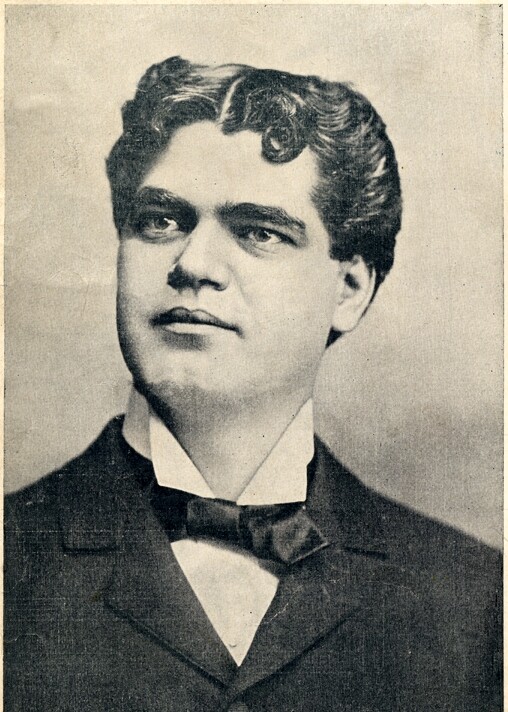
In this column I have written several times about singer Len Spencer, and you’d think there wasn’t much more to say about him, but he was one of the most well connected performers in the early acoustic era. Had he not decided to get into recording, we still likely would know who he was today, albeit for different reasons.
Len Spencer came from a well known Washington, DC, family, though they weren’t only known there. His middle name Garfield was given to him from his said-to-be godparent James Garfield, a good friend of the family. Both his parents and grandparents were recognized by practically everyone in the United States. This is because Spencer’s grandfather was the inventor of the Spencerian writing method. Even Fred Gaisberg mentioned this in his book The Music Goes Round. Gasiberg’s description of Spencer is quite entertaining:

Perhaps because of his unsavory reputation, my particular pet and hero of this time[early 1890’s]was the handsome Len Spencer. His [grandfather], the originator of the florid Spencerian handwriting, was the chief bugbear of thousands of schoolboys, myself included. [He] had many and varied gifts…I first saw him seated at a small table on Pennsylvania avenue, surrounded by admiring [black children], writing out visiting cards at six for a dime…Later I always used to remember his handsome face disfigured by a scar, the result of an up-river gambling brawl…
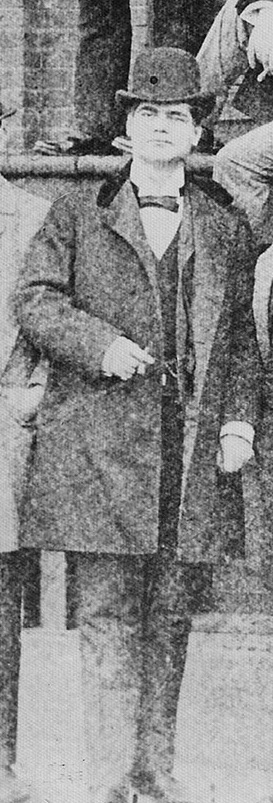
Gaisberg’s description is one of the more detailed accounts of Spencer, and it can leave us with lots of questions. It does document the earliest years that Spencer worked in the phonograph world. Also, there is more than one account of Spencer having a bad scar on his face, there was a much later account that mentioned this as well.
Spencer’s paternal family wasn’t only famous, his mother and aunts were just as interesting. His mother, Sara Andrews Spencer, was among the first few women to cast votes illegally and by force in the 1872 election. She was known around Washington for marrying into the Spencer family, famous not just for the writing system, but also founding a college that taught business and law. She was an advocate for women alongside radicals like Victoria Woodhull and Tennesee Claflin. She and these women were famous not only for opening successful women-run businesses, but were also well known for cutting their hair short. There are several photos that show Sara with her hair cut quite short from the 1860s onward. She ended up taking over the family business school after the death of Len’s father in 1891. She ran the place to a certain extent until her death.
More than one of his aunts also became among the first women to practice law in the United states.
It is not well documented what she and the rest of the family thought of Len’s career choices, there was a short piece published in The Phonoscope in 1898 indicating that as Sara Spencer worked in her office she had a phonograph there and thoroughly enjoyed listening to her son’s records. While this might be true to a certain extent, one could doubt how much she enjoyed the content of the records that he made. As early as 1894 he was already recognized in the phonograph world for specializing in “negro songs.” By the late 1890s, such songs had advanced and also gotten edgier. While one could argue that Len’s mother wasn’t exactly a “polite” Victorian lady, based on her past, many people of her age group didn’t exactly approve of ragtime. It couldn’t have helped that not just one but both of her sons got into recording. It was indicated that later on Len did take on some duties that his mother couldn’t handle, but this was likely minimal.
While Spencer spent a lot of his time recording raucous ragtime songs with Fred Hylands, it can be difficult for us to picture him having a family outside of his brother Harry and mother. He did in fact marry twice, and had seven children. He first married back in 1885 to a woman a few years older than him. She and the daughter he had with her unfortunately died of smallpox in 1891.
He remarried not long after that to a very intriguing and mysterious woman named Elizabeth. However, for whatever reason he and Elizabeth soon split, and remarried a few years later. This situation is difficult to understand, and unusual for the time. His daughter Ethel, who was later interviewed by Jim Walsh, stated that she was part of the Russian ruling class. In all the census records it was indicated that her father, Vincent, was born in Russia, and likely Anglicized his name upon entering the United States. In some records she was labeled as Elizabeth Morris, or Norris. She and Len, also according to census records, had five children together but lost two. She outlived Len by several years, living until 1943.
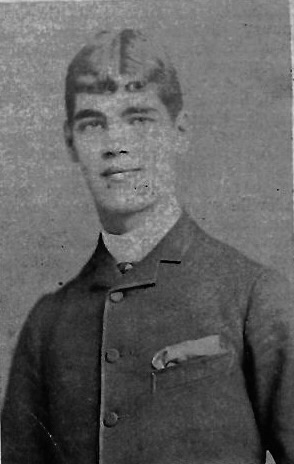
His daughters indicated that he was a good father, which we could easily accept and picture. Though Ethel did indicate that her father had flaws. When he was home he was a great father, but he spent an awful lot of time away from his family entirely made up of women. Growing up around such a strong woman as his mother, we could assume that Spencer had progressive views on women, but there is little in period sources that suggest this.

Sometimes we could picture him being a ragtimer as being rebellion against his older parents, and breaking free from the privileged and “charmed” life that his friends mocked him for. Based on his upbringing, he wouldn’t have had to do any manual labor, but he often insisted on doing things like moving pianos on his own, and running from the law when he did illegal things for record companies. Surely his mother would have been annoyed by these actions. She eventually got Alzheimer’s (based on what the daughters said, obviously this wasn’t a known disease at the time), and soon became a burden to the family, especially to Len.
He was still getting into fights and trouble even into the 1910s, there was a newspaper piece that mentioned him punching a guy out behind the stage curtain at the theater he helped to run at Union Square. Apparently the guy was very badly hurt from this skirmish. He also later lost the sight in one of his eyes, the cause of which has conflicting accounts. He already looked rough in pictures in the 1890s, but he certainly looked even more so by the time of his death in 1914.
Thankfully, his family continued to tell his stories after his death, and he has descendants living today. Spencer is an endlessly interesting and complicated character who did more than just make lots of records that often can be considered offensive to modern listeners.
R. S. Baker has appeared at several Ragtime festivals as a pianist and lecturer. Her particular interest lies in the brown wax cylinder era of the recording industry, and in the study of the earliest studio pianists, such as Fred Hylands, Frank P. Banta, and Frederick W. Hager.