In 2023, I published my findings on the actual birth and death dates of pioneer blueswoman Mamie Robinson Smith (“Mamie Smith: Always ‘The First Lady of the Blues,’” TST, Sept. 2023). After decades of wrong and contradictory dates (including those on her grave marker), I was able to determine that Smith was born May 26, 1891, in Cincinnati, Ohio and that she died at Harlem Hospital in Manhattan on October 23, 1946.
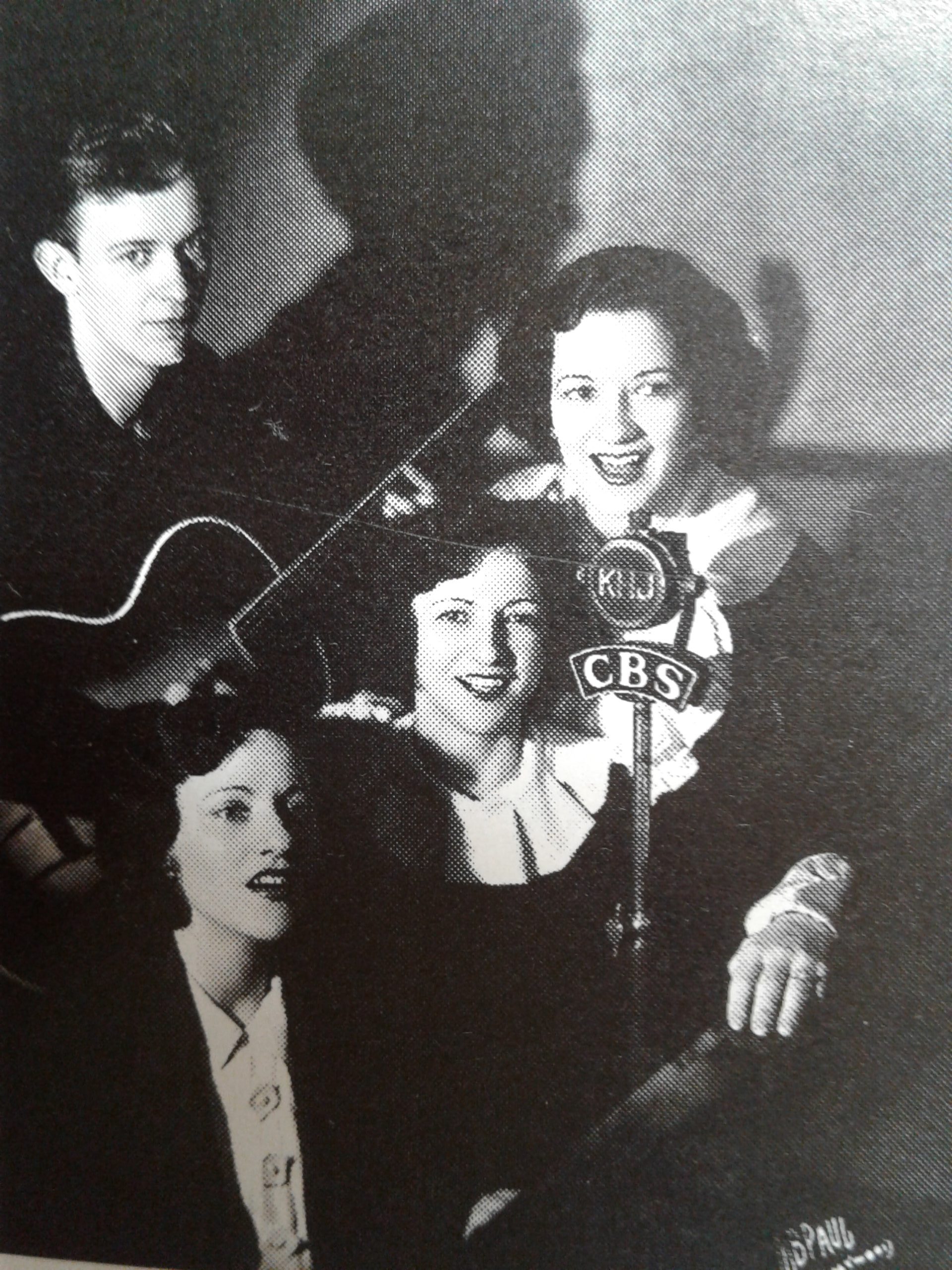
It turns out that Mamie Smith also figures as a major influence on another remarkable performer, Connee Boswell. As documented in contemporary New Orleans newspapers, Smith performed frequently at the Lyric Theatre in the Crescent City in the mid-1920s. As she recounted in the interview excerpted below, Boswell saw her perform there. She also talked of her other main influence, the legendary tenor Enrico Caruso.

What follows is a transcript excerpt of the Mike Wallace Interview with Connee Boswell which aired on WNTA television in New York on January 19, 1961. (Rerun on July 25, 1961). Syracuse University Special Collections houses the Mike Wallace archives. Notes obtained from Syracuse University indicate that the program was videotaped on December 19, 1960, but only the soundtrack has survived.
WALLACE: Where . . . from whom do you derive? Who taught you
. . . not taught you, that’s not what I mean, because you never studied singing, did you?

BOSWELL: No. I never studied vocally.
WALLACE: But what did you derive your style from? From whom?
BOSWELL: Well, I don’t know if you would say I got my style but I was definitely influenced by two people many years ago when I was just a little girl. I had all of their records. Mamie Smith—-there was a Bessie Smith, too, and I liked her.
WALLACE: Mamie Smith?
BOSWELL: This was Mamie Smith.

WALLACE: A colored woman?
BOSWELL: Yes, she was a blues singer, a colored woman, and she could open her mouth and you could hear her in London, you know. She had a tremendous voice, and she played New Orleans. Some of those acts played New Orleans. There was a theater down there called the Lyric. And only colored people were allowed in that theater, except on Friday. White people could pay, they had to pay about three times as much to get in. And I always went every Friday night at the Lyric theater to see these different blues singers that came. But Mamie was my favorite.
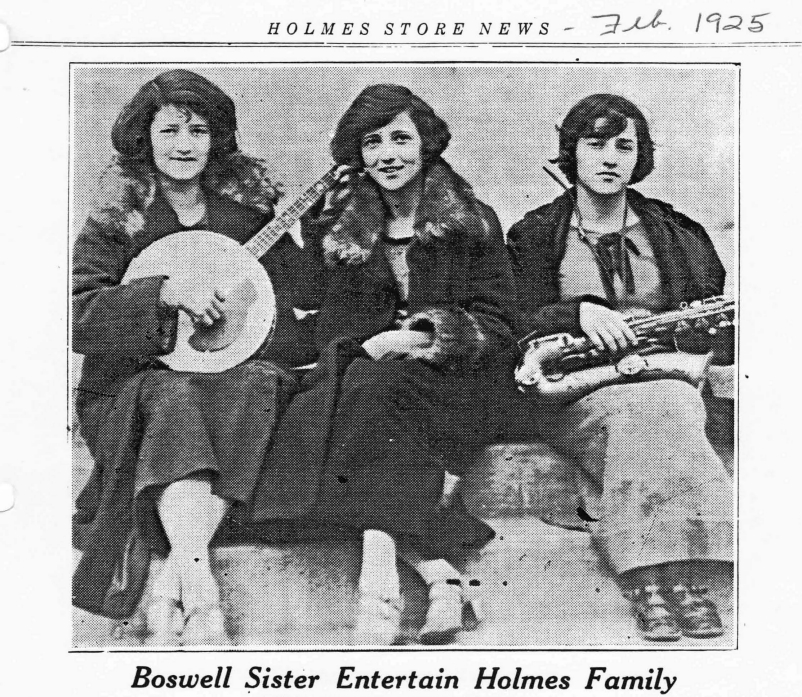
My other favorite was, believe it or not, Caruso. I had all of Caruso’s records. Although these two people were as far apart as you could get them, they were my two favorites, and I think I was influenced a great deal by Caruso’s phrasing, although he was singing in Italian, I didn’t understand him, but I loved the way he sang, and I loved the way he breathed. He could take, oh, ever so many notes and hold it on one breath. And I studied from the record trying to do what he did. So today when I sing a blues song I can, after all my years of singing, I can still sing and breathe properly, and I think that I was influenced by Caruso in that regard.
David W. McCain, a native of New Orleans, parlayed an interest in the female singers of the past into a lifetime of scholarship. He befriended and interviewed Teddy Grace and his fascination with the artistry of the Boswell Sisters prompted him to meet Vet Boswell in 1977. He collaborated with Vet’s granddaughter, Kyla Titus, to publish the sisters’ biography The Boswell Legacy in 2014. A documentary on the Boswell Sisters, Close Harmony, has recently been completed.