While they never recorded together, Frank Signorelli and Rube Bloom had several similarities in their careers. Both were excellent jazz pianists who appeared on many fine recordings in the 1920s yet became better known later on as songwriters. While they are largely forgotten except by collectors of early jazz records, Signorelli and especially Bloom composed a few songs that are still being played regularly these days.
Frank Signorelli was born first, on May 24, 1901, in New York City. He developed as a pianist early on and was playing in dance bands as a teenager. In 1917 when he was still just 16, he became a founding member of the Original Memphis Five with his friend, trumpeter Phil Napoleon. The group was named after W.C. Handy’s popular “Memphis Blues,” none of the musicians were actually from Memphis, and they took the “original” part of their name after seeing the success of the Original Dixieland Jazz Band.

Speaking of the ODJB, when pianist J. Russel Robinson left the group in 1921 (probably due to personality conflicts with cornetist/leader Nick LaRocca), the 19-year old Signorelli was hired to take his place. He made his recording debut with the ensemble-oriented group that year, appearing on five songs including “Jazz Me Blues,” three numbers with Al Bernard vocals, and “Bow Wow Blues (My Mama Treats Me Like a Dog)” which featured rhythmic barking by an unknown participant.
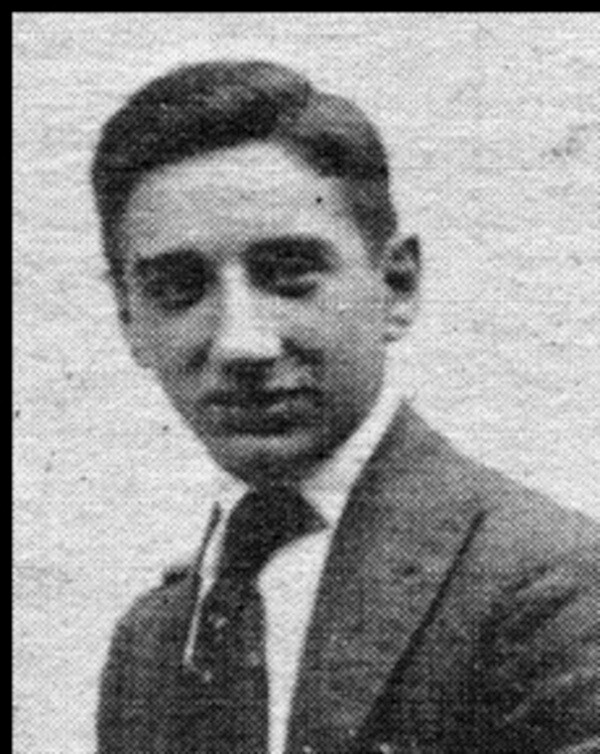
In early 1922, Signorelli rejoined Phil Napoleon just in time to appear on sessions with Ladd’s Black Aces, singer Leona Williams, and most importantly the Original Memphis Five. With trombonist Miff Mole (replaced for part of 1922-24 by the soundalike Charlie Panelli), clarinetist Jimmy Lytell, and drummer Jack Roth, the Original Memphis Five was extremely prolific on records during 1922-26 and occasionally up until 1931. A similar (and sometimes identical) group with Signorelli also recorded as Jazzbo’s Carolina Serenaders, the Cotton Pickers, the Southland Six, the Savannah Six, and Lanin’s Southern Serenaders (although Signorelli missed their 1921 sessions). Ironically underrated today because they were so prolific on records, the Original Memphis Five was playing swinging jazz and hot solos in New York before Louis Armstrong arrived in town. Many of the songs that they recorded deserve to be revived today.
Signorelli’s occasional solos fit quite well into the mainstream of mid-1920s jazz. While not an innovator, his stride playing is an asset on dozens of recordings. During this era he was also occasionally heard with larger groups including the Tennessee Ten, the Broadway Syncopators, Bailey’s Lucky Seven, and the Ambassadors. He accompanied such singers as Anna Meyers (including the earliest recording of “Tain’t Nobody’s Business If I Do”), Mandy Lee, Lena Wilson, Alberta Hunter, and Trixie Smith, and he joined in with Jimmy Lytell as one of The Three Barbers. In 1926 Signorelli led a nine-piece group on a four-song session that included his composition “A Blues Serenade,” a song soon recorded by the Original Memphis Five that caught on as a standard for a few years.

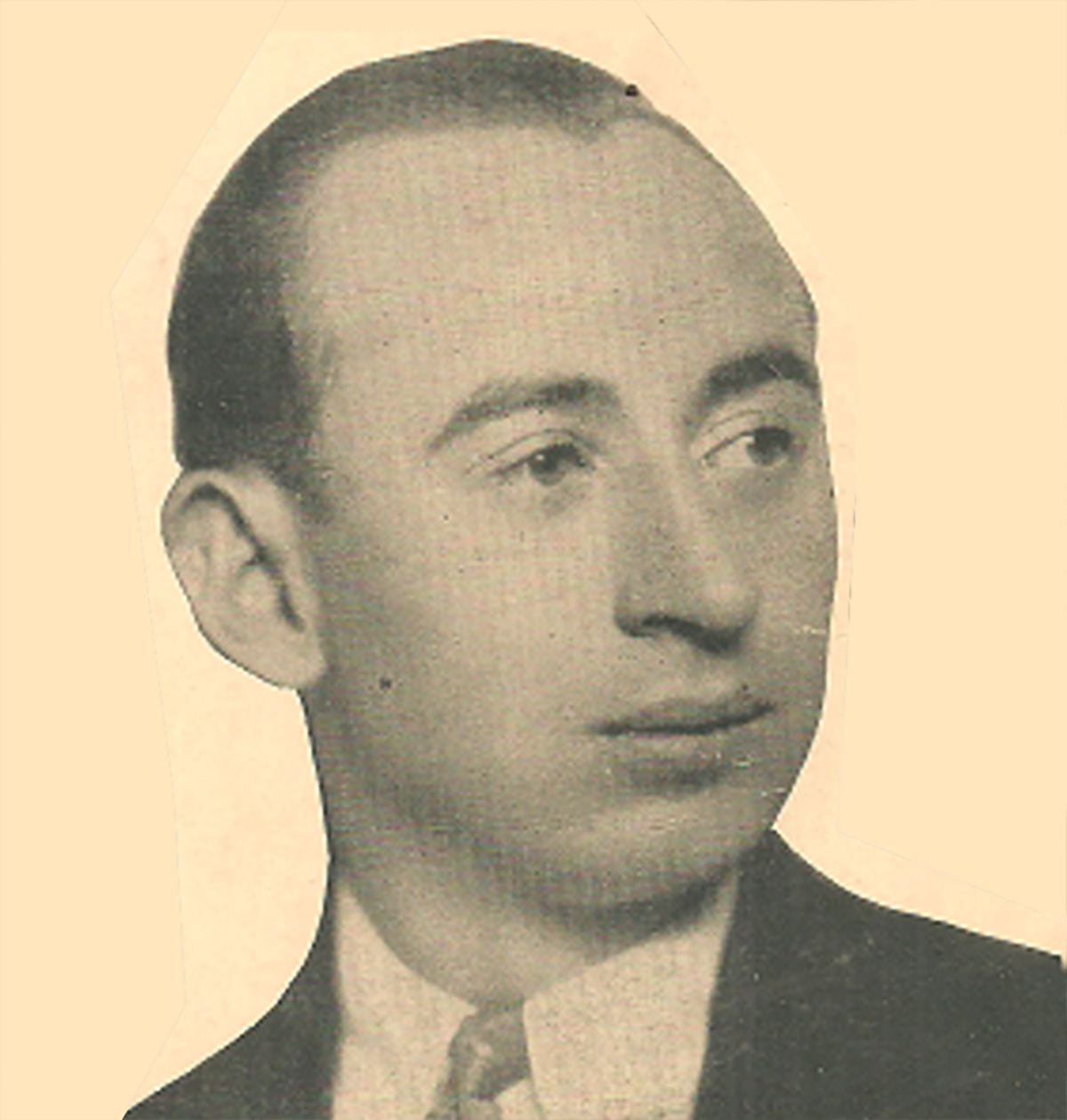
Rube Bloom was born 11 months after Signorelli (on April 24, 1902) and also in New York City. He was largely self-taught on the piano. By the time he was 17, he was working at vaudeville theaters and gaining experience as an accompanist. Bloom began to write piano pieces fairly early starting with “Indiana Moon” and “That Futuristic Rag,” both of which were published in 1923. He began to record in 1924 including sessions with Sam Lanin, Bailey’s Lucky Seven, The Arkansas Travelers (a sextet that included Miff Mole and C-melody saxophonist Frankie Trumbauer), a later version of Ladd’s Black Aces, Ray Miller, the Cotton Pickers (which included Phil Napoleon), the Tennessee Tooters, and two numbers (“I’m Glad” and his own “Flock O’Blues” which later became “Carolina Stomp”) with a pickup group that included Mole, Trumbauer, and Bix Beiderbecke. In 1925 he often crossed paths with Red Nichols (including on recordings with Lanin, the Tennessee Tooters and the Cotton Pickers). Clearly Bloom was part of the big time white New York jazz scene by the mid-1920s.
Both Frank Signorelli and Rube Bloom found their careers becoming even busier as the 1920s progressed. Twenty-four years old as 1927 began, Signorelli recorded that year with Brad Gowans, Phil Napoleon’s Emperors, and in trios with Jimmy Lytell. Most intriguing is that he led a solo piano session and dates heading a trio with violin and accordion, recording such numbers as “Caprice Futuristique,” “Midnight Reflections,” and “Just Around the Edges.” Unfortunately none of those performances were ever released.
During September-October, 1927, Signorelli was a member of Adrian Rollini’s New Yorker Band which found him playing regularly next to the leader-bass saxophonist, Bix Beiderbecke and Frankie Trumbauer. The band did not last long with Bix and Tram soon joining Paul Whiteman, but it resulted in the pianist getting to appear on a series of classic recordings including “Baltimore,” “There Ain’t No Land Like Dixieland,” “Three Blind Mice,” “I’m More Than Satisfied,” and “Cryin’ All Day” plus two Dixieland-oriented sessions by Bix and his Gang, dates led by Joe Venuti, and duets with Eddie Lang.
The next two years offered more of the same including making “Doin’ Things” and “Wild Cat” in a trio with Venuti and Lang, and sets with the Mississippi Maulers, Venuti’s big band, Irving Mills’ Hotsy Totsy Gang, Cliff Edwards, the Dorsey Brothers Orchestra, the Meyer Davis Orchestra, Boyd Senter, Ruth Etting, Ethel Waters (“Am I Blue”), Annette Hanshaw, Lee Morse, and the Charleston Chasers.
When the Depression hit, Signorelli kept busy playing more commercial music (including with Fred Rich’s large orchestra) but he was also part of an all-star group with a declining Bix Beiderbecke and the up-and-coming Benny Goodman for a session that included “Strut Miss Lizzie.” He also continued appearing on Joe Venuti sessions and was on the last recordings of the Original Memphis Five. But even with his technical skills, Signorelli was off records altogether during 1933-34.

Rube Bloom’s career continued on a similar course, at least at first. During 1926-32 he recorded with the Cotton Pickers, the Hottentots, Joe Venuti, Art Gillham’s Southland Syncopators (the group included Red Nichols, Miff Mole and Eddie Lang), Sam Lanin, duets with Eddie Lang, a variety of singers including Peggy English, Vaughn DeLeath, Noble Sissle, Annette Hanshaw, Ethel Waters and Seger Ellis, and extensively with Ben Selvin. Bloom also cut some piano rolls. Having won a songwriting contest put on by the Victor label with “Song of the Bayou,” in 1930 he led three sessions by his Bayou Boys. The all-star combos which included Manny Klein or Jack Purvis on trumpet, Tommy Dorsey, Benny Goodman, and Adrian Rollini performed some rewarding music, highlighted by Bloom’s “The Man From The South.”
The difference in Bloom’s musical life from that of Signorelli’s is that he began to blossom as a composer in 1926 and his solo piano sets were released. That year he recorded two originals: “Soliloquy” and “Spring Fever.” The impressionistic pieces, which Bloom recorded twice again in 1927, were innovative for the time. Duke Ellington was impressed and he utilized his orchestra to make a record of the composer’s arrangement of “Soliloquy.” In these and other pieces, Bloom proved to be a master at novelty ragtime, composing pieces that were quite individual and different than Zez Confrey’s dazzling numbers.
During 1926-34 Bloom recorded 13 original pieces (including “Silhouette,” “Sapphire,” “That Futuristic Rag,” and “Penthouse Romance”) and, counting five standards, repeats of seven numbers and two numbers on which he sang (“Mine – All Mine” and “’Cause I Know I’m Losing You”), one of which included Eddie Lang’s guitar, there were 25 performances that make the case for Rube Bloom being considered a major pianist. Eight of these piano solos are on an LP that he shares with Arthur Schutt: Novelty Ragtime Piano Kings (Folkways 41). But, as it turned out, that would not be the direction that he chose for the rest of his life.
Frank Signorelli returned to records in 1935 and he would be active as a jazz pianist for the next couple of decades. But at the same time, he became a notable songwriter. He had had success with “A Blues Serenade” which was still being played in the 1930s; Duke Ellington recorded it in 1938. In 1931 Joe Venuti recorded Signorelli’s instrumental “Little Buttercup.” Once it was given lyrics by Gus Kahn in 1932, renamed “I’ll Never Be the Same” and sung by Mildred Bailey with Paul Whiteman, it became a standard.
Signorelli had written “Sioux City Sue” back in 1924 and among his other originals were “Gypsy” (recorded by Paul Whiteman), “Bass Ale Blues,” “Great White Way Blues,” and “Shufflin’ Mose.” But his biggest hit was composed in 1935 with violinist Matty Malneck and originally titled “Park Avenue Fantasy.” In 1939 Mitchell Parish wrote lyrics for it and it was retitled “Stairway To The Stars” which was recorded by many bands including that of Glenn Miller.
While Frank Signorelli could probably have chosen to work full time as a songwriter, he continued playing piano throughout his career. He worked with Dick Stabile in 1935 and in 1936-37 recorded with Bunny Berigan (in a group led by Bob Terry), Manny Klein, Red McKenzie, Harry Richman, Bob Howard, Bill Challis, and Miff Mole along with quite a few titles with Dick Robertson. Signorelli was part of a partial Original Dixieland Jazz Band reunion in 1938 and a member of the Paul Whiteman Orchestra during 1938-40.
A technically skilled player who could be relied upon to play a concise and swinging solo when called upon, he was part of record dates during 1940-46 led by Dick Robertson, Connie Boswell, Savannah Churchill, another Original Dixieland Jazz Band group headed by Brad Gowans, Bobby Hackett, Al Duffy, Yank Lawson, and a reformed version of the Original Memphis Five with Phil Napoleon. The 1950s were much quieter on records other than a duet album with drummer George Wettling, a very good set with Connie Boswell and the Original Memphis Five, and an album in 1958 with Miff Mole. The pianist’s final recording was a little-known album with Father Joseph Dustin “and his Red Hot Banjo” in 1961. Frank Signorelli lived another 14 years, passing away on Dec. 9, 1975, at the age of 74.
Ironically his finest recording is a real obscurity. In 1950 Frank Signorelli recorded a 10-inch album, Piano Moods (Davis JD-103). The dozen piano solos on the LP are all his originals including such colorful titles as “Goin’ Nowhere Fast,” “Just Plain Lazy,” “Waltzing With A Dream,” and “Eighty-Eight Keys To Brooklyn.” Signorelli’s playing is a real surprise, quite virtuosic (on “Goin’ Nowhere Fast” his rapid striding and adventurous ideas sometimes hint at Art Tatum), and inventive while being in the pre-bop tradition. As far as I can tell, this superb album has never been reissued and has not been available since the early 1950s.
Rube Bloom’s career took a much different path than Signorelli’s by the mid-1930s. In fact, jazz discographies do not list any of his records after 1934. Bloom had had a minor hit with 1930’s “The Man From The South.” His “Manhattan Skyscraper” was commissioned to celebrate the opening of the Empire State Building in 1931 and that year he composed the five-part “Moods: A Modern Piano Suite.” His “Stay On The Right Side Of The Road” was recorded by Bing Crosby in 1933. Having proven himself as a pianist and a composer of novelty piano pieces, Bloom became a fulltime songwriter.
During the next 20 years, with such lyricists as Ted Koehler, Mitchell Parish, Harry Ruby, and Johnny Mercer, Bloom wrote such standards as “Don’t Worry ‘Bout Me,” “Day In, Day Out,” “Fools Rush In,” “Truckin’,” “Penthouse Serenade,” “Mysterious Mose,” “I Can’t Face The Music,” “Maybe You’ll Be There,” “Good For Nothin’ Joe,” and his most popular song, “Give Me The Simple Life” (written for the 1946 movie Wake Up And Dream). Having achieved great success, 1952’s “Here’s To My Lady” was his last significant composition.
Rube Bloom was largely retired by the mid-1950s other than playing some concerts in the late 1960s that reunited him with Joe Venuti. He passed away on Mar. 30, 1976, at the age of 73, four months after Frank Signorelli. A half-century after their deaths, the two talented songwriters and pianists deserve to be as well-known as their best songs.

Since 1975 Scott Yanow has been a regular reviewer of albums in many jazz styles. He has written for many jazz and arts magazines, including JazzTimes, Jazziz, Down Beat, Cadence, CODA, and the Los Angeles Jazz Scene, and was the jazz editor for Record Review. He has written an in-depth biography on Dizzy Gillespie for AllMusic.com. He has authored 11 books on jazz, over 900 liner notes for CDs and over 20,000 reviews of jazz recordings. Yanow was a contributor to and co-editor of the third edition of the All Music Guide to Jazz. He continues to write for Downbeat, Jazziz, the Los Angeles Jazz Scene, the Jazz Rag, the New York City Jazz Record and other publications.