Wednesday Night, July 2nd, 1947
I returned to the Chicago loop via fast electric coach from the University of Chicago on the South Side and stepped down a few yards from a movie house billing “The Lionel Hampton Show.” The entertainment, an old-fashioned stage show, was sorrowfully noisy, unmusical, and was soon over. I left without catching the Roy Roger’s flick, and stopped in a corner bar nearby, the Brass Rail, from whence came interesting jazz sounds. The zoot-suited young clarinetist played well and interestingly. A strikingly dignified, attractive woman played exciting piano punctuated with a marvelous line of patter delivered in an elegant British accent. She closed the set with “Limehouse Blues.”
I finished a beer and satiated, left the bar to stroll west on Randolph Street. At the corner of North Clark, I overheard two musicians talking shop. As they parted, I asked where good jazz was to be found. One, two sheets to the wind but still navigating rather well, replied, “At the Brass Rail.” I indicated I had just dropped in there and had found the band good “in spots.” He looked amused, and said: “That’s my band, I’m Jimmy McPartland,” to which I quickly replied, “Oh, yes, and the piano player was putting out some especially nice stuff.” He grunted, “Yeah, that’s my wife, Marian!!”
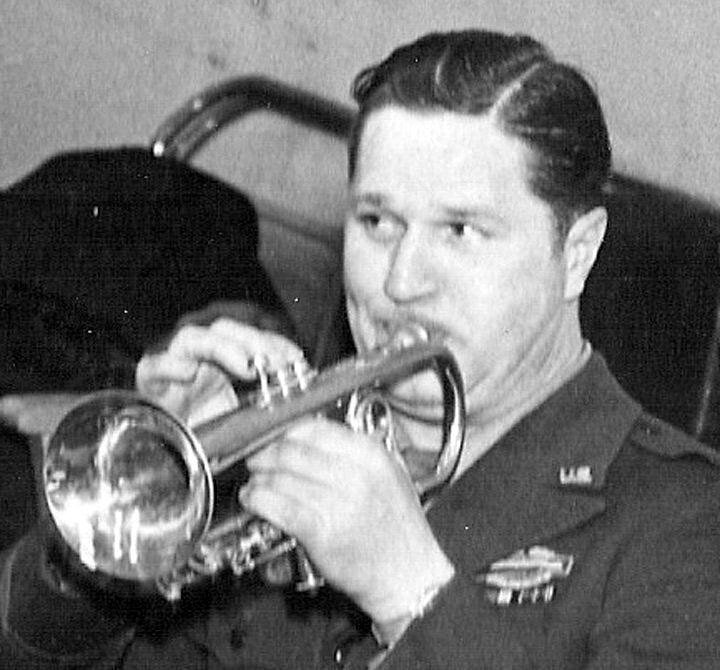
Despite my horrid beginning, Jimmy either took a liking to me or badly needed a good listener /jazz buff. He invited me for a drink, complaining about the weight of the world he was carrying on his shoulders this night. As he spoke, the light dawned—his connection to the pianist, obviously Marian McPartland. I recalled that he was a former member of the Austin High gang and of Ben Pollock and Benny Goodman and other swing bands, and was now on his own. I was particularly delighted when he mentioned being on a show the past week in New York with Bunk Johnson. This indicated a respect for the New Orleans origins of jazz, uncommon among current jazz and swing musicians.
To my neophyte doctor’s eye, he seemed this night a victim of painful anxiety and my heart reached out to him. We talked music, New Orleans, athletics, and medicine, he interjecting a little down-home philosophy from time to time. Jimmy is physically powerful, a tense coil of a man. By this time, over our second drink together, he was showing me photographs of his stunning 17-year-old daughter. I hardly knew how to respond to such an intense, idealistic, and troubled showman-musician. I tried to be an attentive and sympathetic listener.
From his great physical presence and musical competence, I was surprised as he confided that he still gets “terrible stage fright, particularly when friends are in the audience,” after 25 years in the big time! He is obviously searching, but his philosophy after a night of jazz and drinking was neither organized nor profound: “Generalities are the thing. Everything is comparative!,” he opined. Indeed!
We parted in the warm, damp air of Chicago at dawn, he to a gymnasium for a sauna and swim to relieve his panic, and I to bed at Wesley Hospital. In a remarkable coincidence, I thought, the May 5th, 1947 issue of Time magazine lay on a dormitory table as I entered, featuring none other than Jimmy and Marian McPartland!
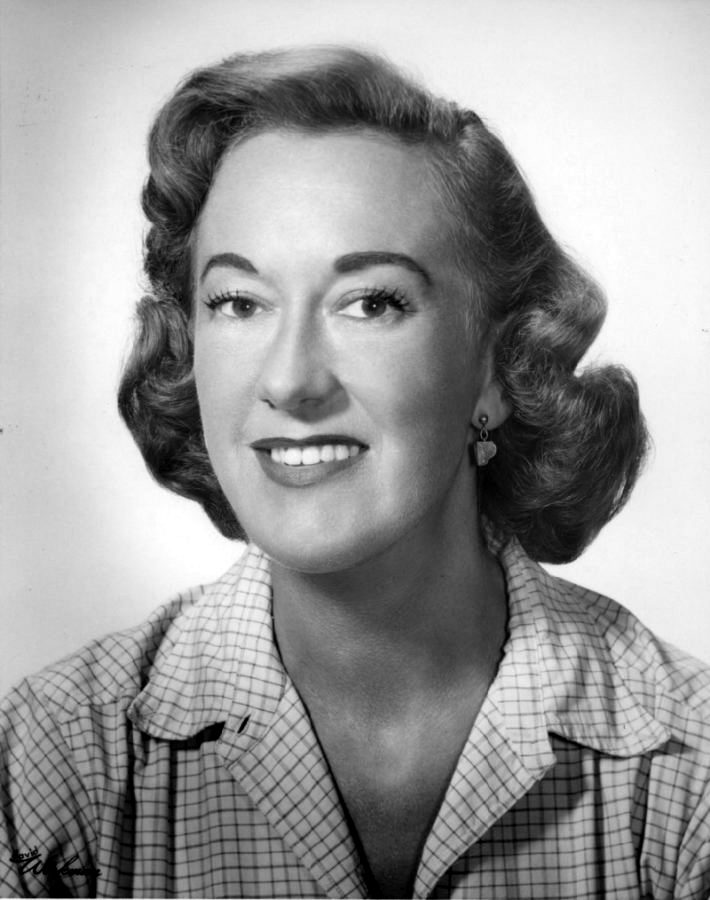
The music critic wrote: “From a loudspeaker outside the Brass Rail Theater Bar, a smoky, crowded joint on Chicago’s brassy Randolph Street, came hard, driving music. One old connoisseur who heard it stopped in his tracks and said, ‘My God. it’s Bix.’ But the sign in the window says ‘Jimmy McPartland.’ ‘It was Jimmy playing the golden cornet Jazz Immortal Bix Beiderbecke had given him years ago. But the critic found the backing Jimmy was getting was not fitting. The drum was off the beat and wife Marian’s piano accompaniment was ‘too refined.’ ‘But people said Jimmy had never been better.’ Said one: ‘He’s still got it . . . it’s good . . . it’s like Bix!’”
Henry Blackburn, MD is Professor Emeritus, Division of Epidemiology and Community Health, at the University of Minnesota School of Public Health.