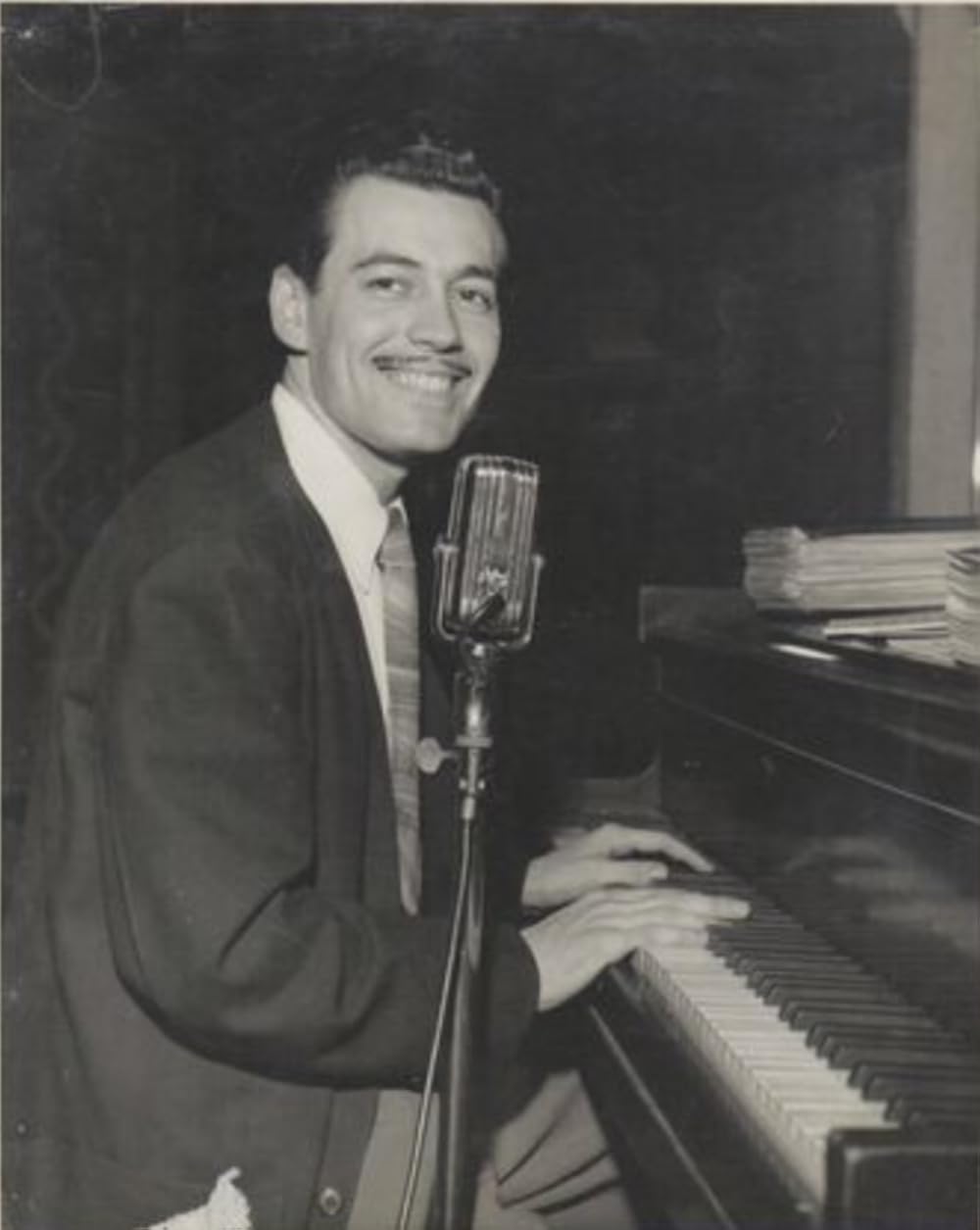
 Pianist Marty Napoleon had a long life, ample musical talent, a successful career, a strong memory, and a gregarious personality, so he was a joy to be with. His family had emigrated from Sicily to New York at a time when anti-Italian prejudice was strong, and the name Napoli did not help getting a job. His father wanted to be in the arts, but without success—until he changed his name, for the pastry, not the emperor.
Young Marty had no formal musical training, but he lived in a musical family. His uncle gained fame leading “Phil Napoleon and His Memphis Five.” At home, both parents played guitar, and his siblings played and sang. Napoleon began gigging professionally as a teen. His strong sense of rhythm, enthusiasm, and innate positive musicianship soon guaranteed him gigs, even though he couldn’t read music.
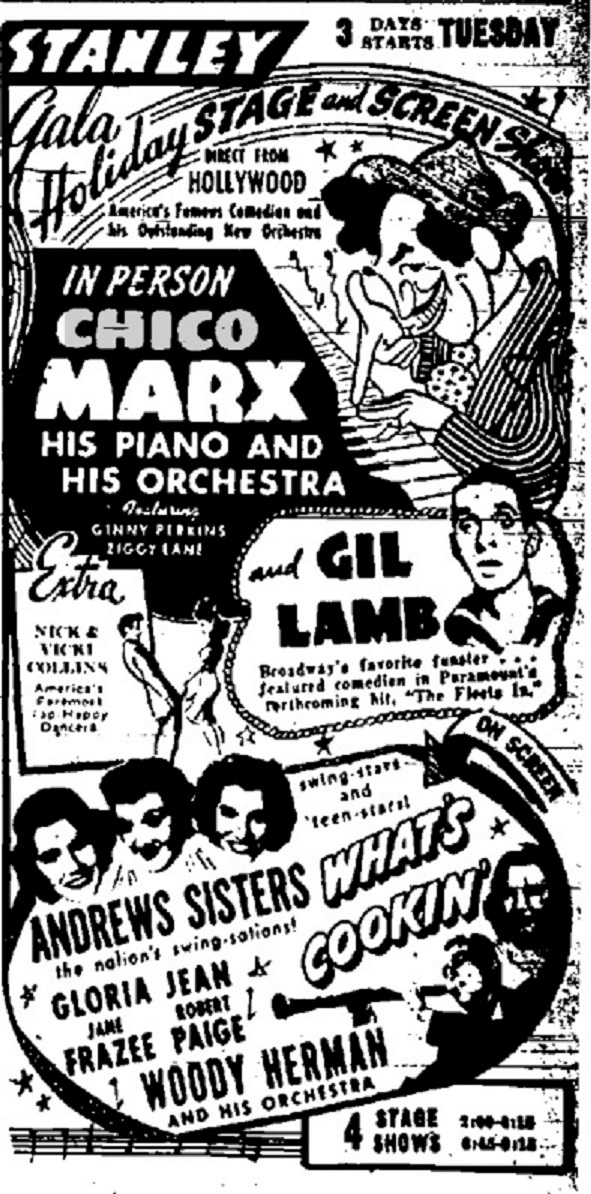
On a whim, Napoleon went into a studio to hear the rehearsing Chico Marx band. “I snuck in, and somebody yelled, ‘Hey Benny, there he is.’ Benny Pollack was handling the band. He said, ‘We’ve been trying to get you. Would you like to audition for this band?’ So, I sat at the piano and the drummer was George Wettling and the bass player told me later, ‘When you auditioned, George gave the OK sign to Ben Pollack.’ Pollack said, ‘Kid you got the job. You get 75 bucks a week’. Now I’m with Chico Marx. I’m 20 years old, just married, and I’m with a dynamite band.”
Unlike other bandleaders, Chico Marx’s fame didn’t rest primarily on his musicianship. Humor was important. Therefore, he always wore the outfit he used in the movies on stage. and Napoleon quickly proved to be an asset there. When they started getting requests for Glenn Miller’s latest hit “Moonlight Cocktail,” Marx asked Napoleon to play it. “I did and at the ending I did it like he did with his fingers in the movies and the house loved it. Anything that you did on stage if it got an audience reaction, he would say, ‘Leave it in.’ So, I was featured with Chico Marx.
“He’d also do the ‘Beer Barrel Polka’ and roll the orange on the keyboard; then he would throw the orange and I would catch it. Then I would throw it to somebody in the band. The next thing you know everybody in the band had an orange and was throwing it to somebody.
“We’d close the show with the ‘One O’Clock Jump.’ They would put the house lights on, and he would go into the audience and shake hands with the people. He loved young girls, so he would bring one up on stage and jitterbug with her. One day I got up from the piano, walked over to them and said, ‘May I?’ and I cut in. He said, ‘Leave that in. It’s beautiful.’
 “The next thing you know, one by one the guys in the band were cutting in on him so he kept going back to the audience and bringing girls onto the stage. Soon, there was only the drummer, a trumpet player and the bass player playing and everybody jitterbugging on stage.
“We were in L.A., and Chico was doing his schtick at the piano and these guys started heckling in the audience. He started putting them down, so they came running up onto the stage. It was Groucho Marx and Jimmy Durante. And so, while Groucho was carrying on at the microphone, Jimmy went over to the bandstand and threw the musician’s music up in the air. He said, ‘What are you reading? You call this music?’ They destroyed the set, but it was funny. Thank God it was at the end of the show. All we had to do was play ‘One O’Clock Jump’ and everybody knew that.
“We played once with Larry Adler. He used to do ‘Rhapsody in Blue,’ and I couldn’t read, and I was nervous and always rushing it. He would say, ‘Marty, please take your time with that. You are rushing it. Take it easy! Take it easy! That is you—all alone.’ ‘I know. That is why I am nervous.’ I thought, ‘He’s going to kill me.’”
This time was when Napoleon taught himself to read music. “We would have a dance team, a comedian or somebody, and they would have their own music and on the piano part there was a conductor part and on the top of the sheet had in red ink all the notes that the band was playing. The first show I would fake it, and from the second show on I would just follow along where I would see a dotted eighth and a sixteenth, and I would play that, and I was right.

“Chico only fronted the band and made believe he was conducting. He was pointing the baton to everybody in the band, one at a time and was saying one of two things: ‘Did you eat dinner with me yesterday?’ If the guy said no, he would say, ‘Meet me in the lobby after the show because you are going to eat dinner with me.’ The other thing he asked was, ‘Did you get laid last night?’ And the people thought he was conducting the orchestra. It was a great show.
“Chico didn’t like to eat alone, even though he had his girlfriend with him on the road. He carried a book of all the best tea rooms in the country. And every time we would get to a town, he would always take musicians to dinner. At least once or twice a week, you were eating with Chico, and you didn’t have to pay. Not only that, he loved to gamble and party.
“We got to Wichita, Kansas, and he’s gambling in the back room. Somebody said, ‘Go call Chico. The steaks are here.’ So, Chico came and his arms were loaded with five dollar chips. I mean loaded. I’m dealing out chips to everybody at that table, maybe forty people; everybody in the band plus everybody that was in the acts in the show. And he’s also throwing five dollar chips until he gets rid of all the money.
When Ben Pollack suggested replacing Napoleon with another pianist who was also a talented arranger, “Chico said, ‘Let Marty go? You’re crazy. This kid is very important to me. Give him a 25 dollar raise.’ Before I left the band I got another 25 dollar raise to 125 bucks a week.” Napoleon was only with the band for about a year. A heart condition kept him from the military, but “I left because my wife was pregnant and afraid. She didn’t know when I was coming home. So, I gave my notice, but I loved working with Chico.”
He next joined Joe Venuti’s big band, an organization less renowned than the violinist’s wild humor and antics. Napoleon recalled: “We worked at the Palisades Park in New Jersey, and there was an Italian restaurant across the street. Naturally we went there to eat because Venuti and the guys loved Italian food. Not only that, at his table there was nothing but laughing. He’d tell jokes and unbelievable stories about Eddie Condon and all the guys.”
Once, they were talking about men with long noses, and when someone claimed that an old man in the Catskill Mountains had the longest, Venuti said, “‘Why don’t we drive up and measure it?’ They started betting about this nose, poured themselves into a car and drove up to the Catskills. They got there at seven o’clock in the morning and rang the bell. This man came wearing a nightgown and a nightcap with a tassel that was almost as long as his nose. The guys are all stoned and looking and laughing.
“The guy said, ‘What do you want?’ And Joe said, ‘Don’t get scared. We just want to measure your nose.’ The guy told his wife, ‘Call the police.’ She called as two guys were holding him and Joe was measuring his nose. ‘Holly crap. You win.’ They paid him, got in the car and left before the cops got there.
“We were at Roseland for a long engagement and guys started giving their notices. We had a big band. Every time a guy quit, he’d say, ‘Don’t worry. We’ve got enough guys.’ Then we went to the Steel Pier in Atlantic City. By then the band was him, Kay Starr, piano, drums, guitar, bass, three saxes and one trumpet. Joe didn’t care. He just went straight ahead. When there was a trombone, violin, clarinet, or trumpet solo, he’d play it on the violin.”
In 1944, Napoleon joined Charlie Barnet’s band, another outfit known for some wild behavior. “Every guy in that band was a drunkard. When we used to leave LA, we’d get on the bus, and the manager would say, ‘Let me see a show of hands to make sure everybody is here.’ They didn’t put up one arm, they put up two. One held a bottle of gin and the other a chaser and the guy counted by twos, ‘Two, four, six, eight, and Marty,’ because I didn’t drink.
“I only hung out with Johnny Chance, the bass player, Porky Cohen the trombone player, and Phil Barton, the boy singer. We hung out so much that Charlie started calling us ‘The Ritz Brothers.’ We did a one nighter and were on the bus going back to L.A. We make a stop in the desert at a tiny little saloon which was open all night. Charlie said, ‘Let’s get some beer.’
“Some guys poured out but half were still sleeping in the bus. We walk into this joint and Phil and I hear music in the back room. They’ve got a banjo, drum, saxophone and an upright piano sitting there. There are maybe two or three people watching these guys play. Phil said, ‘Can we sit in?’ They said, ‘Sure.’ So, I sat in while Phil sang.
“Charlie looked in, saw us, and said to the band boy, ‘Set up the band in the back room.’ They set up the bandstand and woke up the guys that were sleeping on the bus. ‘Are we home?’ said Ray Degeer, the saxophone player. ‘No, we are going to play.’ ‘Play where?’ We must have played three or four numbers. The guys who were sleeping said, ‘We are going to hate those Ritz Brothers for the rest of our lives.’
“When we used to finish a gig, I would have a cup of coffee and sandwich or something and then go to bed. So, I’m in the hotel and about two o’clock in the morning, a guy knocks on my door. ‘You with Charlie Barnet’s band?’ ‘Yeah.’ ‘Get out.’ They chased us out of the hotel because the guys were drinking in one room and every time they finished a jug, they would throw it out the window. Some of the bottles hit some cars, so at two o’clock in the morning I had to go looking for a place to sleep.
“That band swung like crazy, and I was never bored as a player. When we came back to New York, Ray Degeer was playing lead alto. He was a short guy, long hair, a long handlebar mustache. One night the manager said, ‘Charlie got arrested. Ray Degeer is going to play Charlie’s part.’ They got Ray out of bed. He had his slippers on, no stockings; he’d slept in his pants and they were wrinkled and about two feet away from his shoes, and his hair was disheveled.
“We had an opening that Charlie stole from Duke Ellington. There would be a blackout on stage and I would play Ellington-style runs. They had a stand on the corner where the brass could get up with the spotlight on them and play. Then I would play again, and the saxophones would stand up with the light on them and play. Then it would come back to me, then the brass would go, and then finally it comes to Charlie. He was a tall good-looking guy, and the light would hit on the top of his head as he started playing that theme.
“Now we’ve got Ray Degeer. He didn’t shave, he hardly had clothes on, he’s playing lead alto, not the tenor, and not only was he short, about 5’4”, he hunched over, and the light hit his back, instead of his head. Guys in the band were hysterical. We were looking at the audience and they were looking at us as if to say, ‘What the hell are we looking at?’”
When we last spoke, Marty repeated that he was working on his life story. I wonder what became of it?