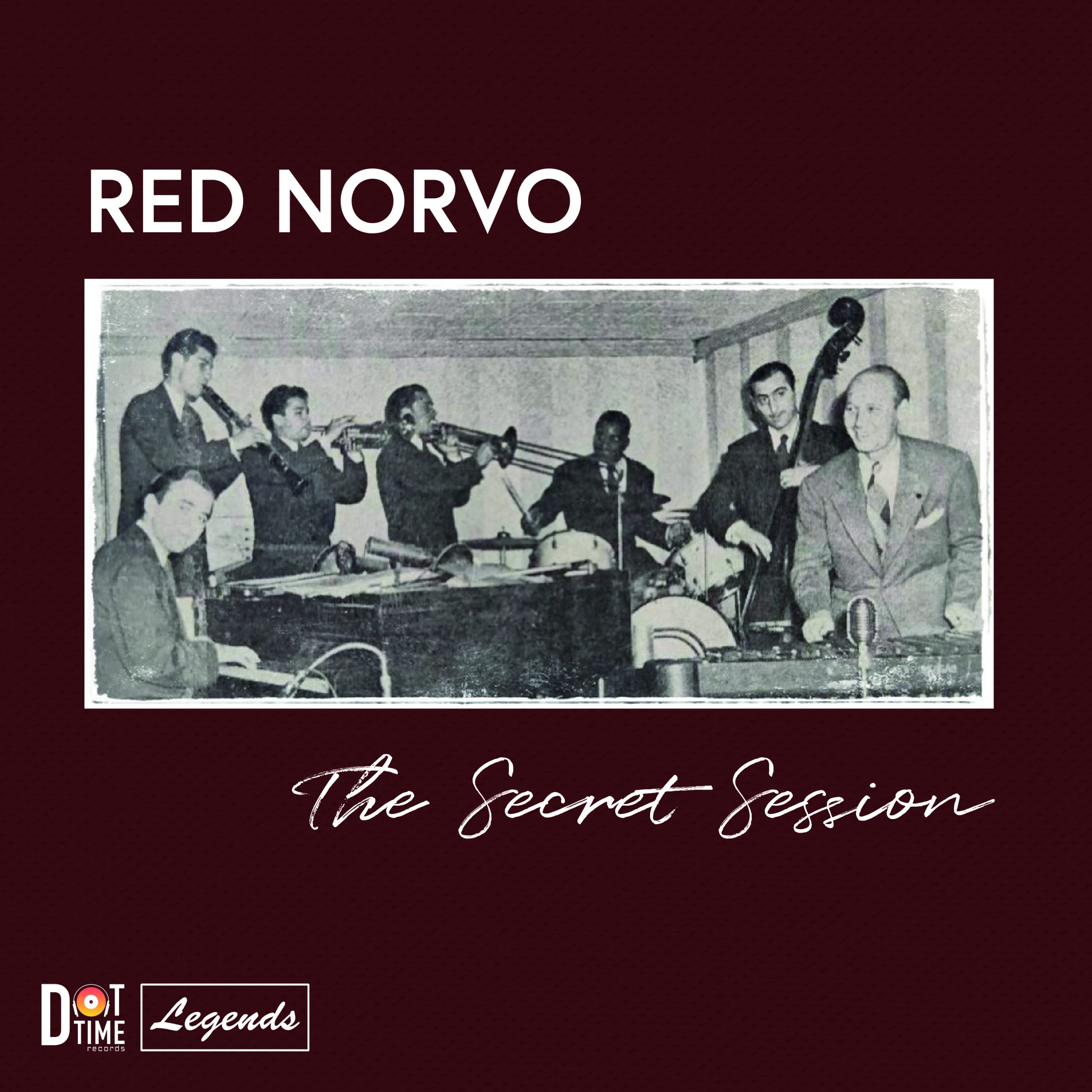
 Red Norvo started his jazz career playing xylophone, which isn’t a very shouty instrument, but he was forward-thinking and harmonically inventive enough to enhance any ensemble he joined or led. In keeping with his instrument, he also was quietly rebellious. He made most of his rebellious statements through music, as his 1933 trio recordings of “Dance of the Octopus” and Bix Beiderbecke’s “In a Mist” attest, but in 1942 he initiated a different kind of rebellion: He made a (technically) illegal recording.
He’d made many recordings before this date, but they were officially recorded and officially released. But at midnight on July 31, 1942, the official recording industry was shut down by a musicians strike called by union president James C. Petrillo.
Petrillo was a firebrand, so renowned and feared that his name became the punchline for popular radio comedians—and every listener knew who Petrillo was. His argument was that the radio industry was robbing his musicians through a lack of royalty payments on the recordings they aired. And he believed that recordings themselves wiped out some 60 percent of in-person gigs. The strike would end only when the major record companies—RCA Victor, Columbia, and Decca—signed agreements to pay into a special fund.
The companies eventually caved; the strike was settled in November 1944. But in August 1942, just as that strike went into effect, Norvo wanted to record his current septet.
It was an easygoing, swinging outfit, one of his best, Red believed. But it was wartime, and the military was grabbing musicians left and right. Benny Goodman and Teddy Wilson, among many others, broke up their bands because of this attrition. The writing was on the wall. And just as Red was getting ready to make this recording, the strike hit.
According to the stories surrounding this event, Red or one of his musicians cajoled an engineer to sneak them into a studio. They laid down ten tracks in a single session. It was more of a souvenir than a commercial release, because nobody was about to issue a platter by strikebreakers.
Much mystery remains about the travels of this recording, but trombonist Eddie Bert grabbed a set of acetates. Those are discs made (during wartime) by coating a base of glass with nitrocellulose lacquer, and recorded on the spot with a cutting lathe. They’re heavy and fragile and audibly deteriorate each time you play one. This I know because I paid about $40 for an acetate transfer of a very out-of-print record I desperately wished to acquire, and I heard my investment being eaten away before I thought to transfer it to tape. This was in the ’70s, and, lacking money, the best machine I had was a cassette recorder.
Eddie Bert a similar experience. According to Secret Session executive producer Jo Bickhardt, Bert had a friend who persuaded him to transfer his acetates to cassette. If you’re working with superior equipment for playback and recording, you can end up with an excellent result. But there are many technical variables that will creep into the process, including playback stylus and whether the cassette deck head is properly aligned and cleaned. But who thinks of these things when you’re in your home music room enjoying the cassette deck you got for peanuts from, say, Sears?
Bert’s cassette is the source for this CD. Although up-to-date restoration techniques were brought to bear, the sound is a little muffled, a little gritty. And you’ll hear the kind of studio noise that suggests just how casual this session was.
The lineup is impressive, even if not completely known: Shorty Rogers is on trumpet, alongside trombonist Bert, Aaron Sachs on clarinet and alto sax, and Clyde Lombardi and Specs Powell on bass and drums. The pianist is guessed to be Hank Kahout. And of course, there’s Red, swinging his butt off.

The session kicks off with a Norvo original, “One Note Jive,” a bluesy up-tempo 32-bar number that’s tightly arranged and loosely swung. The horns cascade in right at the top, then Bert offers a wah-wah effect as part of his opening chorus, keeping that titular single note at the forefront. Piano and clarinet are then featured, and Red holds forth with two mallets (as he does throughout the session).
I suspect the medium-tempo “Speculatin’” was named to honor Powell, although it’s not a drum feature. Red starts by punishing his xylophone with piano behind him as the horns give a broad-notes backing. I’m guessing this is one of those head arrangements that got titled in the heat of the moment. It’s followed by another medium-tempo swinger, “I May Be Wrong,” written by Henry Sullivan and Harry Ruskin. Red recorded it at least as far back as 1938 with his then-wife Mildred Bailey taking the vocal chorus. Here it stretches into a satisfying seven minutes, giving our mystery pianist time for fleet solo that’s sparing and Teddy Wilson-like in its use of runs.
“Keep Smilin’” is a novelty that must have been popular in the club as it exhorts us to “just keep smilin’” in an increasingly insistent vocal refrain. “Rose Room” is the 1917 standard by Art Hickman and Harry Williams, and this one clocks in at eight-and-a-half minutes. Sachs takes two choruses on clarinet, with a lengthy trombone solo on his heels. Here’s where you hear what Red could do with a harmonically inviting song. Horns ease in on chorus two as Red’s playing grows more fleet. Muted trumpet follows—Rogers was a master of that sound—before another Wilson-esque piano chorus takes us into the finish.
Irving Berlin’s “Russian Lullaby” begins with a slow horns and sax chorale with bowed bass, then Red comes in with a perky solo over a repeat of the chorale. The mood shifts slightly when Sachs takes a clarinet chorus, turning this into a beautiful rendering of a neglected semi-standard.
“Bugle Call Rag” always invites an ensemble to horse around with its possibilities, and after Red gets through swinging at the top, Rogers (appropriately) gets solo time with Specs filling behind him. Of course there’s a quote from “Please Go ’Way and Let Me Sleep”—I believe that was legally required for any recording of this number. Specs goes to town on “Slender, Tender, and Tall” (Hughie Prince and Mike Jackson), although the offhand vocal is also off-mic.
Norvo’s “Optical Illusion Pt. 1” gives us a refreshing dose of bass and muted trumpet, with a hint of a feeling of “Shortnin’ Bread” as it lopes along in an easy tempo. And “Liza” finishes the session with vigor, beginning with Red’s top-of-the-song solo. It’s a tight arrangement that makes the septet sound like a 15-piece band, and everyone gets a solo shot before the high-stepping rideout.
Chonologically, we’re at the birth of bop. You won’t hear it in the improvisational lines, but the arrangements sport unexpected harmonies. Of course, you hear those in Red’s ’30s, recordings, too. “I believe I’ve moved with the times, somehow,” he told interviewer Les Tomkins. “Actually, I’ve never been aware of this; it seems like people who listen are much more aware of it than I am.”
Following this session, Red gave up on small groups for a while. Although he professed himself happiest when working with only a few others around him, his subsequent stints with Woody Herman and Benny Goodman found him featured both in the big bands and more intimate ensembles. But even his work with the band is outstanding: Listen to the nifty effect he creates on “A Loaf of Bread, a Jug of Wine” with Herman’s First Herd, and “Panacea” showcases his effortless busy-ness under a ballad, giving a Bach-like effect. This is also when he switched to vibes, which he found more effective in a band setting.
He hit pay dirt when he met guitarist Tal Farlow. They shared virtuoso chops and an eagerness to expand the harmonic language. With the addition of bassist Charlie Mingus, they put together a program of standards and Norvo originals that was successful in clubs and on recordings, although Norvo insisted that the recordings failed to capture the magic. They’re magic enough for me.
And this became the pattern for the rest of his career: a few big-band stints, usually with Goodman, and a lot of small-group work. He made recordings for labels like Famous Door and Concord; I got to see him perform with the house rhythm section at Schenectady’s Van Dyck restaurant in the early ’80s, where his talent was undimmed by age.
He took an unlikely instrument, a novelty vaudeville mainstay, and brought it into mainstream jazz. The Secret Session captures him at a unique point in time, both in terms of jazz history and in his own career. It’s nice to share a compelling secret like this.
The Secret Session
Red Norvo Septet
Dot Time Records