While jazz continues to thrive, it doesn’t get much mainstream media attention. However, there was a time when the clarinet, sax, and the trumpet were pathways to stardom. And this didn’t only happen during the swing era, with the likes of Benny Goodman, Artie Shaw, Harry James, and the Dorseys. The recent birthday of trumpeter Al Hirt reminds us that there were trumpet players who broke into the popular spotlight from the 1950s to the late 1970s.
In this piece, we’ll look back at some of those trumpet players who managed to crossover to mainstream success. Sometimes it was a brief brush with fame, sometimes it lasted for years.

The singular example, of course, is Louis Armstrong. He is the only trumpet player who achieved popular breakthroughs at three stages in his career: at the dawn of his career, the middle and in the twilight.
To jazz fans, Armstrong had already established his fame by his work with Oliver, Henderson, the Hot Five and Hot Seven recordings. However, when he recorded Hoagy Carmichael’s “Stardust” in 1931 he began to reach a much wider public. Although his career did experience ups and downs during the Depression, his touring and work in films kept him known. Then, in 1950 he recorded “C’est si Bon” with Sy Oliver and his Orchestra and had a smash hit.
It was in the 1960s when he really connected with a mainstream audience through his recording of “Hello Dolly” which went to number one on the charts. He was 62 years old, the oldest person to accomplish that feat. Although his 1967 recording “What a Wonderful World” made little impact initially, a decade later it became a cultural phenomenon.
In the 1930s swing was America’s popular music, so the question of “crossing over” in that era is not really applicable. I will mention though, that in an era of trumpet stars, Harry James was the most popular. Like Armstrong, he was a great improviser and technician. His use of the high register, bravado tone and flash in up-tempo songs and wide vibrato in ballads moved audiences. During his career, he released over 200 singles, nine reached number one, thirty-two were in the top ten, and seventy made the top 100 on the pop charts.
Common wisdom has it that after WW2, the big bands rapidly declined, but the big band sound was not as dead as some would have it. No question, there was a tightening up after the war, but there was still an audience for the music, both to dance to and just to listen. Basie and Ellington made it along with, among others, Harry James, Gene Krupa, Lionel Hampton, Earl Hines, Les Brown, Stan Kenton, Woody Herman, and trumpeter Ray Anthony.
Ray Anthony, who is still alive as of this writing, was a member of the Glenn Miller and Tommy Dorsey orchestras in the early 1940s. Like Harry James, whom he esteemed, Anthony had complete technical command of the trumpet. Cat Anderson, then Maynard Ferguson and his acolytes played in the altissimo range of the horn, but Anthony, like James, shined in the “singing” high register of the trumpet. He was not the jazz soloist that Harry James was, although he could keep up and his ballad playing was equally lovely.
Anthony’s arrangements often featured a screaming trumpet section, with him taking some solos. In the early to mid 1950s, Anthony had hits with tunes like “Harlem Nocturne,” the themes from “Peter Gunn” and “Dragnet,” “Bunny Hop” and “Golden Horn.” A handsome guy, he acted in films and had his own TV show. One of the perks of trumpet stardom: Harry James married Betty Grable and Ray Anthony married Mamie Van Doren.
Another big band that hit the pop charts was led by Cuban bandleader Perez Prado. Prado first hit with “Mambo Jambo” in 1949, which got him tagged the “Mambo King.” Prado was a pianist, not a trumpeter, but trumpets carried a lot of weight in his music and his “Cherry Pink and Apple Blossom White, which went to number one on the 1955 charts was a feature for his trumpeter Billy Regis. It was a natural for the horn and was later recorded by British trumpeter Eddie Calvert, whose version reached number one for four weeks and by Al Hirt on his 1965 album They’re Playing Our Song.

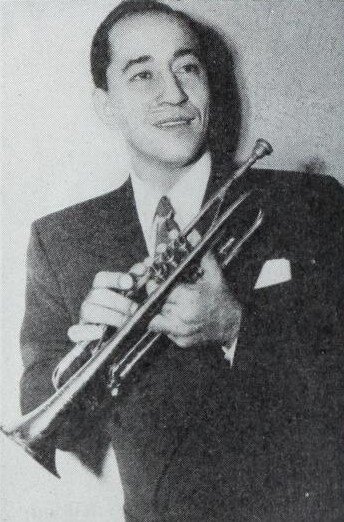
Trumpeter-vocalist Louis Prima deserves a mention. His popular act mutated from jazz to jive and with saxophonist Sam Butera, into rock and roll. His recording with Keely Smith in 1958 of “That Old Black Magic” was a Top 40 hit for two months and earned a Grammy.
During the 1950s, another seemingly unlikely pairing brought jazz into a popular vein: cornet-trumpet player Bobby Hackett and comedian Jackie Gleason.
These sessions came about because Gleason had clout, loved jazz and admired Hackett’s playing. Between 1953-1960 Gleason recorded a total of 17 albums that were “easy listening” and Hackett was featured on seven. Millions of these records were sold. Their first session, recorded in 1952 was Music for Lovers Only. It reached number one on Billboard’s pop album chart and stayed there for 153 weeks. There’s no question that the string section is pretty glutinous, but the presence of the great melodist Hackett redeems the sessions. My parents had the album—the first music I’d heard by Hackett. When I heard all his other music, the context was a hell of a lot different, but his sound was instantly recognizable.
The next trumpeter to make the crossover was a big departure from what came before: Lee Morgan and his song and album Sidewinder. The album was released in 1964 and reached number 25 on the Billboard album chart. It featured straight-ahead jazz cats Morgan, Joe Henderson, Barry Harris, Bob Cranshaw and Billy Higgins. The rhythm section plays might be called a boogaloo-soul beat and the soloists blow jazz on top. Blue Note records made a lot of money from the record and tried to duplicate that success in follow-up records, but they never could.
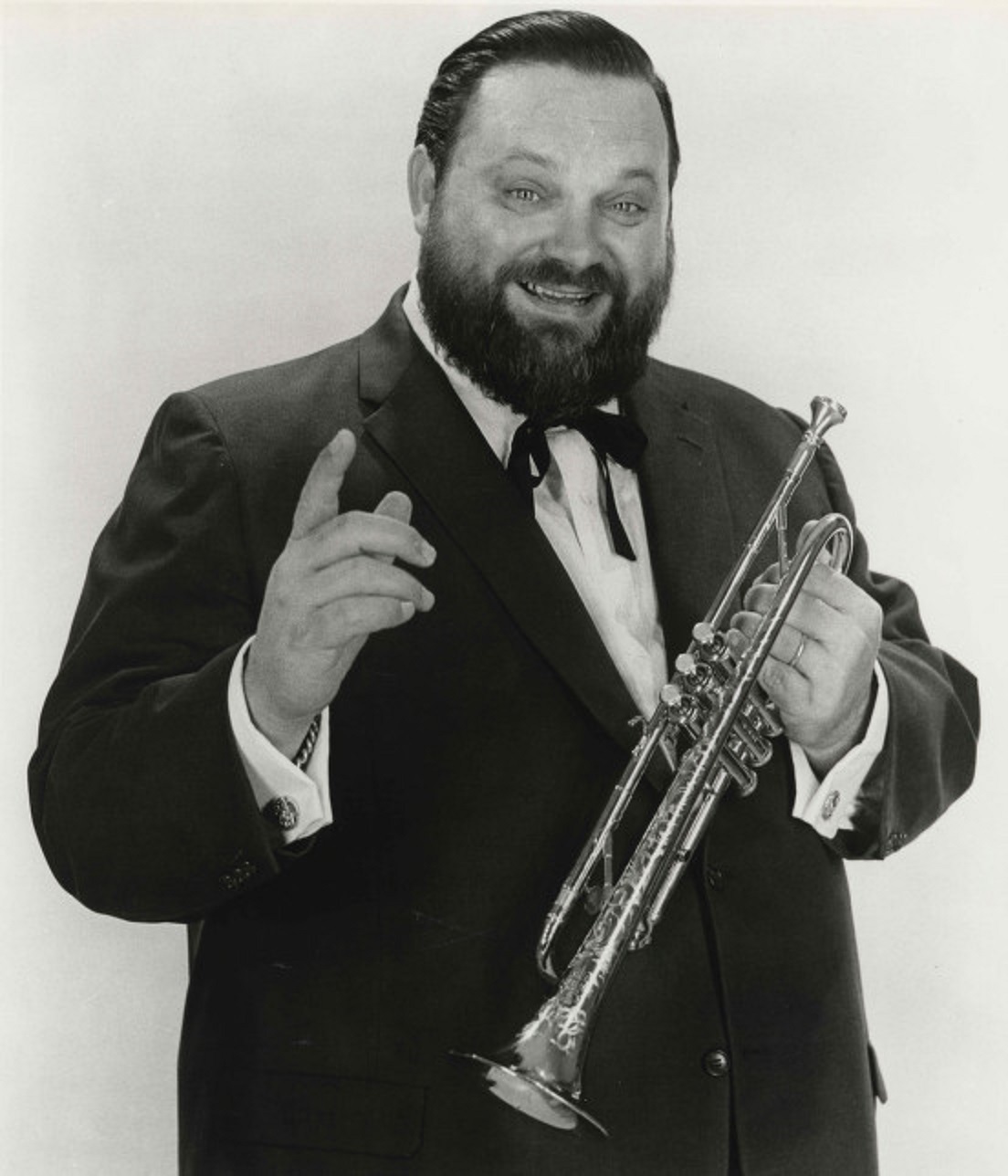
Next comes Al Hirt—truly a crossover phenomenon. Hirt was a New Orleans native who spent time in the trumpet sections of both Dorsey brothers, Benny Goodman, Ina Ray Hutton, and Horace Heidt. Like the other trumpeters mentioned here, he was a master technician who could play from the bottom to the top of the horn. He never considered himself a jazz player and this is an open question. At the very least, he had mastered patterns that were intrinsic to traditional jazz. He knew the role of the trumpet in that context and functioned perfectly, often with his clarinet-playing buddy Pete Fountain.
In 1960 his group, the “Dixieland Six” played Las Vegas and Dinah Shore, also in Vegas, booked them on her television show. Hirt’s playing and outgoing personality came across well on TV and RCA signed and began promoting him. He showed up often on TV playing “Dixieland” jazz and, of course, his new releases. RCA didn’t spotlight his Dixieland roots, but used large studio ensembles and arrangements by the likes of Marty Paich, Billy May, and Marty Gold.
During his career, he got twenty-one Grammy nominations. His albums Honey in the Horn, and Cotton Candy, were both gold records, and he was named “Top Instrumentalist” by Billboard magazine in 1965. His Best of album was number 17 on the top LP charts in 1965, along with albums by the likes of the Beatles, the Stones, and Dylan. His recording of “Java” won a Grammy.
It was also in the early 1960s that another trumpet player broke into the pop mainstream: Herb Alpert.
Alpert may be the most successful jazz (adjacent) trumpeter in pop music history. He recorded 28 albums that showed up on the Billboard top 200 charts, five of which were number one hits. Fourteen records went platinum and 15 went gold. He’s the only musician to have reached number one on the Billboard Hot 100 chart as both a singer (“This Guy’s In Love With You,” 1968) and an instrumentalist (Rise, 1979).
Alpert was inspired by a trip to a bullfight in Mexico and in 1962 his song “The Lonely Bull” ushered in the phenomenon of Herb Alpert and the Tijuana Brass. It’s hard to know exactly why The Tijuana Brass had such success. Mexican music—and this music was embraced by Mexicans—has never had a wave of popularity in the US the way Cuban or South American music has. It was bouncy, mostly very upbeat, slightly exotic and the attractive Alpert was easy to market. A sexy album cover didn’t hurt. Alpert’s playing was fine but showed no trace of jazz or the hyper-energetic Mariachi trumpet tone.
Activity for trumpet-led efforts slowed down in the late 1960s, but a number of “horn bands” began and stayed on the scene for some time: Blood Sweat and Tears, Electric Flag, Chicago, Tower of Power, Average White Band, and Earth Wind and Fire. Note that the big hit of Blood Sweat and Tears, “Spinning Wheel,” featured a stellar trumpet solo by Lou Soloff. Unfortunately, the original version was replaced on the radio with a version that stripped off Soloff’s solo and replaced it with a ticky-tacky guitar solo.
At this point, a few more trumpeters made the crossover.
In 1968, South African trumpeter-fluegelhornist Hugh Masakela’s song “Grazing in the Grass” sold four million copies.
One might say that Miles Davis’ 1970 release Bitches Brew was crossover music. It did make it to number 35 on the Billboard 200 and won a Grammy. And many years after Davis recorded it in 1959, his Kind of Blue album went 5x platinum.
Big band lead trumpeter Bill Chase led a band called “Chase,” featuring four trumpets. Their song “Get It On” spent 13 weeks on the charts starting in May 1971.
In a similar vein, Maynard Ferguson—a great soloist and high note specialist—hit with “Gonna Fly Now (The Theme From Rocky).” The original soundtrack recording was by Bill Conti, but Ferguson’s version made it to number 28 on the charts in 1977.
Chuck Mangione was an excellent trumpet and fluegelhorn player who recorded 30 albums and struck popular gold in 1978 with Feels So Good.
I think that Feels So Good in 1978 and Alpert’s Rise in 1979 mark a kind of last hurrah for trumpet music crossing over into pop territory. Trumpet is used in the hip-hop environment, but it’s mostly samples taken from jazz records. In the same way, jazz trumpeters like Roy Hargrove have “crossed over,” but no one has achieved broad popular acclaim.
Can the phenomenon happen again? Well, who could have predicted the emergence of Herb Alpert or Al Hirt in the era of the Beatles and Stones? Love of swing remains strong and there are certainly trumpet players out there with the chops and possibly the charisma to make people sit up and pay attention. If the trumpet sound does make it back onto the pop charts, it will probably emerge from social media. All right, trumpeters on TikTok, Instagram, and YouTube—get to work.
Steve Provizer is a brass player, arranger and writer. He has written about jazz for a number of print and online publications and has blogged for a number of years at: brilliantcornersabostonjazzblog.blogspot.com. He is also a proud member of the Screen Actors Guild.