Jeff Barnhart: Folks, you’ve been with Hal and me for years now as we forensically dissect various bands’ and musicians’ outputs as well as offer exhaustive analyses of specific tunes in the repertoire. We thought we’d give both of us and you a break this month and wax nostalgic about live performances we were fortunate enough to take in during our formative years as classic jazz musicians. While this will mean there won’t be quite as many tunes to listen to that accompany our text, we’ve found some representative sides, and in my case a few recordings made while I was present, to capture what thrilled us upon first encounter.
Hal, as you’ve been listening to this miraculous music longer than have I, may I ask you to get us started?
Hal Smith: Jeff, in the past I have written about a few life-changing musical experiences for The Syncopated Times (and other publications). I will summarize those performances and will comment in more detail on musical encounters that have not already been written up.
First, it’s worth mentioning that you and I grew up on different sides of the country. I missed out on hearing a lot of great music that was being played on the East Coast. However, I am thankful for all the wonderful jazz and ragtime I heard over the years in California!
The first live jazz performance I heard was by the Firehouse Five Plus Two at Disneyland, in 1962. My folks took me to the Magic Kingdom for my birthday, and I can’t imagine a better present than hearing Ward Kimball, Danny Alguire, George Probert, Frank Thomas, Dick Roberts, Don Kinch, and Eddie Forrest kicking off the evening with “At the Jazz Band Ball.” I still haven’t recovered from that initial exposure to traditional jazz!
JB: Good point about our geographical distance growing up, Hal. I’ll add that we’re about 14 years apart in age; I was “minus” 5 years old when you got to hear the FH5+2 live. I have to say I’m jealous! You saw the A team to be sure, with Don Kinch playing that wonderful tuba!! At least I have the recordings to listen to, but I imagine the full live experience with that band was unforgettable!
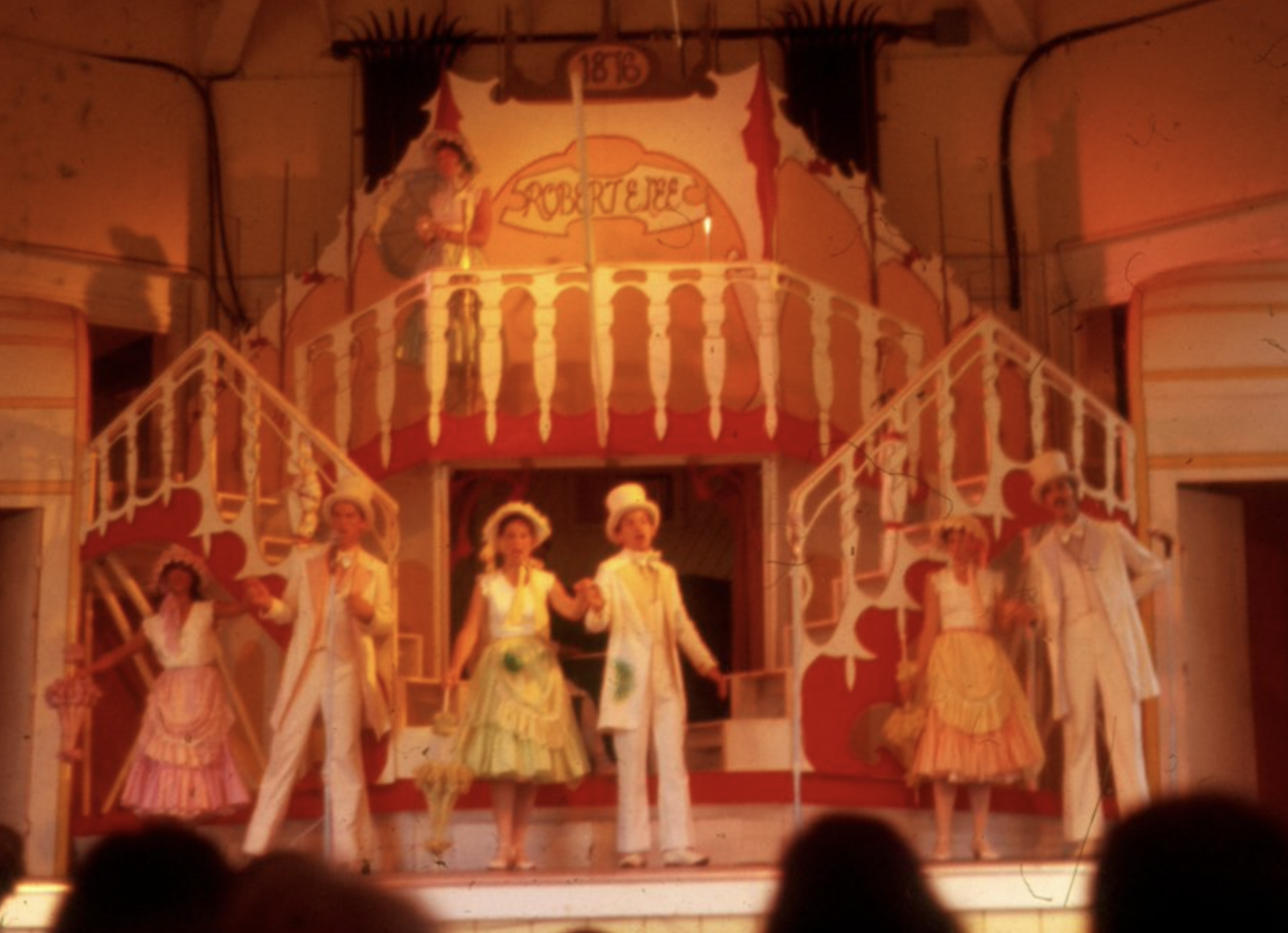
It’s interesting that my initial exposure to live traditional jazz happened in an amusement park as well! It was either 1975 or 1976 at the Great Adventure Theme Park in Jackson Township, New Jersey. This was before Six Flags acquired it, so there was still plenty of variety of musical acts. In addition to the “Ragtime Riverboat Revue” at The Bandstand On The Lake (the action of which anachronistically took place in 1876 and featured “Waiting For the Robert E. Lee”) there were several “strolling” Dixieland Jazz bands. One invited me to “sit in,” not musically, but as a stooge; another featured two VERY young Midiri Brothers! I disappointed my family since they went on rides, saw animal acts, and ate funnel cakes while I spent ALL DAY following the dixieland groups around the park.
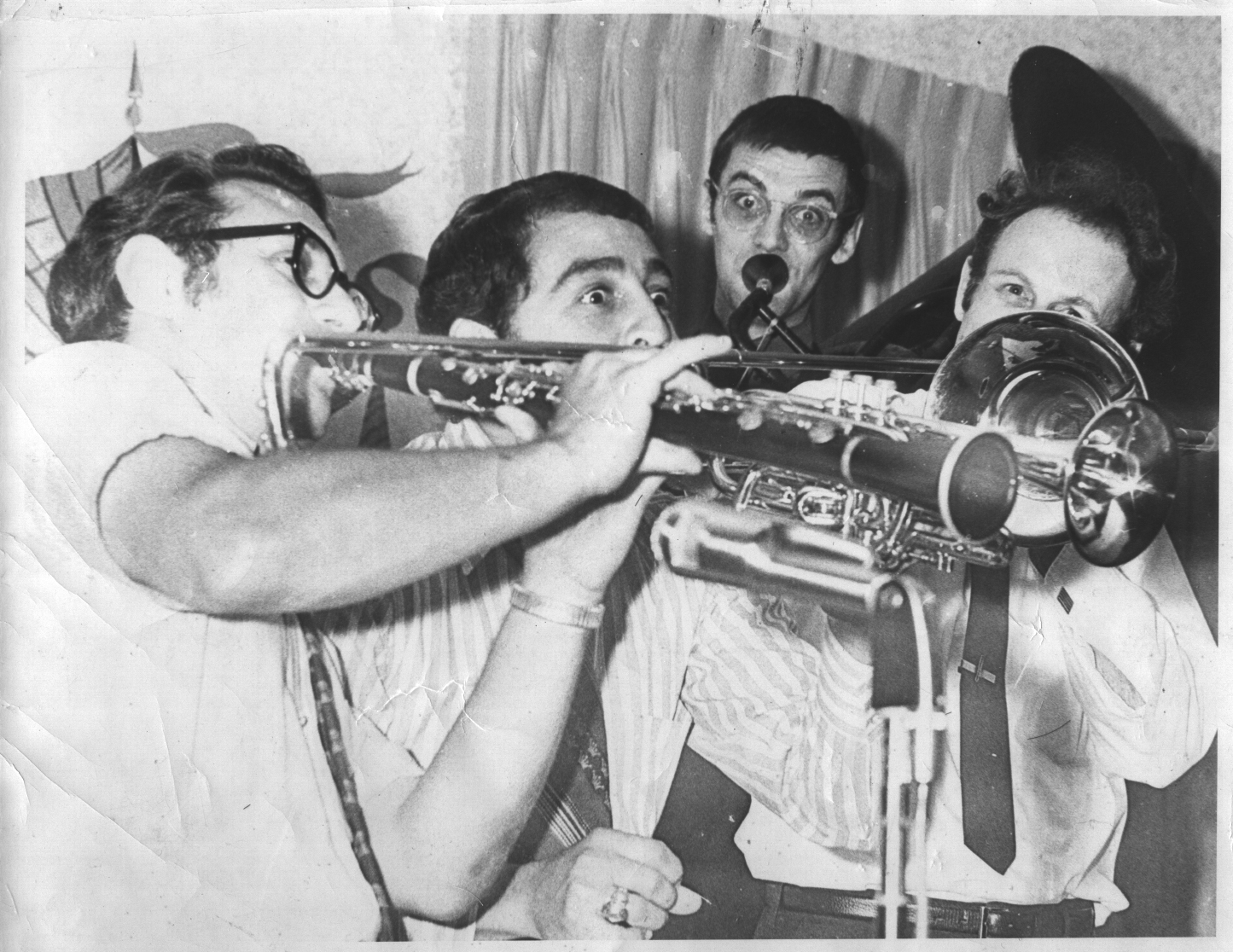
It was soon thereafter that my dad took me to the Millpond Tavern in Northford CT to take in the Galvanized Jazz Band playing their weekly Sunday residency. NOW, instead of wandering behind strolling troubadours on midway thoroughfares with roller coasters roaring overhead and other kids throwing popcorn at me, I was sitting in a small low-ceilinged room made entirely of wood and, though I wasn’t aware of it when I was 10, the acoustics were perfect! The session went from 6-10 pm with three 15-minute breaks, so over the course of the years I was able to get to know all of the band members, and even had occasion to sub for the piano player at times. I was able to attend most Sundays from 1977-1985, and would still go when my college schedule permitted. Like you, I still have those initial sounds deep in my brain and my heart.
Hal, what’s a subsequent experience and/or group that stood out for you in your formative years?
HS: My experience with the Galvanized Jazz Band was the same as yours with the Firehouse Five: The first time I heard the band was on a GHB LP! It certainly was an excellent band and I can imagine how much of an influence it was on you. Speaking of records, I should say that none of the Firehouse Five recordings—even the “Disneyland” album that was recorded live—can compare to how the band sounded in person at Disneyland. I can’t adequately describe what a thrill it was!
Coincidentally, the next eye-and-ear-opening live concert for me was by the same band, at the same venue. My parents took me back to Disneyland several times in 1962 and 1963, but in the summer of 1964 we were sitting in front of the bandstand, watching the band set up and saw George Bruns get behind a big silver tuba. And Don Kinch mounted the bandstand holding a trumpet. Danny Alguire was next up, then the other band members took their usual places. I couldn’t imagine why the band was going to perform with trumpet and cornet. I mean, this was even before the Tijuana Brass! Leader Ward Kimball announced “Tonight we’re gonna play some Lu Watters music!” That was a familiar name, from the FH5 liner notes, but I had not heard any of Watters records. The program began with “I Ain’t Gonna Give Nobody None Of My Jelly Roll” and the sound of those two horns in the front line was glorious!!! And, as you can imagine, that evening was a wonderful preview of the music I was about to discover on the recordings by the Yerba Buena Jazz Band.
What was your next memorable music encounter, after hearing the Galvanized group?
JB: Well, since you mentioned a specific tune in your description, I’ll stay with the Galvanized Jazz Band just a bit longer. By 1984, I was able to drive myself to the Millpond every Sunday to hear the band. As I was underage, the owner of the place made sure I was sitting with some regulars in case the cops came by, because the band was playing in the bar area, not the adjoining restaurant. I could’ve sat at a table in the restaurant (and once in a while arrived so late I had to; the band always sold out) but the partial view and being so far away from the band was less than satisfactory, so I’d sometimes skip dinner to be sure to arrive well before their 6 pm downbeat. The cover was a two-drink minimum, so I ended up having waayy more Pepsi than was healthy for years! I’m frankly surprised I still have teeth!
From 1984 until about 1989, tubist/bassist Art Hovey would make a copy of the evening. He always recorded each show and the sound was surprisingly good! As a result, I have hundreds of tapes of the band playing live. While I’d have a hard time winnowing a favorite, the band, with guest trombonist Jack Gale, played a version of “Mahogany Hall Stomp” on July 15, 1984, that floored me! The tempo was SO laidback, without sacrificing the heat, and Fred Vigorito nailed the Armstrong solo at that slow speed!! I think that was the moment I realized the power of a medium tempo. It was magnificent, I was so lucky to be in the audience that night, and I’ve included a link on the online version of our column.
Another tune I listened to hundreds of times on the cassette Art provided me was from three years later: The hottest version of “Milenberg (Milneberg) Joys” I’d ever heard; and I still haven’t heard one hotter. And I was THERE for this one, too! In this case, the three horn front line (once again with Jack Gale on trombone) was augmented by tenor saxophonist Charlie Weyant, normally a late swing/bebop player, but he fit in great here! That tune has a link as well.
[I’ll take a moment here to thank Art Hovey for his assistance both with the two GJB tunes and helping Hal isolate the two FH5+2 tunes featured in this month’s discussion]
What I especially loved about the GJB was its ability to draw in great musicians who weren’t necessarily tradders. I mentioned Charlie Weyant being more conversant in styles of the ’40s-’50s, and trombonist Jack Gale was a pit musician on Broadway, playing the same thing eight times a week, but really found himself able to open up with this band.
Hal, what’s next for you?
HS: “Mahogany Hall Stomp” at a fast walk instead of a sprint can really go. I can imagine how that version affected you. And you’re lucky to have recordings of some of the performances which inspired you. Unfortunately, I can’t say the same for most of the live music I heard in the 1960s and 1970s.
Disneyland was a great place to hear live jazz back then; especially over the “Dixieland at Disneyland” weekends in the fall. Louis Armstrong’s All-Stars were the headline act for several years and there were more “name” bands than you could count. In 1965, my dad took me to the park for the Saturday night concerts. The evening started with a parade of bands down “Main Street U.S.A.” I remember the Firehouse Five plus Kinch marching and playing a swinging version of “Panama” but I could hardly believe the music being played on the horse-drawn wagon that followed. Would you believe it was the Young Men From New Orleans with special guests Kid Ory and Johnny St. Cyr? As I wrote previously for TST, the band was playing “Muskrat Ramble” as the wagon approached the spot where I was standing. As it passed in front of me, Ory took his famous trombone solo from the Hot Five record, backed by St. Cyr playing the wonderful bass note-chord-bass note-arpeggio figures we associate with him. I was so taken with what I had just heard that I still can’t recall any of the other music in the parade!
But the evening wasn’t over…after the parade we caught one set by the Firehouse Five at the Golden Horseshoe and then my dad asked, “Want to go hear Turk Murphy?” At that time I didn’t have any of Turk’s own records; just some of the sides he made with the Yerba Buena Jazz Band. We arrived at the Oaks Tavern just in time to hear Turk announce “The Whitewash Man.” That was followed by “Snake Rag,” “Flamin’ Mamie,” “Georgia Bo-Bo,” “Coal Cart Blues,” “The Pearls,” “Wise Guys,” “Chattanooga Stomp” … Most of those songs were brand-new to me and Turk’s band played them to perfection. Besides Turk, the band included Bob Neighbor, cornet; Jack Crook, clarinet; Pete Clute, piano; Frank Haggerty, banjo; Bill Carroll, tuba; and Thad Vandon, drums and vocals. As a bonus, I got to meet Turk and the band when they took an intermission and they could not have been nicer or more supportive.
It was definitely a night to remember! In your musical journey, what came after the Galvanized Jazz Band listening experience?
JB: What a night you describe, my friend! That’s what I like to call a “silver box moment” and I know it helped turn you into the fabulous musician you are today!
It’s funny, I didn’t have as many chances to listen to LIVE traditional jazz during my teens as it seems you did on the West Coast. In Connecticut, other than the GJB, any other groups were too far away for me to know about them. And when I did hear another band I was setting them up against the GJB and they always fell short. In a past article, we’ve discussed the recordings that meant a lot to us as we became burgeoning trad jazz musicians. One trip I should mention was when I turned 16, a family friend took me on a trip to San Francisco. In addition to the fabulous sites, I went to Tower Records, where I bought up every tuba/banjo two-beat hot jazz LP and cassette I could find. I went home with every Turk Murphy release in the store, and a host of others: over 40 recordings in all! Those, as well as the constant additions I was making to my collection, had to tide me over until David Greenberg started the Great Connecticut Traditional Jazz Festival in Essex CT in 1987. Then, at age 20, my world expanded 1000 fold!!
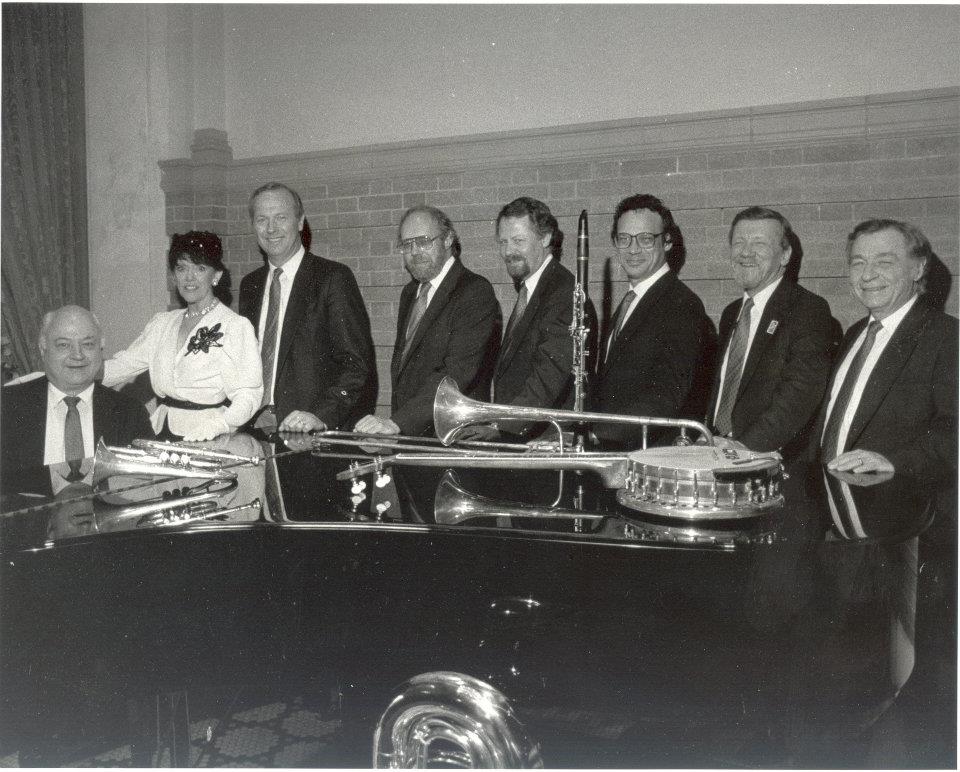
Hal, we were recently on the phone and I told you I wasn’t at the first GCTJF in 1987, the year YOU were there. Turns out I was after all!
[BTW, not that I want you to get a big head, but Greenberg came over to me and said, “Jeff, you need to go hear Chicago Rhythm. It has the best drummer in traditional jazz in it. Have you heard of Hal Smith?” I allowed I hadn’t, and Greenberg went on to avow, “Nobody knows more about the early styles of jazz drumming, or plays it better, than Hal Smith. He’s so good anyone can learn from him regardless of the instrument they play, so go take a lesson.”]
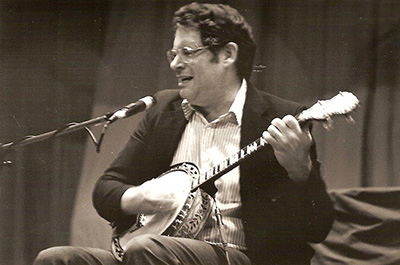
Snotty (and snooty…and ignorant…) young adult that I was, I took a look in the program and saw the band you were in had TWO reeds and NO trumpet or trombone…HORRORS!! So I went in search of the more “traditional” line up of traditional jazz and missed out on hearing you and your band. It was only later upon hearing the Stomp Off recordings you made with Chicago Rhythm and learning about Jimmie Noone and the two reed tradition that I realized what a dunce I was!! Mea Culpa, my good buddy!
There were so many revelatory experiences for me at that festival in 1987 that I’ll need to go one by one rather than monopolizing this discussion. I’ll start with a band from the Boston Massachusets area that was coined “Jimmy Mazzy and Friends.” It was basically the Paramount Jazz Band with trumpeter Scotty Philbrick filling in for their regular trumpeter, Jeff Hughes. What this meant was that none of the band’s usual arrangements could be used, so it was freer. “Jimmy Mazzy and Friends” featured Ray Smith on drums, Gary Rodman and Steve Wright on reeds, Robin Verdier on piano, Albie Bernard on tuba, and the aforementioned Philbrick on trumpet and Mazzy on banjo and leading.
Banjoist/vocalist Jimmy Mazzy should be better known by our audiences, Hal. His playing is superb, subtle, layered, and always a combination of poignant and HOT! When he sings he pours every ounce of emotion into the tune. If an outchorus is particularly hot, he’ll let out this primal scream of joy that by the end of the festival had so caught on that the audience was screaming with him. The following year, the Paramount Jazz Band appeared at TGCTJF and I found it tight and hot, but not HOT!! Mazzy became a friend and mentor of mine. I’ll never forget how each set of his in 1987 included a solo or smaller group. “Brother, Can You Spare a Dime” made people weep. Although this is a recorded version, I’ve included it here as it has the same effect as the live one I experienced way back then.
HS: Jimmy Mazzy has always been able to hold an audience in the palm of his hand! Chicago Rhythm was kind of an acquired taste, so that band really never took off in the festival world.
I was still learning about ragtime as well as traditional jazz in 1966. By then I had all the Lu Watters albums on Good Time Jazz and I loved the way that Wally Rose played the piano rags with the YBJB. And he sounded even better on the GTJ Ragtime Classics LP (with Morty Corb and Nick Fatool). I managed to find Wally’s address and sent him a fan letter. He wrote back—with a beautiful autographed black and white publicity photo and an invitation to visit him any time I was in San Francisco. In the fall of 1966 I was able to do just that when my family made our first trip to San Francisco. That was also our first visit to Earthquake McGoon’s.
The night we were there, the Turk Murphy band was almost the same one that performed at “Dixieland at Disneyland” the previous year. It was outstanding! In particular, Thad Vandon impressed me with his vocals as well as his drumming! The next day, we went to Wally’s apartment. He prepared cocktails for my parents, a Coke for me, and then sat down at his beautiful concert grand piano to play rags just for us! I’ll never forget hearing him play “Junk Man Rag.” His Blackbird recording of the rag was done a few years later, but it reminds me of how he sounded at our “private concert.”
JB: Hal, that is such awesome stuff! It’s amazing how many people you were able to meet in your youth. Sadly, my corner of Connecticut was a wasteland excepting the weekly GJB sessions and the annual Great Connecticut Traditional Jazz Festival, but I absorbed enough weekly with my local band and once a year with the terrific imports that I was kept busy trying to learn it all! In 1988, the festival brought some amazing bands in and I followed two groups around all weekend: The Salty Dogs from Chicago, IL and the South Frisco Jazz Band from Orange County, CA!
I’d heard the “Dogs” on their GHB recordings I’d purchased from the Yale Co-op some years back, so seeing them in person was ear-boggling! While the personnel on the GHB albums I was able to find was Lew Green, cornet; Kim Cusack, reeds; Jim Snyder, trombone; John Cooper, piano; Bob Sundstrom, banjo; Mike Walbridge, tuba; Wayne Jones, drums, it had shifted somewhat by the late 1980s with Tom Bartlett on trombone and Jack Kuncl on banjo. One tune they played when I saw them at the 1988 GCTJF was the charming “Wedding Cakewalk” composed by the aforementioned legendary pianist (and your friend) Wally Rose. Luckily, they had recorded it on Honky Tonk Town (Stomp Off LP 1115) so I can relive the moment I heard them play it live anytime I’d like! I also remember them playing “That’s a Plenty” with a crazy second chord in the “A” section. They go from Dm to Gm for bars three and four instead of staying on Dm throughout!! I was out of my seat at the end of this one, as were the 1200 people listening in the tent that afternoon. There’s a great video from the St Louis National Ragtime and Classic Jazz Festival aboard the Goldenrod Show Boat in 1986 so only two years before I heard them live. Hell, I’ve thrown in another video from that show that they played in CT two years later as well: “Georgia Swing.” These selections show how HOT this band was!
HS: I heard the Salty Dogs several years before you did, but I’ll save that description for our next installment! You also mentioned the South Frisco Jazz Band—one of the all-time great traditional jazz bands! I started listening to them in 1965, at the Pizza Palace in Huntington Beach, California. Dan Barrett and I have both written articles for TST about our admiration for South Frisco.
However, it’s worth repeating that one performance by the band literally changed my musical worldview…After hearing the South Frisco Band for a couple of years with a fairly steady lineup that included Al Crowne on cornet, Ron Ortmann on piano and Bob Rann on tuba, one we went to the Pizza Palace when three different musicians were in the band: Papa Ray Ronnei on cornet, Dick Shooshan on piano and Mike Fay on string bass. That was my first exposure to live New Orleans jazz, “rag-a-jazz” cornet playing, Jelly Roll Morton style piano in a band and string bass instead of tuba! It was a knockout, to say the least!
And I still enjoy playing a lot of the songs I heard that night, like “You Always Hurt The One You Love,” “Bogalusa Strut,” “Ting-A-Ling,” “Corrine, Corrina” and “Salutation March.” I managed to find a live recording of South Frisco from the same time period, with Ron Ortmann on piano instead of Shoosh and Jim Bogen sitting in on clarinet (and regular clarinetist Mike Baird on alto sax). Interestingly, as I learned more about this type of music and the Southern California musicians who played it, I realized that the “New Orleans” version of the South Frisco that I heard in 1967 was almost identical to a band that I never got to catch: The El Dorado Jazz Band!
JB: Wow! Listening to “You Always Hurt” by the band you describe above is a revelation! Listeners familiar with the widely-known (and widely-traveled) two cornet version of the South Frisco outfit will be amazed at this sound, and YES I can hear El Dorado through out this, although having Mike Baird on alto gives it a distinctive difference. A highlight is Bob Raggio’s virtuosic washboard playing!
Hal, we’ve obviously just scratched the surface in this discussion about our early influences and heroes we had a chance to hear when we were (much) younger. How about continuing this next month?
HS: That’s a must! We both have a lot more to talk about, as well as photos and recordings to share with TST’s readers. I look forward to part 2!
Hal Smith is an Arkansas-based drummer and writer. He leads the El Dorado Jazz Band and the
Mortonia Seven and works with a variety of jazz and swing bands. Visit him online at
halsmithmusic.com
Jeff Barnhart is an internationally renowned pianist, vocalist, arranger, bandleader, recording artist, ASCAP composer, educator and entertainer. Visit him online atwww.jeffbarnhart.com. Email: Mysticrag@aol.com