Over the years, a number of musicians told me of their memories of September 11, 2001. I have selected a few to mark the 25th anniversary of that tragic day.
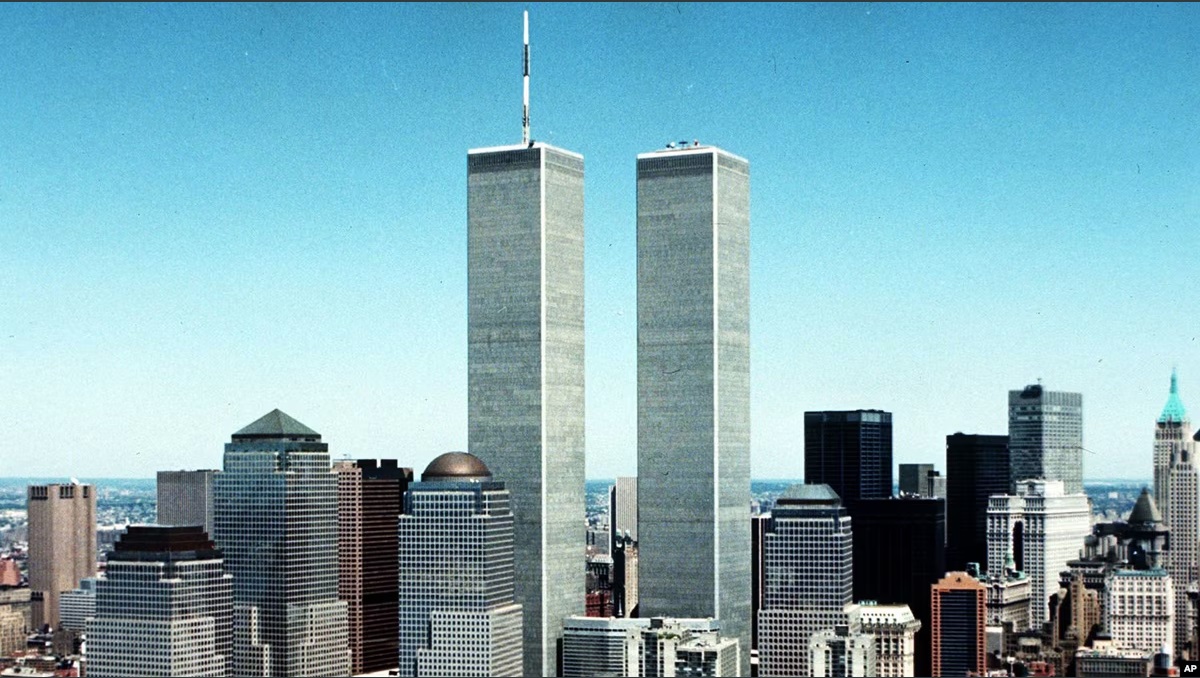
The night before 9/11, singer Sheila Jordan was staying at her daughter’s downtown apartment as her daughter was ill. “I could look out her living room window and see the towers. Every night and morning that I was there, I would say, ‘Good night twins’ and. ‘Good morning twins.’ I loved them. They were so beautiful.
“I stayed the night, and early in the morning I went down to the corner deli. As I was going out the door, some woman came running in yelling, ‘They have just bombed the twin towers.’ I thought she was nuts. I went back to Tracy’s, looked out the window, and said to Tracy, ‘Can you imagine …’ and, I saw the second building go down.
“I was in shock. I had gigs that I cancelled. I said, ‘I can’t do it. I don’t want to do it.’ Two friends of mine lived right at Battery Park and the ash and debris came flying into their apartment. They left immediately and never went back for anything except the piano. We got in touch, and I said, ‘Where are you staying?’ They said, ‘We are looking for a place.’ I said, ‘No you are not. Come to my apartment. You stay in the bedroom, and I’ll sleep on the couch.’ I put them up for about six months. I was grateful I could help somebody in need.”
Joel Forrester: “That day my wife Mary woke me and said, ‘Come to the roof.’ I went, and she showed me the large semicircular outline that had been made in one of the towers, and we got a radio report that one plane had crashed into it. And I assumed a plane had crashed into the World Trade Center as an accident that the worst had gone down and I said, ‘I will go to work.’

“My day job was playing for ballet classes in Queens. My F train got stuck underneath the East River. The motorman said, ‘I’m going to take you to the next stop and let you off because I don’t think there is going to be any train service for the next 24 hours.’ When we emerged, I found out what had happened and my heart yearned homeward, to see that Mary was okay.
“I spotted one of the bridges back to Manhattan and walked several miles to it and then walked across as teeming thousands were pouring across the bridge in the opposite direction. A woman who was going in my direction against the crowd was talking on her cell phone and in the crowd heading toward us was a woman also talking on her cell phone. The two crashed together and their cell phones went down. They began to duke it out with each other. I picked up and held the smaller of the two women, and a big guy picked up the large woman, and both of us guys said, in different ways, ‘We don‘t have time for this now,’ and then continued on our way.
“Later that day, I went downtown and tried to volunteer for the Red Cross. I was asked what I could do. I said, ‘Well, I play piano and write tunes.’ Apparently, they didn’t have use for people who could do those things. About a week later the place where my band had been playing at the time, which was right in the shadow of the World Trade Center, the club was allowed to reopen behind army lines as an R&R station for the rescue workers. When that happened, I was permitted to play for those people. I did that maybe four or five nights a week for about a month and a half.
“My mother was then 96 years old and still really quite bright. As she put it, ‘You didn’t exactly cover yourself in glory. When danger struck New York, you immediately headed in the opposite direction.”’
Ted Nash: “The day before, the Jazz at Lincoln Center Orchestra flew from New York to Los Angeles to do a residency with the Los Angeles Philharmonic. We all woke up to the news and everything got really crazy with security at the places we were playing. The piece we were there to perform was an extended work by Wynton called All Rise that involves a choir. One group of singers was scheduled to be on one of the flights that went down. They had changed their flight to come out a day earlier. They were a religious group, and I remember how they felt it was God intervening or something. It was pretty amazing and the piece All Rise took on a whole different meaning for us – rise up and be strong.
“All the planes were down after that and we couldn’t fly to our next destination which was Seattle. We finished the recording session, went to the hotel, got all our things and got into the bus. Evan Wilson, the principal violist in the Los Angeles Philharmonic met us with blankets and pillows. He knew we had a 20-plus hour ride and went and bought all this stuff to make our ride more comfortable. This was the kind of togetherness the tragedy created.
We got to Seattle just a little after 8:00 P M, when our concert was supposed to start. We threw our clothes on as we were pulling in. Wynton said, ‘Whoever is ready, just get out on stage and start playing.’ The audience had been waiting patiently. We came out one at a time and started playing small band things. Finally, everybody was suited up and we played “The Star-Spangled Banner,” and we all started crying. The audience stood up. It was pretty amazing.”
Ken Peplowski remembered flying out of LaGuardia on the first weekend that flying resumed. “The airport was so eerily quiet and almost empty. Everybody was spooked getting on the plane, and I sat next to a Middle-Eastern guy. The plane took off and he pulled out his cell phone. All heads turned, and we all called for the stewardess and the air marshal. Every plane at the time had one. They just surrounded this guy, but he was just an idiot who didn’t know he shouldn’t use his cell phone.”

John Pizzarelli’s best memory involved a bar called The Victory Café. “It was owned by a former firefighter who lost two of his nephews from our local fire department. Martin and I drove to St. Louis the following Thursday; I don’t think the planes were going yet. Somewhere along the way, I remember calling my wife Jessica and saying, ‘We’ve got to do something for Ronnie at the Victory and for our 85th Street fire department.’ She thought a good way to help out our friends would be to gather them at the bar and try to raise money for our fire department. She did a lot of the leg work with people from the Victory.
“I was supposed to do a gig at the Rainbow Room with George Shearing for a decent amount of money, and I said, ‘Well, just so you know, I’m going to take the money and we’re going to rent a PA, and we’re going to have this sort of block party for our fire department.’ 90th is between 3rd and Lexington and they were still going to have traffic running. I said to Ronnie, ‘You know, a fire truck could break down right at 90th and Lexington and nobody could get down the street.’ He said, ‘That’s not a bad idea,’ but then the cops said, ‘We are closing the street, don’t worry about it.’
“My trio – Ray Kennedy on piano, Martin Pizzarelli on Bass and my dad, Bucky Pizzarelli on guitar, pitched in and played. We put the band on the corner, and everybody got together. They had people all up and down the street, drinking and having, like, an Irish wake. The Victory provided some food and all the beer, but you had to pay to get in.
“We had an auction. I had called the husband of the lady who ran the Regency because he is the head security guy for the Yankees. He said, ‘I got an autographed ball and you can auction that off and Roger Clemens is going to come.’ So, Roger Clemens showed up, and it was like Babe Ruth showing up. He was fantastic. He stayed for a couple of hours.
“When we auctioned that ball, I won it and gave it to my son. Then Roger auctioned off the jacket he wore the night the Yankees came back. It was as beautiful an evening as you could have and Ronnie took $85,000 in a brown paper bag to our fire department. So out of that horrific scene was this coming together of all these beautiful people; that was really amazing.
“I remember thinking after it all happened, ‘I’ve got to make a record with George Shearing. Is there really a reason to keep singing these songs?’ When we went into the studio on October 12th, I realized why we were doing it. We were singing “September in the Rain,” “Lost April” and “The Lady’s in Love with You” with one of the verses: “If you’ve been traveling by plane and she says please take the train;” and here’s George Shearing still continuing to play. It was rather reaffirming.
“That December I played ‘Have Yourself a Merry Little Christmas’ with James Taylor on the Today Show. They talked about how that Christmas was going to be different from everything. There was so much emotion in all those following months artistically that was really amazing.”
Bill Charlap recalled that, “My daughter Vivi at that time was very young. She was in a sort of knapsack that goes on your front with your child. I remember walking from my home and all of a sudden sitting down by the curb. I was reduced to a puddle of tears just by the gravity of what had happened and having her physically so close to my heart.
“A year later, I was at the Village Vanguard with my trio, and it was September 11th. I started the set with ‘Manhattan’ and played it solo, just the melody. Stopped. Then we played ‘Autumn in New York.’ There was no applause. It was quiet. Everybody in the room felt that together. Sometimes we find God in those moments, and we see how beautiful what the best we can be is. That is all over American music for all of the obvious reasons.”
Catherine Russell was teaching on Mondays at Berklee College of Music in Boston. “I would take the train or fly up on the 6:00 or 6:30 shuttle Sunday night. Before 9/11 you could get to the airport at 6:25 with no ticket and get on a 6:30 airplane. I was on my way back to New York that morning on an Amtrak train. All of a sudden, the conductor was going through the cars saying, ‘Something happened in New York at the World Trade Center.’
“We got to New Haven, and the conductor said, ‘Everybody off the train. The train is stopping here. Everybody has to get off the platform and go down into the station.’ Still, we didn’t know what was happening. We go into the station. There was a little television monitor, and a hundred people crowded around as they showed the footage of the planes striking the towers. There was mayhem and confusion in the station.
“Then there was one muffled announcement, ‘There is going to be one Greyhound bus going back to Boston.’ I got on the bus, and then we found out that everything had been shut down, and the towers collapsed. It took six hours to get back to Boston. I called my mother and said, ‘I’m fine I wasn’t on a plane.’ My mother was terrified because previously I had taken that very same flight that the hijackers had used. I might have been on that flight.
“Then I was stuck in the Boston area for a week. I finally got to New York, which looked like Night of the Living Dead. I live about 40 minutes walk from Ground Zero. It smelled horrible with photos all over the place. People were walking like they were in a trance. Everything stopped. There was no work. You couldn’t fly anywhere. No one was going to shows. I did have a few shows with other artists in the Northeast where ten people would show up but not on my own. It was really, really bad. I ended up taking a second day of teaching at Berklee and I had some session work, and that was about it.
“That was the end of an era and a new beginning for a lot of things. In 2000, there was a six-month union strike, which put a big hole in the jingle business; then 9/11 was the death of a lot of that. A lot of jingle studios went out of business. It ended a lot of work for people. The advertising business was struck very hard by those two things.”
Scott Robinson had to get up early that day, “because I had a record date with Jimmy McGriff at Rudy Van Gelder’s studio. It was a big day for me. The radio came on, and instead of music I heard a lot of talk about the World Trade Center. I was confused. Then Sharon, my girlfriend, who is now my wife, called and filled me in about what was going on. I lived in New Jersey, right along the Hudson River. I walked to the boulevard and the beautiful panorama of the New York City skyline, and there I could see the giant cloud. My record date was cancelled.
“I had a gig the next night at The Cajun, on 8th Ave. around 16th street, where I used to play quite a lot with Eddy Davis, the banjo player. He had a wonderful little band there for years. Sharon had driven up, and I said, ‘I’m going to do that gig.’ It was just a little gig, but I wanted to do it if we possibly could.
“We managed to get into town. The smell in the air was something I had never experienced before. You could smell the dust and the smoke and the burning and the death just hanging over the entire city for quite a few days. It was very thick and very unnerving.
“We went to the club and there were just a few people there, tourists from out of town who had just gotten stuck with the whole situation. They were kind of shell-shocked and wandered into The Cajun because it was open and a lot of other things were not.
“We got on the stage with this awkward strange feeling and looked at each other. I don’t remember what we played…but the moment my horn filled with music; my eyes filled with tears. I just lost it. The music just took over and said, ‘Let me handle this.’ The music somehow knows what the situation calls for.

“Something just came alive the instant we started playing and everybody was swept up in it. I’d been asking myself all night, ‘Why are we jumping through all these hoops just to get here for this little gig?’ But the music just took us by the hand, and I immediately knew why I was there and how important it was. We just played our hearts out all night long. It was a night where you remember how powerful this music is.
“It was a very moving experience; you remember why there is such a long history of music cutting through these kinds of experiences, wars and all the horrors that we visit on each other all over the world.”
Every week, Les Paul had a Monday night gig in New York that was always packed. Then, Frank Vignola was part of Paul’s band. 9/11 was on a Tuesday, and Vignola remembered going in the next Monday. “The city was eerily empty and with that smell of the burning. There were, like, eleven people in the club. Les still said, ‘We are going to do this every week. We are going to have to take a pay cut because, obviously, no one is coming, but we need to be there giving the music to the people.’
“The music prevailed in Les’ mind. He could have easily said, ‘Ah, let’s take a few months off.’ No. Let’s play the music. People need to hear the music and we need to keep people’s spirits up. That was what he said and I thought that was brilliant. Within a couple of months, it was back to a full house, but we never got the raise back. That wasn’t Les’ fault. That is a club owner for you.”
Over the years, one fan had approachVignola and said, “‘Hey Frank Vignola, I’m Frank Vignola.’ He was a fireman with the exact same name. For days after the tragedy the guitarist’s phone would ring, “I would pick it up and someone would say, ‘Are you Frank Vignola?’ I would say, ‘Yes.’ Then they would hang up. I was thinking, ‘Why are people doing that?’ Then as the victim’s names started to be published, I saw ‘Frank J. Vignola’.”
Rufus Reid recalled that“my brother’s wife called and said to turn the TV on, because we don’t tend to watch it during the day. Then the phone rang again, and it was Julie, a friend of ours from England. She said a friend’s daughter and her boyfriend were coming to New York from Rhode Island on the 11th. They were going to spend a couple of days and then fly back to London. They were going to one of those youth hostels when the bus driver just freaked out and told everybody to get off the bus and just left them.
“These kids were like deer in the headlights. They called their folks and their folks freaked out. So, Julie asked, ‘Could you go in and get these kids?’ We didn’t know who these kids were, but we were lucky. The girl called us because they were afraid and didn’t know anything. My wife said, ‘I’ll meet you on this corner, I’m driving this kind of car.’ They hadn’t closed the George Washington Bridge yet. I stayed home because we didn’t have cell phones at that time.
“We were lucky. We were able to get them and she got home and within hours the bridge closed and nobody went in or out for a couple of days.
“They stayed with us for a week and it was great. They were kids in their twenties, here to have a good time, and all hell broke loose. The daughter was a delightful young lady. Our son was just a couple years older, and we were saying, ‘If anything happens like this to him, we hope someone will do the same.’ We have become close with the mother and father. We finally got to meet them a couple of years later when we went to England.
“It was one of those circumstances that everybody wanted to help but you would get in the way if you didn’t know what you were doing. So, we felt we contributed in some kind of way by giving them a place of refuge and consequently we gained some great friendships as well.”
Russ Kassoff recalled that “September 9th was a Sunday, and the end of the first week of a two-week engagement that I had at Joe’s Pub with Ute Lemper. That afternoon, I was a member of an orchestra since I was a Broadway guy and was actually subbing or playing the cast rehearsals for about 12 shows on Broadway.
“Every year they have this concert called ‘Broadway on Broadway’ with a full orchestra made up of musicians and the actual casts for all different shows performing free for the public right on Times Square. The concert lasted a couple of hours and in the middle of all that I’m right next to mayor Rudy Guiliani. We exchanged pleasantries and it was a great concert. For me, that was the start of the weekend.
“After the attack, nobody could drive south of 14th Street. The subways or the buses weren’t going down there until three days later. They decided to open up south of 14th Street, and we could do our show. We did and the place was packed. It was something that needed to be done. People had to find a way to return to normalcy. We could smell death in the air. The buildings were smoldering for months, and we were only about a mile away.
“It was horrible to be outside, doing the show so people could get their minds off that for a while, but we did it. It was really tough but part of the healing process.
“The same thing happened with Broadway. Broadway was shut down for quite some time and people, especially tourists from Europe, were reluctant to go to shows. So, they cut the prices in half and gave everybody that worked on Broadway a 25% cut in salaries with the promise that if business returned by a certain time, we’d get reimbursed. It did, and we did. All of the 12 Broadway shows I was playing on closed by the end of that year. I had no more appearances on Broadway for several years after that.”
Ronny Whyte was in Our Sinatra at the time. “It was really what closed the show. When it happened, we couldn’t even get into town to do the show. The city just shut down, and we were off for three or four days. Then business was really slow. The tourists weren’t coming. One Sunday afternoon, we did the show for two people and only one spoke English.”
Maria Schneider was in New York during 9/11. “I didn’t feel like making music. I had to do a concert in Ireland maybe 10 days after that. It was too early. I didn’t play a note of music, except for conducting that one concert, for a couple of months. Everything felt so insignificant compared to that event. I felt like music was trivial for a good long time.
“Then I started to realize that music was one of the most important things because it was expressing beauty and love, and unites us all and heals us. It came around to feeling very significant, but I was very raw for a long time after that. Sometimes people come up after a concert or after hearing a CD and say the most powerful and moving things and you realize that music really does touch people. Then it feels like such a privilege to be a musician.”
Dena DeRose: “I lived in Long Island City, Queens, and I woke up to my mother’s phone call. She screamed, ‘Oh my God, a plane went into the World Trade Center.’ We went up to the roof, and we watched the second plane go in. It was literally right across the water.
“I was doing a show at the Algonquin, and of course, they held it off. Friday, they called and said, ‘Let’s do a show on Saturday.’ We did, and it sold out. Everybody in the room, at many points during the show, was literally in tears, or laughing. It was the most emotional show I’ve ever done. People needed the release. It was really quite special.”
Matt Wilson: “My boys were born in April, 2001, and this was in September, obviously. I wasn’t touring. There is a spot on a hill in Oceanside where I brought my daughter. She was a little over three, and we could see the smoke. It was powerful.
“I was doing a six-week gig at the Algonquin Hotel with Dena DeRose. It happened on Tuesday, so we only played one night that week. I took the train into the city, and it was silent all the way, completely reverent. We got out, and I walked from Penn Station to the Algonquin. The streets were deserted. I had never experienced that. The posters of missing folks, and the smell coming from downtown were powerful. Later, maybe late October or early November, we played a gig on Leonard Street and you could see the lights at Ground Zero and it still smelled. It was really bizarre.”
Sharel Cassity: “I had a waitress job at the T. G. I. Fridays in Times Square, and had arrived at work at 9 AM after a late gig. We saw the first tower with a plane in it on TV, and thought it was a joke. When the second plane hit, everyone was fleeing uptown. The subway had been shut down, and the buses were so full that people were hanging onto open doors. I walked more than 180 blocks to get home that day with no cell reception.
“It was pretty grim in the days after. You couldn’t go below 14th Street, and the jazz clubs were closed. People weren’t going into the restaurants, and in essence, I didn’t have a job because the $3.00 an hour at T. G. I Fridays didn’t pay my rent without tips. I will never forget the smell that hung in the air. It was chilling.”
Tia Fuller: “I had just moved, at the time I was sleeping on my roommate’s mattress, because I didn’t have any of my stuff. My roommate actually worked in lower Manhattan. I called to make sure she was okay. I spoke to my parents and sister to let them know that I was okay. Then I spoke to Javon Jackson, who is like a big brother. I ended up going to his and his wife’s house and stayed there for a couple of days because I needed to be around some semblance of family. I was thankful to have people who were extremely supportive.
“I remember Union Square was a gathering place for people. I guess someone put some objects in the middle of the plaza, melted candles, pictures of people who were missing, and stuff. People just kept adding to it, and it became this incredibly large mandala, full of melted candles of different colors, messages that people wrote. I had a keychain with a tiny globe of the Earth on the end of it. I put that in there. Then the city came after a couple of weeks and took everything away.”
Sachal Vasandani: “I had been in New York for a year. I had a banking job, and felt the need to get on with what I knew was my purpose being in New York and on this earth. I had quit the job, and was getting my bearings as a musician and living that dream for real. I did what I could to help with the Red Cross. When I think of the people who were really doing it, the First Responders, then I didn’t do anything. I tried to see if I could get down to help, but they wouldn’t allow it unless you were a trained professional. So, we helped make sandwiches for the First Responders. It wasn’t anything special. I just did what everybody else in New York felt like doing.”
Steve Wilson: “I was living on 186th street, and I got up around 9:00 AM. The first thing I did was turn on the news, because I’m a news junkie. I just sat thinking, “What is going on? Are we in Armageddon?” I decided to give blood at St. Vincent Hospital. I got there and they weren’t taking any blood, because there weren’t any victims coming in. There was no traffic, except for emergency vehicles. I saw people still walking from the downtown Wall Street area covered in dust. All I could think was, ‘This isn’t real. It isn’t real.’
“I didn’t touch my horn for two weeks because it felt so inappropriate and insignificant. I know others felt compelled to play to put some beauty back into the world, but the grieving and the reality hit me so hard. New York just shut down. We are accustomed to New Yorkers walking around with this energy and urgency. I remember New York just being very quiet and people slowing down like some zombie world.”
Jay Leonhart: “I was walking around New York in the days immediately afterwards, and I heard two black kids riding by on bicycles. I don’t remember what they said, but it was very subtle, and I thought, ‘That is exactly what I was thinking.’ I realized how much we are all alike. Everybody was reacting the same regardless of what their position in life was. They all felt so much the same: in a state of shock, a state of wonder, sadness, disorientation, and ‘They did what to us?’
“We share so much and the little bit of difference we make so much of. We are all really part of the same thing. We find religious differences, philosophical differences, any way we can to deny it – and let’s have a war.”
Tomoko Ohno was sleeping at her home in New Jersey, but awoke to find messages of concern from friends worldwide. Oddly, her husband, Allen Farnham, was on tour in Japan. Naturally, he tried to return home only to learn that all flights were grounded. For three days he kept going to the airport trying to get home. Local Japanese reporters were there interviewing any American they could. One asked if he was American. “My husband said, ‘Yes, and you can speak to me in Japanese.’ Immediately, all the TV and newspaper people surrounded him. Then I received more calls from friends in Japan saying, ‘I saw your husband on the TV news.’ or ‘He is in several newspaper interviews.’
On the third day, Air Nippon Airlines flew into Kennedy airport. I don’t know what they were thinking, because they used an airplane painted with Pokémon, the Japanese cartoon character. It was very strange to see that at the airport with the tightest security. I picked him up, but it was very uncomfortable around that area, so I drove as fast as possible back to New Jersey.”
Noriko Ueda was asleep at home in Brooklyn when her mother in Japan called to tell her to watch TV “because something was going on. I didn’t understand that the first tower was already down. I looked at the window, and I saw the smoke from the World Trade Center; then the second building just collapsed. That was really shocking,
“That morning a friend of mine went to a real estate agent to rent a place and live in New York. Right after she signed, 9/11 happened. She cancelled it right away, and went back to Japan. I didn’t think about leaving at all. It was an interesting time after that. Everyone was so friendly. I often passed by the fire station near Houston Street, and most of the firemen there were killed. I didn’t have any close friends there, but I felt so bad for them. Such painful memories…”
David Demsey: “The late, great saxophonist Michael Brecker had a gig at the Iridium in New York City that was supposed to open on 9/11. Of course, that got cancelled, but when it got to be the weekend, he made the decision to finish out the engagement, and donate all the proceeds to the Red Cross. I went, and the roads were completely empty all the way into the city.
“I remember between sets, standing on the yellow line in the middle of Broadway talking to Michael’s manager. We could still smell the jet fuel four days later. There were maybe five or six people in the audience. Michael said, on stage, ‘We had to do this because this is New York. We play jazz music here. No matter how many they killed, they haven’t won unless we stop doing this.’”