Hal Smith: Hello to our readers! Thank you for your interest in the music of great American composer Fred Rose. Jeff Barnhart and I have one more article to share with you where we will talk about more of Mr. Rose’s jazziest compositions.
Jeff, let’s begin with “Deep Henderson,” which is probably the most familiar to readers of The Syncopated Times.
Jeff Barnhart: Hal, I know we’re not dwelling on more modern groups playing these Fred Rose pieces, but I’d like to briefly mention that I first encountered this song when I heard the Buck Creek Jazz Band play it live at the Great Connecticut Traditional Jazz Festival in the early 1990’s and have loved it ever since, so this is about to be a real treat experiencing the tune from groups “of the day!” Where should we start?
HS: My initial exposure to the song was a 1966 recording by a classic jazz band from Germany called the Barrelhouse Jazz Band. I was really knocked out by Horst Dubuque’s Oliver-style cornet, Reimer Von Essen’s Johnny Dodds-inspired clarinet and Frank Selten’s hot alto sax.
Next I heard King Oliver’s record, from 1926. Oliver’s cornet playing is out of this world!

The Coon-Sanders Original Nighthawk Orchestra offers quite a contrast. The tempo is brighter, the feel is different and co-leader Joe Sanders’ great piano playing is featured. As we mentioned previously, Coon and Sanders sometimes traded arrangements with Doc Cook. Imagine the cornet solo played by Freddie Keppard!
Jeff, what catches your ear on these first three records?
JB: It’s cool how you first heard it from a band thousands of miles away in the late 1960s! Not bad for a tune written in 1926!
I remember in College trying to purchase the Barrelhouse Jazz Band recordings but never being able to find them out in the sticks of Connecticut. I’d forgotten about them and just LOVE their style! Yes, it’s a sound that has only been created in European countries—I can’t adequately describe it: the swing just sounds slightly more rigid, and the reeds have a different attack (and tuning)—but that doesn’t detract from the exciting playing AND the bespoke arrangement found on this interpretation of “Deep Henderson.” What a delight to hear two reeds mixing it up and also the hot cornet work!
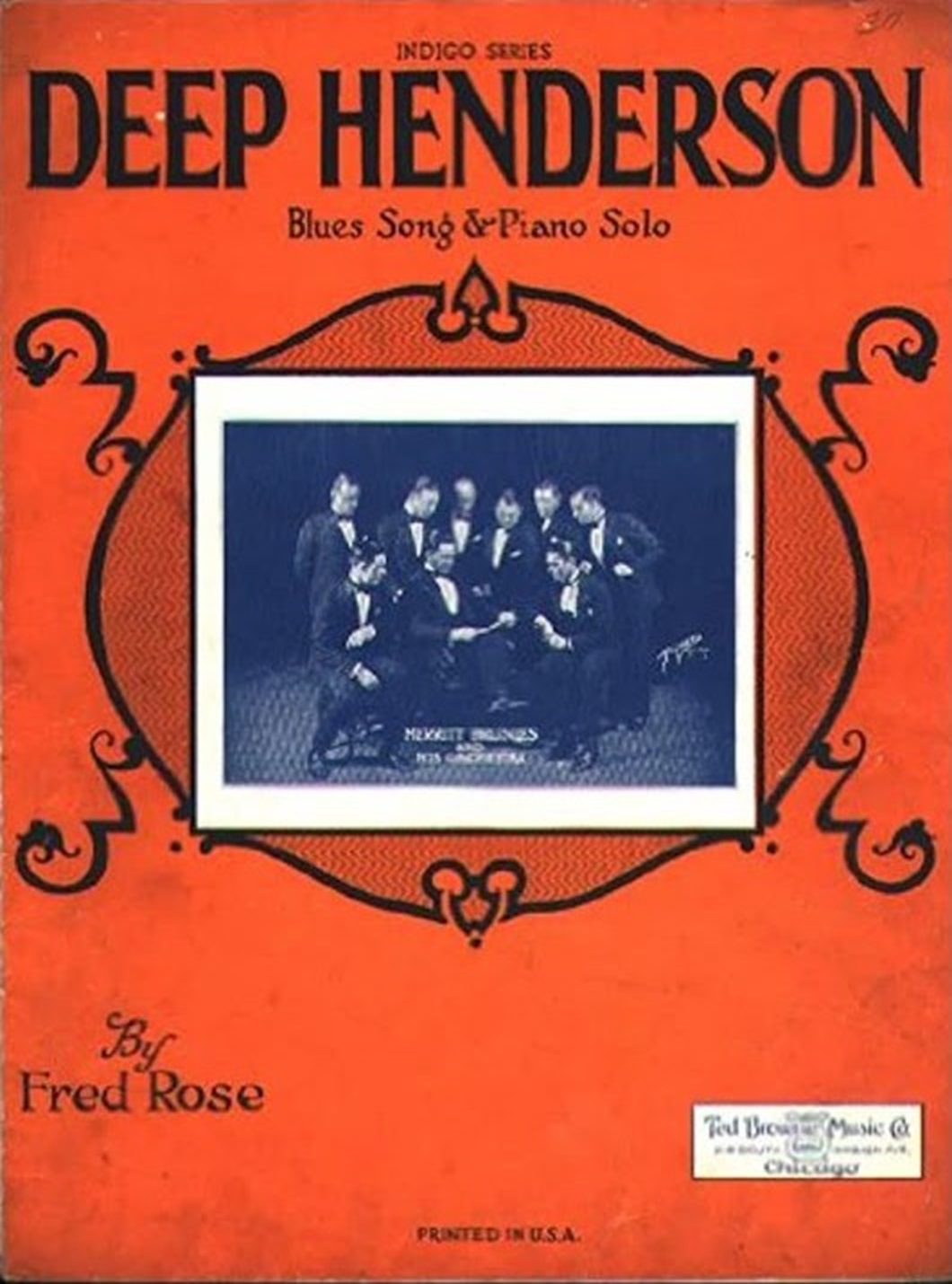 It would be illustrative to describe the form of “Deep Henderson” for any readers who will also click the available links and become listeners! I’m using the Oliver recording to do that. The tune starts off in the key of F. The eight bar intro alternates the first two bars of the first melody with rhythmic hits from the brass and rhythm. The first theme is 32-bars long in AABA form and the first six bars are heard on the low register quasi-slap tongue tenor sax playing of Barney Bigard, interrupted for two bars by the brass rhythm figure from the intro. The next eight are given once again to the tenor and this time Bigard’s allowed to finish the phrase. The bridge changes harmonic and melodic ideas and is a solo for one of my musical heroes, the great Luis Russell (someone else feels that way too, calling out “Awwww, play it, Mr. Russell!).
The final eight bars of the first strain return to the A theme and the ensemble plays it hot. Is it Albert Nicholas leading us into the next theme (B section) with some hot playing, accompanied by downward and upward figures from the horns?
HS: On Oliver’s record, it sounds to me like Paul Barbarin yelling during the piano solo and I think you’re right about Albert Nicholas being the clarinet soloist.
JB: Nice! We hear 16 bars of Nicholas and then the bridge—with the same harmonic changes as the bridge on section A—is assayed by a saxophone trio (quick switch for Nicholas to be sure!). The final eight are played by the King himself with the band returning to those accompanying phrases heard in the first half. So far this really isn’t a remarkable pice of music (though everyone is playing wonderfully!).

THEN…something happens! Perhaps Fred Rose became more inspired when writing this composition, because after a four bar interlude (for musicians, it takes us around the circle of Fifths—F7, Bb7, Eb7, Ab7—to the new key of Db), the trio section is a hot riff for clarinet trio with torrid countermelodies from Oliver, a great melodic phrase for Bert Cobb on tuba, and some choke cymbal accents by drummer Paul Barbarin on the final eight! The most interesting part of this 32-bar section is again the bridge with a wild chord progression (Db-Cb (or B)-Gb-A), but the riff keeps the whole thing chugging along! This tune and tempo must have filled the dance floor.
Incidentally, “Deep Henderson” was created solely by Fred Rose with no collaborator so he’s responsible for both the tune and the lyrics. Frankly they’re a bit odd to sing as there are so many notes but the sheet music (printed in Chicago by Ted Browne Music) labels this tune a “blues song” and includes a generous three-page hot piano solo including all three strains: Rose wrote lyrics only for the A and B themes. The piano solo contains each strain in the key of G. The Oliver arrangement lifts the nifty chromatic ascension to the repeat of the C strain from the sheet.
HS: Henderson, Kentucky, is right across the Ohio River from Evansville, Indiana—where Fred Rose was born. That city probably inspired the song title.

JB: The Coon-Sanders rendition is faster, and more dance-bandy than bluesy. I like it in a different way. The spritely nature brings images of college boys in raccoon coats and girls in flapper dresses rather than cellar jazz clubs. Hal, your first trio of versions is inspired, taking us all the way from Germany to Chicago! Where else can we go?
HS: Next, let’s hear a very hot recording of the song by Charlie Skeete & his Orchestra—also from 1926. The Edison discs allowed for longer playing time and this group made the most of it! Trumpeter Leonard Davis is outstanding here. His playing reminds me of Tommy Ladnier at his best. Gene Johnson plays a nice bass sax interlude and the Benford Brothers—Bill and Tommy—sound terrific in the rhythm section.
For contrast, listen to the Original Indiana Five’s version. I doubt that these musicians spent much time in Evansville, but they sure did know how to make this song sound great with just five pieces!
One more recording from 1926—by Chicago’s own Charley Straight and his Orchestra, with the leader on piano. (It is an added treat to hear so many different pianists soloing on these records)! The tempo is unusually bright and there are some neat variations in the standard routine; especially the ending, which really comes out of left field!
JB: Hal these are awesome. I was blown off my chair by the Charlie Skeete version, especially with the longer play time and the fact that Edison dipped his toe, however briefly, into hot jazz music by an African-American band! Whoa!! Too bad he didn’t stick his whole foot in.
You justifiably mention the work of Leonard Davis but I want to point out trombonist Jimmy Harrison’s fantastic work whether with mutes or open horn. HOT, HOT, HOT!! Such a groove on that final chorus!! The sound quality is marvelous as well.
The Original Indiana Five’s take on the tune is light and bouncy, with very nice interplay between the three horns, and solid piano by Harry Ford! When the band reaches the trio, clarinetist Nick Vitalo plays some enticing variations to the actual melody and is featured through the first chorus, the final ensemble loses a bit of steam during the bridge but the final eight bars will allow no-one to sit still! Hal, I know why you chose this side.Tom Morton, the drummer, is the leader!!
I love ANYTHING involving Charley Straight! The quick tempo allows for two times through the A strain, the bridge on both being the highlights for me. The first time through, Charlie takes the bridge with some fiendish novelty piano licks, so clean! The brass section fairly dances through the second bridge!
The phrasing is different than anything we’ve heard so far as well! HOT playing by cornet on the first time through B, with a spritely clarinet trio sailing through the bridge. Once we’ve arrived at the trio, it’s a clarinet trio holding sway the first time through with Joe Gish’s bouncing tuba featured on the bridge. Just as I was surprised by the creative additions to the standard intro, the surprise fake ending got me, as did the wild four-bar tag, found nowhere else. My very favorite thus far!!
HS: For the sake of our word count, why don’t we move ahead to some later recordings of “Deep Henderson”—like, for instance, Ralph Sutton’s, from 1950 with bassist Jack Lesberg and drummer George Wettling. This is a dreamy, Fats Waller-inspired interpretation, omitting the key change and the final “stomp” strain.
JB: Oh gee!! I’m afraid Maestro Sutton has unseated Mr. Straight as providing my favorite version of “Deep Henderson.” Simply GORGEOUS!! I hear Fats in here as well, but there is so much on this side that could only be Ralph. Thank you for sharing this, Hal. It’s just beautiful. To our loyal readers, if you skip this one, you’ll be missing out on something that just changed my life for the better.
HS: Bob Scobey recorded a similar version with Ralph (and Bob Short and Fred Higuera) for Verve in 1956. This is one of my favorites.
JB: I hear that Scobey retained that laconic, lazy tempo we just heard on Ralph’s version, especially compared to the other earlier versions we’ve listened to. Hal, we’ve covered some sides by this quartet in our exposé on Clancy Hayes, and I marvel at how this group defies category. While Short’s tuba suggests trad jazz, Scobey’s phrasing, Sutton’s figures, and Higuera’s fill-ins place this album squarely in the mainstream jazz mode. While both Sutton and Higuera could fit into most any musical situation, it’s EAR-opening to hear Scobey: it’s hard to believe this is the same guy who played second trumpet to Lu Watters in the Yerba Buena Jazz Band! I notice this was released by Verve in 1957; by then Verve was releasing bunches of mainstream jazz by world-renowned artists.
And BTW, the album lists Clancy as being on “Deep Henderson” although I can’t hear him.
HS: For something completely different, here is a New Orleans Revival-style record of the song from 1966, with Charlie Devore on cornet, Butch Thompson on clarinet and Mike Polad on banjo really stomping it down: LINK
JB: Great stuff! I had the chance to play with Butch Thompson and Charlie Devore in 1999 in Minneapolis for the wedding celebration of the recently deceased Mike Schwimmer and his wife Kate and marveled at Devore’s chops and ideas then. Hearing him here in his prime is wonderful, which is no surprise when he studied with both Manuel Manetta and Thomas “Kid” Valentine! I’ve known Mike Poland as a ragtime pianist, so this was interesting to hear him on another instrument. And Butch Thompson was such a soulful, fluid player on what people viewed as his second instrument. Devore gives us some searing, growling mute work on the final chorus. The dynamics are superb as well!! his might be another album to dissect one day.
HS: I would be happy to discuss the Hall Brothers, if we can find enough of their recordings that are available online.
Terry Waldo’s Gutbucket Syncopators also recorded “Deep Henderson” in 1970. I love Roy Tate’s unchained trumpet playing, Frank Powers’ references to Pee Wee Russell, Tom Hyer’s great drumming and that weird and wonderful modulation to the last strain! (“Deep Henderson” starts at 32:50 on the YouTube video). Incidentally, the first LP track is Fred Rose’s “Here Comes The Hot Tamale Man.”
JB: OK, now we’re in some great territory for me. Since I was about 16, the Gutbucket Syncopators have been MY quintessential revivalist band. The tempos, the grooves, the arrangements; I’ll always love this group above all others. So imagine my surprise when you introduce me to an earlier version of the band than I’ve hitherto been familiar with. First of all, YOU’RE not on drums!! WHAT?? And the only survivors from the band presented here and the one I grew up loving are Terry Waldo (no surprise as the leader), Frank Powers, and Roy Tate. I LOVE this, and not to take anything from their rendition of “Deep Henderson,” but the entire album is a revelation to me. I’ll be spending a long time with this recording!
OK, you magician, NOW where do we go?
HS: Our publisher Andy Senior mentioned the 1920s recordings featuring “Freddie” Rose singing and accompanying himself on piano. Four of the titles posted on YouTube are “So Tired,” “Honest And Truly,” “Highways Are Happy Ways When They Lead To Home” and “Somebody And Me!”—all recorded in 1927. Mr. Rose had a marvelous voice and he was a crackerjack pianist!
JB: His piano playing is relaxed, full, and quite hot! What a high singing Fred Rose had! It was a style of the time (think Cliff Edwards and others). This is a marvelous tune, Hal. It’s surprising it didn’t get picked up by musicians of the era, and a pity it’s been lost until now. Before I listen to the other sides, I’ll point out what a natural musician Rose seemed to be. So many pianists who accompany themselves when singing resort to a simplistic “boom-chick” backing during the vocal, reserving their interesting playing for the instrumental interludes. Not so Mr. Rose! His piano is so orchestral if he were recording these sides today he’d be accused of overdubbing!
The verse on “Honest and Truly” for me foreshadows the country tunes Rose would write some years later. The harmonic changes on the second half of the chorus are marvelous. I can hear an outfit like the Halfway House Orchestra strutting on this one, or perhaps Bix and his Gang. To me, the melodies and harmonies of this era would never again be matched so beautifully. Oh, and Rose’s instrumental interlude is sophisticatedly hot!
Each of these tunes offers us a snappy verse! Rose takes “Highways are Happy Ways” at a brisker tempo than the previous two. He repeats the formula of a short intro, sung verse and chorus instrumental chorus and then a final vocal chorus out, so this one comes in at 2:38. Too bad he didn’t break out and give us a second time through the tune on piano.
On the verse to “Somebody and Me!” Rose sings a handful of notes way down in the male tenor range! As far as the tune itself, this is an expectedly solid composition with some nice harmonic twists in the second half of the chorus. Incidentally, one of the images from this video is an ad declaring that Freddie Rose will “torment the piano into talking turkey!” OK, then!
Hal, I know we’re concentrating on Fred Rose the composer, but I thought it would be illustrative to include a well-known song he DIDN’T write to fully appreciate his way of delivering a tune. I chose “My Melancholy Baby” from the same year as the tunes you shared. In fact it’s the A side of Brunswick 3768—“Honest and Truly” being the B side. He must’ve timed his rendition before recording as he only takes the second half of the chorus as his piano solo in between vocals. What stood out to me is that Rose was much freer on the repeat vocal on this side than he was with his own compositions. He really gets down and sings hot during the final 8 bars!
What do you get from this track, Hal, and where shall we go next?
HS: He could definitely have built a career as a vocalist, but I’m thankful that he kept writing great songs!
Back to the “hot” numbers…Clarence Williams recorded a Fred Rose composition, with a vocal by Margaret Johnson, way back in 1924. I don’t think this was as popular as other Rose songs, but at least this gives us a chance to hear some early Sidney Bechet!
JB: It’s a pity “If I Let You Get Away With It Once, You’ll Do It All Of The Time” wasn’t a hit. Besides the big vibrato of Bechet, we have some nice interplay between the horns during the instrumental chorus, but for me Rose composed a very pretty verse and chorus with some poignant chord changes: a step up form the usual “double entendre” tunes of the day.
HS: In 1926, Rose penned “Say, Mister—Have You Met Rosie’s Sister?” Of all the recordings I have heard, Harry Reser’s “sock-time” version is my favorite (even with the hokum). The banjo playing on that last chorus is something else!
JB: The arrangement here is hot! The period-style vocal isn’t enough to dampen the cleverness of the lyrics and the tune itself is nice and flowing. Enduring the (anachronistically of course) Spike Jones-like chorus is rewarded with a terrific outchorus and Reser’s banjo playing on the bridge leaving no question that banjos were the punk-rock instruments of the day! I listened to a few more sides by this group and at this point just want to strangle the vocalist, but everything else if spot-on!
HS: “Black Maria” was recorded by Fletcher Henderson in 1927, then in 1940 by Fats Waller. Henderson’s reed section must have almost hyperventilated, but Coleman Hawkins charges triumphantly through all that busy writing! Waller’s version sounds like a different song, but has some nice low-register clarinet instead of the brash tenor sax heard on so many “Rhythm” records.
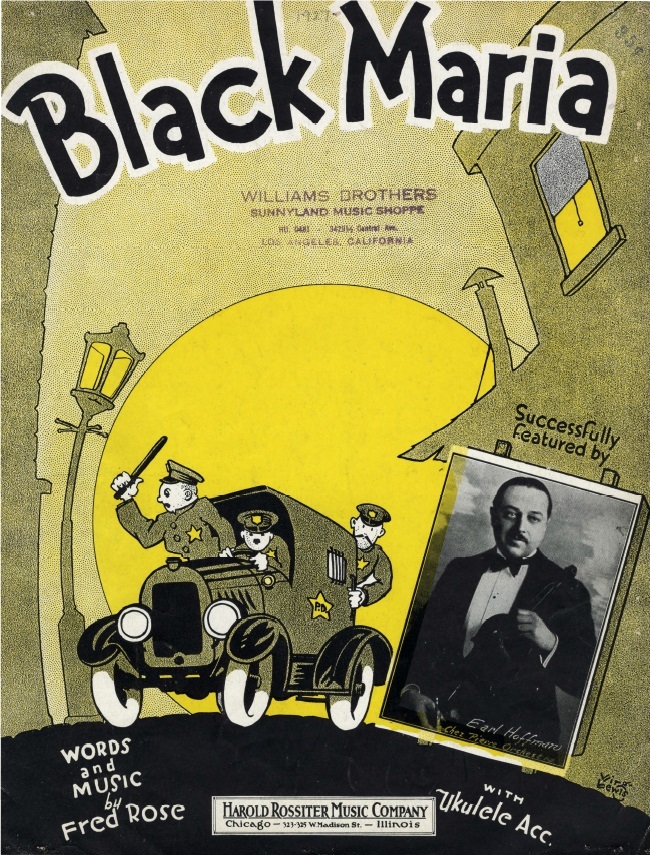 JB: “Black Maria” as assayed by Fletcher Henderson in 1927 is filled with precise playing at a very spritely tempo and hits all the 1920’s “hotcha” tropes as well as some much more forward-looking playing by Coleman Hawkins! Fred Rose’s very hot composition was also recorded stately fashion in 1928 by Carroll Dickerson’s Savoy Orchestra and then in 1930 by Bubber Miley and his Mileage Makers (at a very quick tempo and with a vocal!) While one section of “Black Maria” is just a re-do of “Tiger Rag,” the second section is unique to the jazz canon. Finally, Fats Waller’s recording with his Rhythm in 1940 brought Rose’s tune into the swing era. Waller starts with the trio, and then turns to a vocal where he shouts for a section with crashing cymbal work by “Slick” Jones and finally settles in on lyrics (his own by the sound of it) for that same section.
HS: The sheet music credits Fats Waller as arranger, and as written by Andy Razaf, J.C. Johnson and Fred Rose.
Two more Fred Rose compositions were recorded by Jimmie Noone in 1930: “Deep Trouble” and “El Rado Scuffle” (El Rado was a club in Chicago). You can definitely hear traces of more popular Rose numbers in both of them. Zinky Cohn plays a wonderful chorus on “El Rado,” trading phrases with tubist Lawson Buford and Noone really wails on the last chorus.
JB: Two of my favorite tunes when I first discovered Jimmie Noone’s Apex Club Orchestra were “Deep Trouble” and “El Rado Scuffle,” and it’s only today that I’m reminded Fred Rose wrote them! These are true jazz tunes, Hal. No way we could refer to them as “songs.” Having words on either would greatly diminish their impact. Of course, when your orchestra includes Zinky Cohn and Lawson Buford, how can you miss? ANOTHER hope: I’d love to have Jimmie Noone featured in our series!
HS: Mr. Rose really had a knack for turning out great tunes didn’t he, Jeff?
JB: He did indeed, my friend! Hal, we’ve (reluctantly on my part) reached the conclusion of our exploration of the multi-faceted work of the multi-talented Fred Rose, a musician whose legacy continues to live on every time someone covers one of his tunes in the jazz, Western swing, or country styles. His versatility places him on a rarified level in the history of American music!
HS: Now that you mentioned Western Swing, I think we should devote a future column to Fred Rose’s jazziest Western numbers. In the meantime, thanks to our readers and we will see you next month!
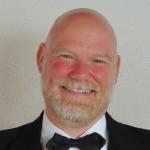
Jeff Barnhart is an internationally renowned pianist, vocalist, arranger, bandleader, recording artist, ASCAP composer, educator and entertainer. Visit him online atwww.jeffbarnhart.com. Email: Mysticrag@aol.com