Clarinetist Albert Nicholas and trumpeter Bill Coleman had compatible styles and were active during similar periods. But, other than a brief time when they were both members of the Luis Russell Orchestra, they seemed to have crossed paths only on surprisingly rare occasions. However, their careers had a few similarities. They were distinctive soloists who were overshadowed by others despite their talents, and they spent long periods living and performing in Europe where their timeless playing (considered by many in the jazz world to be out of date by the 1950s) was more appreciated than in the US.
Albert Nicholas was born in New Orleans on May 27, 1900. He began playing clarinet when he was ten and he took lessons as a teenager from Lorenzo Tio Jr. Nicholas was part of the early New Orleans jazz scene both before and after he served in the Merchant Marines (1916-19). He played with such notables as Buddy Petit, King Oliver, and Manuel Perez in addition to the Maple Leaf Band, Arnold DuPas’ Orchestra, and his own group which included pianist Luis Russell and Barney Bigard on tenor.

In May 1924, Nicholas traveled up North to Chicago to join King Oliver. After seven weeks, he was homesick and returned to New Orleans. However, after a few months back home, he rejoined the cornetist and was employed during the Dec. 1924-Aug. 1927 period as a regular member of Oliver’s Dixie Syncopators. Nicholas made his recording debut on one song (“New Orleans Goofer Dust Blues”) with singer Thelma La Vizzo in late 1924 and was featured in Nov. 1925 on a session by pianist Richard M. Jones’ Three Jazz Wizards, Even at that early stage, Nicholas had his own sound and was impressive both technically and as a soloist.
1926 found the clarinetist (who occasionally played alto and soprano) recording with the Chicago Hottentots, Luis Russell (who led a combo taken out of Oliver’s group), singers Ada Brown, Irene Scruggs and Wilmer Davis, and on five sessions by Oliver’s Dixie Syncopators. The latter dates included classic versions of “Too Bad,” “Snag It,” “Deep Henderson,” “Jackass Blues,” and “Sugar Foot Stomp.”
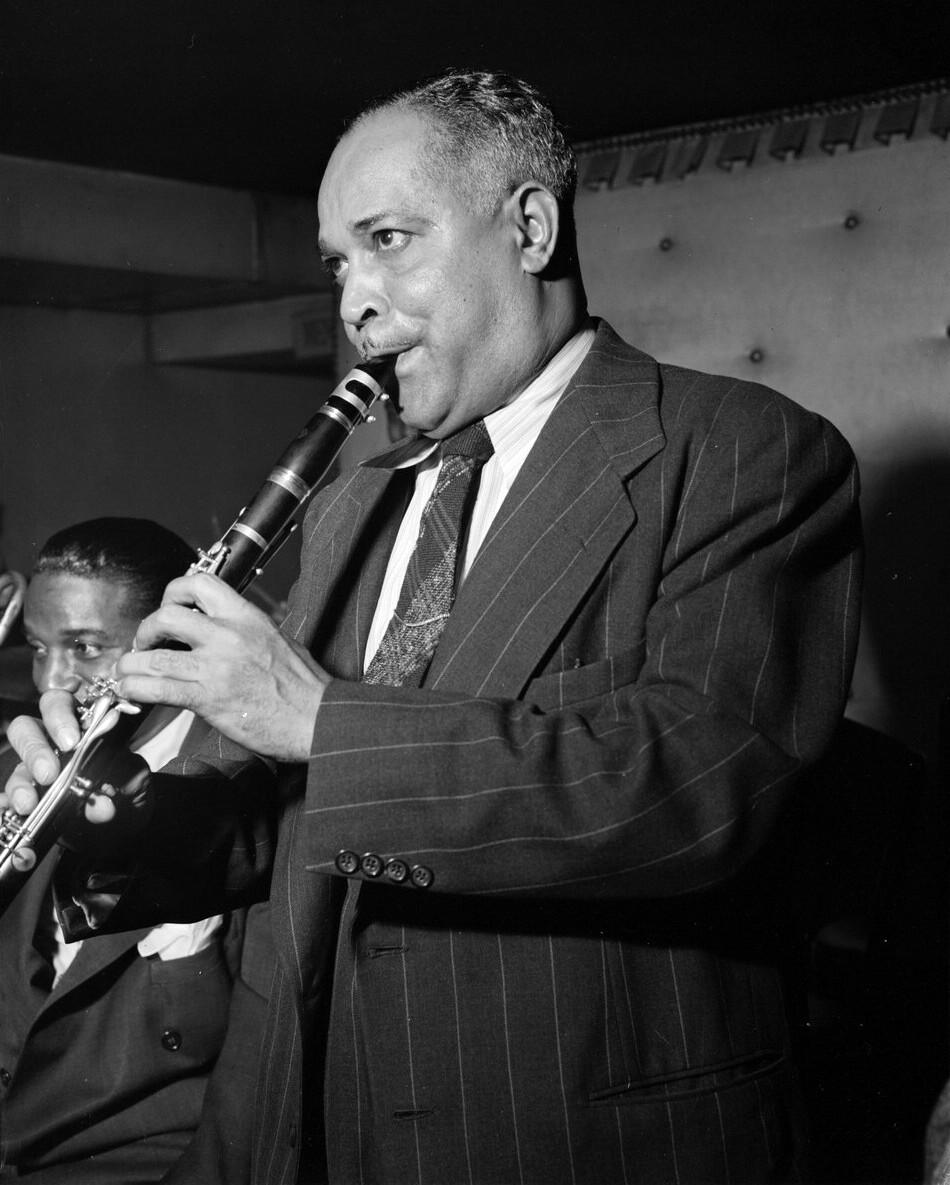 One would think with Albert Nicholas’ fine playing on the Oliver sides, he would be rated in the jazz history books as one of the top New Orleans clarinetists of the 1920s, alongside the big three (Sidney Bechet, Johnny Dodds, and Jimmie Noone), particularly when one considers that his recordings predated the more significant work of Dodds and Noone. But his lack of fame was partly the result of his decision to go overseas. Nicholas spent a year in Shanghai, China, with drummer Jack Carter’s group, played in Egypt with Guido Curti and Benedetti’s Six Crackerjacks, and also spent time gigging in Paris. None of those associations resulted in any recordings.

Nicholas returned to the US in Nov. 1928 and soon became a member of Luis Russell’s Orchestra, staying for five years. He was one of the band’s main soloists along with trumpeter Henry “Red” Allen, trombonist J.C. Higginbotham, and altoist Charlie Holmes. Nicholas returned to records on Mar. 5, 1929 after a nearly three-year absence when Louis Armstrong used some of Russell’s sidemen for his versions of “I Can’t Give You Anything But Love” and “Mahogany Hall Stomp.” In addition to the Russell recordings (which included “Jersey Lightning,” “Saratoga Shout” and “Panama”) , Nicholas participated on other sessions during this period led by Armstrong, Red Allen, Fats Waller, Jelly Roll Morton (“Low Gravy” and “Strokin’ Away”), and Clarence Williams.
Bill Coleman was born on Aug. 4, 1904, in Centreville, Kentucky. Considering that he would spend a lot of time in Paris, France, it is ironic that Centreville was a small town located near Paris, Kentucky. Coleman grew up in Cincinnati where he first played music on the clarinet and the C-melody sax. After hearing Louis Armstrong’s recording of “Money Blues” with the Fletcher Henderson Orchestra, Coleman switched permanently to trumpet when he was 22. He gained important early experience playing locally in an amateur band with J.C. Higginbotham and with professional bands led by Clarence Paige and Wesley Helvey. After joining a group co-led by Lloyd and Cecil Scott, in Dec. 1927, Coleman went with the group to New York City, working with the band until the summer of 1929.
The paths of Bill Coleman and Albert Nicholas crossed for a short period of time when the trumpeter joined the Luis Russell Orchestra. He made his recording debut with Russell on two sessions in Sept. 1929 (taking a solo on “Feelin’ The Spirit”) but was soon very frustrated. The flamboyant Henry “Red” Allen not only had nearly all of the trumpet solos with the band but also played lead. Coleman, with his relatively mellow tone and thoughtful style, felt underutilized and left within a couple of months, returning to the Scott Brothers group which had been renamed Cecil Scott’s Bright Boys. He was on a record date with the unit that resulted in happily eccentric versions of “In A Corner” and “Lawd, Lawd.”
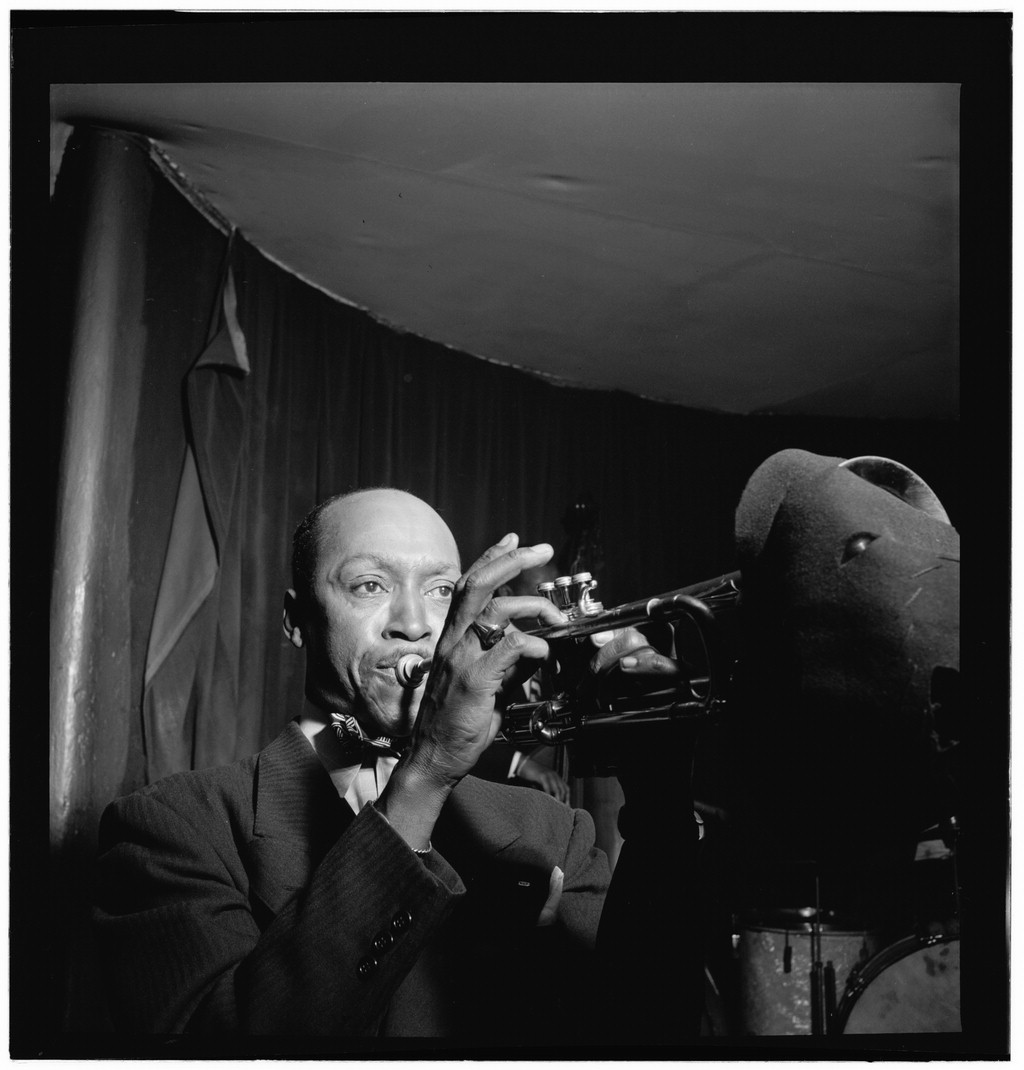 By the spring of 1930, Coleman was freelancing, working with Charlie Johnson, Bobby Neal, Johnny Monnegue, back with Luis Russell (1931-32), and Ralph Cooper’s Kongo Knights. He appeared on record dates with Don Redman and Billy Banks and visited Europe for the first time in 1933 with Lucky Millinder. Back in the United States, Coleman had stints with the big bands of Benny Carter and Teddy Hill and recorded with Fats Waller (including an early band version of “Honeysuckle Rose”).
In 1935, Coleman received an offer from Freddy “Snake Hips” Taylor to return to Europe. During the next five years, the trumpeter enjoyed being a big fish in a small pond and getting to travel extensively. He worked with Taylor, Willie Lewis, in Bombay with Leon Abbey, and in Egypt with the Harlem Rhythm Makers during 1938-40. While he had little chance of being noticed in the US when such trumpeters as Louis Armstrong (who was always his idol), Roy Eldridge, Henry “Red” Allen, Bunny Berigan, and Harry James were among the pacesetters, in Europe Coleman had little competition and he became a bit of a star.
During this period, he recorded with pianist Garnet Clark, a visiting Dicky Wells, tenor-saxophonist Alix Combelle, clarinetist Eddie Brunner, and on his own dates which included such notables as pianist Herman Chittison, guitarist Oscar Aleman, Django Reinhardt, and Stephane Grappelli. Only the outbreak of World War II. convinced Bill Coleman to return to New York.
Meanwhile, after leaving the Luis Russell Orchestra which was struggling, Albert Nicholas had unrecorded stints with Chick Webb, Sam Wooding, and John Kirby. Highly rated by his contemporaries, during 1934-37 he had opportunities to record with Alex Hill’s Hollywood Sepians, Red Allen, Freddy Jenkins’ Harlem Seven, the Little Ramblers, and Victoria Spivey. Nicholas next became a member of Louis Armstrong’s big band (which had a nucleus of Luis Russell’s group) during 1937-40, occasionally getting short solos on Armstrong’s records. He was also recruited by Jelly Roll Morton for his five band sessions of 1939-40.
When Louis Armstrong’s management decided to modernize his orchestra, Nicholas was replaced in 1940 and things got a bit tough for the veteran clarinetist. His style was considered out of date, the clarinet was identified in the public’s mind with Benny Goodman and Artie Shaw, and work became so scarce that in 1941 he took a job as a guard on the New York subway.

Fortunately, the Dixieland revival eventually brought Albert Nicholas back to music. By 1945 he was active again, working with New Orleans veterans and in some swing-oriented units. Starting in late 1945 and continuing through 1947, he appeared on many recordings including with Baby Dodds, Wild Bill Davison, Pete Johnson, Sidney Bechet, Kid Ory, Mutt Carey, and Bunk Johnson. In 1947 Nicholas was a regular on Rudi Blesh’s This Is Jazz radio series (which has been fully reissued by the Jazzology label) and that year he finally had an opportunity to lead his first record date, a quartet outing by his Creole Serenaders which included pianist James P. Johnson.
After his return to the United States in 1940, Bill Coleman enjoyed a busy eight-year period. He immediately started working with the Benny Carter Orchestra and had stints with Fats Waller, the Teddy Wilson Octet, Andy Kirk’s big band (1941-42), Noble Sissle, Ellis Larkins, the John Kirby Sextet, Sy Oliver, and Billy Kyle. In addition to Carter, Wilson, and Oliver, he recorded with Joe Marsala’s Delta Four, Billie Holiday, a classic date with Coleman Hawkins, Dicky Wells, Sammy Price, Lester Young in the Kansas City Six, many sessions with Mary Lou Williams, the Capitol International Jazzmen, Jimmy Jones, and Ben Webster. But while he was very well respected by the top jazz musicians, fame eluded Coleman. The rise of bebop was gradually making his soft-spoken swing style out of vogue.
Albert Nicholas was facing a similar situation. While the clarinetist worked with Ralph Sutton during part of 1948 and had a record date with Bob Scobey two years later, things were again slowing down for him as the swing era ended, bebop and rhythm & blues were gaining in popularity, and Dixieland was becoming stylized. After recording a live set with Rex Stewart in June 1953, he decided to try his luck in Europe. Sidney Bechet was having great success (becoming a national hero in France) and, while Nicholas would never achieve Bechet’s fame, the move was a good one for him. Other than returning to the US for record dates during 1959-60 with Art Hodes and Doc Evans, he spent his final 20 years in Europe, living in Paris and Switzerland.

Although his European recordings are not that well known in the US, Nicholas had the opportunity to perform and record regularly both as a leader and a sideman during his European years including with trumpeter Al Fairweather, the Dutch Swing College Band, pianists Henri Chaix, Claude Bolling and Joe Turner. Humphrey Lyttelton, Chris Barber, and Papa Bue’s Viking Jazzband. A set from the Cannes Jazz Festival in 1958 had him meeting up with Sidney Bechet, Roy Eldridge, and Vic Dickenson, but most of his other recordings were with top swing-based Europeans on sessions from all over the continent including Paris, Copenhagen, Brussels, Poland, Milan, Amsterdam, Zurich, Berlin, Innsbruck (Austria), Hamburg, England, Baden (Switzerland). and Prague.
Albert Nicholas played in his distinctive and personal voice up until the end, never declining or discarding his roots in New Orleans jazz. He passed away in Basel, Switzerland on September 3, 1973, at the age of 73.
In 1948 Bill Coleman made the same decision that Albert Nicholas would make five years later. In December he returned to Europe and, other than vacations to the US in 1954 and 1958, he spent his last 33 years living in France. Although he would be largely forgotten in his homeland, Coleman performed steadily and recorded prolifically during his last decades. In 1949 he co-led a group with fellow expatriate Don Byas, participated in the historic Paris Jazz Festival of that year, teamed up with Sidney Bechet, Buck Clayton, Ben Webster, Buddy Tate, Dicky Wells, and Stephane Grappelli on separate sessions, and primarily led groups with talented European jazz musicians including in France, Belgium, Switzerland, the Netherlands, Holland, Sweden, Italy, Spain, and Germany. A regular at European jazz festivals, Coleman continued playing in his relatively mellow mainstream swing style throughout the years, occasionally performed in Dixieland settings and sometimes taking a vocal. He also wrote a thorough, colorful and highly recommended autobiography, Trumpet Story (Northeastern University Press).
As with Albert Nicholas, Bill Coleman had a much more secure career in Europe than he would have had in the United States, playing the music he loved before appreciative audiences. He passed away in Toulouse, France, on Aug. 24, 1981, at the age of 77.

Since 1975 Scott Yanow has been a regular reviewer of albums in many jazz styles. He has written for many jazz and arts magazines, including JazzTimes, Jazziz, Down Beat, Cadence, CODA, and the Los Angeles Jazz Scene, and was the jazz editor for Record Review. He has written an in-depth biography on Dizzy Gillespie for AllMusic.com. He has authored 11 books on jazz, over 900 liner notes for CDs and over 20,000 reviews of jazz recordings. Yanow was a contributor to and co-editor of the third edition of the All Music Guide to Jazz. He continues to write for Downbeat, Jazziz, the Los Angeles Jazz Scene, the Jazz Rag, the New York City Jazz Record and other publications.