Helen Humes and Big Joe Turner never recorded together and do not seem to have ever shared a vocal, but their careers had several things in common. Neither singer changed their style or sound after they matured in the late 1930s yet they somehow stayed musically relevant for the next four decades. They appeared in many different settings through the years yet always sounded like themselves and retained their popularity despite the many changes in the music world.
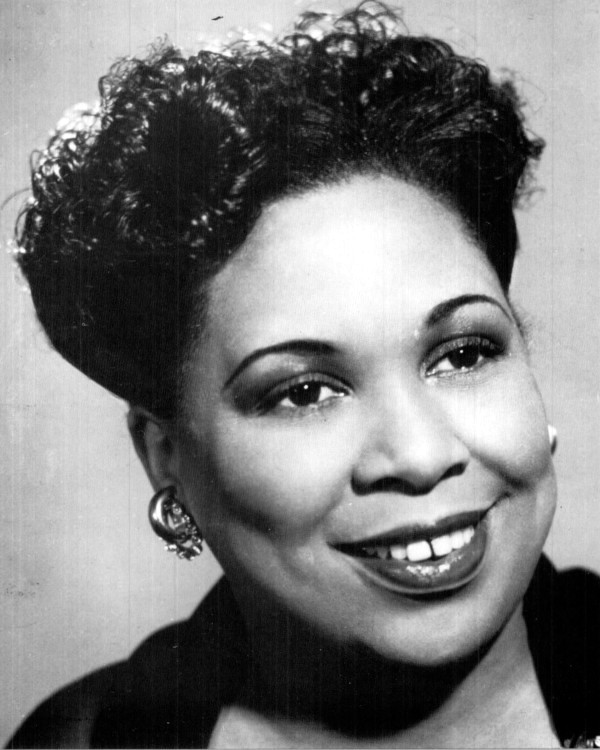 While Helen Humes was two years younger than Turner, she arrived on the music scene first. Helen Humes was born June 23, 1913, in Louisville, Kentucky, and grew up in New York. Her career can easily be divided into four parts. In 1926 she performed at an amateur contest and was noticed by the blues guitarist Sylvester Weaver who recommended her to producer Tommy Rockwell of the Okeh label. On April 30, 1927, the 13-year old singer made her recording debut with “Black Cat Blues” and “A Worried Woman’s Blues.” Later that year she recorded eight more numbers at two sessions including “If Papa Has Outside Lovin’,” “Do What You Did Last Night,” and “Race Horse Blues.” Humes was the youngest of all of the classic blues singers of the 1920s and she later claimed that she had no idea what the risqué lyrics she performed meant!
Ten years passed before she recorded again. In the meantime, Humes graduated from high school, had jobs at a bank and as a waitress, performed in theatres and clubs in Buffalo and Cincinnati, and worked with Stuff Smith, Vernon Andrade’s orchestra, and Al Sears. Moving to New York City in 1937, she was heard by producer and talent scout John Hammond who teamed her with Harry James and some of Count Basie’s sidemen on two record dates, singing “Jubilee,” “Song Of The Wanderer,” and “It’s The Dreamer In Me.” While Humes had previously turned down an offer to join Count Basie in 1937 because it did not pay enough money, in March 1938 she joined Basie for what would be a nearly four-year stint.
By then, Helen Humes’ style was fully formed. She was equally skilled with blues, standards, and ballads, her high voice was both sweet and powerful (allowing her to sound humorously innocent on double-entendre songs), and she always had a smile in her voice, even on sadder songs.
While singing with Count Basie’s orchestra during the second part of her career gave her exposure, because Jimmy Rushing was Basie’s main vocalist and received most of the blues and the best material, Humes was in a secondary role, singing ballads and some lesser tunes much of the time. However, she did sound rewarding when given the chance, as on such numbers as “If I Could Be With You One Hour Tonight,” “Don’t Worry ‘Bout Me,” and “Blame It On My Last Affair.” But by 1942, it was clear that she needed to have a solo career in order to have her musical skills properly showcased.
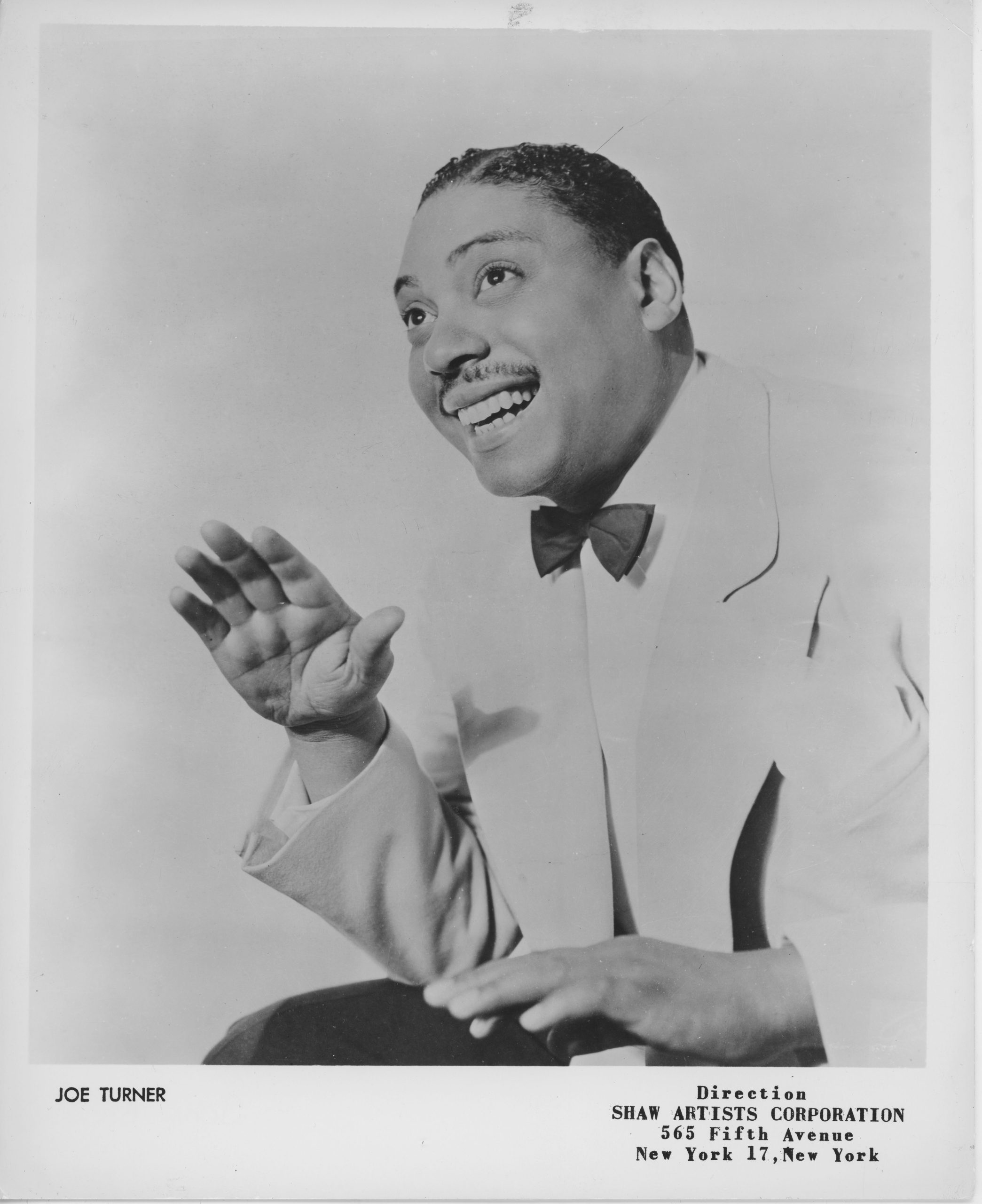 Big Joe Turner was born in Kansas City, Missouri on May 18, 1911. He sang early on in church and for money on street corners to help support his family. When he was 14, he permanently dropped out of school to work in Kansas City’s nightclubs. Originally, he was a cook but he graduated to become a singing bartender. Turner was very much a part of the legendary Kansas City nightlife of the late 1920s and ’30s, performing at many jam sessions and often teaming up with boogie-woogie pianist Pete Johnson (1904-67) who became a close friend and a frequent musical associate through the years. During this period, Turner developed the skill of being able to spontaneously make up an endless series of blues choruses while on stage; many of his lines and phrases would become adopted by other singers in the future.

In 1936, Turner and Johnson went to New York and appeared at a concert with Benny Goodman. However, they were unable to get further work and soon returned to Kansas City. Two years later in Dec. 1938, John Hammond invited them to be part of his From Spirituals To Swing concert at Carnegie Hall, an event that also coincidentally featured the Count Basie Orchestra with Helen Humes. That night, Pete Johnson was teamed with his fellow boogie-woogie pianists Albert Ammons and Meade Lux Lewis (launching a boogie-woogie fad), and Turner sang “It’s All Right Baby” and “Low Down Dog” with Johnson, causing a bit of a stir. A week later, Turner and Johnson made their recording debut with “Going Away Blues,” and a song that would be in the singer’s repertoire for the rest of his life: “Roll ‘Em Pete.” They were soon appearing regularly at Café Society in New York.
Big Joe Turner recorded during 1940-42 with other swing groups including the Varsity Seven (“How Long, How Long Blues”), Joe Sullivan’s Café Society Orchestra (“Low Down Dirty Shame”), Benny Carter’s All-Star Orchestra (“Joe Turner Blues” and “Beale Street Blues”), Art Tatum (“Wee Baby Blues” and “Corrine Corrina”), and as a leader including four duets with pianist Willie “The Lion” Smith and a set with the Freddie Slack Trio (“Rocks In My Bed” and “Goin’ To Chicago Blues”). He was based in Los Angeles in the fall of 1941, appearing in the short-lived Duke Ellington show Jump For Joy.
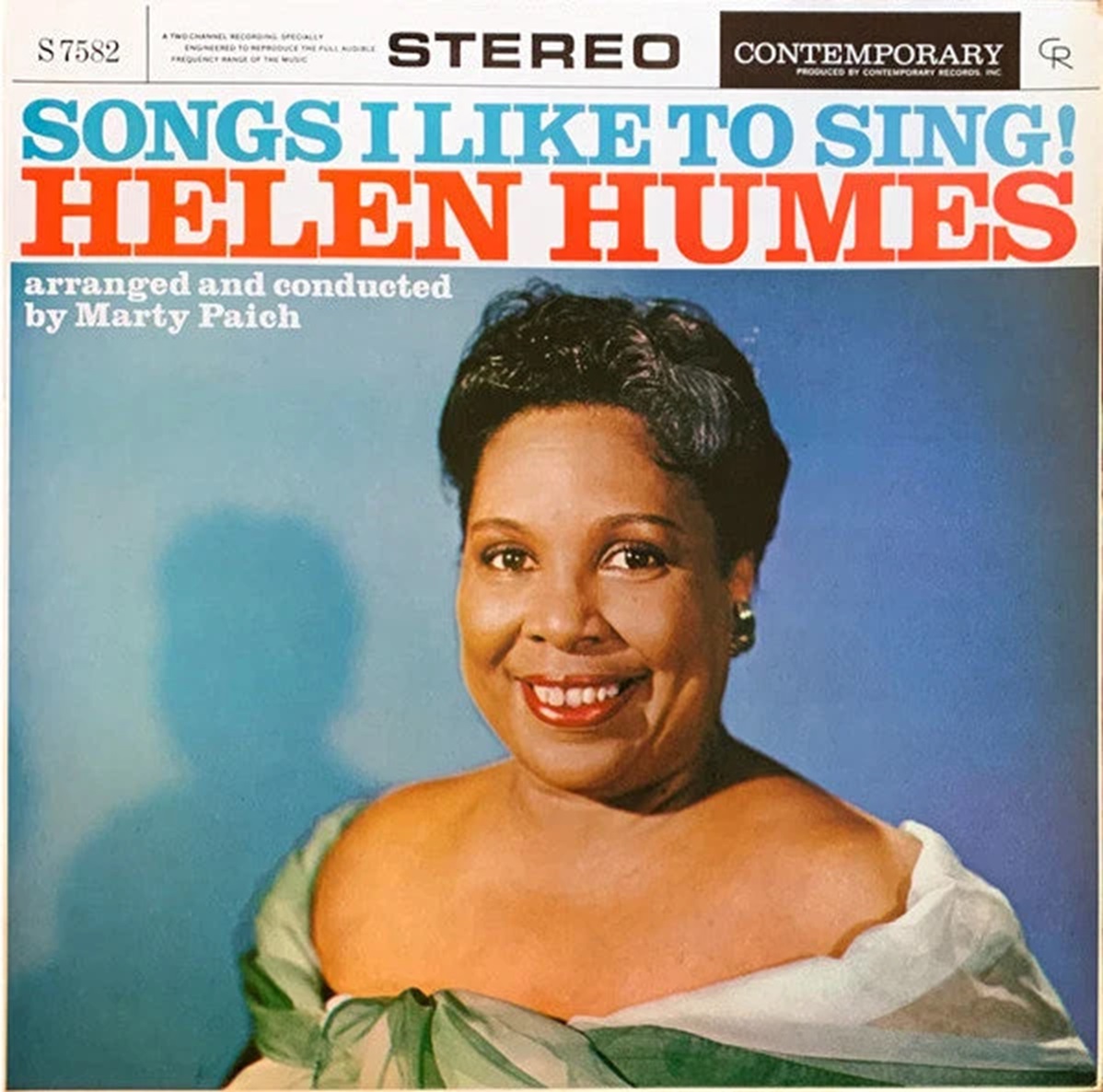 Helen Humes’ third period began with the launching of her solo career when she left Basie. John Hammond, who was so important in the careers of many swing era musicians, invited her to sing at Café Society. That became her home base for the next year, often accompanied by pianist Teddy Wilson. She also performed at other clubs with Benny Carter and Eddie Heywood before moving to Los Angeles in 1944.
In Southern California, Humes was a regular on the radio, recorded for the soundtracks of some Hollywood films, appeared in the 1946 Dizzy Gillespie movie Jivin’ In Be-Bop, and in 1950 starred with the Count Basie Septet in a film short, singing a classic version of “I Cried For You.” She recorded for several labels and had success with such numbers as “Be-Baba-Leba (which was #3 on the r&b charts and soon followed by “Be baba le ba Boogie” and “E-Baba-Le-Ba”), “Unlucky Woman,” “He May Be Your Man,” “Jet Propelled Papa,” “They Raided The Joint,” and the hilariously insightful “Million Dollar Secret.” The latter explains why it make sense for young women to go after elderly men, and for older women to “train” youngsters. The three-CD set Complete 1927-50 Studio Recordings (Jazz Factory) is well worth searching for since it has all of her recordings from her early years other than her Basie recordings.
Helen Humes’ cheerful swinging and bluesy style fit very well into the world of r&b in its early period. After 1952, things slowed down a bit with her appearing on only one obscure record date during 1953-57. She had success on a tour of Australia with Red Norvo in 1956 and in 1958 she was on two of his records (Red Plays the Blues and Red Norvo In Hi-Fi), showing that, at 45, she was nearing the peak of her powers.

That height was reached on the three albums that she recorded for the Contemporary label during 1959-61: Tain’t Nobody’s Business If I Do, Songs I Like To Sing, and Swingin’ With Humes. With such sidemen as Benny Carter (on trumpet), trombonist Frank Rosolino, tenor-saxophonists Ben Wesbter and Tedd Edwards, pianist Andre Previn, and the Marty Paich Orchestra, Helen Humes made such songs as “You Can Depend On Me,” “When I Grow Too Old To Dream,” “Don’t Worry ‘Bout Me,” “If I Could Be With You,” “Home,” and “The Very Thought Of You” (plus a definitive version of “Million Dollar Secret”) sound as if they were written for her. In 1962 she toured Europe with the American Folk Blues Festival, displaying versatility by interacting with such bluesmen as Memphis Slim, T-Bone Walker, and Willie Dixon.
While Helen Humes did well in the 1950s, Big Joe Turner must have been a little surprised that he was becoming a household name. Like Humes, he moved to Los Angeles in the mid-1940s. After recording with Pete Johnson in New York and Chicago, they operated a bar, the Blue Moon Club, in L.A. Turner recorded regularly during the second half of the 1940s, both with and without Johnson, including such numbers as “My Gal’s A Jockey,” “It’s A Low Down Dirty Shame,” “Battle Of The Blues” (with fellow blues singer Wynonie Harris), “Around The Clock Blues,” “Wine-O-Baby Boogie,” and “Lucille.” Turner had no difficulty straddling the boundaries between swing, blues, and r&b, appealing to all three audiences. He was noticed by Ahmet and Nesuhi Ertegun during an engagement with Count Basie in 1951, and they quickly signed him to their Atlantic label.
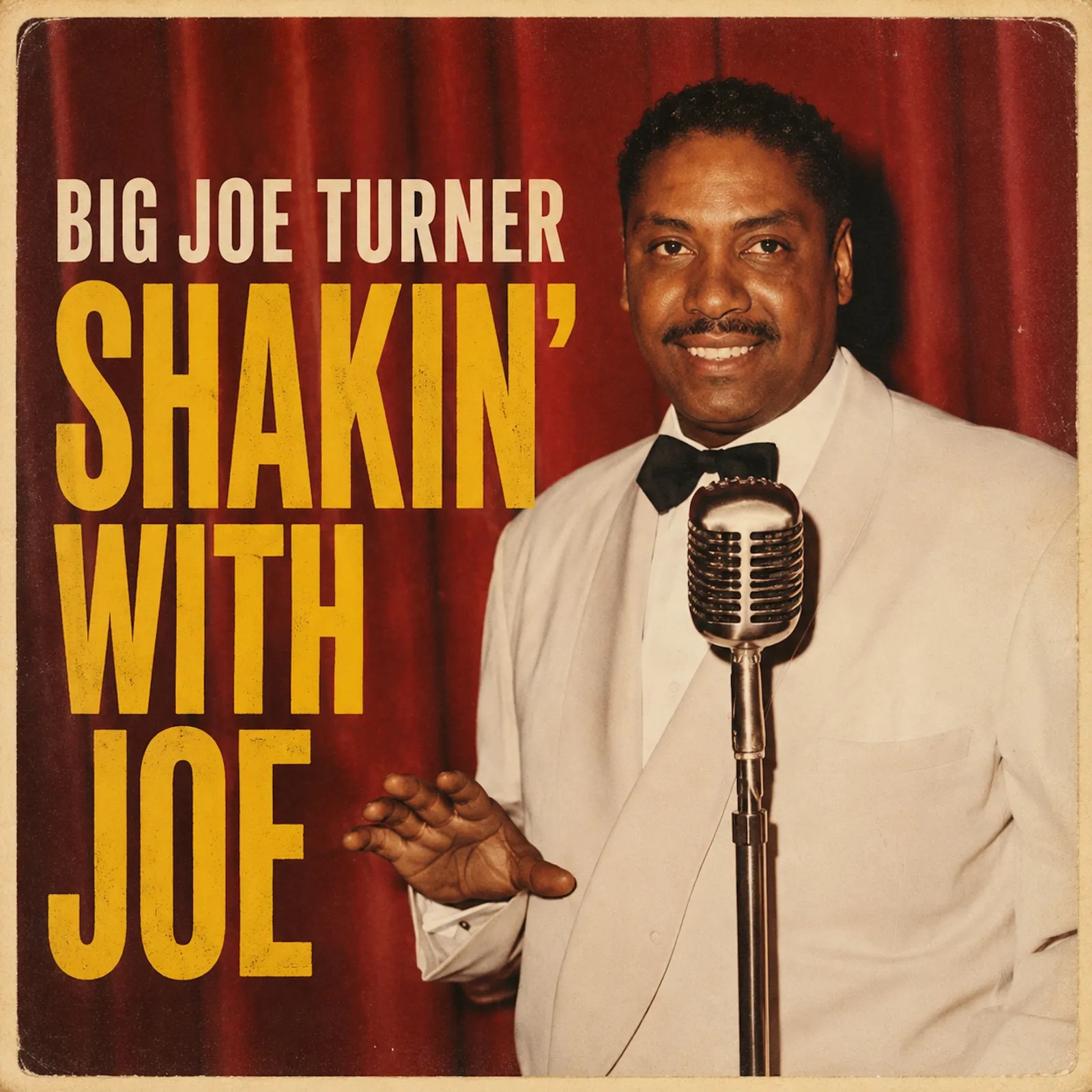 Although he was already 40, Turner became a major star in r&b and the early rock and roll world. His string of recordings for Atlantic included “Chains Of Love,” “Sweet Sixteen,” “Honey Hush,” “Oke-She-Moke-She-Pop,” “Flip, Flop and Fly,” “The Chicken and the Hawk,” “Corrine, Corrina,” and the 1954 smash hit “Shake, Rattle and Roll.” He appeared in the films Rock ‘n’ Roll Revue and Shake, Rattle & Rock.

In 1957, Turner toured Australia on a bill that included Bill Haley and the Comets. While the settings might have changed, Big Joe Turner had no difficulty adjusting to the newer musical trends. He simply sang the blues and his brand of rollicking swing the same way that he had for 20 years. While his hits stopped after 1958, Turner had become permanently famous. He was free to sing in both jazz and blues settings, with rock and roll groups, and with swing all-stars. He was welcome everywhere. Many of his best recordings from 1938-59 can be found on the three-CD set Big Bad & Blue: The Big Joe Turner Anthology (Rhino)
After 1962, Helen Humes did not record for 11 years. She spent 1964-67 living in Australia, returned to the U.S. to take care of her ailing mother, and then spent six years working day jobs including being employed by a munitions factory. She considered singing to be part of her distant past. However, that changed in 1973 when she was persuaded by writer Stanley Dance to sing at a reunion of Count Basie’s alumni at the Newport Jazz Festival.
Suddenly she was back. Now 60, she showed that she had not lost a thing through the years. Humes toured Europe (1973’s Let The Good Times Roll was her comeback record and includes “That Old Feeling,” “They Raided The Joint,” and “He May Be Your Man”), made four albums in 1974 (including her set at that year’s Montreux Jazz Festival), and was featured on a series of rewarding albums through 1980 for several different labels. During 1974-77 she sang regularly at the Cookery in New York City. Humes appeared at many festivals and clubs in Europe and America. She was active until less than three months before her passing, sharing a vocal duet with Joe Williams on “If I Could Be With You” at 1981’s Playboy Jazz Festival. Even that late, she sounded happy, sang with power, and was still in her musical prime.

Helen Humes passed away from cancer on Sept. 13, 1981 at the age of 68.
While his recordings were no longer on the charts, Big Joe Turner continued on, singing in many different settings in his unchanged style. He had a final reunion with Pete Johnson at John Hammond’s Spirituals To Swing concert in 1967 (performing “Roll ‘Em Pete”), recorded with several blues groups in the late 1960s (one album was titled The Real Boss Of The Blues), and then in the early 1970s began to be teamed with jazz greats for Norman Granz’s Pablo label. He recorded the album Flip, Flop & Fly with the Count Basie orchestra in 1972, made sessions with Roy Eldridge, Dizzy Gillespie, Sonny Stitt, and Eddie “Cleanhead” Vinson, and sounded just as lively and comfortable when recording with lesser-known blues players, Mike Bloomfield, Knocky Parker’s Houserockers, and Roomful Of Blues. In 1979, Turner was one of the stars in the film The Last Of The Blue Devils. His final album, Patcha, Patcha, All Night Long from 1985, features him holding his own with fellow blues shouter Jimmy Witherspoon.
Big Joe Turner passed away on Nov. 24, 1985 at the age of 74 after a very full life.

Since 1975 Scott Yanow has been a regular reviewer of albums in many jazz styles. He has written for many jazz and arts magazines, including JazzTimes, Jazziz, Down Beat, Cadence, CODA, and the Los Angeles Jazz Scene, and was the jazz editor for Record Review. He has written an in-depth biography on Dizzy Gillespie for AllMusic.com. He has authored 11 books on jazz, over 900 liner notes for CDs and over 20,000 reviews of jazz recordings. Yanow was a contributor to and co-editor of the third edition of the All Music Guide to Jazz. He continues to write for Downbeat, Jazziz, the Los Angeles Jazz Scene, the Jazz Rag, the New York City Jazz Record and other publications.