Who was the greatest musician ever to play jazz? While one can make the case for Louis Armstrong, Charlie Parker and John Coltrane among others, I would vote for Art Tatum. Not only could he play faster than any other pianist, but his harmonically advanced ideas were 40 years ahead of their time, the dense ensembles that he created sometimes sounded like there two or three pianists playing at once, and somehow he sounded relaxed and almost effortless while playing runs that were almost impossible to imagine.
As with Buddy Rich on drums, there is really no explanation for Art Tatum’s extraordinary playing. He was born in Toledo, Ohio on Oct. 13, 1909. Suffering from cataracts, Tatum was completely blind in his left eye and just had limited vision in his right. Neither of his parents were musical. Despite this, he began playing piano by ear when he was just three. He had perfect pitch and a superior memory, learning songs from the radio, recordings, and piano rolls. While he spent some time at the Toledo School Of Music as a teenager, Tatum was mostly self-taught. He began to play in public around 1924 when he was 15 and more regularly by 1926, performing at social functions. Tatum led a sextet for a time and quickly became a local legend.
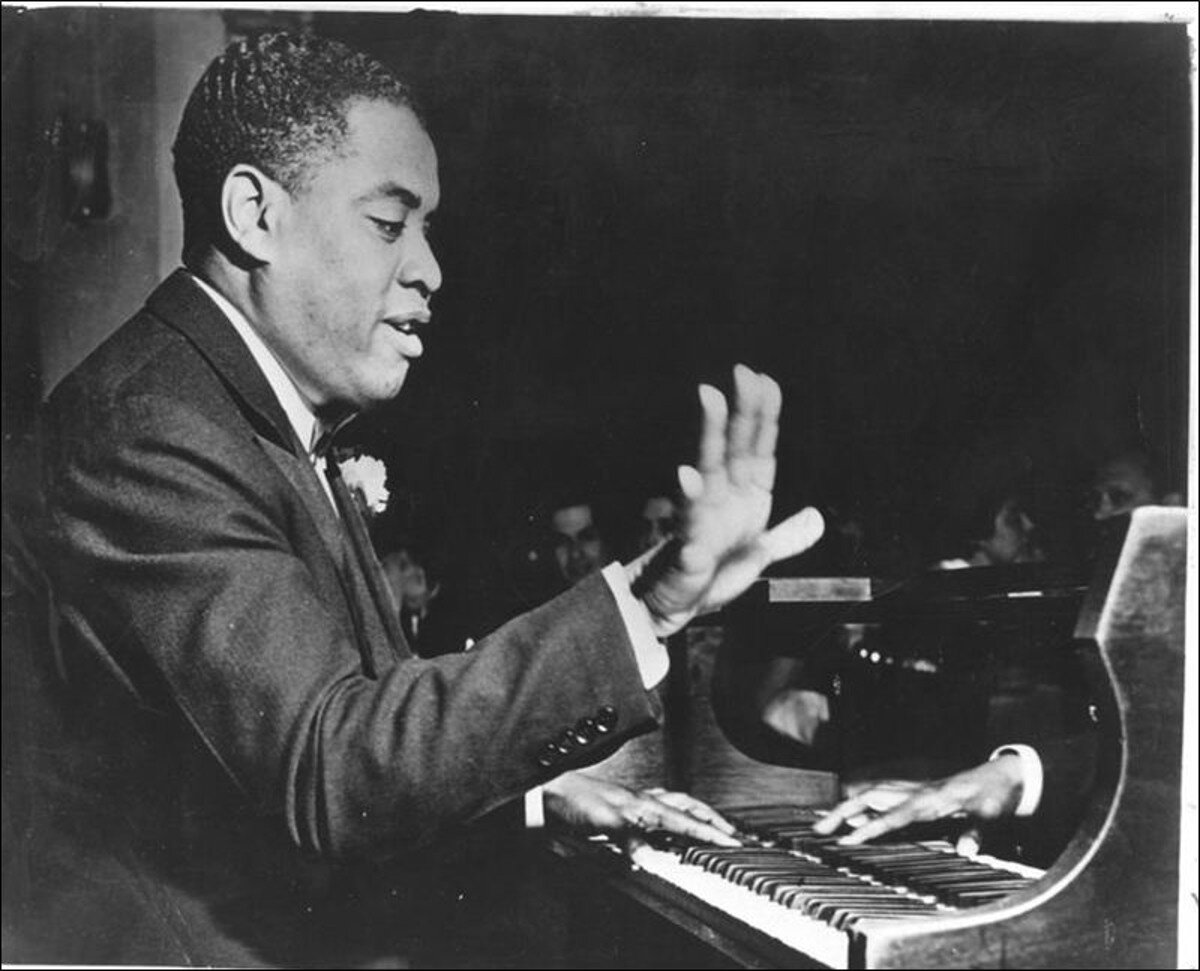
In 1927 the pianist won a local talent contest and was soon appearing on his own daily 15-minute radio program on Toledo’s WSPD which was picked up nationally. Unfortunately none of the programs still exist so one cannot hear what he sounded like as a teenager. However many visiting musicians who passed through Toledo were somewhat flabbergasted by his technique and his playing ,in general. Among those who heard Tatum during these early Toledo years and urged him to move to New York were Rex Stewart, Coleman Hawkins, Duke Ellington, Red Norvo, Count Basie, Benny Carter, and Earl Hines. But despite their advice, Tatum felt that he was not yet ready. Instead, he worked for several years in clubs in the Midwest including Cleveland and Detroit.
 In 1932 he finally made his move. Singer Adelaide Hall was touring with two pianists as her accompaniment but, while in Toledo, one of her pianists (Joe Turner) left to form his own band, recommending Tatum as his replacement. When they reached New York, Adelaide Hall and a septet that included both Tatum and Francis Carter on pianos along with trumpeter Bunny Berigan and Jimmy Dorsey (clarinet and alto) recorded “Strange As It Seems” and “I’ll Never Be The Same” on August 5. The same day Tatum was featured on the radio playing “Tiger Rag,” a performance that was released many decades later. Five days later Hall (this time just joined by the two pianists plus vibraphonist Larry Gomar on one song) recorded “You Gave Me Everything But Love” and “This Time It’s Love.” While Tatum is heard briefly on his performances with Hall, this was just a prelude for what was to come.
At a legendary piano battle with James P. Johnson, Fats Waller, and Willie “The Lion” Smith, Tatum stunned his idols with his playing on “Tea For Two.” While the others gamely fought back, this was the first time that Johnson was ever defeated at a jam session. His mastery of stride piano was no match for what Tatum could spontaneously create.

After his association with Adelaide Hall ended, on Mar. 21, 1933 Tatum recorded his first piano solos. He was quite outstanding with his variations on “Tea For Two,” “Sophisticated Lady,” and “St. Louis Blues,” but on “Tiger Rag” his playing is simply unbelievable. When the younger pianist Hank Jones first heard this recording years later, he asked who the other two pianists were who were playing with Tatum. On “Tiger Rag” at first Tatum creates an otherworldly introduction. He then dazzles listeners with his speed, punctuating the melody with lightning-fast runs up and down the piano that never miss. His right hand takes some death-defying breaks worthy of Earl Hines, he reharmonizes the tune, engages in whole-tone displays with both hands, breaks out into some rapid stride, and then drives the piece to its conclusion with two stunning choruses. If he had only made this one recording, he would have made his mark on music.
Art Tatum always said that his main influence was Fats Waller. Others who inspired his playing include Earl Hines, James P. Johnson, and the popular pianist Lee Sims, While one can hear bits of each of these pianists in his playing, Tatum was more advanced than all of them by 1933.
Art Tatum spent much of his life as a solo pianist. He worked at the Onyx Club on 52nd Street soon after breaking away from Adelaide Hall. He also played in clubs in Cleveland, Chicago, and in Los Angeles, was featured on the radio (including appearing on Bing Crosby’s radio program), and appeared at many late-night jam sessions. Tatum was featured on a series of solo piano recordings including 17 songs made during three record dates in 1934, radio transcriptions, and a few surviving radio broadcasts. In 1935 he recorded at the head of a group for the first time for “Take Me Back To My Boots And Saddle” and, more significantly, in 1937 he headed a sextet billed as “Art Tatum and His Swingsters.” While it was often said (somewhat inaccurately) that Tatum could not play with other musicians, the opposite was actually true; other musicians had to be very talented in order to play with the pianist who could overwhelm them with his “accompaniment” if they were not close to being on his level.
While he consistently amazed other musicians, Art Tatum mostly toiled in night clubs during his life, never really breaking into the big time as a commercial success. This was partly due to racism, the fact that he was nearly blind, and his soft-spoken personality. And part of the reason was because his playing was so adventurous even though some of the pieces that he performed had fairly well-set solos. As with Fats Waller, he always kept the melody in mind even during the most adventurous runs but his outbursts of rapid notes were criticized by some writers, as if that were a fault. Speaking of Waller, who became his close friend and occasional drinking buddy, Fats made a rather famous statement. Spotting Tatum in a club where he was performing, Waller said “Ladies and gentlemen, I play the piano, but God is in the house tonight.”
Art Tatum’s recordings gave him worldwide fame, at least among jazz fans. In 1938 he visited England, performing overseas for three months and even appearing twice on a pioneering television show, Starlight. In addition to his many solo sides, on Jan. 21, 1941 he led a sextet that included clarinetist Edmond Hall for a record date that included two instrumentals and two vocals by Big Joe Turner (unrelated to pianist Joe Turner): “Wee Baby Blues” and “Last Goodbye Blues.” A follow-up session featured Tatum accompanying Turner on four more blues.

In 1943, Art Tatum surprised many by forming a trio with guitarist Tiny Grimes and bassist Slam Stewart. It turned out to be a smart move for the group, which lasted until late 1944, became quite popular. Grimes was just 25 at the time but his fast single-note lines worked well with Tatum as did veteran bassist Slam Stewart’s unique solos that featured him humming along with his bowed bass. Tatum made his first of only three filmed appearances with the trio, playing multiple versions of the brief “Tiny’s Exercise” for a newsreel.
In late 1943, Art Tatum gained the most votes for a pianist in the Esquire All-American jazz poll, resulting in him recording and performing with many of the all-stars. He solos on “Mop Mop” with Coleman Hawkins, is heard on an existing broadcast with the Chamber Music Society of Lower Basin Street, and is one of the stars of a remarkable concert that took place on Jan. 18, 1944. On “I Got Rhythm” he takes a solo during a performance also featuring Louis Armstrong, Roy Eldridge, Jack Teagarden, Barney Bigard, Hawkins and Red Norvo. During that special night he also had opportunities to accompany Billie Holiday and Mildred Bailey.
Tatum made his second filmed appearance in the Hollywood 1946 movie The Fabulous Dorseys. While the biography of Tommy and Jimmy Dorsey does not live up to expectations, Tatum’s part, playing a piano solo version of “Turquoise” mostly behind dialogue and then joining in with the Dorseys, trumpeter Ziggy Elman and tenor-saxophonist Charlie Barnet on the uptempo “Art’s Blues,” is the highpoint of the film.

A 1949 solo concert at Los Angeles’ Shrine Auditorium was fortunately recorded and features Tatum at the peak of his powers on such numbers as “Humoresque,” “Tatum Pole Boogie,” “I Know That You Know” and his superb arrangement of “Yesterdays.” The latter was his third and last appearance on film several years later when he appeared on the Spike Jones television show. It is the closest that one can come today to seeing Tatum play solo. Tatum appeared on television on several occasions during the 1950s but none of those appearances are known to have survived.
While Art Tatum continued playing throughout his life in a largely unchanged style, bebop musicians admired his artistry and were open to his influence. Among his fans were Bud Powell, Lennie Tristano and Oscar Peterson. He formed a new trio with Slam Stewart and guitarist Everett Barksdale in 1952 that recorded for Capitol. Highlights of their appearances at Chicago’s Blue Note from August 1953 were released in recent times by the Resonance label as a three-CD set (Jewels In The Treasure Box) and they find Tatum in frequently stunning form.
Producer Norman Granz entered the Art Tatum story in late 1953. Never one to do things in small ways, he recorded the pianist on two very extensive projects. Granz told Tatum that he should feel free to record whatever he wanted as a soloist and the result was no less than 121 selections: 34 recorded on Dec. 28, 1953, 35 on Dec. 29, 26 during Apr. 22, 1954 and 26 on Jan. 19, 1955. The music eventually came out as 14 LPs in Verve’s The Genius Of Art Tatum series. Unfortunately, little preparation took place beforehand and Tatum merely ran through a long list of standards. They generally clock in around three minutes, do not have much development and, rather than being wondrous, are somewhat workmanlike, pleasing rather than the miraculous statements one would expect from him.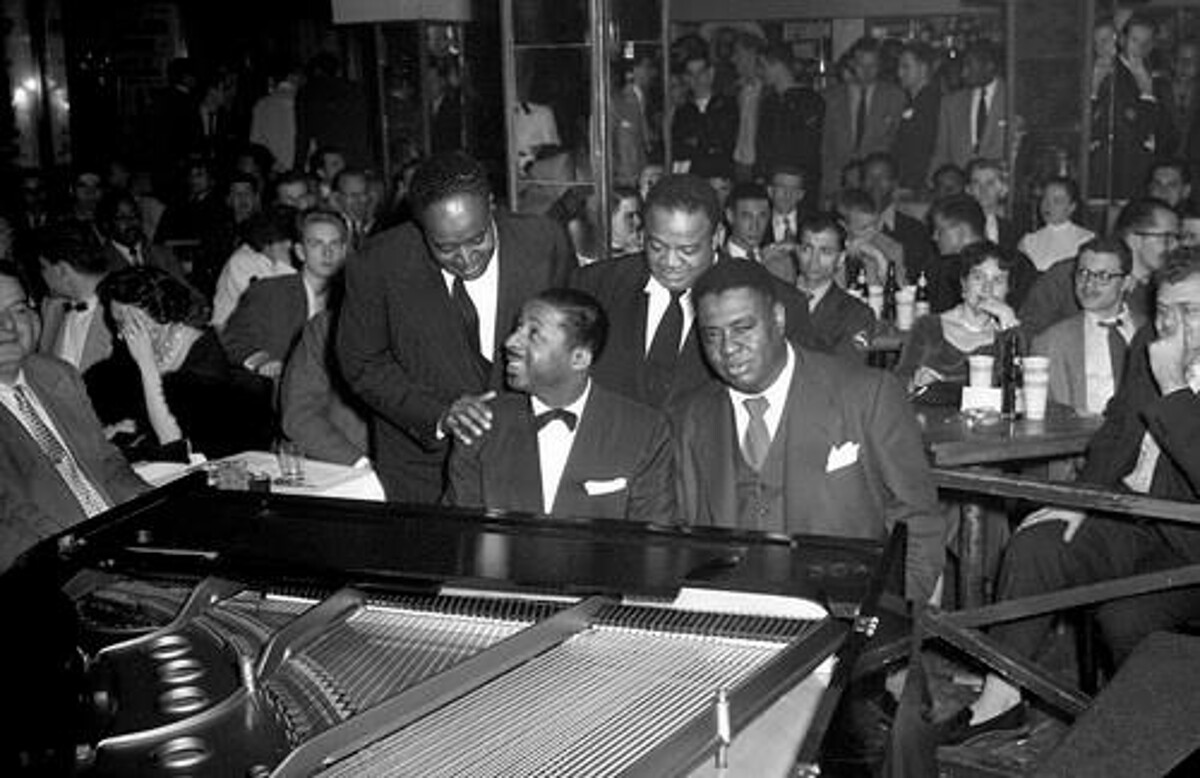

Much more rewarding was Granz’s other Tatum project. Wanting to show that the pianist could certainly play with other musicians, Granz teamed Tatum with some of his favorite players. The eight albums consist of two with Tatum playing in a trio with altoist Benny Carter and drummer Louie Bellson, and one apiece with a quartet featuring trumpeter Roy Eldridge, a trio with Lionel Hampton and Buddy Rich, a sextet that includes Hampton and Harry “Sweets” Edison, a trio with bassist Red Callender and drummer Jo Jones, a quartet featuring clarinetist Buddy DeFranco, and a quartet with tenor-saxophonist Ben Webster. Each of these sets find Tatum in inspired form and the other musicians finding ways to work with the pianist. The fluent DeFranco challenges him directly while Webster emphasizes long notes for Tatum to play dazzling lines around.
A proposed project by Granz unfortunately never took place: a matchup of Art Tatum with Charlie Parker. Early in his career, Parker worked as a dishwasher at a New York club primarily so he could hear the pianist play every night. Unfortunately for the proposed recording, Tatum for unknown reasons did not show up. Another summit meeting that should have taken place was recording Tatum with Oscar Peterson. That was never proposed but it could have been remarkable. Tatum was one of the few pianists who Peterson was in awe of, and one can only speculate what a duo recording between these virtuosos would have sounded like.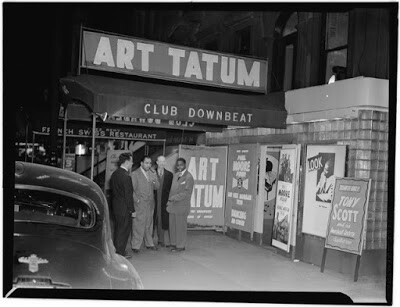
In 1956, thanks to Granz, Art Tatum was making more money than he had previously and performing at prestigious concerts including being part of an all-star Hollywood Bowl concert. But unfortunately he was suffering from a liver disease (uremia) which was exasperated by a lifetime of excessive drinking. Just three weeks after his last performance, he passed away on Nov. 5, 1956 at the age of 47.
70 years after his passing, few pianists come close to playing on Art Tatum’s level although Dick Hyman could always do a good imitation. Tatum’s influence affected not only a countless number of pianists but saxophonists Coleman Hawkins and Don Byas and singer Jon Hendricks (who often practiced with him in Toledo) among many others. His life is summed up very well in James Lester’s definitive biography Too Marvelous For Words: The Life & Genius Of Art Tatum (Oxford University Press).
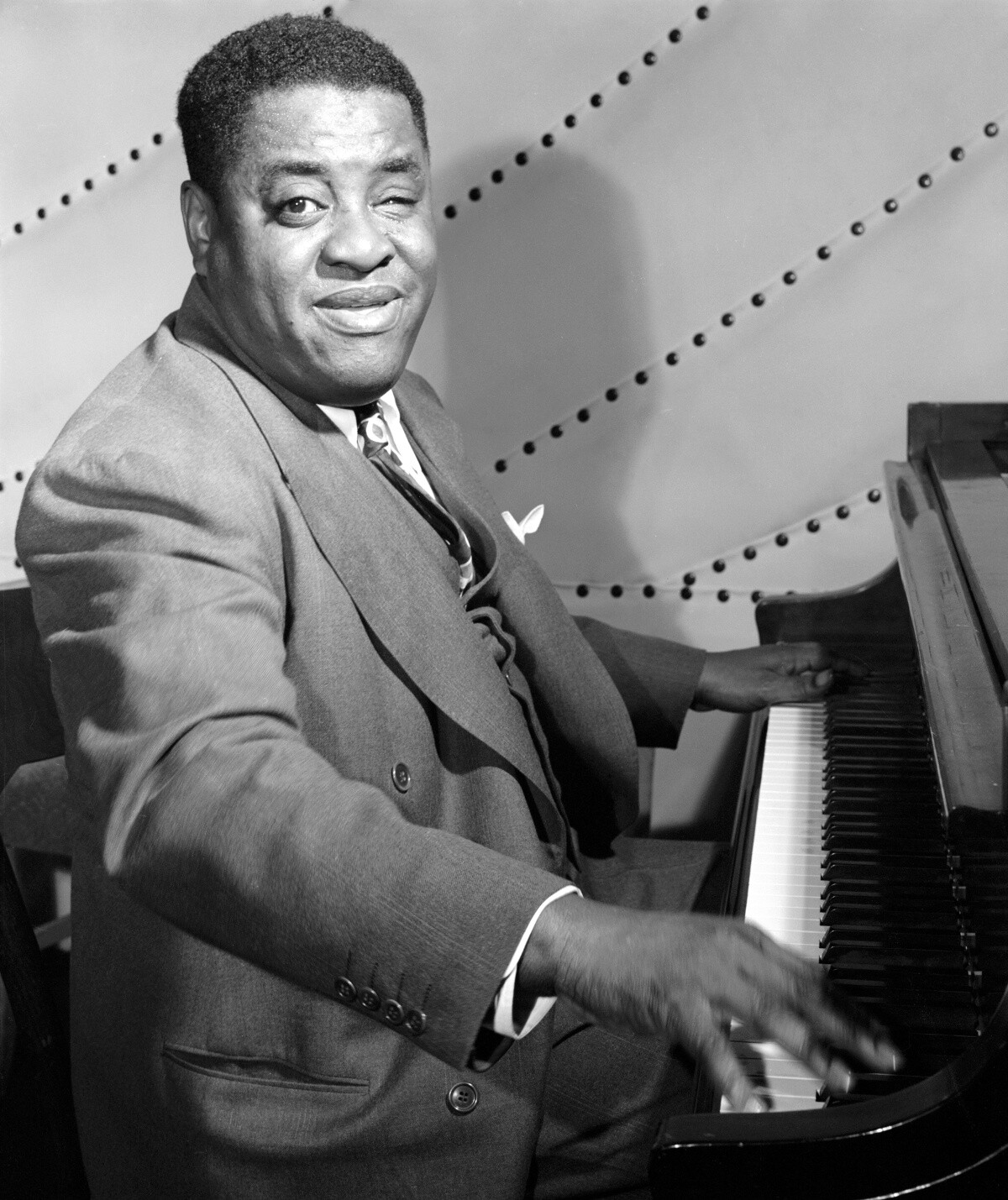
Fortunately, nearly all of Art Tatum’s recordings are available in one form or another. Among the most highly recommended Tatum reissues are Piano Starts Here (Columbia/Legacy) which has the “Tiger Rag” session from 1933 along with his remarkable 1949 live performance, many of his studio recordings of 1934-44 were compiled on three Decca CDs (Classic Early Solos, Solos, and I Got Rhythm), the three CD set Jewels In The Treasure Box (Resonance) came out in recent times, and the six-CD set from 1954-56 The Complete Group Masterpieces (Pablo) is well worth a search.
A close listen to those recordings will convince many that there has never been a jazz musician on Art Tatum’s level.

Since 1975 Scott Yanow has been a regular reviewer of albums in many jazz styles. He has written for many jazz and arts magazines, including JazzTimes, Jazziz, Down Beat, Cadence, CODA, and the Los Angeles Jazz Scene, and was the jazz editor for Record Review. He has written an in-depth biography on Dizzy Gillespie for AllMusic.com. He has authored 11 books on jazz, over 900 liner notes for CDs and over 20,000 reviews of jazz recordings. Yanow was a contributor to and co-editor of the third edition of the All Music Guide to Jazz. He continues to write for Downbeat, Jazziz, the Los Angeles Jazz Scene, the Jazz Rag, the New York City Jazz Record and other publications.