Marion Harris, Lee Morse, and Teddy Grace had several things in common. Each were talented jazz-oriented singers who are largely forgotten today. They each had potentially significant careers and a certain amount of prosperity for a time but had their careers (and in one occasion their life) cut short by tragedy. All three, who fortunately made a series of rewarding recordings, deserve to be better known today.
Marion Harris was born as Mary Ellen Harrison in Vanderburgh County, Indiana, in March 1897. Her early life is shrouded in mystery including the exact date of her birth. It has been written that at 14 she ran away from a convent to sing on the stage, but that is doubtful. She did begin singing in public as a teenager and was discovered by dancer Vernon Castle. She would appear in such productions as Irving Berlin’s Stop, Look, and Listen, Midnight Frolic, Yours Truly, A Night in Spain, and Great Day.

Five months before the Original Dixieland Jazz Band became the first group to record jazz, Marion Harris was documented in 1916 singing “I Ain’t Got Nobody Much” (the “Much” would soon be dropped from its title) and “I’m Gonna Make Hay While the Sun Shines In Virginia.” These performances could be considered the first vocal jazz records. Unlike most singers of the era who found their way into the recording studios, she had a subtle and laid-back delivery, sounding relaxed in an approach that would become popularized a decade later by Bing Crosby, Ruth Etting and Annette Hanshaw. This was much different than the shouting and aggressive style that was dominant at the time with singers trying to be heard in theaters without the use of microphones.
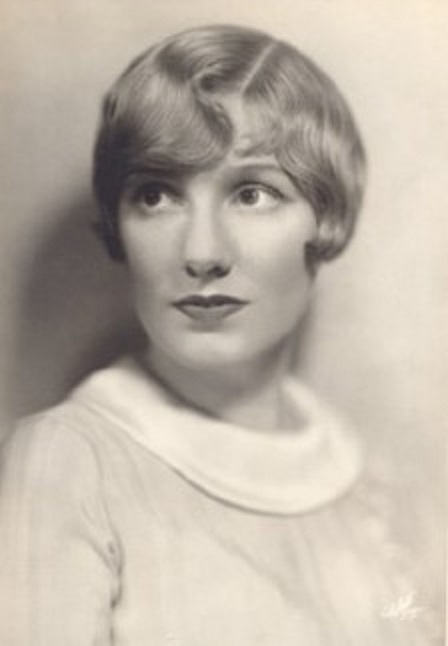
Aged 20 at the time of her first record date, during the next few years Harris recorded such jazz-inspired numbers as “Paradise Blues,” “My Syncopated Melody Man,” “They Go Wild, Simply Wild, Over Me,” “When I Hear That Jazz Band Play,” and “When Alexander Takes His Ragtime Band To France.” During 1918-27 she also helped to introduce and popularize “After You’re Gone,” “A Good Man Is Hard To Find,” “Look For The Silver Lining,” “I’m Nobody’s Baby,” “Carolina In The Morning,” “It Had To Be You,” “Tea For Two,” “I’ll See You In My Dreams,” “Take Me to the Land Of Jazz,” “The Man I Love,” and “More Than You Know.” Harris recorded these and other numbers, 130 in all, for Victor, Columbia and Brunswick. In addition to the recordings and her stage work, she worked often at the Palace in New York, She can be seen as well as heard in a short film, Song Bird Of Jazz (performing “Afraid of You” and “We Love It”), and acted in the nonmusical movie Devil May Care. As the 1930s began, Marion Harris was still a few months shy of turning 33.
At that time, Lee Morse was on the verge of having great success. Born as Lena Corinne Taylor in Cove, Oregon, on Nov. 30, 1897, she was the ninth of twelve children and the only girl; she had 11 brothers! Morse came from a musical family that before her birth had toured Idaho by covered wagon as the Taylor Family Concert Company. She grew up in Kooskia, Idaho, began singing at home when she was three, and at 17 married a local woodworker named Elmer Morse. The marriage would be brief when she decided to pursue a career as a singer instead. She began singing professionally in 1918, working locally in the Northwest while often accompanying herself on ukulele or guitar. Two years later she was discovered by a top vaudeville producer and her career really got going.

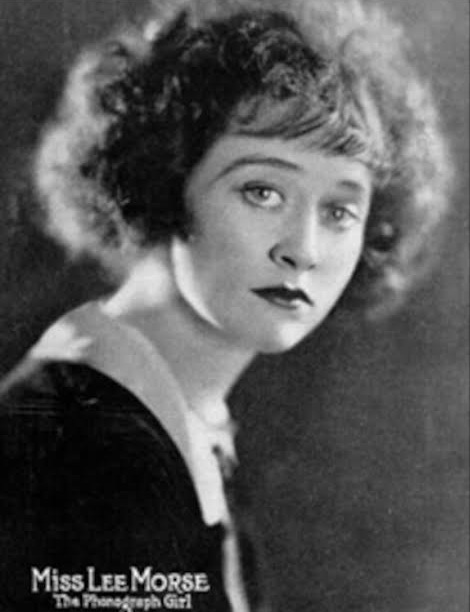 Lee Morse had a wide range (three octaves) and could sing low notes with ease. She was versatile and sounded quite comfortable whether singing jazz (she became an expert and very individual scat-singer), blues, country-tinged tunes (sometimes punctuating her songs with yodeling), pop hits of the time, and torch songs. After touring with the Hitchy Koo revue and performing on Broadway in Artists and Models, she began to record in 1924. While Morse did not have major hits, she was a steady seller and would record over 200 songs in her career including several of her own compositions.
Among her recordings were “I Ain’t Got Nobody To Love,” “Yes Sir, That’s My Baby,” “Sweet Man,” a hot “Poor Papa,” “Let a Smile Be Your Umbrella,” “Tain’t No Sin,” and “Cooking Breakfast For The One You Love,” Some of her recordings found her just accompanied by her own guitar (she also occasionally played kazoo) while those with her Blue Grass Boys had her joined by such sidemen as Red Nichols, Phil Napoleon, Miff Mole, Tommy Dorsey, Benny Goodman, Jimmy Dorsey, and Eddie Lang. Her recordings for Pathe and (by 1927) Columbia made her a star as did her appearances on radio.
Unfortunately Lee Morse had a drinking problem that started because she imbibed often to overcome stage fright. It resulted in her becoming an alcoholic and, at a key moment in her career, she fouled up. She had gained an important role in Florenz Ziegfeld’s Broadway show Simple Simon. When the show opened on Feb. 18, 1930, a few days before it was set to debut on Broadway, she was drunk and could not remember the words to her songs. She lost the role and was replaced by Ruth Etting, who made the main song, “Ten Cents a Dance,” a sensation. Lee Morse’s career would never recover from that mishap.
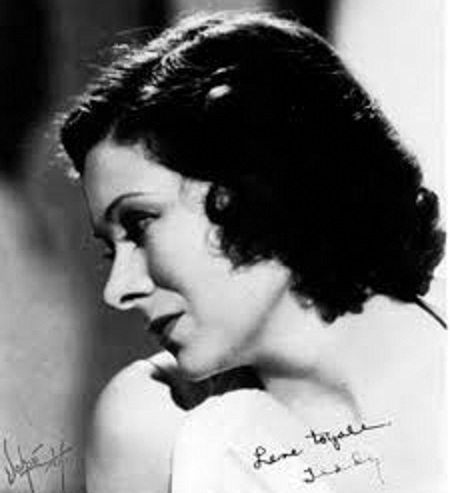 Teddy Grace was born as Stella Gloria Crowson on June 26, 1905, in Arcadia, Louisiana. One of ten children, she gained the lifelong name of Teddy when a baby brother regularly called her that instead of Stella. While just eight years younger than Marion Harris and Lee Morse, she belonged to a different musical generation.
She played piano and guitar while growing up, married in 1923 when she was 18, and for eight years was a housewife in Montgomery, Alabama. The beginning of Teddy Grace’s singing career sounds like a scene from a Hollywood movie. In 1931 while at a country club function, a live band was broadcasting on the radio. Grace sang quietly to herself, was overheard by a friend who dared her to sing onstage, and she joined the band for an unrehearsed “St. Louis Blues.” She was immediately discovered and within two weeks had become a radio star in the South. During the next few years, Grace sang with Blue Steele’s orchestra, Al Stanley’s Arcadians, Al Katz’s Kittens (with whom she went to New York), Tommy Christian, and, most significantly, Mal Hallett’s orchestra (1934-35 and 1937).

In 1937 at the age of 32, she made her recording debut with Hallett (cutting ten numbers), appeared in a film short with Hallett’s band (singing “That’s How Swing Began” and “Swing Makes The World Go ‘Round”), and recorded the first of her seven sessions as a leader for Decca. The 30 songs that she made on her own dates during 1937-40 find her holding her own with an impressive group of jazz all-stars that included cornetist Bobby Hackett, trumpeters Charlie Shavers and Max Kaminsky, trombonist Jack Teagarden, clarinetists Buster Bailey and Pee Wee Russell, tenor-saxophonist Bud Freeman, and pianists Frank Froeba and Billy Kyle.
She proved to be an equally talented blues and jazz/swing singer, one of the few white female singers of the time who ranked with the top African-American vocalists. She also recorded 11 numbers with Bob Crosby’s orchestra in 1939 and two apiece with Lou Holden’s Disciples Of Rhythm and organist Milt Herth. But discouraged by having to constantly fight with Decca executives in order to record the material that she wanted, and somewhat burnt out by the music business, she stopped performing altogether in late 1940.
By 1940 Marion Harris had been almost completely forgotten and Lee Morse had faded out. While she was a pioneering jazz singer, Harris had often emphasized ballads in the 1920s rather than interacting with the top jazz artists on her recordings which hurt her reputation in the long run. She moved to London in 1931 where she worked for a time as a cabaret performer. However, on what would be her final recording session, on Aug. 2, 1934, she did something that was quite historic even if it has been generally overlooked.

Vocalese, the art of writing and singing words to recorded solos (using the improvisations as the melody) is often thought of as having been originated by Eddie Jefferson in the late 1940s and by bebop-oriented singers in the 1950s. Bee Palmer, a dancer and vaudevillian, in 1929 actually recorded a rendition of “Singin’ the Blues” that had lyrics written to part of the recorded solo of Frank Trumbauer; she scatted the Bix chorus. However, Palmer’s voice was not very good and the performance was not released until the 1990s.
By coincidence since it is very doubtful that she ever heard the unreleased Bee Palmer recording, Harris had her own crack at “Singin’ the Blues” five years later. After taking the verse fairly straight, Harris effectively sings her words to both the Bix and Trumbauer solos, reversing the order of the original record, resulting in a fascinating and unique performance. She never did that before or after and her last record had no real impact. Vocalese would have to be “invented” again 15 years later.
Married to a theatrical agent, Marion Harris was largely retired from music after the mid-1930s. Her health was gradually declining and, after their home was destroyed in the London blitz during World War II, she moved back to New York. The singer died tragically on Apr. 23, 1944, at the age of 47 when she fell asleep in bed with a lit cigarette in her hand.

Lee Morse’s career never reached the heights it could have due to her disaster with Ziegfeld. In 1930, she appeared in three musical shorts (A Million Mes, The Music Rocket, and Song Service) that show what she could do as a versatile singer and actress. But her alcoholism, reputation for being unreliable, the changes in the music business, and her occasionally volatile personality made her return to prominence largely impossible. She made a handful of recordings during 1932-33 before a bad case of strep throat in 1935 knocked her out of action for a time. Morse recorded four songs in 1938 but by then she had become obscure. She and her husband of the time ran a small club in Texas before it burned down in 1939. Moving back to New York, she occasionally performed in local nightclubs and hosted a radio show. But, while there were many attempts at a comeback including recording four numbers in 1951, nothing really worked. Lee Morse died unexpectedly on Dec. 16, 1954, at the age of 57.
After 1940, Teddy Grace stayed out of music for three years before World War II. brought her back. In 1943 she joined the WACS, working as a recruiter for the Army, organizing musical revues, and singing constantly at bond rallies and shows for the military. Her singing schedule was so hectic after the long layoff that in 1944 she completely lost her voice. Grace was unable to speak for six months and her singing voice never came back. Any chance of a postwar career as a vocalist was lost Instead, she worked as a typist and a secretary for decades. Even those who had known her during her prime years had no idea what happened to her and assumed that she had died long ago.
In 1991, Teddy Grace was located by writer David McCain at a nursing home near Los Angeles. Although ill from cancer, she was overjoyed to be found and sat for extensive interviews with McCain. By the time that she passed away on Jan. 4, 1992, at the age of 86, she had heard from others in the jazz world and knew that her contributions to music were remembered and appreciated.
While all three of these singers fell short of their limitless potential, their recordings (and film appearances) exist today. Highly recommended are Marion Harris’ The Complete Victor Releases (Archeophone5 001) which has her earliest sessions, and the excellent overview Look For The Silver Lining (Living Era 5330) despite the latter missing “Singin’ The Blues”; Lee Morse’s Musical Portrait (Take Two 420) and her double CD Echoes Of A Songbird (Jasmine JASCD 646) sum up her prime years well; Teddy Grace (Timeless 1-016) has 22 of her 30 recordings as a leader while Teddy Grace (Hep 1054) consists of four more of the songs, all of her recordings with Mal Hallett, a number with Lou Holden, and 10 of the 11 selections that she made with Bob Crosby.

Since 1975 Scott Yanow has been a regular reviewer of albums in many jazz styles. He has written for many jazz and arts magazines, including JazzTimes, Jazziz, Down Beat, Cadence, CODA, and the Los Angeles Jazz Scene, and was the jazz editor for Record Review. He has written an in-depth biography on Dizzy Gillespie for AllMusic.com. He has authored 11 books on jazz, over 900 liner notes for CDs and over 20,000 reviews of jazz recordings. Yanow was a contributor to and co-editor of the third edition of the All Music Guide to Jazz. He continues to write for Downbeat, Jazziz, the Los Angeles Jazz Scene, the Jazz Rag, the New York City Jazz Record and other publications.