The year 2025 was rather special, as my family and I had the chance to attend both Mike Durham’s International Classic Jazz Party (better known as Whitley Bay) as well as the Davenport Bix festival—two top annual events, highlighting the best of today’s hot jazz. This gave me a chance to view both events’ variances. After much observation during attendance, I was quite amused at the differences in both the musical aspects as well as the overall festival format. Years back when I was just getting into early styles of jazz music, I had little thought on both events’ contrasts, but I have learned that there are far more distinctions beyond the fact that Mike Durham’s is held in the wet winter of Newcastle, UK, and Bix in the heat of Iowa.
Both events are highly worth attending, although likings might differ depending on where one resides. For any American, it is understandable to find the Whitley Bay jazz party quite overwhelming to attend for the first time. Folks like to joke that traveling to England is just a “little hop over the pond,” but in actuality, it is quite a costly and daunting distance to endeavor these days. As for my family, last year was our first time in England, and we surprisingly found Newcastle-upon-Tyne, where the jazz party is held, a decently peaceful city with good food and friendly locals, who reminded me of jovial Alabamans.
Now, excluding the locational differences, the four significant factors that differentiate Mike Durham’s International Classic Jazz Party and the Bix Beiderbecke Jazz Festival are its goals, repertoire, audience, and venue styles, all which amount to the unique atmosphere. Additionally, the program changes the event energy—from musicianship to material.
Firstly, the Whitley Bay jazz party is compiled into annual “concert themes” while the Bix festival is organized by touring bands. These “concert themes” are chosen by the musical directors (currently Michael McQuaid and Colin Hancock); and a leading musician is assigned to research and transcribe material of that specific band. For an example, if the Whitley Bay committee included Jean Goldkette and his Orchestra as one of the annual themes, you might be hearing that specific version of “Hoosier Sweetheart” from 1927, being brought back to life before your eyes!
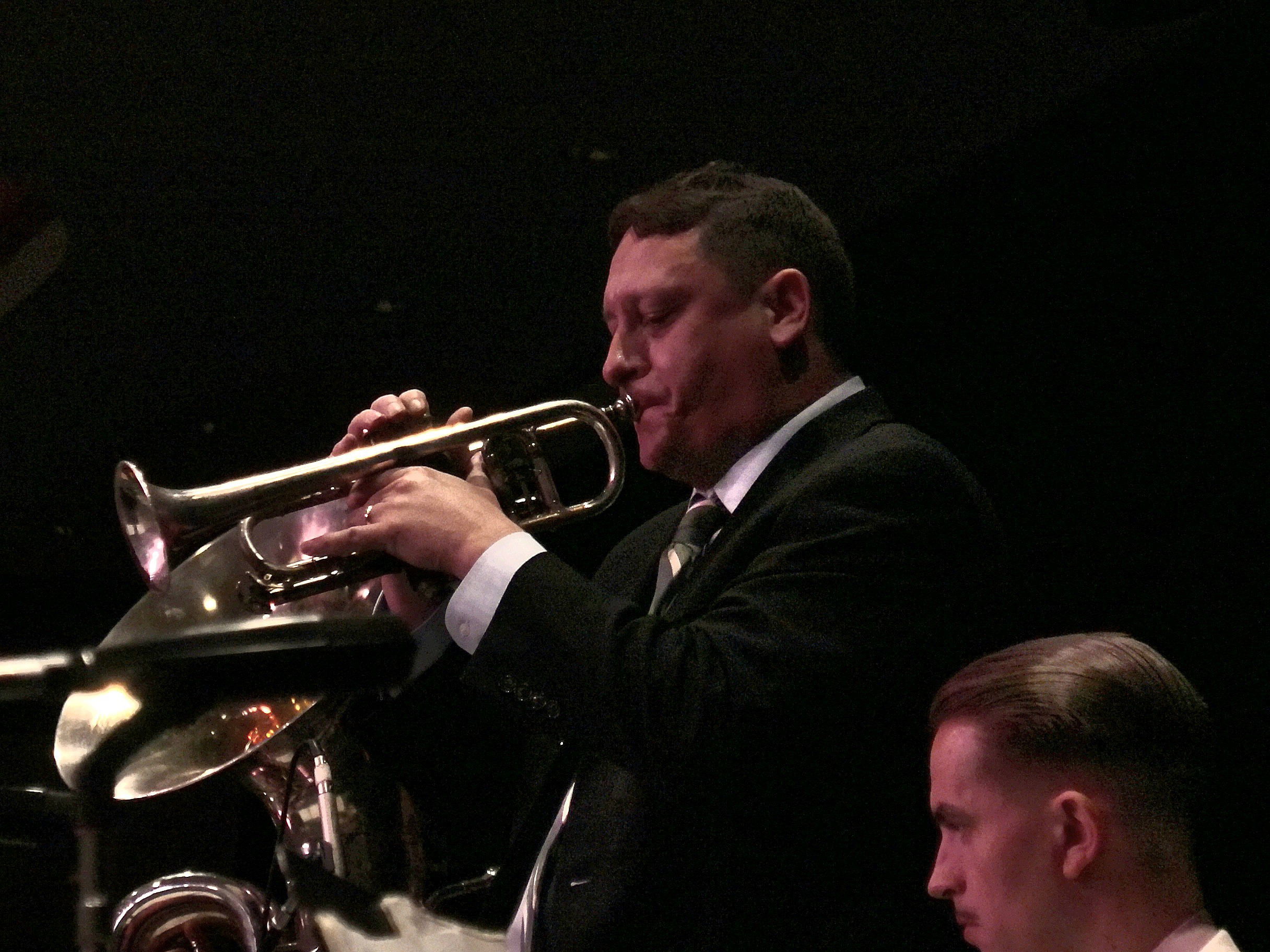
On the other hand, the Bix festival bands bring you a varied surprise of songs with higher chances to hear some “standards.” Nevertheless, the Bix festival already allows freedom and flexibility to play nonstandard, exciting numbers. Only, the Whitley Bay jazz party might surpass the obscurity by including even maligned, forgotten songs revivified from history. For an example, last year at the Whitley Bay jazz party, there were twenty-seven sets, ranging from obscure Oliver Naylor to even more obscure Richard M. Jones, while the Bix festival had the Bix Beiderbecke Youth Jazz Band, T.J. Müller’s Jazz-O-Maniacs, Paul Asaro and his Rhythm, The Mortonia Seven, The New Wonders, Chicago Cellar Boys, El Dorado Jazz Band, and Graystone Monarchs.

Secondly, the repertoires are highly distinguishable. At the Bix, if Mortonia Seven is on
the program, it is plausible they’d play songs of Jelly Roll Morton, or The New Wonders might mean lots of Red Nichols and California Ramblers numbers. But as stated above, since the
Whitley Bay committee chooses concert themes, they announce the program of tributing bands
from the past. Usually, this is selected earlier in the year. Last autumn, my sister and I tried to
guess what songs the program included, and we made a lengthy YouTube playlist of 141 songs

from all the bands listed on the program.
Concluding the repertoire differences, at the Bix, you might hear a bit more personalized styles of the musicians; at Whitley, you’ll hear them transforming more into specialized styles of various former artists of the early 1900s. Both are masterpieces to view and listen, and one doesn’t particularly top the other.
Iterating upon previous remarks, the intriguing appeal of Whitley Bay is its wide exhibition of research material. The sheer amount of study put into the transcriptions is breathtaking, especially if you are familiar with those obscure numbers. It’s deeply saddening that most of these scores that the musicians put hours of effort into are rehearsed and performed just once at the Village Hotel—at least as of now, since quite no other place holds chances, musicians, and audience for such repertoire. It hadn’t occurred to me until then that many sometimes hardly catch a wink of sleep during their transcription sessions, so it urged me to listen vehemently. Most of the songs have plausibly not been played since they were last recorded in the 1920s or 30s, and if you are an ardent follower of some obscure band, it’s really the only spot on this planet to hear it live (do inform me if I’m wrong!).

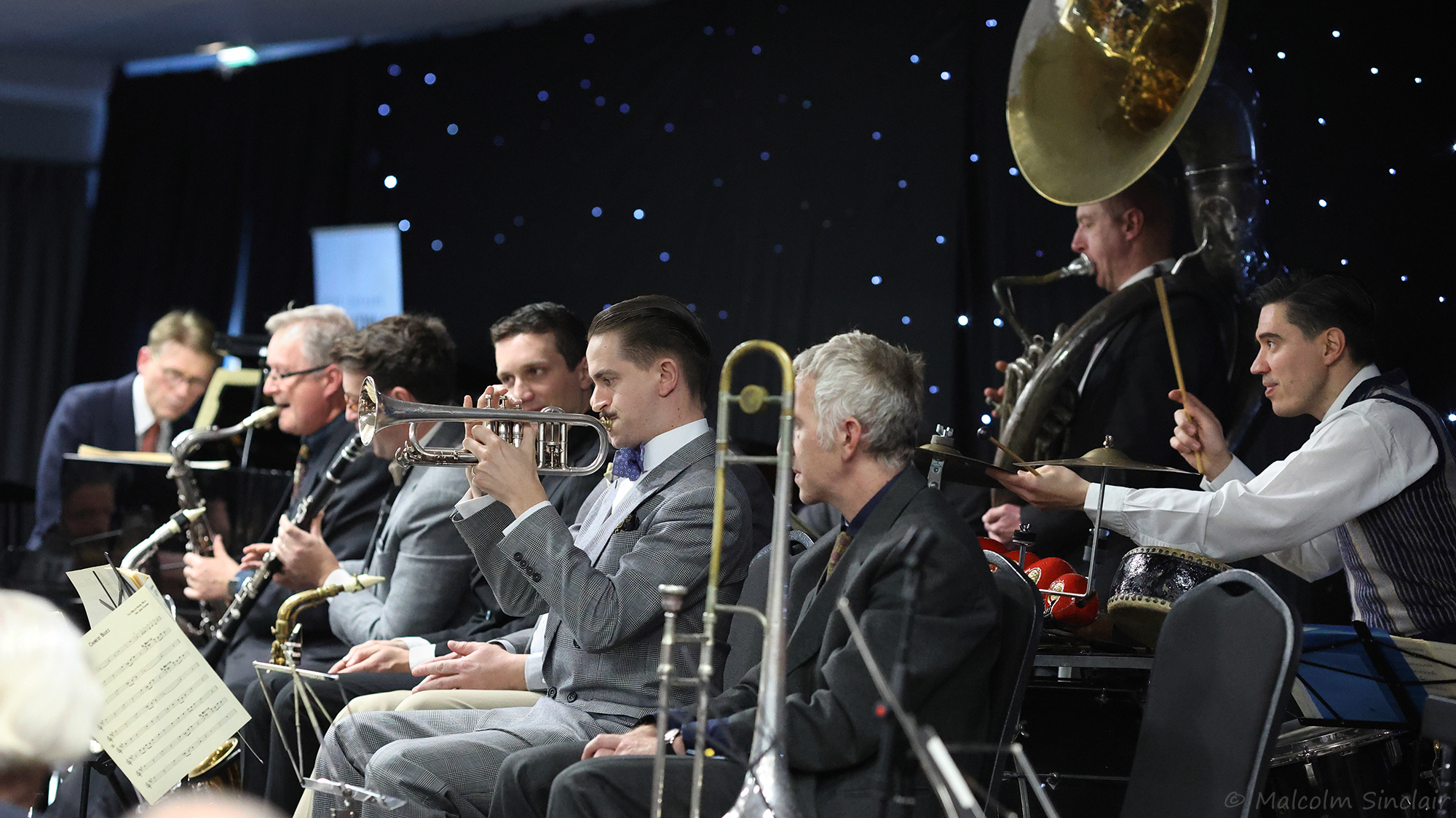
Thirdly, the audience’s energy is another key contrast. The Bix festival creates a more relaxed setting, perhaps a bit more family-friendly too, while Mike Durham’s has a more narrowed-down collection of listeners. There is especially a warm, welcoming feeling of “a musical family reunion” at the Bix festival, and the audience are more open to chatting in between sets, in contrast to my experience at Whitley Bay. Perhaps I feel that way as an American and because of where I’m from, and this could differ anytime with anyone.
While both festivals are indeed wonderful, my family found fascination with the atmospheric differences. The Bix festival is definitely more casual, and although dress codes are not strict, most people at Whitley Bay don their fancy evening wear. For any first-timers of live hot jazz listening, the Bix festival offers a much better experience as an easygoing event, in my opinion. It is not that the musical skills and abilities differ; rather, Whitley Bay presents an intricate “exposition” of compiled research material, which might be a little overwhelming. The atmosphere is a bit more formal too, in contrast to the Bix Beiderbecke festival.
The lineup choices of Whitley Bay are entertaining to scrutinize due to the stylistic representations. I view many of the musicians for the jazz party as “ambassadors” of their tributed star. For example, Mike Davis is bound to get the well-received Red Nichols lines; David Boeddinghaus or Andy Schumm is designated to the legendary Arthur Schutt; Josh Duffee, whether in Davenport or Newcastle, emulates the essence of Chauncey Morehouse; and Lorenzo Baldasso represents excellent qualities of Artie Shaw. However, there’s flexibility in the positions too, as these musicians are masters in multiple styles and instruments. I find myself continuously expanding my knowledge of the delicate details that these marvelous musicians capture. If you are a super fan of the UK’s or Europe’s finest trad jazz musicians, Whitley Bay’s definitely the place to go as many of them congregate to present such fine music. Last year, and for the first time, I got to see and listen to David Horniblow, Nick Ball, Curtis Volp, Lorenzo Baldasso, Nick Ward, Graham Hughes, Alistair Alan, Martin Litton, David Lukaćs, and Emma Fisk to name a few. With the mix of American musicians playing, some of whom are also at the Bix festival, it makes a wonderful combination. Additionally, it was welcoming to see T.J. Müller debut at Whitley Bay, along with David Lukaćs (from the Netherlands) and Joe Boga (from NYC).

Lastly, now in the technicality of the venues, I do prefer the acoustics of the Bix festival over Whitley Bay due to the grand open stage. The vast venue of Rhythm City Casino has high ceilings and wide walls, allowing a rich sound in comparison to the Village Hotel in Newcastle, which is much limited. However, I did find some interesting perks for the Village Hotel set: at Mike Durham’s, the stage is roughly a yard or less in height, which gives a warmer sense of the audience participation. Since the stage is right before your eyes, it’s almost as if you are viewing these precious sheets of manuscripts and transcriptions with the musicians that spend countless hours on. It feels more personal having the stage right up close, rather than a typical distanced stage with beaming lights. Additionally, since the seating system, choreographed by Jonathan Holmes, rotates in rows, everybody gets a chance to be in the front row where the audio is at its finest. The assigned table seating at Whitley Bay makes the experience more organized.
Notably, certain Whitley Bay themes, like the grand Frankie Trumbauer, Artie Shaw, or Dorsey Brothers sets, present an outstanding sound unheard in Davenport. I wonder if it’s the sheer size of the volume. Headcount-wise, there isn’t much of a personnel change—perhaps at Whitley Bay, there is an augmentation of two or three. Mayhap it is the arrangement? To me this remains a mystery.
Winding down at the end of the day, I found favor towards Mike Durham’s, where the pub jam session gave chances to mingle with musicians, somewhat comparable to an indoor version of Bix’s Quality Inn jam sessions. Although at both events (and I presume any other gig) the musicians were terribly busy and exhausted, there were more times at Whitley Bay where we could chat and discuss. It was a wonderful time, although speaking of the pub jam, I wouldn’t consider the overall setting very child friendly.
In conclusion to musical aspects, it’s a tie between those two events because one has strength in its freedom and the other in structure, but I might have a leaning towards the atmosphere of the Bix festival. It’s sort of my philosophical side, I guess, that believes in the invisible American spirit of hot jazz, but depending on your style, it’ll differ.
Certainly, this conclusion is nearly impossible to determine merely through watching YouTube video recordings. I got into early styles of jazz much through records and videos of current festivals, but nothing could replace live performance. If you can make it to the real concert, it’ll make a huge change. As I like to say, festival recordings are taxidermy, but live music is the real creature. It’s grand, stunning, and alive!
Nevertheless, both wondrous events carry that special post-festival sentiment. Upon leaving the empty venue, trudging around the pavement of the parking lot on a cold English night or steamy Davenport summer, I hear the echoes of kind folks and jazz music. It’s over—but turning around, I glance back at that one remarkable weekend of the year. How many people have worked very hard to keep these things alive—and I wouldn’t even know! Entering the moment of sweet peace and silence, I hear my mind whispering once again, “Until next time. . .”
(Note: unfortunately, I would love to present personal festival highlights, but if I dare continue rambling on, this article will exceed its word count of at least 2,000 and get so laggy long. Therefore, Dear Reader, I shall save more stories for next time—stay tuned!)
Clorinda Nickols resides in Southern Appalachia. While being an avid student of hot jazz, she is also fond of illustrating, researching history, and sharing her musings through her writings. Hobbies include playing cornet, piano, and the obscure 'Pocket Rollini.'