One thing jazz lovers today can appreciate is that here are a good number of jazz bands featuring young musicians—in music schools, high schools, colleges, and elsewhere – keeping jazz alive in both spirit and practice. But one band in particular, the Sant Andreu Jazz Band in Barcelona, stands alone as arguably the most accomplished and acclaimed band of young jazz musicians in the world. And when we say young, we’re talking about teens and even pre-teens who, under Joan Chamorro’s guidance and world-renown teaching method, regularly play big band swing, Dixieland, bebop, bossa nova, and other genres, sounding like seasoned professionals while doing so. The SAJB’s past and most high-profile members include Andrea Motis and Rita Payes—who, in their professional careers, have been among the most sought-after jazz musicians in Europe—as have Elia Bastida, Joan Mar Sauque, Eva Fernandez, Magali Datzira, Alba Armengou—all of whom have earned outstanding reputations while still in their twenties.
This year, the SAJB, created and directed by Joan Chamorro, celebrates its 20th anniversary with an extensive string of concerts in Europe, with stops across the Atlantic in South America and then on to New York before 2026 is over.

The SAJB was born in 2006 as a modest little band Chamorro created as an extra-curricular project while teaching at the Escola Municipal de Musica de Sant Andreu, in Barcelona’s quiet Sant Andreu neighborhood, some distance from the city’s popular tourist destinations.
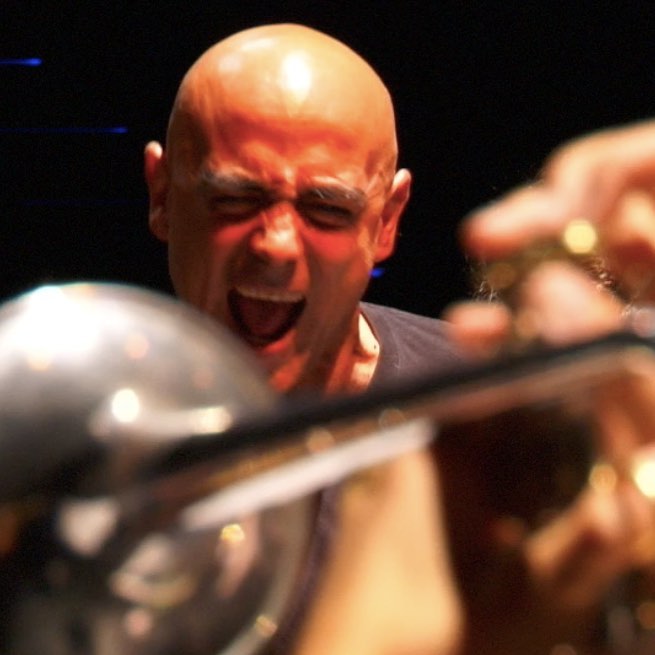
A jazz devotee and accomplished multi-instrumentalist (specializing in baritone sax and double bass), Chamorro decided to create a band to teach the school’s students traditional American jazz, focusing on Dixieland. Most of the students had been in the school learning classical music, so the idea of playing jazz came as a curiosity to them. “Some of them do learn classical music from a young age,” he says regarding many of his former and current students, “but I don’t think it should be an advantage. If you work from the beginning of learning using the language of jazz, being rigorous with the technique, transcribing good references, etc., the result I think can even be more authentic and powerful. Starting from a young age with jazz music opens your mind.”
He recognized that teaching kids the basics and fine points of learning and playing jazz required a new method. “It was all a gradual thing, he says. “Before starting with the Sant Andreu Jazz Band I realized that something needed to change in the way of teaching music to children and young people. I learned that the language of music was better approached as another language: through listening, memory, the need for repetition, and above all the enjoyment of what you are listening to and playing, from the first day you pick up an instrument. From there I changed my way of teaching and based myself on making them listen to melodies and solos, on working from memory, from the beginning.”

He began to see results work in the band rather than with just one individual student at a time. “The results kept coming and, little by little, I had the opportunity to work with groups at the Sant Andreu Municipal Music School, where I was able to put this way of teaching into practice, but in a group. I saw the potential that all this had and I continued working on it…From there, year after year I have continued working so that all this would bear fruit, which was already intuited from the beginning: boys and girls who played jazz, and they did it with an authentic sound, with joy, with desire, making this music their own.”
Andrea Motis, star trumpeter and singer who performs around the world, had been learning trumpet at the school. She recalls, “My first teacher was not Joan Chamorro, who was only giving lessons for the big band and saxophones, but not any other instrument. So, I was taught by another teacher at the school, Toni Gallart, and he was a great teacher for me. At the same time my parents put me in piano lessons, but I didn’t take many because I was busy doing sports and other things, and it became a lot of things to do.”
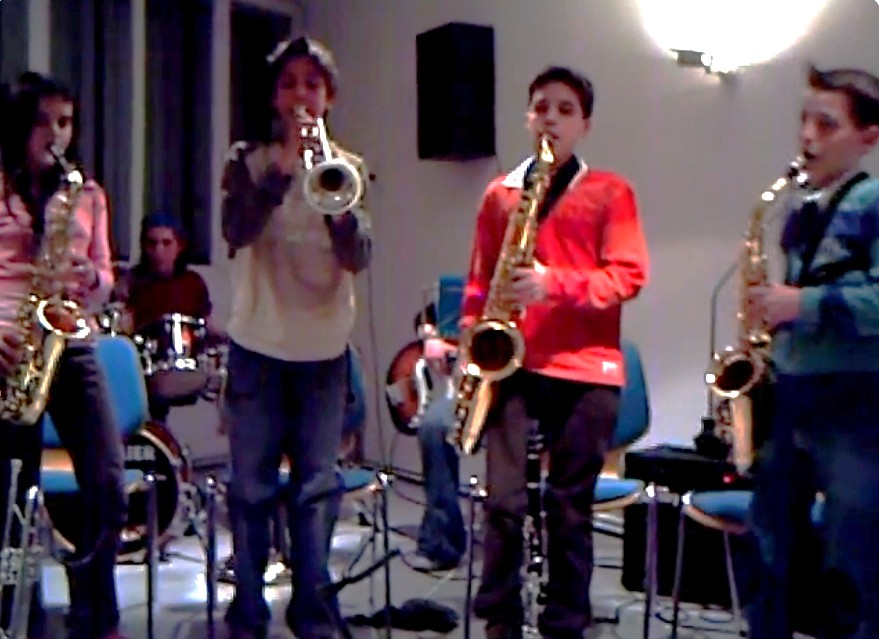
(video by Juame Ferrer)
She was 11 years old when she started with the SAJB. “Joan knew me from when we did auditions for concerts, where we would do saxophones and trumpets together…but I remember—I saw that the saxophones were playing jazz, and I became more fond of what they were playing. Then I wanted to start saxophone as a second instrument in the school. When I started saxophone lessons, Joan was my teacher. He saw that I really had an interest in jazz music and I wanted to study, and I could play both trumpet and saxophone, so he invited me to be part of the Dixieland band. He would do it apart from the official hours of the school, for free.”
While it’s never a guarantee that any young music student will take to jazz, Andrea’s sister Carla, who was the SAJB’s guitarist for over a decade, offers an observation that many current and former members of the band have also made about Chamorro as a teacher: “Joan has a talent for making you love this music,” she says. “He makes it fun for the children. He’s a funny person. You absorb his energy, and then, as you grow up, you start listening by yourself, and start to investigate it on your own.”
She recalls Chamorro making mp3s for the students to download and listen to, and guiding his young musicians through jazz history via the recordings of Louis Armstrong, Chet Baker, Charlie Parker, Miles Davis, and other legends.

“At the beginning,” she says, “I remember Joan gave us albums on mp3—classics and ‘easy’ ones, very melodic and easy jazz for the children…And then you’re discovering Miles Davis and Charlie Parker…”
As original SAJB drummer Arnau Julia remembers, “I didn’t know what jazz was until Joan gave us some CDs with recorded jazz music. From then on, I started listening to jazz every day. I learned all the melodies and solos by heart—mainly because I loved the music and didn’t have access to much else. My parents didn’t know anything about jazz, and I didn’t have many other ways to discover new music. Joan was the person who opened up a whole world to us—and here we are today, working as professional jazz musicians.”
The band grew in both size and repertoire, eventually becoming a full-size big band within a few years after its inception, making it necessary to adapt from playing Dixieland to the big band swing of the 1930s and ’40s. Their concerts and recordings steadily became the talk of Barcelona, as they played in venues large and small, indoors and outdoors, from concert halls to modest clubs.

As the band’s reputation began to grow, increased exposure came with invitations to perform at more prestigious venues; articles were written in the local press, followed by appearances on Barcelona television. But the major factor in spreading the word has been its presence on YouTube, allowing maximum, worldwide exposure with relatively minimal effort. Home-shot videos from concert attendees began appearing on the site, but Chamorro wanted to preserve the performances and publicize the band via videos shot by a professional production team.
Filmmaker Ramon Tort clearly remembers his first reaction upon seeing the band play: “A friend had already told me about the band and Joan’s work, but words to describe this band always fall short. It was watching them play when I understood the dimension of the project, and I think the same thing happened to me as to the audience at that first concert: emotion and disbelief.”
Then came the idea for him to play an active role in filming the band’s performances.

“We met with Joan at the Barcelona Jazz Orchestra, for which I spent a few years making videos of their disc recordings and live performances. And he suggested that I film the SAJB concert at the Hotel Casa Fuster in 2009, which ended up being the first Jazzing in CD/DVD format.
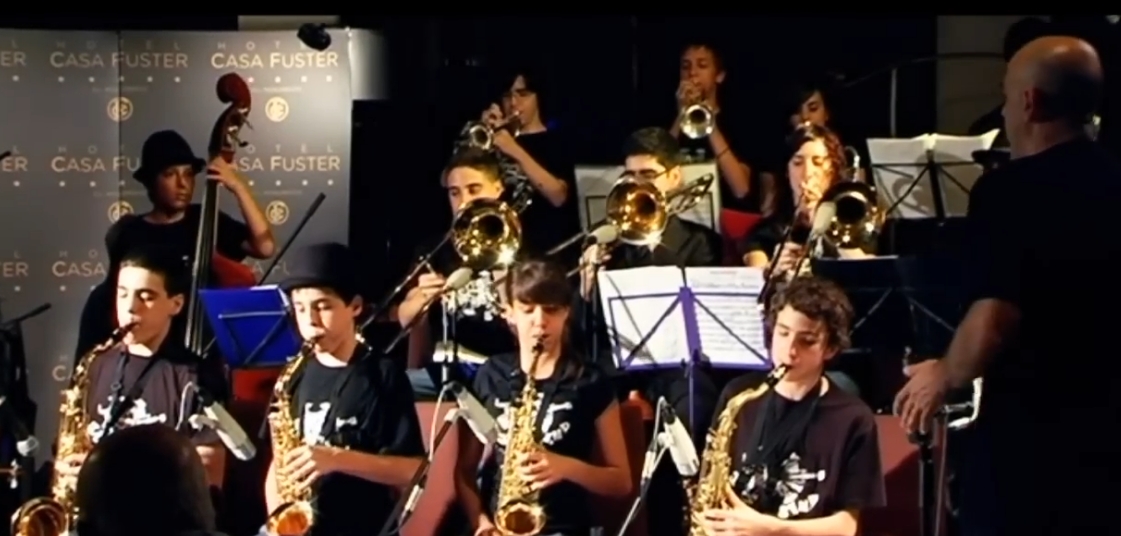
“To publicize his project, Joan quickly understood that the videos were the perfect element…The relationship we established has been totally organic and progressive. There was no plan, no purpose, no objective, beyond seeing that through the videos we were making, the project stopped being a local thing and began to interact with the entire world.”
From that point on, Tort and his crew, including audio technician/producer David Casamitjana, became an essential component of the project’s existence. In 2012, the team released the fly-on-the-wall documentary about the band, A Film about Kids and Music, having filmed them in rehearsals and in performance the previous year. Throughout 2013 and 2014, Tort traveled to 37 film festivals across Europe and North America, where Kids and Music won 14 awards in all.
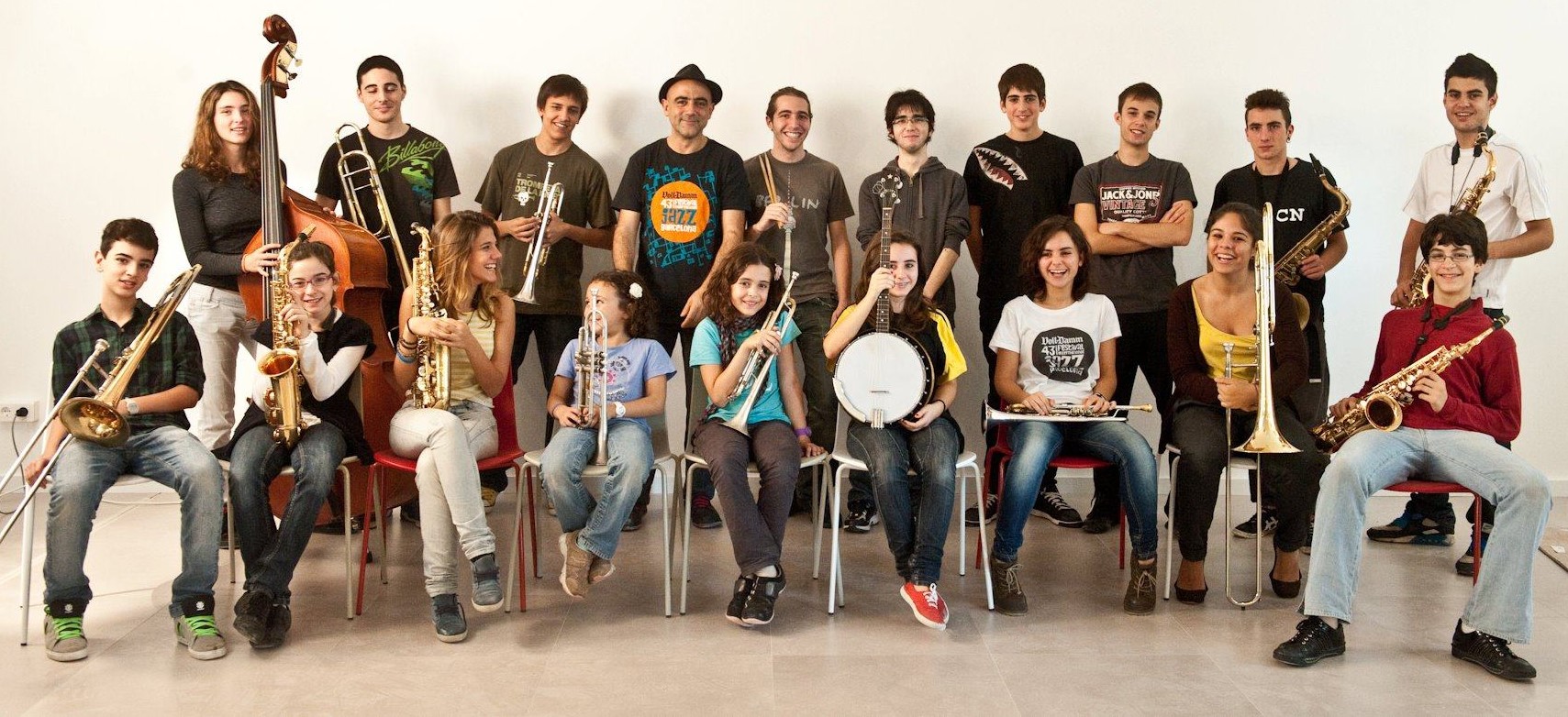
Today, there are now nearly 1,500 videos on YouTube of the band in performance and in recording sessions at The Jazz House, a professionally soundproofed room in Chamorro’s home in the Sant Andreu neighborhood that serves as both a rehearsal space and recording studio. The videos on his own YouTube channel have had over 192 million views and counting.
In September of 2014, a major step forward took place for the SAJB when Chamorro and SAJB manager Blanca Gallo Yáñez launched Jazzing Fest (or simply “Jazzing”) with the blessing and support of the Sant Andreu District. Jazzing became an annual, multi-day music festival hosted by and featuring the SAJB and its musical guests; the first Jazzing hosted a total of ten big bands. In addition to concerts, the event would introduce the Education Stage in 2018, with master classes and informal demonstrations and jams, encouraging audience members to bring their own instruments and receive practical education from world-class musicians on some fine points of playing jazz.
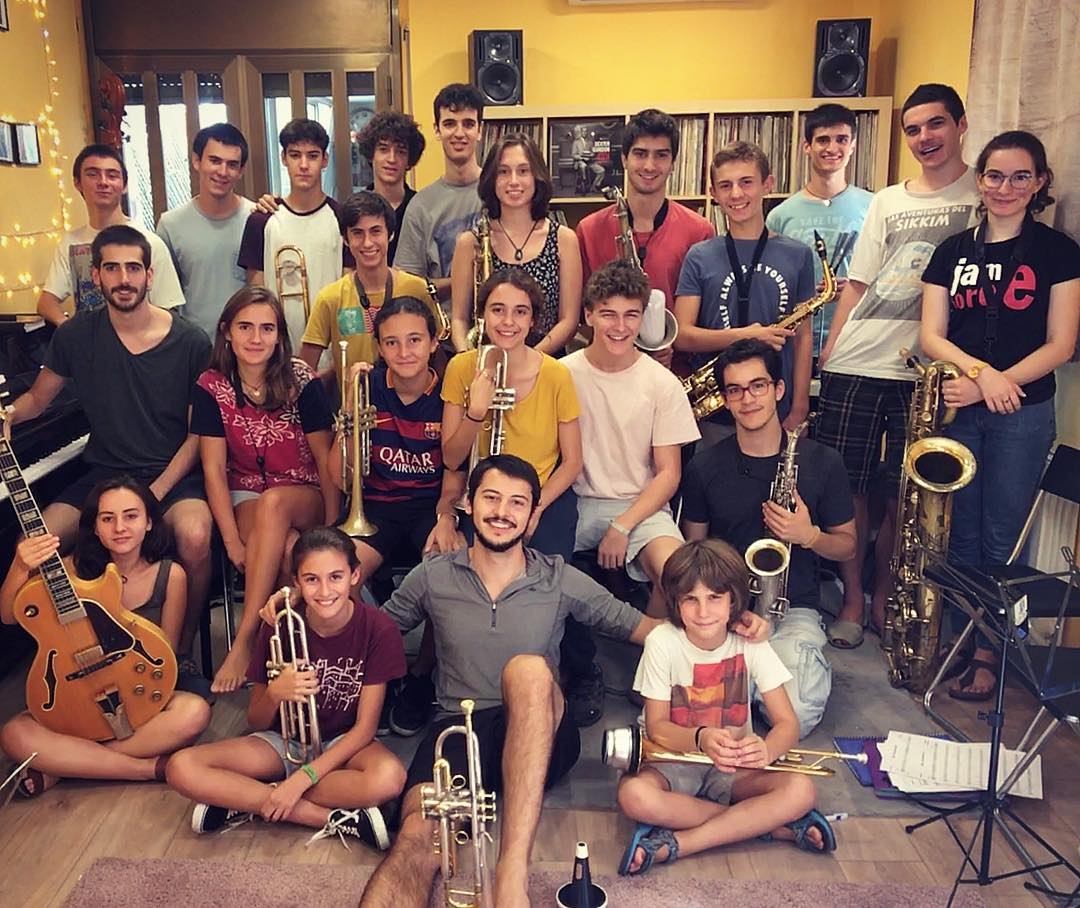
Many top-notch American musicians have played as guests of the SAJB through the years, and continue to do so. Even a partial list reads like a Who’s Who of current jazz virtuosos: Scott Hamilton, Joel Frahm, Scott Robinson, Jon-Erik Kellso, Alan Vache, Joe Magnarelli, John Allred, and others, all of whom have shared the same sense of wonder at the level of musical professionalism of the young SAJB musicians—regardless of the time period in which they were part of the band. There have been no “peak” or “down” years in terms of SAJB personnel and their musical skills. Maintaining such a high level of consistency has been another of Chamorro’s remarkable achievements as the guiding force of the project.
“It’s amazing what he’s accomplished with these kids,” Robinson says. “It’s breathtaking. There’s probably not much more I can say! Sometimes with a venture like this you have a good year, where you have a good bunch of kids, then you have some dry years, where you don’t have that much talent. But somehow he keeps this thing going at a very high level.”
The legendary Hamilton, who has a long and distinguished history playing with the band and its many related projects, concurs. “It’s astonishing,” he says, “because I’m not a teacher, I haven’t spent a lot of time around people trying to teach jazz to young people, but this was different than any sort of jazz education that’s ever existed before, in the sense that everybody there had a natural enthusiasm, and natural kind of understanding of the music, and a natural feeling of the music. And that’s something that you only ever saw in individuals before this, never a group of people who played individual styles and had this kind of spirit and abilities.”
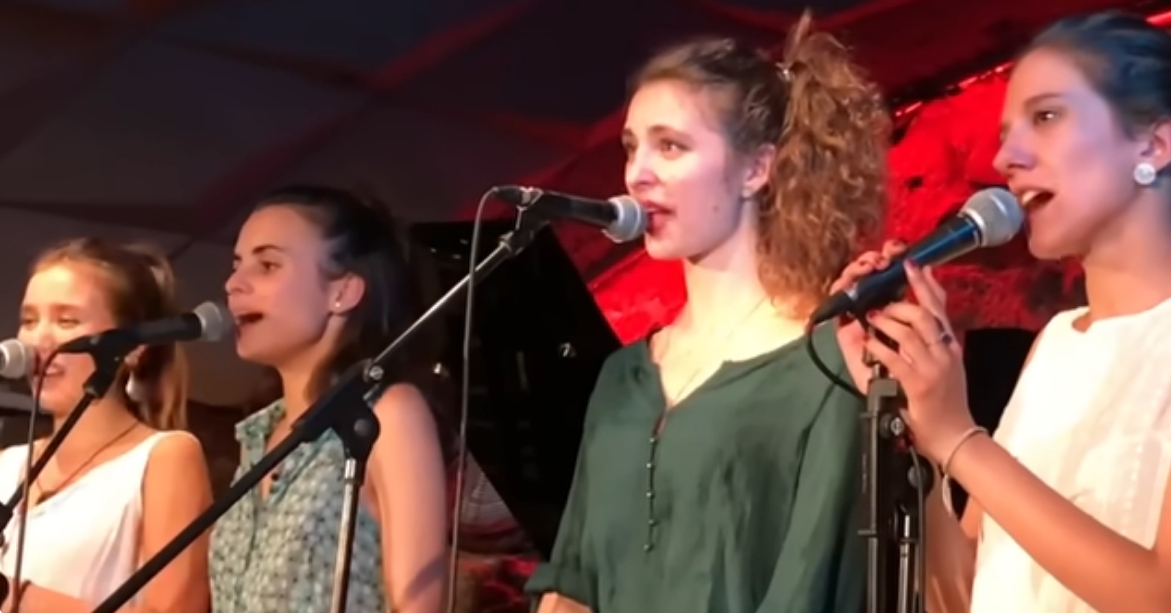
Chamorro has produced over 70 CDs related to the band and its side projects, most notably the Jazzing series of releases, performed by a total of over 90 musicians who have been in the band at one time or another; some have relatively short stays while others have literally grown up in the SAJB, joining as pre-teens and staying for a decade or longer (it’s been a long-standing custom for a member to leave the band upon turning 21, give or take a year).
Another series of CD releases has been the Joan Chamorro presenta series, beginning with Andrea Motis in 2010, and with each subsequent release (18 in all so far) serving as a de facto debut album for a stand-out SAJB musician. “Yes, the idea behind the Joan Chamorro Presents series was exactly that: to introduce and showcase a musician who was doing great work,” he says. “In these projects, the musicians also have to take responsibility for many aspects that are shared with me, such as choosing the repertoire, selecting the best takes, listening carefully to the recordings and making decisions, working on the CD cover, and many other parts of the creative process. There is also a clear before and after in the way a musician plays once we record a ‘Presents’ album. That process changes them, helps them mature musically, and that is something very important.”
Despite the consistency of the band’s musical output, the past twenty years have seen high points and low points. The SAJB and its smaller side groups have enjoyed the opportunities to perform throughout the length and breadth of Europe, with forays to the U.S. and even India. However, the devastating worldwide Covid pandemic and lockdown of 2020-’21 endangered the band’s very existence, without the ability to play live concerts (ticket sales being a crucial source of income), limited travel opportunities, and re-arranged rehearsal schedules to ensure safety of the kids.
But a major highlight came as recently as May of last year, with the SAJB’s participation in Essentially Ellington, the annual competition among high school big bands across the U.S., created by Wynton Marsalis in his role as director of the Lincoln Center Jazz Orchestra. At the 2025 competition, with 30 bands taking part, the SAJB—one of only three bands from outside the U.S.—made the stunning achievement of placing 2nd in the overall competition (first place went to Memphis Central High School).
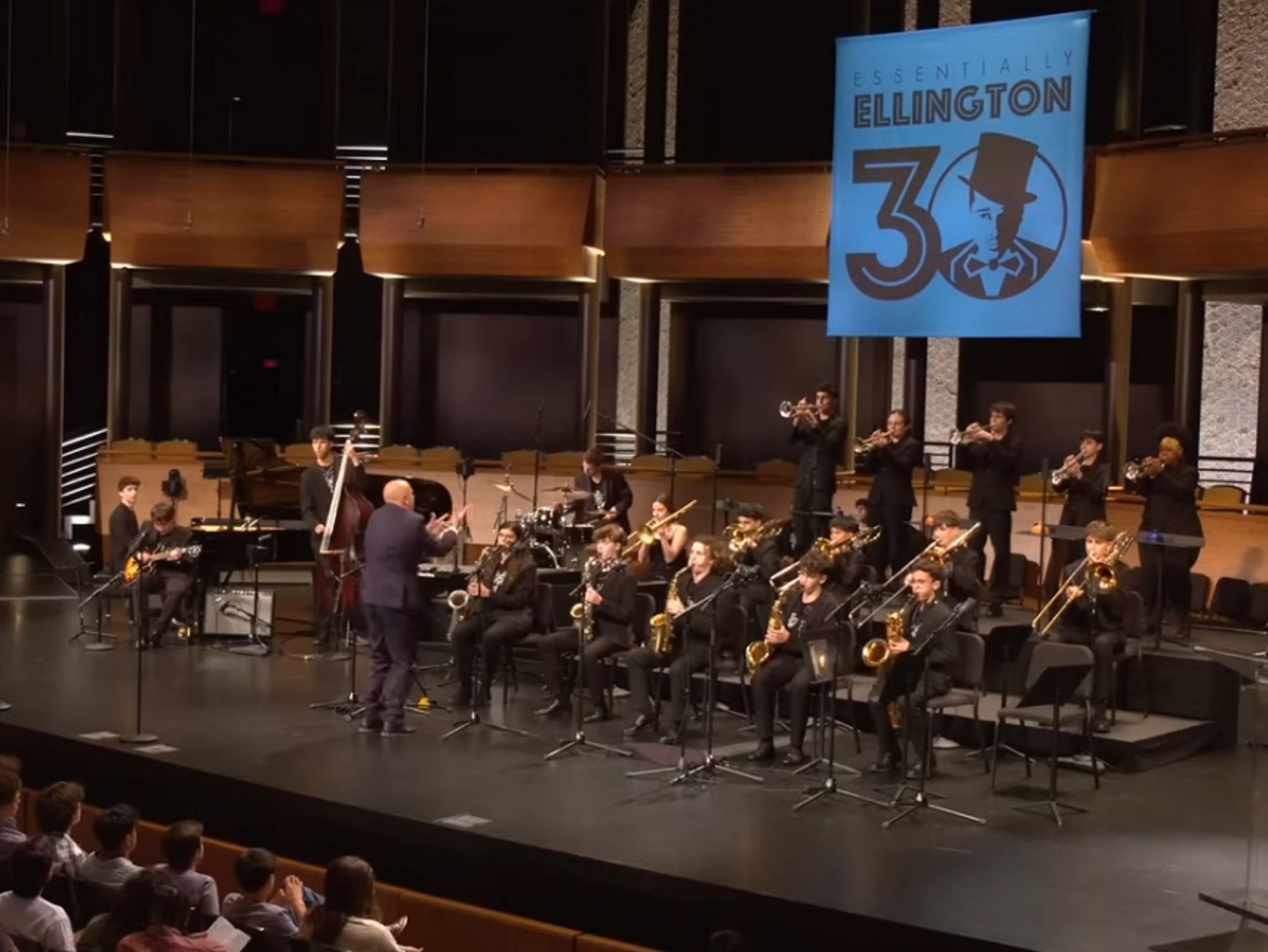
Recently, Chamorro looked back on the accomplishment: “The feelings surrounding our participation in Essentially Ellington and finishing in second place have been many, and all of them very positive. Beyond the visit to New York City—the first time there for many of the musicians of the Sant Andreu Jazz Band—and the experience of performing for the first time in the capital of jazz for all of them (I had been there many times before, including performing at Dizzy’s Club with Andrea Motis and at the Beacon Theatre), it was a musical, human, and emotional experience that will be very hard to forget. It was wonderful to share music with so many youth big bands of such a high level.”
He continued, “For me personally, it was also something that, in a way, confirmed the good work we have been doing over the last 20 years, and that the level we have achieved stands alongside any youth jazz project in the world.”
This past spring, he returned to Jazz at Lincoln Center to receive the institution’s Global Jazz Citizen Award, describing it as “another recognition that I feel deeply proud of—especially receiving it from Jazz at Lincoln Center, from Wynton Marsalis himself, and during such a wonderful gala as the one we experienced there. I honestly have no words to describe it. It was another dream come true among the many dreams we have been fortunate enough to live through since the release of Jazzing 1 back in 2009 (we already have more than 70 CDs connected to the project, and this year another eight will be released.
Chamorro, who is what could be described as a soft-spoken extrovert, added without false modesty, “We truly are a very singular and unique project.”
More travel is in the band’s future, including a return to New York in late September. “We will most likely go first to Bogotá, where I will be together with [current SAJB stand-outs]
Pau Garcia, Lola Peñaranda, and Elsa Armengou, teaching a five-day course. After that, we will finish with a concert by the Sant Andreu Jazz Band and then continue on to New York.”
They will perform at JALC and in the prestigious Dizzy’s Club. “The idea originally came from the Barcelona Jazz Festival, and I took the initiative to make it happen. We are making a huge financial effort to make this dream become a reality as well. Jazz at Lincoln Center is paying us for the concerts, but not for the flights or accommodation, which we have to cover ourselves. Even so, I truly believe it is worth doing something like this for our 20th anniversary. Another dream come true.”
After that, there will be still more ways of celebrating the 20th anniversary. “We have a very busy schedule,” Chamorro says, “especially considering that we are a big band. The Barcelona Jazz Festival is awarding us the festival’s Gold Medal—an honor that many great musicians have received over the years—and they are also granting us the Artist Portrait series, with four concerts connected to the project.”
And what lies beyond 2026 for the Sant Andreu Jazz Band? Some of the SAJB’s longtime “superfans” have speculated that Chamorro might be considering winding things down, or at least lessen the workload for himself, as he is raising his young son with partner Elia Bastida.
He is just a little reticent to contemplate the project’s future.
“Right now,” he says, “the important thing is to accomplish everything I have set out to do this year and truly enjoy it. This year, eight or nine albums will be released (or at least, I’m going to try), and we are already recording several more projects that will be released next year. Beyond that, I honestly do not spend much time thinking about the future—partly because I do not really have the time to.
“At the moment,” he says, “we already have some commitments with the Sant Andreu Jazz Band for 2027, and I am sure we will fulfill them. But regarding the future of the project itself, I need to sit down with all the families and the musicians and reflect together on what we want to do moving forward. As for me, I still have the enthusiasm and the energy to continue, but I also need to feel that same commitment and excitement from each and every musician who is part of the orchestra…I would also like to have more time for myself as a professional musician—especially to play the baritone saxophone again—and, above all, more time to be with my family, which right now is the most important thing in my life.”
He’s content to see how life continues to unfold rather than plan each day far into the future. “So, for now,” he suggests, “let’s enjoy 2026, enjoy the present moment, and the future will reveal itself in time.”

For over twenty years, Garry Berman has written books and articles related to pop culture and entertainment history. He has contributed articles to Beatlefan magazine, Nostalgia Digest, and History magazine. In addition to his non-fiction work, he also writes comic novels and screenplays.He is also co-administrator of the Facebook group page Friends of Sant Andreu Jazz Band. Visit him online at www.GarryBerman.com.