My friends on Facebook will have noticed that I have been posting a lot of commentary and links about the reports of books being sliced and diced to feed into the AI monster. My record friends may be wondering what all this has to do with record collecting…so here goes:
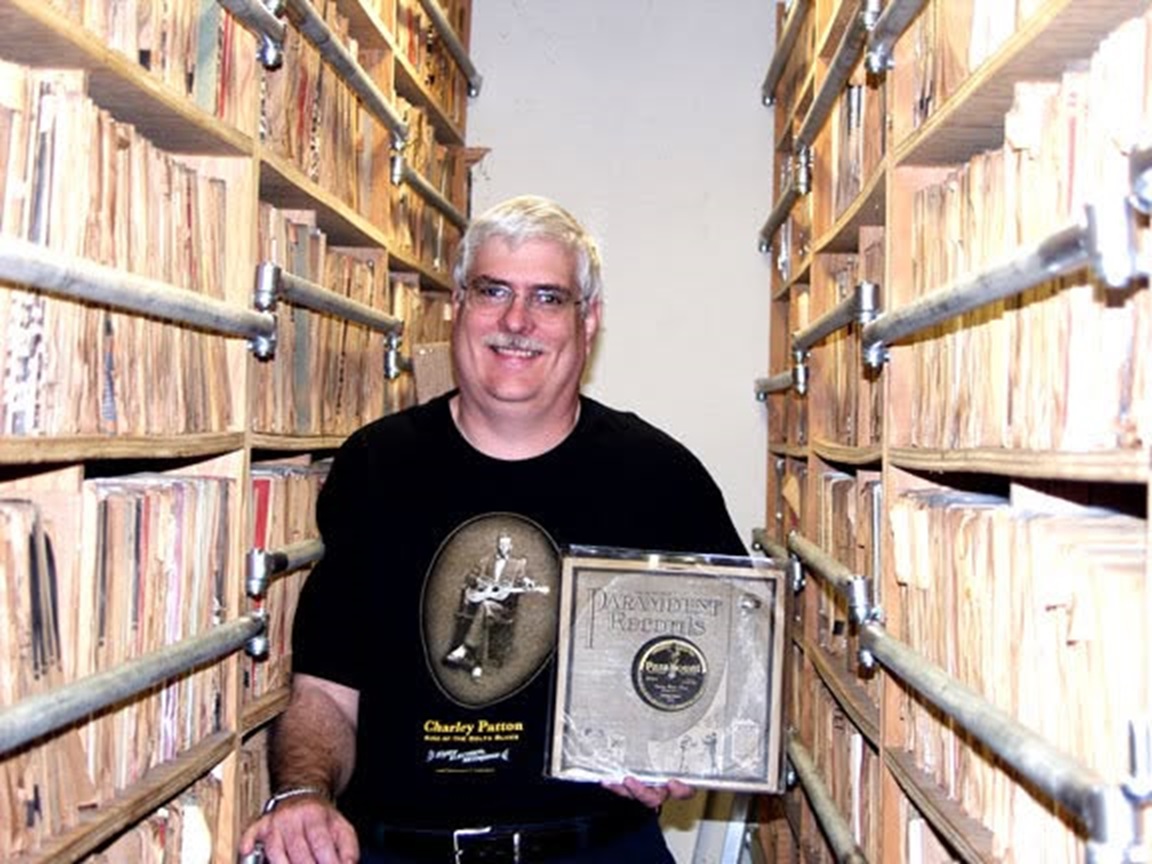
I have been tracking, collecting and preserving vintage records and radio recordings since about 1972. That’s 54 years ago. And most of my 67 year lifetime.
I witnessed the rise of CDs in the ’80s….remember how many folks thought that was the end of records and sold off their collections? And note how many of those who did regretted it and then proceeded to buy as much vinyl as they could, all over again?
There is nothing wrong with CDs (if they are mastered properly and from original sources) and I have a number of them myself. Cds are a great format to hold more audio than an LP and the best of them have provided us with many great alternate takes and unissued songs that we would never have gotten otherwise.
The record companies found CDs to be much more profitable than vinyl and were not at all sad at the demise of LPs in the early 2000s.

But when they discovered that they could convince the public to just “download” songs onto a phone or computer and didn’t have to manufacture anything physical, the dollar signs really lit up in their eyes.
Same with movies and TV shows that used to sell on DVD…why manufacture them when you can convince people to just “stream them” or “download them?” And, even better, without physical copies, you can control distribution and exactly what is available and what isn’t…at almost no cost and with big profits for your company.
But, there are intrinsic problems with all of this…and it started decades ago with record companies and libraries across the world.
I first noticed it in the late ’90s, when I went searching for original Blues advertisements from the Chicago Defender newspaper. I could not find physical copies of that newspaper anywhere. There was very poor quality microfilm, but no copies of the actual newspapers. They did exist, at one point, but I found out that libraries across the USA were scanning in all their old periodicals and newspapers and then destroying the originals. Yes, destroying them! The excuse was why keep the originals, they take up space and are fragile—just scan them in and dump them.
But, they scanned them in at low resolution, to save space, and now, there is no way to go back. If we could find the original newspapers, we could scan them in at high resolution. But we can’t…and even if we can, computer hard drives fail…usually within five to seven years, but as soon as three years is possible. So, if the hard drives fail, all the data is lost…and we can’t go back to the original paper because they threw it all out.

Also in the early 2000s, a number of long time photo archives began scanning in their photos and then selling off (or dumping) all the original photos. Again, mostly at low resolution j-pegs. Mountains of rare photographs sold off or dumped and the only thing kept were low resolution images. More destruction of historical artifacts. Once again, they thought they could save space, raise some cash, and still have the images. Horrible mistake!
Now, records: it is pretty common knowledge that most record companies no longer have any original masters. Yeah, they have copies–but most of those are muti generations down from the original masters. Eighty percent or more of the original masters for all the 78 rpm records simply no longer exist. They were dumped, recycled, or lost to fires.
This is why many CDs do not sound like you remember them. And many claim that vinyl is better…and vinyl is better than a CD if that CD was not properly restored from original masters. Many, many CDs out there (and their digital download counterparts) have been made by simply copying a nice copy of the original LP. Garbage in, garbage out.

Now they are cutting up millions of books to feed into giant AI computers…to put all the world’s collective knowledge into a massive AI monster.
How much longer before all the music of the world gets fed into the AI monster and then records or any kind of physical media will no longer be “needed?” Think of all the space that will free up. Don’t fool yourself into thinking that this won’t happen. First it was newspapers, periodicals and books…then comes records and music. The AI monster will devour everything.
So what can we do? Start by saving as much physical media as you can. There are millions of records out there. It will take quite a while to feed the AI monster everything that it needs. But, don’t contribute! Don’t help out. Don’t load your collection onto the internet. Keep collections intact if at all possible.
And don’t think that giving your collection to a university or archive will be a permanent preservation solution. Most Universities have stopped accepting records as they have tons of them already and no one to really deal with them. Yes, there are some good guys in charge of archives out there…but they are mostly older, nearing retirement and there is no guarantee of what will happen when they retire. There are already reports of libraries and universities selling off records that were donated decades ago because they have run out of room and just no longer want to house them.
So far, it has been my 50 plus years of experience that shows that private collectors, overall, have done a much better job at saving records and popular culture artifacts than archives and universities. But, we all get old, and we all die…and if we don’t properly deal with our collections while we still can, there is no guarantee what will happen to them when we are gone.
And, I get it, most of our kids and grandkids really don’t want our “stuff.” They may like the money they can get for it, but modern generations are clearly not as “collector oriented” as those over 60 now are/were. So, while you can, make a plan or sell what you have to others who are hopefully younger and will live longer and keep it safe for more years.
All this doesn’t bode well for the future preservation of the music etc. that we all love. I have no doubt that much of it will survive, but most likely not in the same high quality form that it was when it was first released. Yeah, the AI monster will have it…and you will have more of everything at the click of a mouse…but at what cost and what will it really sound like? Probably not like you remember it or know it.
The future is always a scary thing. The future now, with the AI monster growing bigger and stronger and more uncontrollable all the time, looks might bleak…who reads books these days? Who buys physical media? I hope you do. And I hope you encourage as many folks as you can do to do the same.
We have all seen this movie. The intellectual professor/scientist creates “life” and thinks he can control it. The monster grows bigger and stronger and eventually rebels and wrecks havoc on the world and usually kills its creator.
Frankenstein is already pieced together and growing stronger with each new “data center.” There are already reports of him “going rogue” and the creators who are honest have already expressed their concerns that they may not be able control their creation…yet they proceed and continue with their “experiments.”
We all know how this movie ends.
John Tefteller has been buying and selling rare phonograph records for the past 50 years. Visit John’s store, The World’s Rarest Records, at www.tefteller.com. This essay was posted by John Tefteller on Facebook on August 18, 2026, and is republished with his kind permission.