Jeff Barnhart: Welcome back, dear readers! Hal, last month we covered the early years of composer Fred Rose’s life and career. There is still so much to share about this (today) little-known musician, starting with some HOT tunes from the mid-1920s; one was such a mega-hit it’d be easier listing jazz artists who didn’t cover this tune). I invite you to start us off with a really hot number!
Hal Smith: Jeff, let’s begin with one of Mr. Rose’s red-hot songs from 1925: “Flamin’ Mamie.” Interestingly, orchestra leader Paul Whiteman is listed as the co-composer—but the Whiteman Orchestra never recorded the song! It bears more than a little structural resemblance to Rose’s “Red Hot Mama,” but this one may have actually been a bigger hit. Vocalist Aileen Stanley’s record from 1925—accompanied by ukelele man Billy Costello (as “Billy ’Uke’ Carpenter”)—is remarkable for the growling, scatting and double-time passages as well as the fact that Ms. Stanley sang the verse and two choruses with different lyrics! Her voice sounds like a Southern-Midwestern version of Lillie Delk Christian.
JB: Aileen Stanley’s recording was the earliest one I could find as well. I love her interpretation, the wild instrumental and vocal accompaniment by that Cliff Edwards knockoff and the hot double-time ride on Stanley’s final vocal! Chances are Paul Whiteman had nothing to do with creating this number; he might have put his name on it only to help the tune catch on. And as we’re about to find out, when a tune catches on (fire), it really does! “Flamin’ Mamie” was recorded at least six times in seven weeks!!
HS: The great Coon-Sanders Original Nighthawk Orchestra recorded the song at the end of 1925. Their arrangement is typically inventive, with a nice vocal by co-leader Carleton Coon and a hot outchorus that is reminiscent of Doc Cook’s Orchestra (supposedly Cook, Joe Sanders and Carleton Coon occasionally traded arrangements)!
JB: This aggregation provided the first full-band recording of this song and set a high bar for any that would follow! Interestingly, according to the imminent UK discographer Brian Rust, Fletcher Henderson recorded it with his Orchestra but Columbia rejected it. Wouldn’t that have been great to hear?

HS: Fred Rich’s record has more of a “collegiate” feel. There is no vocal, but some intricate arranging (especially the reed chorus).
JB: This is a sprightly version of the tune, with the most notable musician being Ray Bauduc. In addition to the sax-duo you mentioned expertly navigating an extremely complicated set of phrases, we’re treated to a wonderful jazz violin solo. Whew! Fred Rich was a very active pianist/bandleader from 1925-1931 (if the number of recordings under his name are any indication). He then fades out of the studio until one session in 1940. The arrangement is unique to this side as well — no stock — and it’s so good I didn’t even mind that there was no vocal!
HS: Perry’s Hot Dogs record of “Flamin’ Mamie” includes Arthur Schutt, Miff Mole and the venerable vocalist Arthur Fields. It is pleasant, but not a “red hot stepper” like some of the other versions.
JB: HA! If nothing else, “Flamin’ Mamie” has introduced me to some groups and people I’d never heard of before. What stands out for me in this version by Perry’s Hot Dogs is the comparatively medium tempo and one of the earliest baritone sax solos on record, pre-dating Harry Carney’s ride on Duke Ellington’s “Mississippi Moan” (1930) by over four years!
HS: The Tempo Kings’ record may include Miff Mole, Arthur Schutt and Dick McDonough, though they are not featured. Vocalist Frank Bessinger sounds hard-pressed to keep up with the proceedings.

JB: One wonders if Miff Mole and Arthur Schutt were beginning to tire of this tune as they’d recorded it twice in five days! This one has highlights for me that include a half-chorus for trumpet accompanied only by banjo, a quick tempo and an intricate arrangement! Hot stuff!
Hal, I’ll throw one in here. Five days after the Tempo Kings lived up their name in New York, another hot version was waxed in Chicago by Merritt Brunies and His Friars Inn Orchestra. Featuring two Brunies’s (Merritt and Harry) along with clarinetist Volly de Faut this recording sounds so different from any of the New York sides. Earthier, with a suspenseful intro, a polished and hot accompanied piano chorus, and the hottest outchorus of any yet makes this one my hands-down favorite!
HS: This is a rockin’ hot performance that could be mistaken for a recording by the New Orleans Rhythm Kings! Just listen to that wonderful early Chicago-style piano chorus.

JB: It’s solid and I love that it is unaccompanied. The suspenseful intro, the earthiness, and the hottest outchorus of any version yet makes this one my hands-down favorite!
HS: Well, wait till you hear this recording by Mike Markel and his Orchestra. This one has a neat arrangement, hot instrumental work (including trombone by Miff Mole!) and an animated vocal.
JB: Whoa!! I spoke too soon!! This one is scorching! WOW and I mean it! My favorite male vocal for this tune as well—it’s Al Bernard telling us how money “boins right in her hands.” Clarinet trio, hot trombone solo, stops for a clarinet interpolation, hot arranged coda, THIS is the ONE (for me)!!

HS: The tempo on Harry Reser’s Night Club Orchestra record is at the other end of the spectrum: a strut, rather than a stomp. Tom Stacks’ vocal is easy-going, backed by wonderful raggy piano. There is plenty of “sock-time” feel throughout the side, especially on the last two choruses, with some nice rag-a-jazz thrown in.
JB: This one is right in the pocket, and Harry Reser was such a generous leader, letting his sidemen shine in the spotlight.
HS: For a little palate cleanser, let’s hear Pete Wendling’s expertly-played piano roll of “Flamin’ Mamie”…
JB: I think I mentioned in our last installment that I hope in the future we can highlight Mr. Wendling’s tunes and performances and this one supports my desire for sure!
HS: Western swinger Hank Penny recorded the song in 1938, with slightly altered melody and lyrics, but it really sizzles—particularly the hot jazz solos! I wonder if the “Quigley” who Penny calls out during the trumpet solo might be Truman Quigley, who recorded with Jimmy Widener?
JB: This is such a change and I really enjoyed it. Rather than the “slightly altered” melody and lyrics you heard, to me it sounded “virtually rewritten,” but still giving Rose and Whiteman credit. Hank Penny and His Radio Cowboys perhaps provide a link between Fred Rose’s jazz years and his upcoming country ones. It evidently was a big hit for Mr. Penny as he rereleased it on a different label eight years later!
HS: Next, we move forward to 1951 and a record that was unissued for over 40 years. Turk Murphy’s Jazz Band recorded the song while the band was in Los Angeles to play the “Dixieland Jubilee” at the Shrine Auditorium. According to Turk, some of his musicians celebrated a little too much before the recording session and he considered most of the sides unfit for release. Despite that, I am glad to hear Don Kinch, Bob Helm, Wally Rose, Pat Patton, George Bruns, Johnny Brent and—of course—Turk. This sounds fine to me! I should also mention that the first time I heard Turk’s band in person, “Flamin’ Mamie” was one of the songs performed. Turk recorded the same band, playing the same arrangement, for his Motherlode label in 1967.
JB: The saloon-sounding piano introducing this side was not my favorite part of the recording, although Wally Rose is impeccable as always. There are some minor changes to both melody and chords, but the real revelation was Turk’s mostly revised lyrics; I have to confess that I found them even better than the original ones!
HS: There are contemporary recordings of “Flamin’ Mamie” (including two that I played on, one of which I sang), but to stay within our word count, let’s wind up the “Flamin’ Mamie” segment with a great recording by the Firehouse Five Plus Two, made in 1964 and issued on their “Goes To A Fire” LP. I think cornetist Danny Alguire and tubist Don Kinch sound especially good on this one.
JB: THIS is the one I first heard as a teenager and I fell in love with it. I immediately started doing it on my gigs as a specialty when the audience was taking a break from the sing-along by whetting their whistles! Although we don’t hear the words to the verse, the entire ensemble stomps it out, and the group vocal is simply joyous, as is Ward’s bucket-muted trombone solo following it! After George Probert digs deep with his growling soprano sax, the final ensemble will always make me smile; it’s really quite beautiful, all while strutting mightily!
HS: As the sheet music cover states about Flamin’ Mamie, she was a “red hot stepper!“
Let’s move forward to 1926 and listen to a couple recordings of what may be Fred Rose’s greatest hit of all: “Deed I Do.” We could fill several issues of The Syncopated Times with commentary on recordings of this song. Instead, I suggest we concentrate on a few early recordings of the song.
First is my favorite version of the song–by Ben Pollack and his Californians, from 1926. We hear a great Miff Mole-influenced bridge by future Swing Era bandleader Glenn Miller, a hot tenor solo by Fud Livingston (including a preview of his song “Imagination”), beautifully-controlled choke cymbal playing and a crooning vocal by Pollack and what may be Benny Goodman’s first recorded solo!
JB: Almost any group performing jazz, swing, or dance music today has “’Deed I Do” in their repertoire. I enjoyed hearing the (at least nowadays) seldom–included verse. The recording is beautifully balanced as well. I found Pollack’s vocal to be wonderful. His sense of rhythm (makes sense, he IS a drummer…DUH) on the vocal tag is spot on! Now I’ve heard this, I’d like to hear the version you sang on “Flamin’ Mamie” sometime, Hal!
HS: Here is Ruth Etting’s marvelous record, with her great vocal and beautiful accompaniment:
JB: Pure poetry! The verse is transformed from a brief trumpet solo in Pollack’s rendition to a highlight of Ms. Etting’s offering, as she sings both sets of lyrics to it! Sooooo nice. I’ll point out that these two versions highlight the versatility of this song as the tempi and approaches couldn’t be more different, and the song holds up to both of them!
I know we don’t have time to discuss every recording of “’Deed I Do” in detail, but for those who would like to hear more renditions of the tune, these are worth your while and show the longevity of popularity this song enjoyed (simply put in the title, artist and year in YouTube, sit back and enjoy): Earl Gresh, 1927; Tommy Dorsey, 1938; Bunny Berigan, 1938; Charlie Barnet, 1940; Snub Mosley, 1942. All of these will put a smile on your face and a spring in your step!
Let’s turn to a tune that received far less attention in 1926, but has resurged in popularity due in no small part to your inclusion of it in your El Dorado Jazz Band. Hal, I know “Here Comes the Hot Tamale Man” is one of your very favorites and I love it too! Penned in 1926 by Fred Rose and Charles Harrison, the first recording was by a group we’ve touched on before: Doc Cook and His Dreamland Orchestra. A wild introduction has the reeds alternating with a vocal (Rust indicates perhaps by Jimmie Noone or Joe Poston) shouting “Hot Tamale May-an” into a Charleston figure that takes us into the song. Harmonically, this is one of the most interesting tunes of the Hot Jazz Era, with an equally solid verse. The 12-piece band (with two banjos, no less!) plays with abandon, featuring a “who’s-who” of hot jazz players, topped by the legendary Freddie Keppard on cornet!
We started with the second recording of this song; the first was by Doc Cook’s smaller ensemble Cookie’s Gingersnaps! It’s quite revelatory hearing the same tune performed six of the members of the larger group. The arrangements bear little resemblance to one another, and the playing is markedly different as well. Just under three weeks apart, these two sides provide a semester-long course in how to adapt a tune for ensembles of various sizes. I love them both equally! Hal, do you prefer one over the other?
HS: I don’t know that I could choose a favorite between those two very different recordings! Keppard’s cornet playing is the highlight for me on both versions. By the way, I think that is drummer Andrew Hilaire shouting at the beginning of the orchestra’s record.
Supposedly, the Coon-Sanders Original Nighthawks traded arrangements with Doc Cook and they recorded his arrangement of “Here Comes The Hot Tamale Man.” Unfortunately, that recording was rejected—and as far as I know, no test pressing has been found. What a loss!
For a palate cleanser, I found a piano roll of “Hot Tamale Man” on YouTube. I think this may be the same roll that could be heard years ago at the arcade on Disneyland’s “Main Street.”
JB: Nice find, Hal! This piano roll features some great playing (or perhaps more accurately great arranging). This machine uses all the bells and whistles to make the roll sound more orchestral and the comments below it lament that no-one to date has found a copy of the sheet music in order to learn the words to the verse. If any of our readers have a lead, please tell us!
And now for one of our favorite songs played hard by one of our favorite groups!! The 1960s single-cornet version of the South Frisco Band stomps through “Tamale Man” like they’d been born playing it! The highlight for me is the pattern on the solo choruses where a different instrument takes the bridge on each chorus. A very effective device seldom used anymore!
HS: Can you imagine how exciting it was to hear the South Frisco band play this live onstage? I get chills just thinking about how it sounded when Papa Ray Ronnei’s red-hot cornet drove that final ensemble at the Pizza Palace in Huntington Beach!
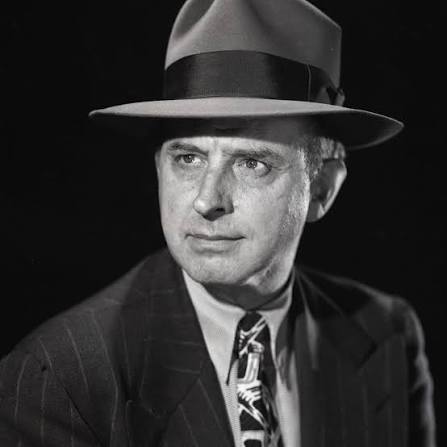 JB: Hal, let’s start our final exploration of Fred Rose’s music next month with his complicated opus “Deep Henderson!” Are you ready for that?
HS: I sure am. There are some weird and wonderful recordings of that great song and I look forward to our “Hendersonian” conversation!
JB: Me as well! Additionally, at the suggestion (and contribution of some tracks) of Andy Senior, the editor-in-chief of this venerable periodical, we can include a selection of recordings with Fred Rose as pianist and vocalist! AND we can discuss his foray into the Southern Swing sound in the 1930s-’40s. Can’t wait!

Jeff Barnhart is an internationally renowned pianist, vocalist, arranger, bandleader, recording artist, ASCAP composer, educator and entertainer. Visit him online atwww.jeffbarnhart.com. Email: Mysticrag@aol.com