When historians think of the first famous drag queens, most will consider the liberated ones of the 1920s. Usually Julian Eltinge and Gladys Bentley come to mind, but there was one much earlier who had become famous as a “female impersonator” long before making records. He remained mysterious throughout his life, refusing to speak much of his origins and career. His records over 100 years after his death are still very popular with collectors. In more recent years there have finally been more discoveries about his life, though it took quite a lot of effort to find anything new.
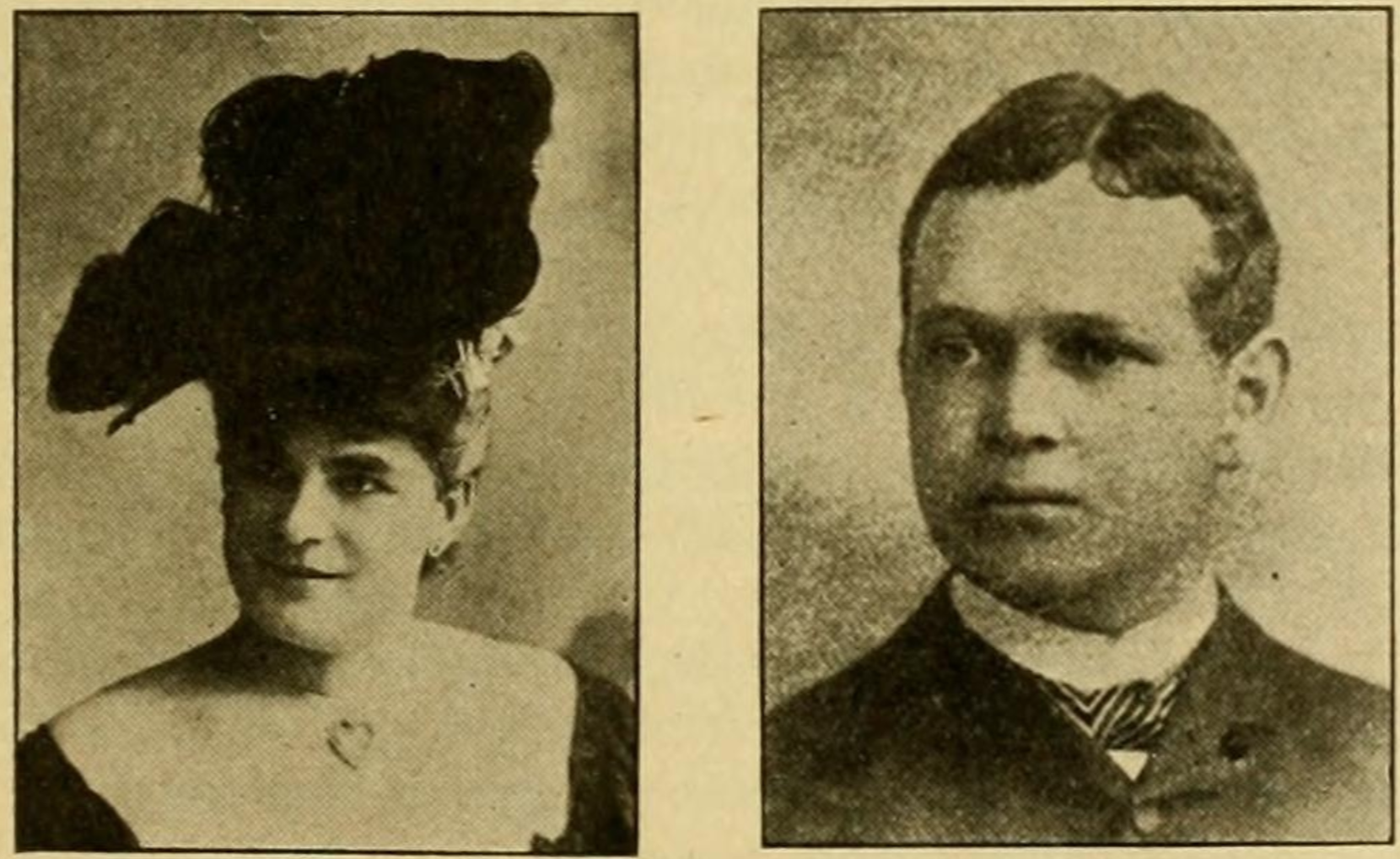
Born George Franklin Shepard in Oneida County, New York, in 1854. When he was young the family moved around a lot. In 1870 they were living in Minnesota, and in 1880 they were in Iowa, which is where the family would settle for the rest of his parents’ lives. His father worked as a fire insurance agent, a very lucrative occupation at the time. Not long after the 1870 census, it is believed that young George began performing, and soon changed his name to Burt. According to the 1911 book Monarchs of Minstrelsy, he started performing in 1874 with Haverly’s New Orleans minstrels, and stuck around with them for three years. It was here that he began not only performing in blackface, but he took it to another level as a so-called “female impersonator” (what we would now call a drag queen).
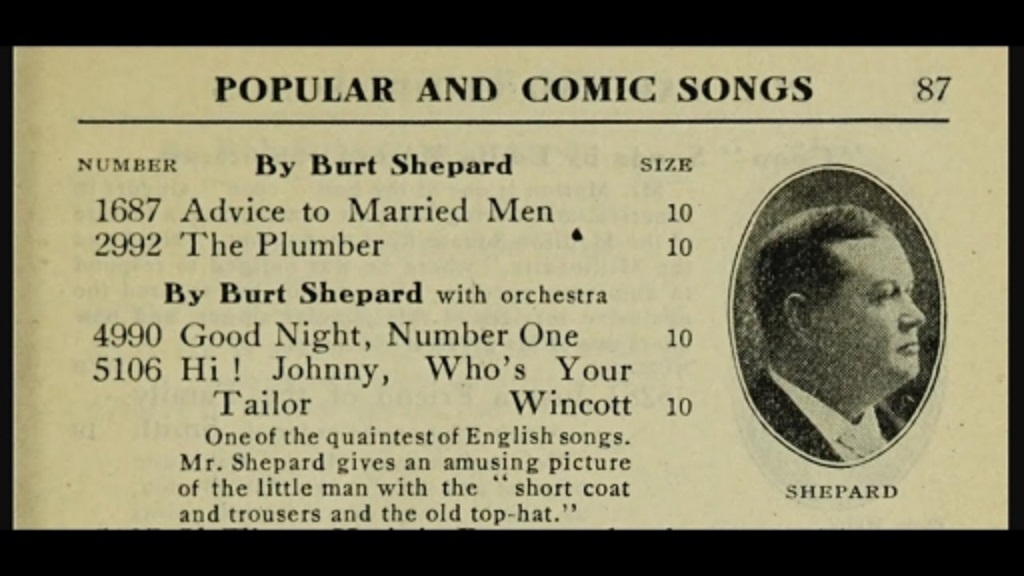 It didn’t take long for audiences to become enchanted by his drag performances. In those days, as a drag performer, you had to do it all yourself: the costumes, makeup, songs, the music, the jokes, it was an incredibly strenuous style of performance. You had to be a one person show. He became an expert in this and became famous for it. His specialty was parodies of popular songs, something that he would continue to do decades later. What made his act so funny was his strong baritone voice and his larger size. Because of this, he soon became a must-see act. One 1888 review stated thus:
…Burt Shepard’s make-up and action as a strong-minded widow is worth going miles to see…”
Even audiences in Los Angeles were treated to his masterful drag performances, one reviewer there in 1895 made sure to describe the flowing yellow dress and wig he wore to be particularly hilarious and fetching.

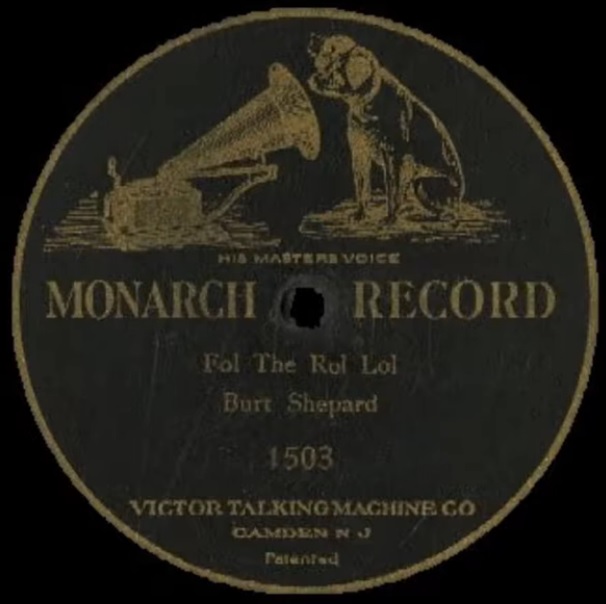 While he became known for this persona, he is also noted as one of the most well-known minstrel performers of the late 19th century, hence his name is featured in the above mentioned Monarchs of Minstrelsy. In the book a long list of various famous troupes is written under his name. He did small parts as well as the middle man (often the one guy in the troupe who didn’t wear the black makeup). The term itself “middle man” was sometimes thrown on its head as he would sometimes do it in drag. You would never know this listening to his later records, there’s barely any indication of dialect or stereotypes in his voice and material. He did songs of the sort, but he specialized in songs that were purely comical, but also some that were just racy enough that some people would have been slightly offended at the time.
In 1897, he toured England, and this is when he fell in love with the place. He ended up spending much more time there in the coming years than in the United States. He made a smash hit in England, performing more suggestive songs, and he ended up performing all over the world, from the ends of the British Empire to Paris. It is likely that, like many performers from the United States, that he found more success overseas, as they were more accepting of his act and material.
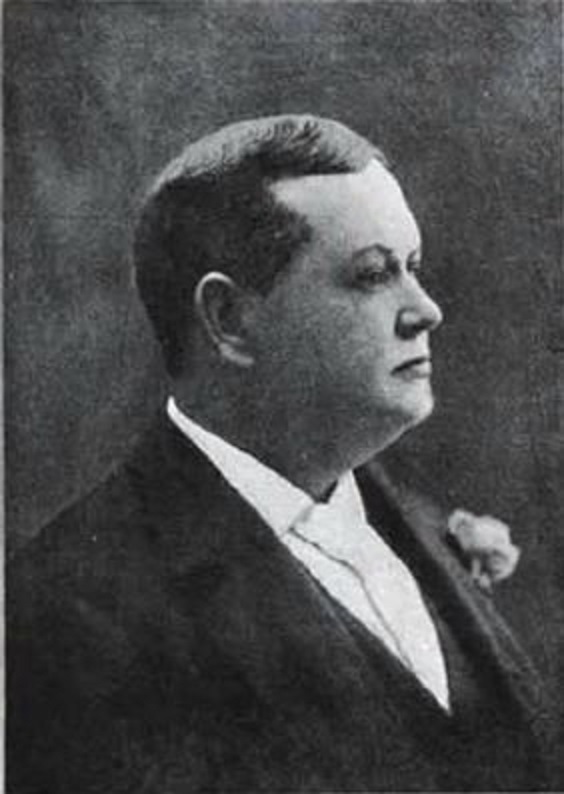
In 1899, he made his first few records for Fred Gaisberg and Sinkler Darby at their Berliner office in London. It is because of this that he is mentioned in Gaisberg’s book The Music Goes Round. This was the beginning of his recording career. From here he would make records rather consistently for the next 15 years or so. It was notoriously difficult to arrange recording sessions for him, as he was seemingly always on the road, so whenever he made records many different takes would be crammed into single sessions. This is similar to when Silas Leachman recorded.
He had a very distinct performance style on the phonograph. At the time recording was generally thought of as a low form of entertainment, but those who worked in the world were very serious about it. By the time he started making records regularly, there were formalities to the process, including a rather standard style of announcement at the beginning of each record. Usually a record would have an announcement at the beginning with the title, the performer, and sometimes the record company name. For some reason, on most of his Victor records, Shepard would say the title and abruptly say his name after. Also if you are listening closely to many of them he will often clear his throat as if it were some sort of rehearsal. His nonchalant nature with the medium makes his records incredibly charming and unusual compared to others.
It wasn’t just his quirks while recording that made him stand out, but also the content he recorded. As he had spent several years in England by the time he started recording, he had become an expert at rendering some rather racy English music hall songs. Many of these would have often raised listener’s attention in the United States. Songs of this type include one called “other things too numerous to mention,” where one verse tells of how he likes to go to a music hall where in addition to lots of alcohol flows, but also girls will undress just for fun on the stage. Other songs include lines like:

“Early in the morning you’ll hear father shouting hip-hooray!”
“I’d like to see where she sits at night!”
“I asked some fellow how I looked, and he said, may I be sat on?”

After 1906, he never came back to the United States to make records. From then he only made records in England, and he remained there on the stage as well. He married actress Ida Fitzhugh and had a daughter. His daughter, Venita, was born in 1893 in Chicago, and like her parents, she became a performer, but she died tragically in a car crash at 26. Unfortunately, Shepard died while performing in his adopted home of England in 1913. In his time and today, he is generally more recognized in England. His records are sought after there as much as those of Arthur Collins in the United States. It’s unfortunate that he didn’t live to see the “pansy craze” of the 1920s, as he probably would have done very well with his drag performances, as Julian Eltinge had a second wind in that decade.
R. S. Baker has appeared at several Ragtime festivals as a pianist and lecturer. Her particular interest lies in the brown wax cylinder era of the recording industry, and in the study of the earliest studio pianists, such as Fred Hylands, Frank P. Banta, and Frederick W. Hager.