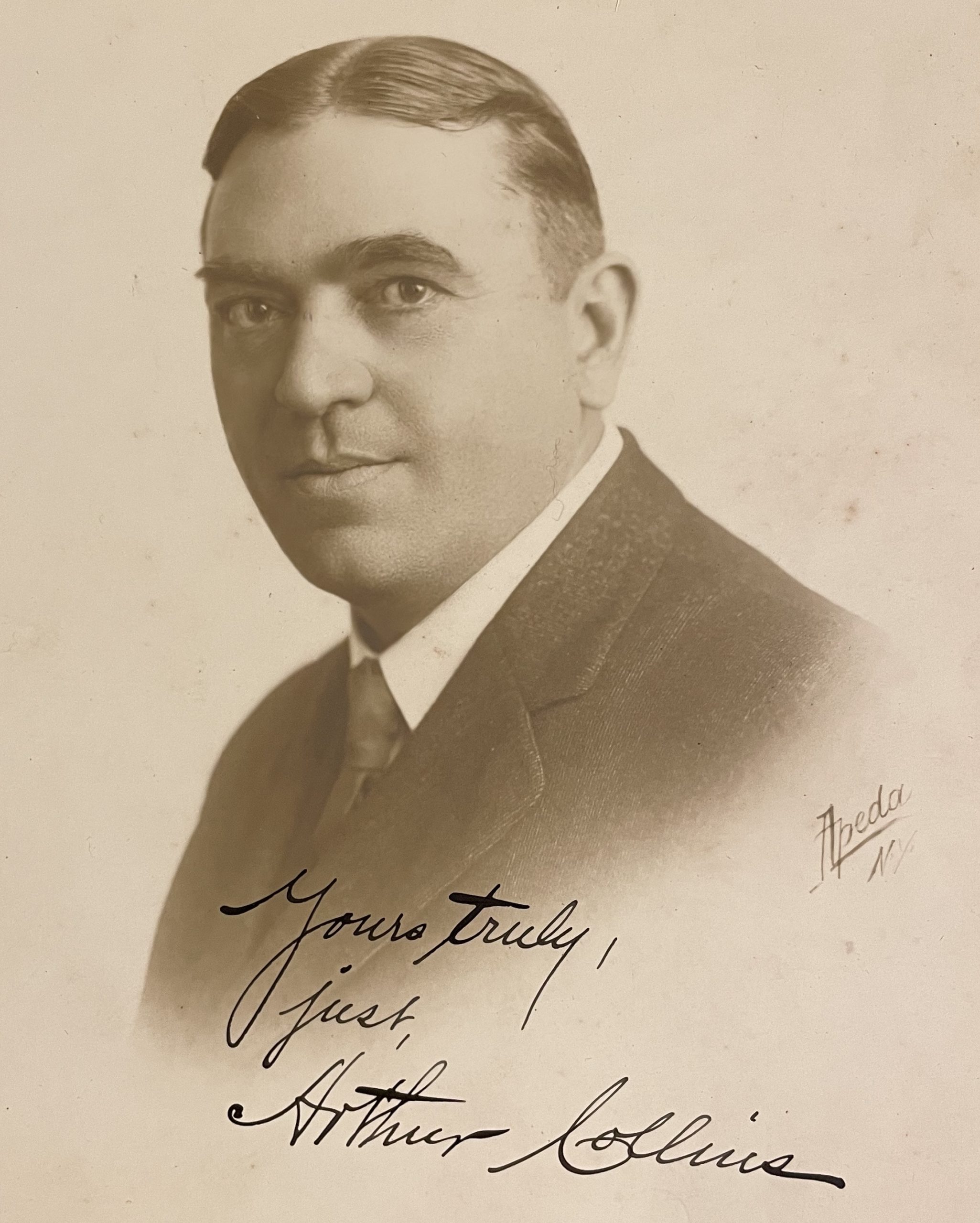
 It is difficult to determine who the most popular singer of the acoustic era was, and while many of the time claimed this title for themselves, one could argue Arthur Collins was certainly one of them. His career went in several different directions before he became part of the phonograph world.
Much of the information we have on Collins comes from letters written to Jim Walsh by his widow Anna. Arthur Francis Collins was born February 7, 1864, in Philadelphia. While he was born in Philly, he spent most of his younger years in mid-New Jersey at the shore. Arthur came from a classic east coast seafaring family, as his father was a chaplain in the navy before and during the Civil War. According to his widow, Arthur spent many a day sailing around the east coast with his father, beginning at age 12. He became very well acquainted with the sea; its joys as well as its dangers, apparently almost drowning several times in his younger years. With this experience he took saving lives at sea seriously, taking up a job on a jersey shore lifesaving station. It is said that he was first inspired to sing by his mother, and it became clear early on that not only was he interested in it, but also very talented.

His parents sent him back to Philly to formally study music and voice, and by the late 1880s he was ready to perform legitimately. He famously had hard luck finding success as a performer, joining several traveling shows that flopped. And though they flopped, he did get to share the stage with some big names including Francis Wilson. By 1895 the flopped shows annoyed him and he decided to settle down with his new wife Anna, assuming that he could get a good job making cigars. It was at this time that he also had a son with Anna, Arthur Perry. Unfortunately after half a year a hand injury forced him to leave that job and he jumped right back into performing. This time he saw some success performing with DeWolf Hopper’s company. By this time Edison in Orange New Jersey had noticed him and were interested in hiring him for their company.
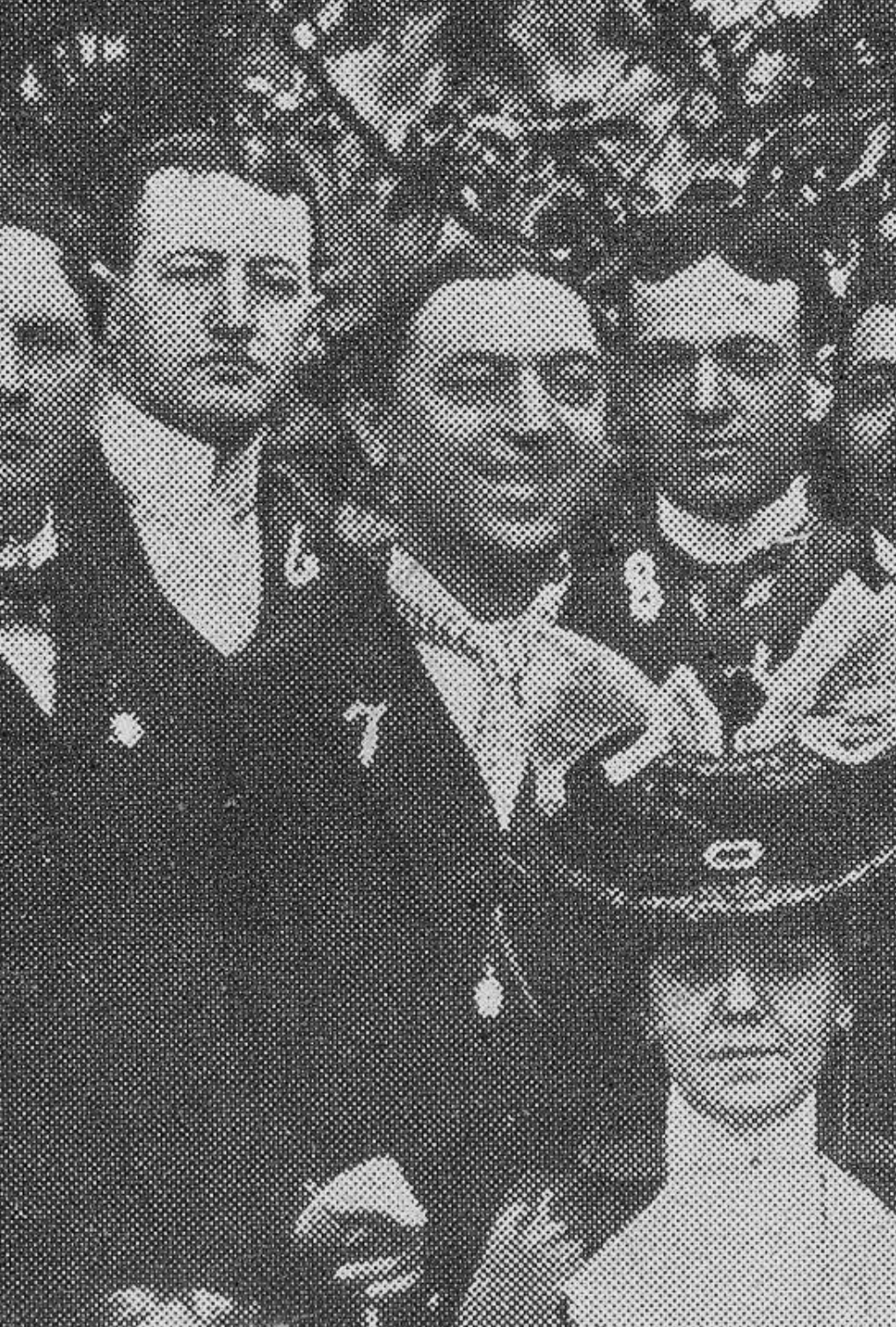
He accepted their invitation and by the spring of 1898 he had begun making records for them. His success was not immediate in the phonograph world, but by 1900 record buyers began to notice and recognize his voice. He was not just a singer for Edison in those first few years, he also happened to hang around there so much that if you listen to a lot of Edisons from 1898-1900, many of them include his voice at the beginning announcement. His voice was very distinct, and oddly enough you could argue that at that time he was the voice of the Edison. Sometimes his announcements are comical as he might pronounce words strangely, or with a distinct old New Jersey accent, one that was often caricatured in media at the time. His voice was most often heard at the beginning of Peerless Orchestra records.
After 1900 Collins became much more famous not necessarily for his own singing, but because he sang with someone else. He started out singing with Joseph Natus. Natus was already a well established performer on Broadway. He can be found in the cast of many popular stage shows. His voice was already well recognized by the time he started making records regularly. When they were first put together, the record buyers would likely have known Natus more than Collins. Their records sold well, and they recorded for nearly every label, including Lambert. They weren’t together for too long unfortunately. Some collectors prefer them together over the next pairing.

At the end of 1902, Collins was paired with his most famous partner, Byron Harlan. Harlan had some similarities to Natus, such as the fact that he was more famous for sentimental and sad songs. Harlan was much less famous than Natus, performing almost exclusively in vaudeville prior to recording in 1899. Their first recording session was Halloween of 1902, and oddly enough on the same day the famous Dinwiddie Colored Quartette recorded. From there Collins recorded almost exclusively with Harlan.
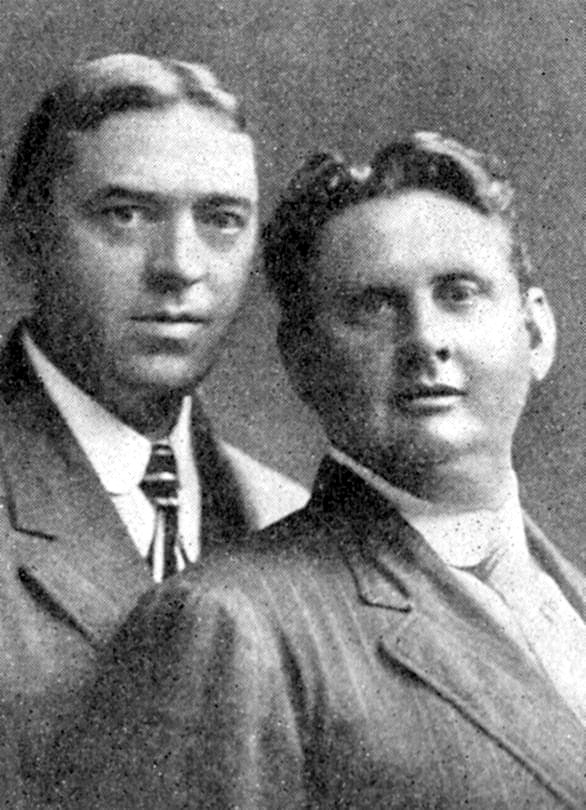
Soon their records became inescapable, as they were recording nearly every popular song for every label. In addition to performing songs, they also became famous for their sketches. Oftentimes they would incorporate these sketches into their songs. The material could be compared to some of Billy Golden’s sketches. In those, Golden would sometimes play a black woman, or a “mammy” sort of part. Similarly, Harlan would do this with Collins. It is rare to hear them not doing a record in some sort of dialect. Most often it was a black dialect, but sometimes you could hear them doing a “rube” (country) dialect, or Irish.
Collins and Harlan generally worked well together, despite the reputation that Collins had for being difficult. When Collins joined the newly formed Peerless Quartet in 1908, it was assumed that the group would work well together. The original group included Frank C. Stanley, who most likely was the glue that held the group together. Henry Burr and Collins famously would often be at odds while in the quartet. More than one person who worked with Collins described him as difficult, crude, and sometimes a perfectionist. To his credit, he was an incredibly skilled singer, even into his older age. As styles of ragtime started to change into the 1910s, he performed these songs surprisingly well considering his age. It is impressive to hear him sing a piece like “Come Out Dinah on the green” in 1901, and compare that to a 1911 cylinder of “The Hornpipe Rag”. Both are difficult songs to sing(for different reasons), but because of his talent, they were executed incredibly. It cannot be understated how skilled he was as a singer compared to others of the time.
Collins and Harlan had their ups and downs throughout their career,but somehow they stayed relatively popular as late as 1920. They ended up becoming among the first people to record for vertical Okeh in 1918. As the studio manager Fred Hager was of the older generation of recording folk, he considered Collins and Harlan for their first line-up of artists. The both of them were certainly not young at this point, and were beginning to slow down in the business. They did travel on the road to perform Edison “tone-tests” and also with the newly formed “Eight Victor Artists” group, but neither of them lasted too long in the group. The tone-tests continued though.
These performances were live stage shows that exhibited the insurmountable quality of the voice on the Edison diamond disc. Often they would keep the audience guessing as to whether it was the machine or the singer the audience was hearing. Collins and Harlan generally did not have to travel too far to do these. One of these shows, in 1922, ended up seriously injuring Collins. He fell through an open trap door as the lights were dimmed onstage. He sustained pretty bad injuries from this, and at 58, recovery was difficult. One could argue that this incident is what shortened his life.

By the beginning of radio, Collins did not get himself involved too much, though Harlan embraced the new medium(with the help of Fred Hager). Collins decided to retire by the late ’20s. It is notable that he was still recording pretty regularly in 1925. Harlan kept going on the radio for a few more years. Collins retired to Florida with his wife. In the months before his death, Jim Walsh wrote him a letter, and though he wanted to respond, he never did. Later after his death in 1933, Anna responded to Walsh, she had much to say, thanks to her, much of the beginning of this article used her writing.
Arthur Collins has actually been one of my favorite singers going all the way back to when I was a small child. When I wasn’t even 10 years old, I would hear his distinct 1902 Columbia of “Bill Bailey” (with Fred Hylands piano accompaniment) and marveled at its age and Collins’ great voice. To this day that recording is still special to me, and because of it I have the controversial opinion of preferring Collins to Billy Murray.
R. S. Baker has appeared at several Ragtime festivals as a pianist and lecturer. Her particular interest lies in the brown wax cylinder era of the recording industry, and in the study of the earliest studio pianists, such as Fred Hylands, Frank P. Banta, and Frederick W. Hager.