In the 1890s, the phonograph was still so new to most of the public. Not only was it new, it was expensive. Very few people could actually afford a machine and its records. Only at the very end of the brown wax era (1901) could a working person afford a phonograph. In 1898, Columbia released its cheapest and hardest working machine, the Eagle, which could be purchased for 10 dollars. At the time, a regular working person’s weekly wages usually amounted to five dollars. Because the phonograph was so expensive, those who could afford it often were sent by record companies to exhibit the phonograph to working people all over the country. Some were paid by record companies to do this, but others just did it on their own whim. These exhibitions ranged from small time productions in farm towns, to giant theatrical shows performed for thousands.
Back in the 1870s and 1880s, the phonograph was exhibited at several worldwide events like the Paris world’s fair in 1889 (the one where the Eiffel tower was unveiled). That was done before the beginning of commercial recordings, although by the end of that year some were being made, but in small batches. That was the year that the North American phonograph company was founded, and when Edison opened up his lab to commercial recording. Many of these records were well documented in a book of ledgers that survives to this day, and while that is incredibly important, it is hard to know how many people outside of the lab were actually hearing these. Phonographs usually weren’t available for purchase at that time, the tinfoil machines of the late ’70s were exclusively used for demonstrations.
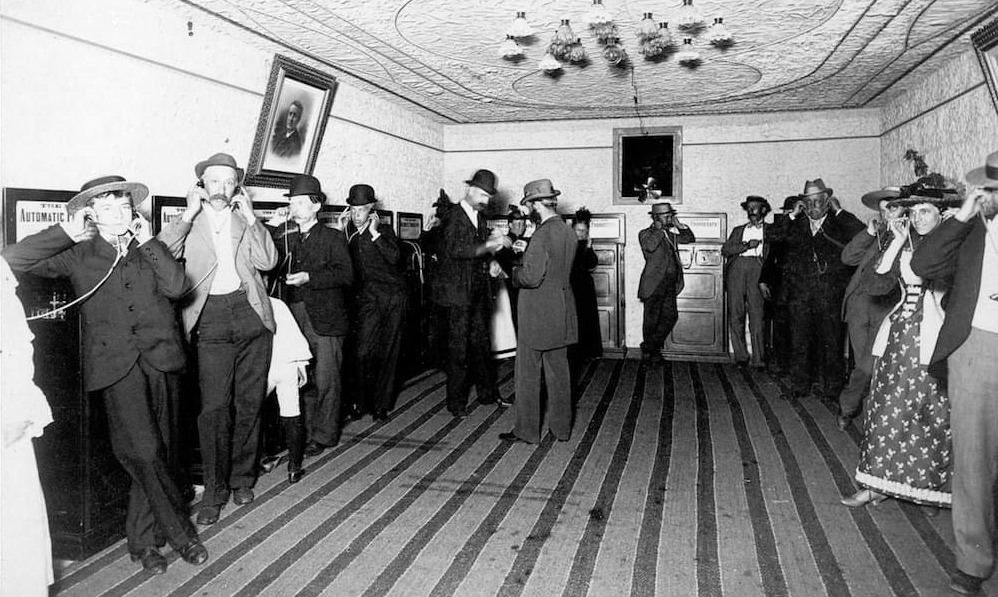
The easiest and cheapest way most people would have heard these was by going to an arcade, or a nickelodeon as they were later called. By 1891, people began to complain about how many of these arcades were “popping up like mushrooms,” and that children were spending all their allowance on these places. While the phonograph wasn’t the only coin operated attraction at these arcades, they were often the most popular. Before 1896, the arcade had no sort of censorship when it came to records in the phonographs. Some of the material in those machines would still be censored today. Many pornographic recordings were made by Russell Hunting and Charles Carson, intended to be heard in the dive bars of the Bowery and surrounding area in New York. While paying just a nickel for one listen doesn’t seem too bad, people clearly were spending a lot of their time and money there, as this was the cheapest option.
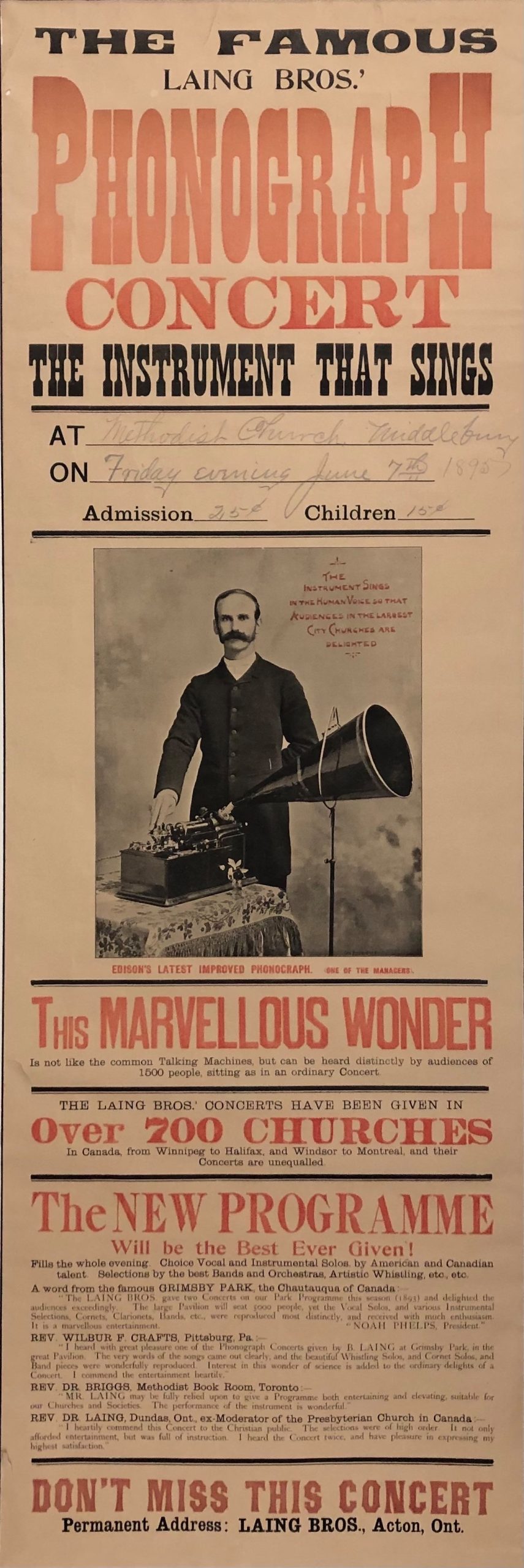
If you wanted to spend more money, you could attend a concert in your town where a representative from one of the record companies brought in a machine and also a show. Often they would explain the perceived miracle of preserving sound, pass around the strange looking eartubes, and play records for a fee. Many of these were advertised in local papers. This is how most people in smaller towns experienced the phonograph before the middle 1900s.
There are also accounts of families renting phonographs. For special occasions music and record stores would allow folks to rent them. This was done into the 20th century. This is sometimes how people could make a buck doing exhibitions. Someone who famously did this was Fred Van Eps. There are several interviews with old man Van Eps, and he described doing just this, except that he bought his machine. In the late 1890s, he would often post ads in his New Jersey town, people would show up, and for awhile he made a pretty good living of it. He also would occasionally make some records for Edison, being that he lived in Jersey. He did all of this before he became famous after 1902.

The highest quality option was to go to a theater and attend what Edison would later call a “tone test.” Those who know of these events today likely know them as a show that included audiences having to guess whether they were hearing the machine or the live performers onstage. This started in the 1910s with the advent of the Diamond Disc, but there had been a variation of this happening since the late 1890s. Berliner started doing shows like this back in 1897. If you comb through newspapers, you can find several of these live performances happening all over the east coast.
 One of these shows featured Arthur Pryor, Billy Golden, and, yes, the pianist Frank P. Banta. Not only did they play the records onstage, they also recorded them live. Every once in a while, one of these will surface. Columbia famously did many of these shows in their actual lab at 27th street and Broadway in New York. One of these has thankfully been immortalized in an 1898 photograph from the Russell Hunting-run magazine The Phonoscope. This picture is significant for many reasons, other than it being one of the only good images of pianist Fred Hylands (at the piano, and in the Columbia lab!).
Several pieces in The Phonoscope describe these shows happening in the hottest weather, and it being nearly unbearable for those in attendance, but especially for the performers. These Columbia shows did attract thousands, and for a few months of the year they did these nearly every weeknight. These grueling shows likely didn’t last for too long, as some of the conditions the performers dealt with were less than ideal.
After the middle 1900s, more people could afford phonographs, so the idea of demonstrating the phonograph was falling out of fashion. Because of this people got a little more creative with how it could be done. There were several attempts to use wax figurines with phonographs to imitate live performances. Back around 1906, Len Spencer and crew did a series of minstrel show records that were intended to be used for this purpose. They set up a stage at Coney Island with wax figures of all the performers with the phonographs behind them. This spectacle didn’t last very long, as it unfortunately burned in a fire before 1910, but the concept continued. In 1908-09, Edison set up a traveling debate show with wax figurines of the candidates. Edison recorded many pieces by the presidential candidates for these shows, and they made good money from these, despite the relative uncanniness of them. Thankfully these records exist, and are incredible documents of the voices and views of historic politicians.
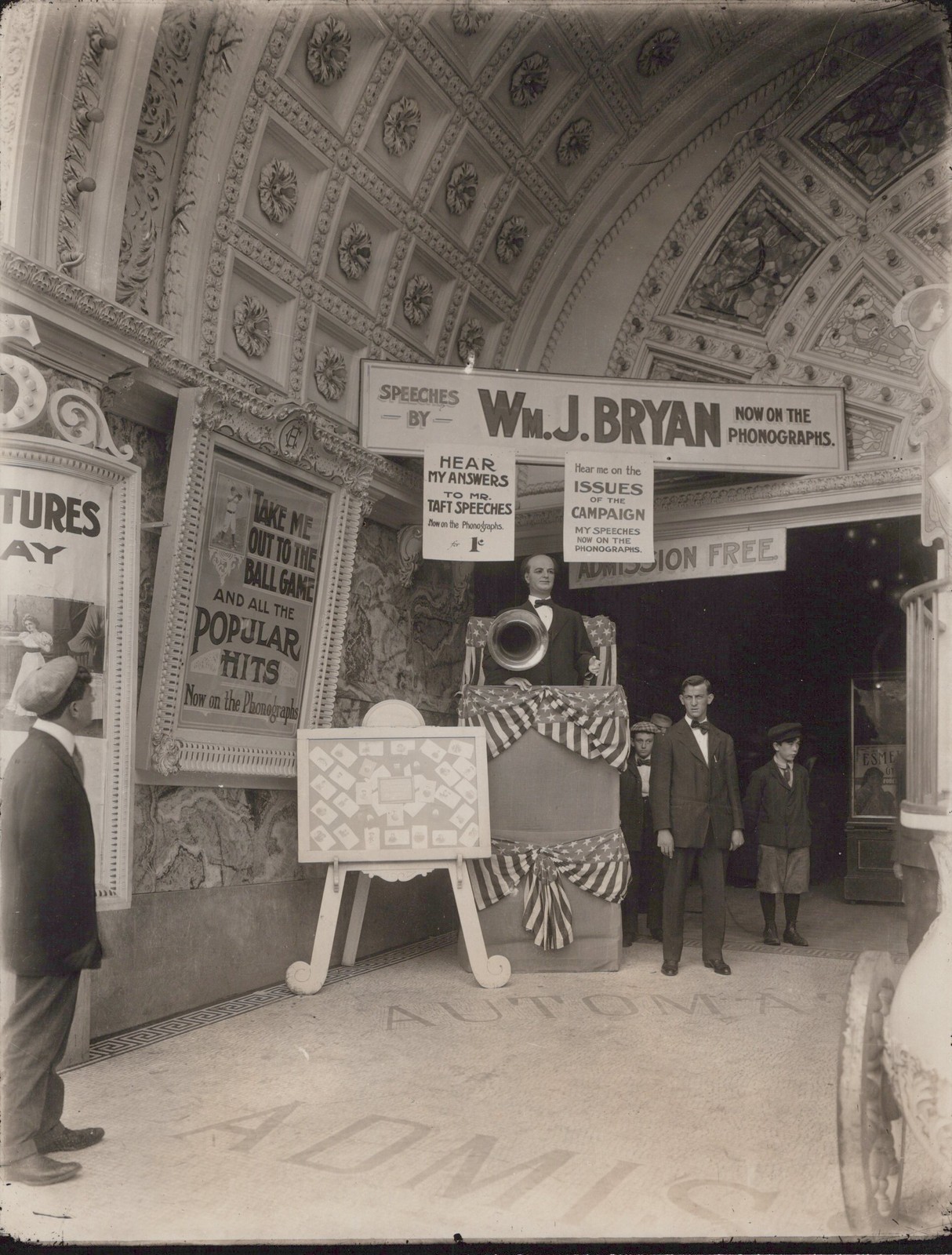
There were still plenty of people who did run arcades locally, but as the years went on the focus of those places moved away from the phonograph and more into film and other novelty devices like mechanical instruments. It is such an interesting concept to imagine what listening to the phonograph was like before the general public could afford them. There is also something very novel about sitting in a group with eartubes listening to the miracle of recorded sound. Thankfully we don’t have to use wax dummies to present debates around the United States anymore.
R. S. Baker has appeared at several Ragtime festivals as a pianist and lecturer. Her particular interest lies in the brown wax cylinder era of the recording industry, and in the study of the earliest studio pianists, such as Fred Hylands, Frank P. Banta, and Frederick W. Hager.