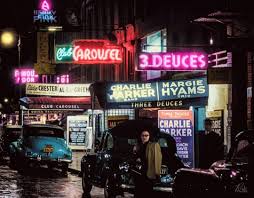
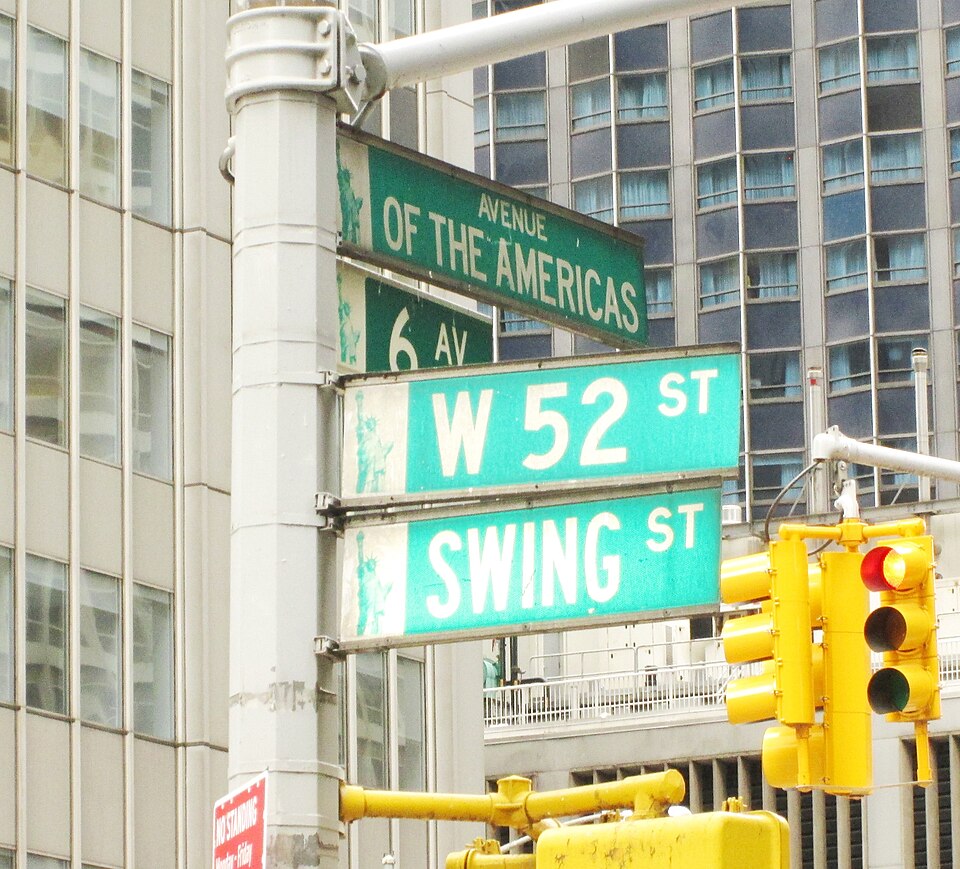
They called it “Swing Street.” It’s only an echo of a memory today for those old enough to have immersed themselves in the sights and sounds, but there was an era in New York between 1930 and the late ‘50s, when 52nd Street was the home of over a dozen jazz clubs nestled side-by-side mostly between 5th and 6th Avenues, attracting the legends of the genre and their audiences.
On that block there was, at one point, a concentration of cellar clubs that included Jimmy Ryan’s, The Onyx, The Downbeat, The Spotlight, The 3 Deuces, B.S. Pully, Club Carousel, and The Famous Door – the latter opening in 1935 with Louis Prima as the headliner, and which was one of several clubs — including the Onyx — to bounce from one address to another on that same street every few years.
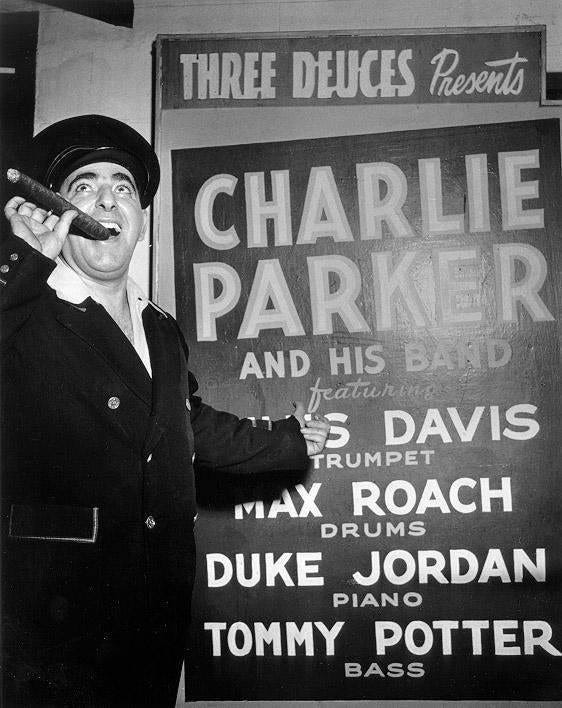
Within a roughly twenty-five-year period, virtually all styles of jazz could be heard emanating from the venues, from Dixieland to Swing to Bebop. The names that populated the stages are legendary: Fats Waller, Count Basie, Lester Young, Art Tatum, Billie Holiday, Louis Prima, Dizzy Gillespie, Thelonious Monk, Charlie Parker, Miles Davis, and many others.
These clubs weren’t spacious, luxurious venues. They were small, simple rooms with a modest stage at one end. Yet the very close quarters actually seemed to give the musicians greater freedom to stretch out creatively, explore their own music and that of their peers, and sometimes push boundaries.
What led to the unprecedented concentration of jazz clubs on that particular street? A combination of factors.
Once the Prohibition Era began in January of 1920 with the passage of the 18th Amendment banning the manufacture, sale, and distribution of alcohol, it was inevitable that illegal speakeasies would become commonplace in New York and the rest of the country. For reasons that are not entirely clear, the basements of many brownstones along 52nd Street in particular—especially those between 5th and 6th Avenues — became a hub of speakeasies. By mid-decade, there were an estimated 30,000 speakeasies throughout the city. The 1926 Cabaret Law made it illegal for businesses to host “musical entertainment, singing, dancing, or other forms of amusement” without a special cabaret license.
With the repeal of the 18th Amendment in December of 1933, many of the speakeasies were converted into legitimate jazz clubs. Their popularity grew in part due to the infamous Harlem Race Riot in March of 1935, which fueled tensions and fears among white jazz lovers who had been frequenting clubs in that northern end of Manhattan—including the Cotton Club, the Rhythm Club, and the Savoy ballroom—who began seeking what they deemed to be safer venues closer to mid-town.
Geography was also a factor in the popularity among musicians of the 52nd Street clubs thanks to the street being a short walk to Times Square, the Theatre District, Rockefeller Center, and the network radio studios at the time. This allowed the musicians to play gigs for the masses, so to speak, before heading to the clubs to play and experiment with jazz without restriction.
In Ken Burns’ epic 2001 PBS documentary Jazz, promoter and Newport Jazz Festival founder George Wein recalled his early experiences on 52nd Street while visiting New York with his family.
“I was just a kid,” he remembered, “and my brother was three or four years older. And we would come down the West Side Highway, and we’d get off at 52nd Street, and before we’d check into a hotel we’d drive straight across town and just drive down 52nd Street. It was the most beautiful thing, so exciting. There was Red Allen and J.C. Higgenbotham at Kelly’s Stables, and here was Art Tatum at the 3 Deuces, Count Basie at the Famous Door…
“It was like being in a candied heaven,” Wein said, “and the candy was the jazz that you could grab hold of. And that night, we would take ten or fifteen dollars that my father had given us and go out. We’d go to five clubs! It was just the greatest feeling that one could have, and you never forgot that feeling, because as you sat in those clubs, particularly at 3:00 in the morning — I was half asleep but I wasn’t asleep — you felt that the musicians were playing for you.”
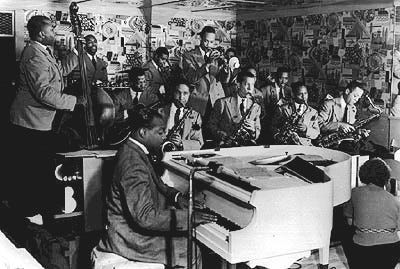
As for Count Basie and his big band at the Famous Door, they settled into a cozy routine in 1938 and became one of the club’s biggest draws. Guest musicians, including Harry James from Benny Goodman’s band, would stop by and play a few tunes with Basie’s band as well. The club’s bandstand was so small, however, that Basie’s piano had to remain on the dance floor. CBS aired their sets live at midnight several nights a week for part of that year. This was nicely documented by the late jazz historian and radio broadcaster Phil Schapp in August of 1984, when he hosted a Count Basie retrospective on WKRC in New York. Throughout a portion of his broadcast, Schaap played several rare airchecks preserved on disk of the Basie band’s gig at the Door in ‘38. He speculated on how they benefited from the extended run at the club that summer, as a break between long road tours. They were able to return to their home base at the Woodside Hotel in 142nd Street and relax a bit as they worked on new music both there and at the Door.
“It must have been great going to the same bed every night,” Schaap surmised, “and being able to do what so many bands never get a chance to do. They tried out new ideas in rehearsals during the daytime at the Woodside Hotel, came down to the Famous Door to stretch them out a little more on the bandstand, and sometimes on the air. Those air checks catch Basie and his band at a very, very important moment in jazz history. You can hear great things happening on almost every note…The music was brought to a peak because they could rehearse daily, they weren’t tired, they could play their music — it was sort of a de facto jazz workshop, the bandstand of the Famous Door.”

But make no mistake about it: Jazz wasn’t necessarily an open gateway for black musicians and whites to socialize in the clubs. Some clubs openly welcomed black and white musicians and patrons to mix, but segregation norms of the day remained in place for many other clubs, be they in Harlem, mid-town, or Greenwich Village. Billie Holiday and Teddy Wilson were reportedly once fired from the Famous Door for speaking with white bandleader Charlie Barnet, who was in the audience. And incidents involving violence and even killings in and around those music venues dot the history of the clubs on 52nd Street.
Financial problems led to the Famous Door closing on May 10, 1936, but it reopened at 66 West 52nd Street in December 1937, with its seating capacity of no more than sixty. As before, Louis Prima was the resident headliner upon the reopening.
The Onyx Club opened in 1927 at 35 West 52nd Street as a speakeasy and moved down the block in February of 1934 as a legitimate club, with Art Tatum as the regular intermission pianist. It would be the first of many gigs Tatum would have among several of the clubs on the street throughout the ‘30s and ‘40s. The Onyx burned down and was rebuilt in 1935, and its location was moved again down 52nd Street, where it closed in 1939. Not to be defeated as an institution, a new Onyx Club opened on the street in 1942 and thrived as a venue, again featuring top-tier musicians and singers including Tatum, Red Allen, Roy Eldridge, Ben Webster, Billie Holiday, Charlie Parker, Dizzy Gillespie, and Sarah Vaughn.
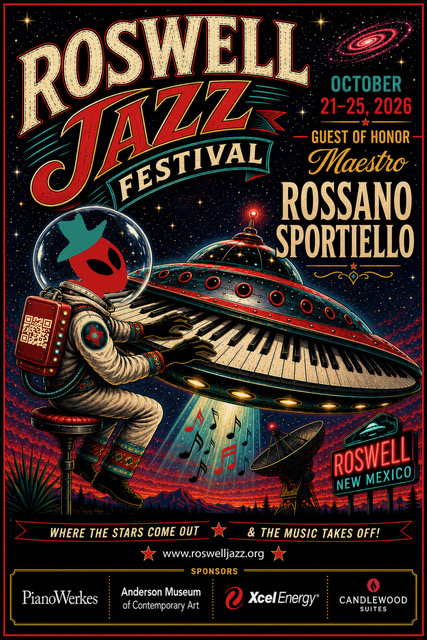
Sadly, by 1949 the Onyx had devolved into a strip club, but as Swing Street lost it as one of its longtime jazz locales, excitement returned to the neighborhood late in the year with the opening of a new venue, Birdland. The club was a latecomer to 52nd Street (technically, it was located at 1678 Broadway, just around the corner) opening in December of ‘49, with, of course Charlie “Yardbird” Parker as the headliner.
The glowing neon sign at the front of the club read, “Birdland, Jazz Corner of the World,” boasting a significantly large venue than the modest cellar clubs on 52nd Street. Birdland seated 500 people, had a long bar with tables, booths, and a bandstand big enough to fit a big band — all accessible for just the $1.50 admission fee. Crowds came to see big names on double and triple bills, with the action starting in mid-evening and sometimes lasting until the dawn’s early light. Popular jazz disk jockey “Symphony Sid” Torin moved his radio program to Birdland in 1950.
Parker himself played at Birdland on only rare occasions, but the club attracted the cream of the jazz crop, whose performances and recordings there helped solidify the venue’s prominence in jazz history. Sarah Vaughn’s version of George Shearing’s “Lullaby of Birdland” was a hit in 1954; Count Basie and his big band recorded the album Basie at Birdland live at the club in 1961. But the club was also part of the scene in which bebop developed, even as some clubs looked askance at the newer, more frenetic sound that evolved from swing.John Coltrane’s quartet regularly appeared there in the early 1960s, recording Live at Birdland, released in 1964. And, of course, years after the club closed, the jazz fusion group Weather Report, led by Joe Zawinul, recorded his composition “Birdland” in 1977. With Jon Hendricks’ lyrics written later, evoking the names of the many legends who played there, the Manhattan Transfer won a Grammy for their recording of the track in 1979.
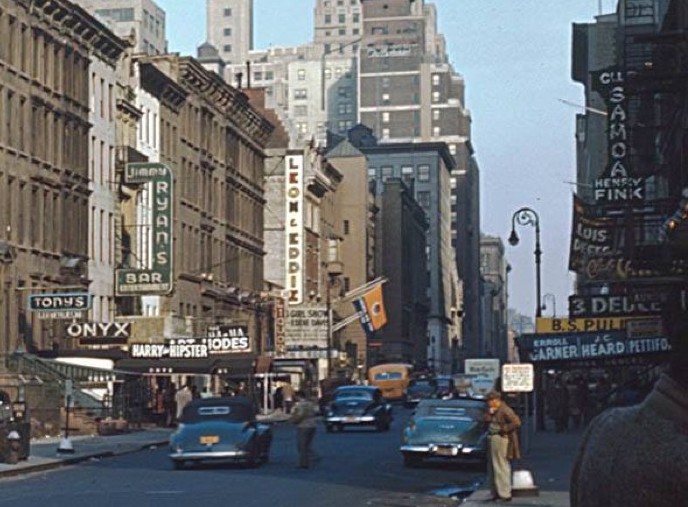
Over time, as jazz clubs elsewhere in the city gained prominence, mid-town including 52nd Street razed blocks of brownstones to make way for commercial properties and business towers. Consequently, Jimmy Ryan’s, one of the first jazz clubs on the block, proved to be the last. That club and the brownstones on the north side of the street were demolished in 1962 to make way for construction of buildings including the new CBS headquarters, nicknamed “Black Rock.” The network paid Ryan $9,000 to relocate—which he did, to W. 54th Street.
In June of 1964, Birdland filed for Chapter 11 bankruptcy and closed in 1965 due to increased rents. A new Birdland opened in 1985, first on the Upper West Side of Manhattan, and now located in Manhattan’s Theater District, not far from the original nightclub’s location.
With the finest of New York’s jazz clubs today scattered or found in small clusters throughout Manhattan, it is all the more remarkable that there was a time when music aficionados could stroll practically door-to-door on 52nd Street to enjoy the greats of jazz history, or simply hear their sounds wafting into the night air from the brownstone cellar clubs. Those of us who missed out on that era can only learn of it with a sense of wonder, and perhaps with more than a little envy.
For over twenty years, Garry Berman has written books and articles related to pop culture and entertainment history. He has contributed articles to Beatlefan magazine, Nostalgia Digest, and History magazine. In addition to his non-fiction work, he also writes comic novels and screenplays.He is also co-administrator of the Facebook group page Friends of Sant Andreu Jazz Band. Visit him online at www.GarryBerman.com.