The Nash Jazz Club in downtown Phoenix, Arizona, recognized by Downbeat Magazine as “one of the Great Jazz Venues in the World,” has undergone a $1.8 million expansion of the Club’s facilities, including the creation of a 3,200-square-foot John Dawson Center for Jazz Education at the Nash. The expansion was funded by a $1 million donation from the John Dawson Foundation and a capital fundraising campaign underwritten by Nash supporters.
The Nash does much more than preserve an original American art form. It celebrates the rich tradition and ongoing innovation of jazz by presenting quality live performances, providing unique educational programs, and building a vibrant jazz community in Arizona and beyond.
Renowned for its moody, close-up acoustic setting that places the focus squarely on the music, renovations to the Jazz Club, that hosted 340 performances in the intimate 107-seat facility this past year, included a new stage and “Green Room,” more relaxed seating, a full bar and enhanced food offerings and restrooms.
Center for Jazz Education
The Dawson Center has created a comprehensive complex for jazz education and musician training, including 1,800-square feet of rehearsal space for big band ensembles, smaller combos and vocal groups. “We’ve tripled the size of our program in the past couple years,” according to Dr. Clark Gibson, director of education
The Nash is named for internationally-renowned drummer and Phoenix native Lewis Nash, who Modern Drummer magazine calls “the most valuable player in jazz.” He frequently performs at The Nash and works with student musicians who participate in ensembles, jam sessions and other educational activities.

The Nash sponsored a summer camp attended by 132 students (ages six to 20) this past June. Campers participated in all-day jazz intensive studies, featuring improv, combos and master classes under the direction of an 18-member faculty that included Lewis Nash. Each day of the camp week concluded with a faculty concert for students, with the week culminating in a faculty performance and a student concert at the world-renowned Nash Jazz Club.
The non-profit Nash Jazz Club opened in 2012 in a 2,600-square foot building in the city’s Arts District. Its initial event was a Jazz for Young People concert performed by Wynton Marsalis—who drove from New York City and appeared pro bono in recognition of the new venue’s bold promise, which is best exemplified by the Club’s slogan: JAZZ HAPPENS HERE!
♫ ♫ ♫ ♫ ♫
GoFundMe Campaign for Dan Levinson
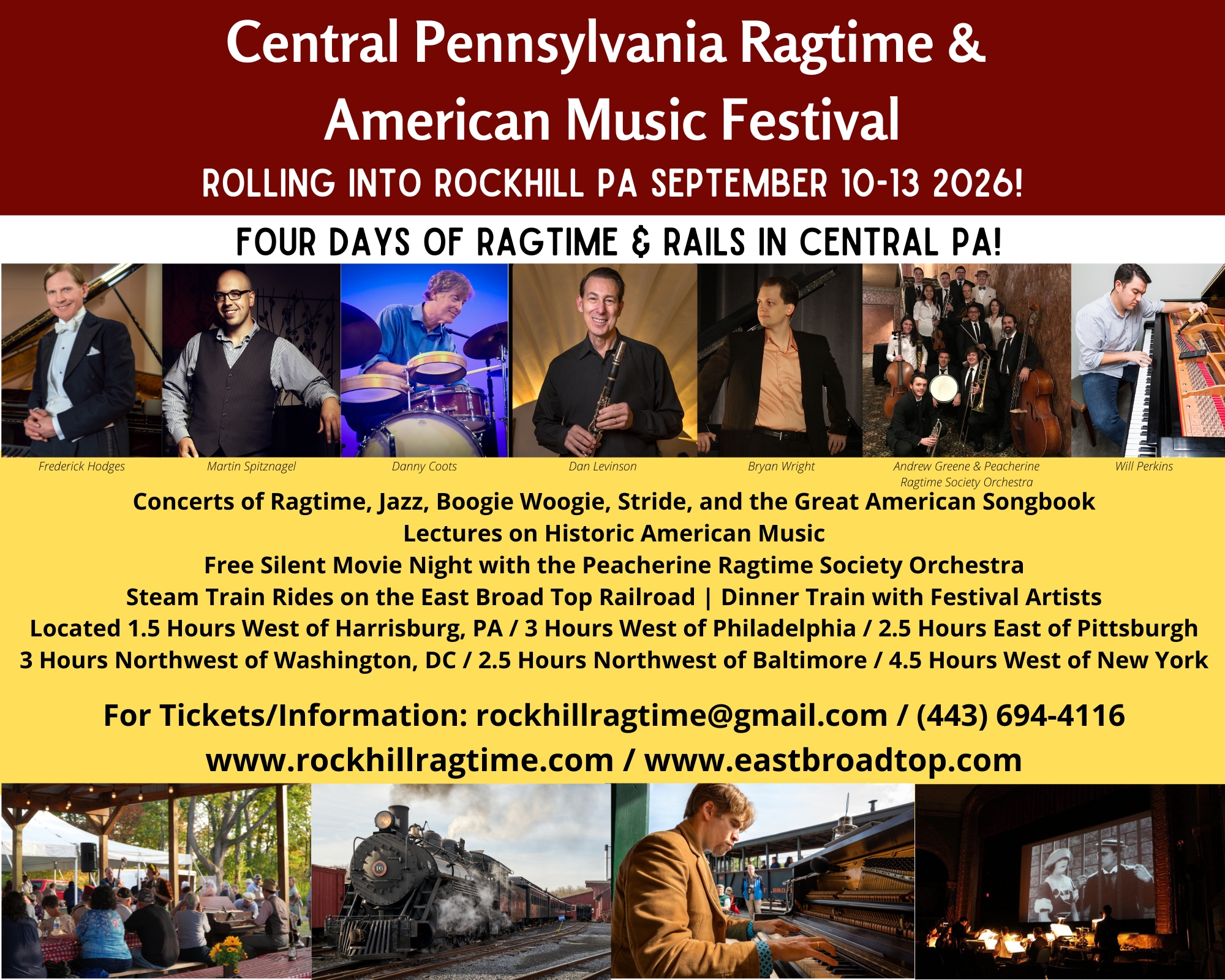
Two of Dan Levinson’s friends initiated a GoFundMe campaign to help Dan get back on his feet after dealing with serious health issues that have kept him off the bandstand for several months. Brice Moss and Neal Siegal explained: “Because of complications that developed years after successful cancer treatment in 1999, Dan recently underwent extensive reconstructive surgery to his jaw. The operation—and the long, difficult recovery that followed—cost him numerous long-standing engagements that had provided his family’s livelihood.”
“It was a devastating interruption to a career built over a lifetime. Yet, true to character, Dan met every setback with determination, rather being paralyzed with self-pity. His recovery has been remarkable, and he is finally able to perform again. What remains is the financial hardship created during those months when he simply could not work.”
Dan’s Response
Dan responded, “It’s hard to believe how much has happened in just a short time. My family and I have been overwhelmed by the generosity, kindness and encouragement we’ve received from so many people. Every contribution has reminded us of how fortunate we are to have such wonderful friends, colleagues and supporters.”
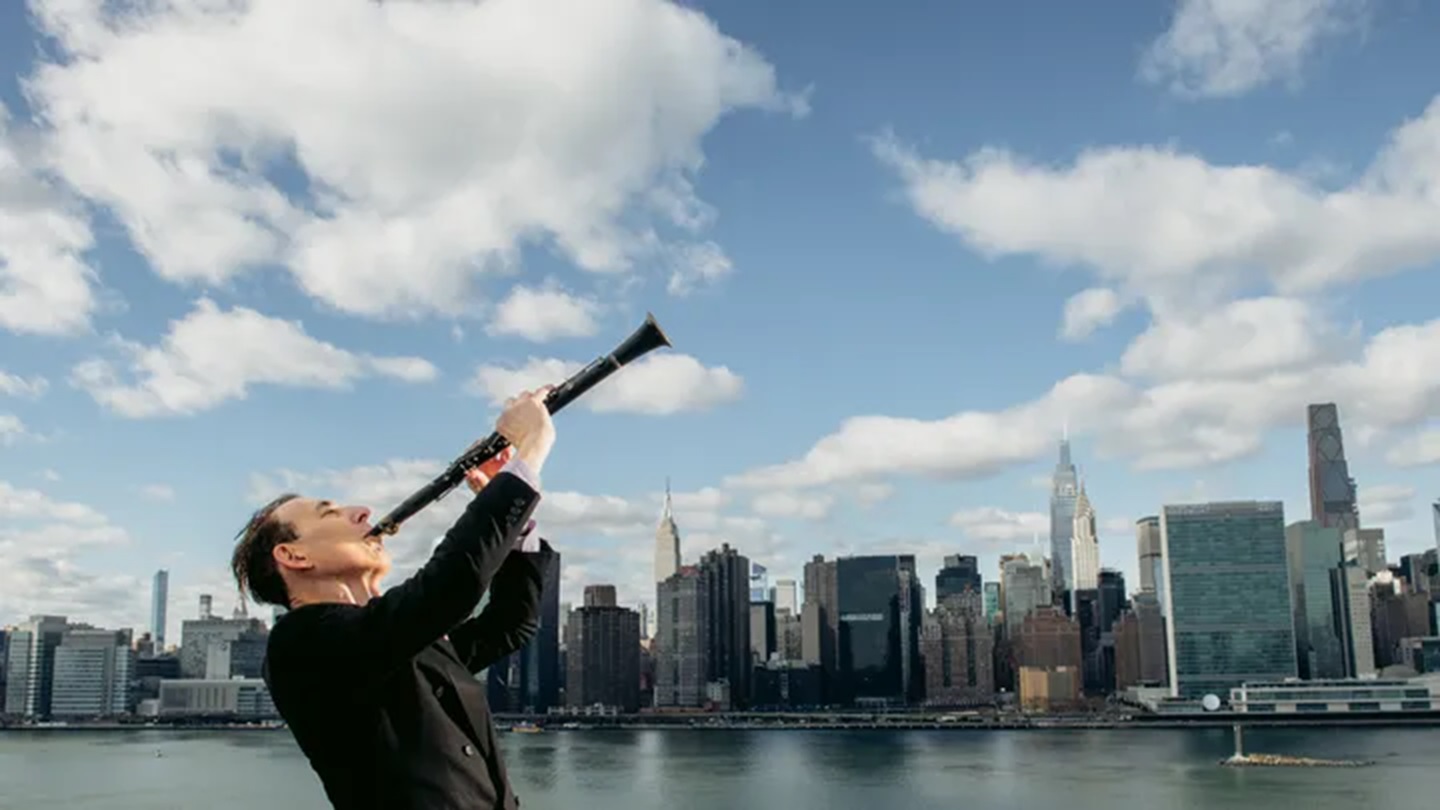
“I wanted to let everyone know that I’m continuing to work hard every day to redevelop the technique on my instruments that I lost during this difficult period. I’m feeling stronger on my instruments than I was a year ago. I truly feel I’ve been given another chance, and I’m determined to make the most of it. My primary objective has been to rebuild my performance schedule and to reach the point where I can support my family and myself, as I have throughout my career.”
The link to donate is: gofund.me/f3b297753

♫ ♫ ♫ ♫ ♫
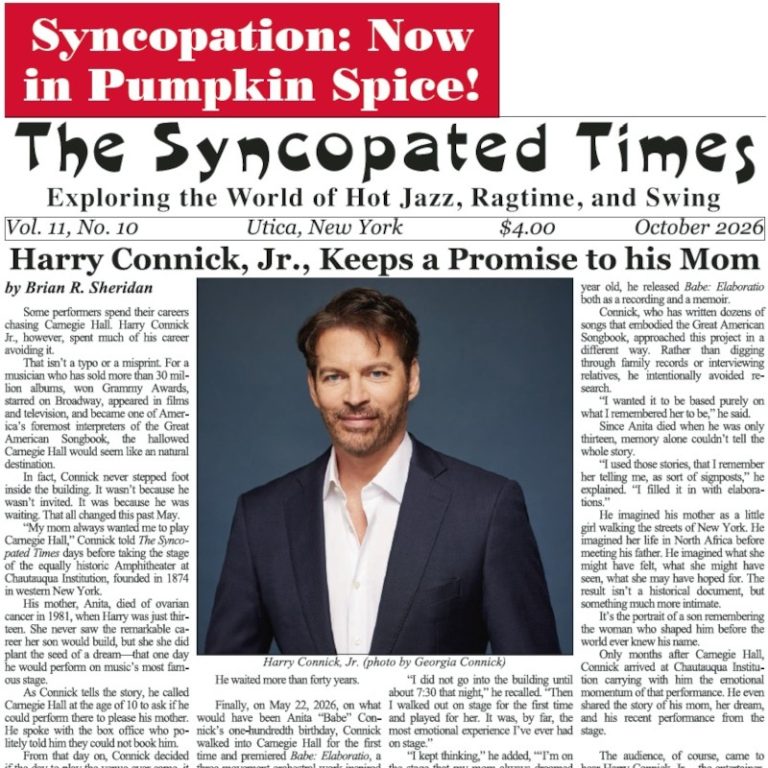
Tribute to Ken Peplowski
A tribute was held this past July honoring the memory of the late Ken Peplowski at the Pocantico Center on the grounds of the Rockefeller estate in Tarrytown, New York. The sold-out concert was organized by two longtime friends of Ken’s: Stephan Heintz, president-emeritus of the Rockefeller Brothers Fund and a member of the American Academy of Arts & Sciences, and Loren Schenberg, Senior Scholar of the National Jazz Museum in Harlem, who had played with Ken in Benny Goodman’s last band.
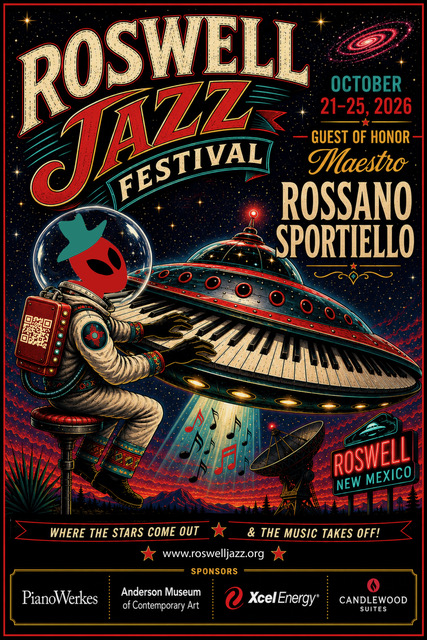
The theme of the concert was “The Spirit of Jazz: A Tribute to Ken Peplowski.” Rossano Sportello served as musical director and led an all-star sextet. The John Pizzarelli Trio took over for the second set, and the concert concluded with a rousing jam, session, which Rossano described “as the best possible way to pay tribute to Ken Peplowski.”
♫ ♫ ♫ ♫ ♫
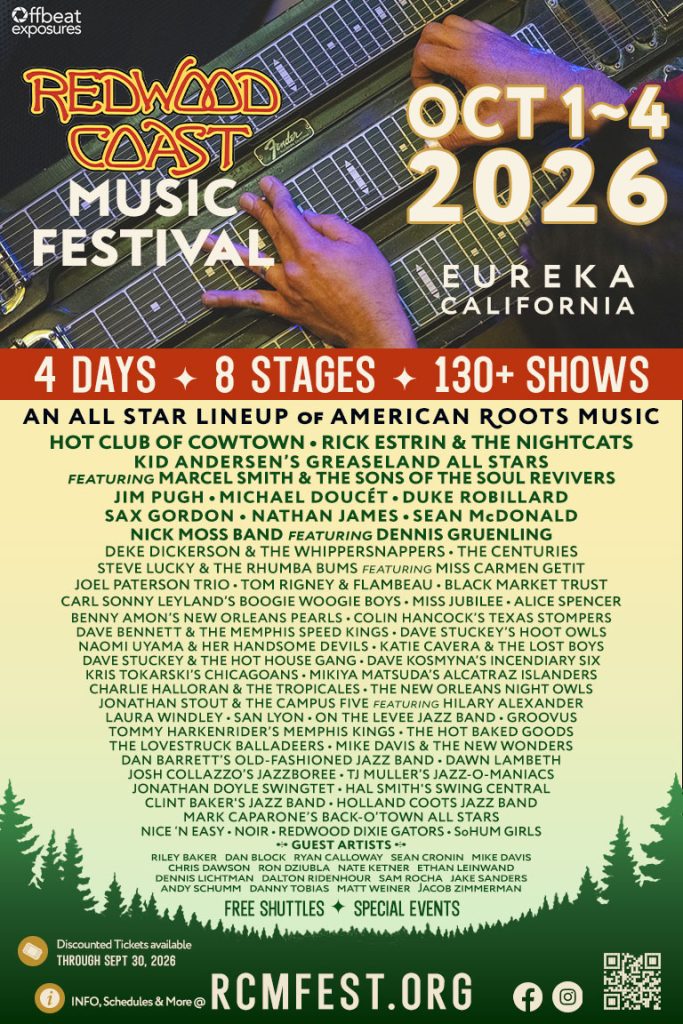
“It Happens in Sun Valley…”
Holding the 37th edition of the Sun Valley Music & Jazz Festival in mid-October at the world-class Sun Valley Resort is reason enough to make the trek to the picturesque Sawtooth Mountains of Southern Idaho as the aspens and maples are changing color. Encompassing just under 10 square miles at an elevation of 5,926 feet, Sun Valley was the first destination ski resort to be built in the United States, opening in 1936, and has since become a year-round tourist mecca for 2.8 million visitors annually.
The Resort has all the amenities you could want or need, including an array of shops located between the Lodge and Inn. Then you have the friendly festival volunteers who make everyone feel welcome and keep things running smoothly. Those who are so inclined are able to venture into nearby Ketchum (one mile) to patronize a surprising number of tasty restaurants that one would not expect to find in a former mining town—population 3,600.
New Co-Directors
After 23 years as co-directors, Carol and Jeff Loehr have handed the reins over to Linda and Steve Goff who have taken over planning and producing the festival. The Loehrs will continue to serve on the board of the festival as artistic directors for the next five years. The Goffs have recruited a diverse lineup of musical groups and guest artists and have them performing a smorgasbord of music in five venues that will delight, refresh and entice each and every attendee.
The Goffs promise a great experience for the estimated 1,200-plus jazz fans expected to show up in Sun Valley the weekend of October 15-18. “We want to keep this great tradition going,” the Goffs promise. “More people today are reaching senior age and therefore have more time for leisure activities. The average age of our attendees (72) has remained fairly constant over the past few years. And we also have a lot to offer to the younger generation.”
♫ ♫ ♫ ♫ ♫
The Musical Instrument Museum in Phoenix, Arizona is a massive museum that is home to over 12,000 musical instruments and other associated objects and that includes instruments from nearly 200 countries and territories. Additionally, The MIM has a 300-seat theater that regularly hosts concerts for the public after museum hours. It was recently voted Arizona’s favorite art museum as well as its favorite family-friendly museum.
♫ ♫ ♫ ♫ ♫
The Turkey Trot was a dance made popular in the early 1900s and was done to fast ragtime music popular in the decade from 1900 to 1910, such as Scott Joplin’s Maple Leaf Rag. Driven largely by youth counterculture of the time, the Turkey Trot fad quickly fell out of favor as the Foxtrot, a much more conservative dance step based on the waltz, rose to popularity in 1914.
The basic step consisted of four hopping-steps sideways with the feet well apart, first on one leg, then the other with a characteristic rise on the ball of the foot, followed by a drop upon the heel. The dance was embellished with scissor-like flicks of the feet and fast-trotting actions with abrupt stops.
It achieved popularity chiefly as a result of its being denounced by the Vatican. It was thought that the positions assumed by the dancers were offensively suggestive. Conservative members of society felt the dance promoted immorality and tried to get it banned at public functions, which only served to increase its popularity.
Lew Shaw started writing about music as the publicist for the famous Berkshire Music Barn in the 1960s. He joined the West Coast Rag in 1989 and has been a guiding light to this paper through the two name changes since then as we grew to become The Syncopated Times. 47 of his profiles of today's top musicians are collected in Jazz Beat: Notes on Classic Jazz.Volume two, Jazz Beat Encore: More Notes on Classic Jazz contains 43 more! Lew taps his extensive network of connections and friends throughout the traditional jazz world to bring us his Jazz Jottings column every month.