Vince Giordano was born on March 11, 1952, in Brooklyn. He directs the Nighthawks, where he switches between string bass, tuba and bass saxophone, and offers the occasional vocal. He has become the premier performer of 1920s and ’30s jazz and has contributed music for films by Woody Allen and Martin Scorcese and for the Boardwalk Empire series.
Vince was interviewed in New York City on January 11, 2007, by Monk Rowe, Director of the Hamilton College Jazz Archive.
MR: Well I’m curious as to what in your childhood turned you on to the music from the twenties and thirties?
VG: I started when I was five years old. I was born in Brooklyn and raised out in Smithtown, Long Island. My grandparents remained in Brooklyn and they used to have a lot of parties in the twenties and thirties, family gatherings, where people brought old records, old phonograph records.
One day my grandmother points to this old victrola and shows me how to wind it up, and there was like two thousand old records, everything from Grand Opera to novelty singers of the time, of the twenties, to an actual Louis Armstrong Okeh and a King Oliver Brunswick. So I would just be enthralled about winding up the machine and actually help produce this music by putting it on. And growing up in those years there was these wonderful hits like “How Much is that Doggie in the Window” and “Oh Mein Papa.”

And what I was hearing on these old discs was this great energy and vitality that I did not hear in the popular music of my time, the mid-fifties. And also coming home after school everyday you could still turn on your TV and see Laurel & Hardy, you could see the “Our Gang,” “The Little Rascals” and the old black and white cartoons, which had elements of 1920s and early ’30s jazz in it. This was still part of it. Those were my reinforcements. Like wow, there’s my music so to speak.
On the early jazz recordings there was this sound that instrumentalists produced in those days that was a lost language as far as the fifties were concerned, the way the saxophones would have that kind of little vibrato, that little moan, and hearing King Oliver or Louis Armstrong or some of the novelty cornetists. They had that kind of, you know, agitated vibrato. And there was a definite push on the downbeat, to get the thing going, and then this afterbeat. I just took it all in, that this was something that I could not experience in my generation. It was something special about this music. I was totally drawn to it.
MR: Were you able to enlist any of your friends?
VG: They would come over and—“don’t play that stuff.” They couldn’t understand me for anything. I chose the other path as the poet said. One fateful day I was playing one of my old recordings and I had my tuba home, and I listened to it and I decided to try to play along with the recording. And I was maybe 12 years old. I could feel the beat but I really didn’t have enough musicality to understand chord changes. I would kind of sync up but not really know what to do.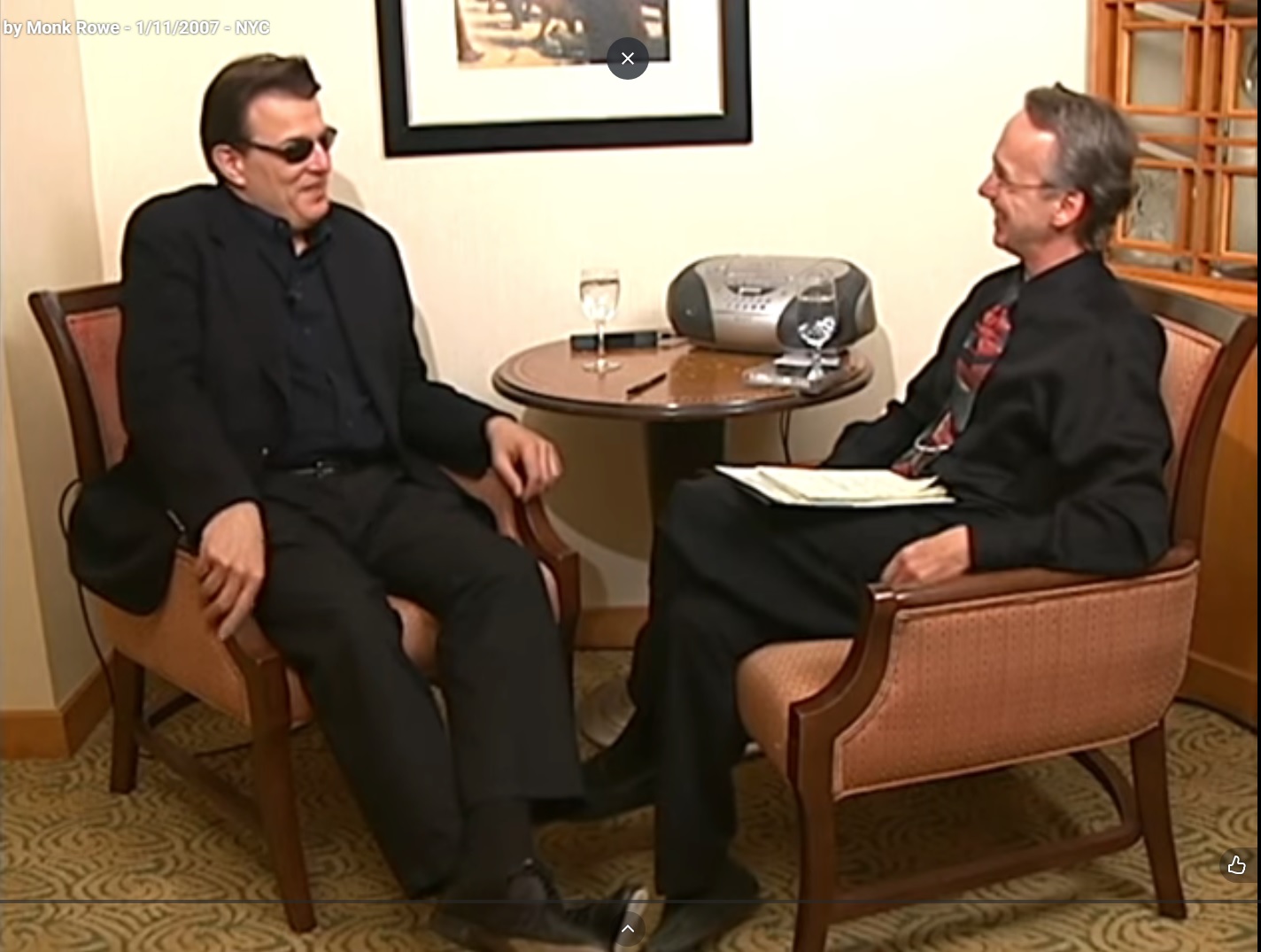
That magic moment was when I said I want to do something with this older music today in my generation. And that’s when I started to seek out a place out on Long Island that had a live music policy, particularly older music that I could study, early popular music of the twenties and basically get into the professional music world. I joined the union, I schlepped a tuba and later a string bass up two flights of stairs and the union fellow says, “why did you bring all this here? Did you bring your money?” That’s all he wanted. He didn’t care if I could play or not.

MR: Is it it difficult to teach people to improvise melodies?
VG: Yeah, a lot of young people, they want to get up there and play a million notes and play high and fast and all that stuff, which is good, but you have to start someplace. It’s sort of like this glass of water here you know? Mr. Jelly Roll Morton said if you’ve got a half a glass of water you can go up. But if you start with a full glass, you can’t go any further, you’re just going to go all over. A lot of kids want to go with a full glass and they blow themselves out. And playing the melody is just a wonderful way to introduce the tune, it’s a little tip of the hat to the composers who originally wrote it, and now what do you want to do with it? I think that’s one of the reasons I love the older forms of jazz because they would work within that format, stating the melody and then creating your own melody.
MR: How did the bass sax come into your life?

VG: I was collecting recordings in my high school days and I did a lot of antique—in fact I worked in an antique shop along with a music shop. I’d get first dibs on the recordings. And one day I get this 78 and I’m playing it and it’s the California Ramblers. And I’m hearing this wild sound and Jesus it’s some kind of bassoon or something. I brought the record in and my band director says, “Oh that’s a bass sax.” Wow, I’ve got to find one of those. So again my poor parents, I dragged them all over Long Island. So many people, we would show up and of course it was a baritone sax. Many times it was a tenor and they said, “well gee whiz, it’s big.”
MR: Seems pretty big to me.
VG: Exactly. How big is big? So I finally found a fellow who—he was a string bass, tuba, and bass sax player, what I eventually became, and he had it in his attic and brought it out and it was completely—it was a silver sax at one point but it was completely black, like somebody spray painted it. Completely tarnished. And he sold it to me for 95 dollars. So I got it, I cleaned it up and brought it into the music store where I was working and it was part of my project to put it together and re-pad it. It wasn’t a great horn but it was a good horn to start with.
MR: Here’s a question that rarely works, okay? What was the worst gig you’ve ever played?
VG: Oh that’s easy. We got hired to do a New Year’s Eve party out in New Jersey, oh maybe fifteen years ago or something like that. And I got there in time and the weather was nice, everything was going along fine except these people did not want any kind of swing or acoustic music whatsoever. They just hated it. So after about 20 minutes comes “could you guys take a break?” I said sure. So we all took a break and the DJ took over, they had a DJ there. The place was mobbed.
So here it is, it’s New Year’s Eve and it’s about ten minutes before twelve, you know we’re not on, we’ve been on a break since like nine twenty and the guys are drinking, they’re eating, they don’t care. And the party planner says, “do youze guys know the New Year’s Eve song? The DJ doesn’t have it.” I said, “you mean ‘Auld Lang Syne’? Yes we know that.” So, “well could you play that, and then take a break?” “Okay.” I said, “you have the check, now?” So we played “Auld Lang Syne,” a couple of choruses, and back to Joe the DJ. And that was it. And it was one o’clock and guys I’m sorry, but it was just one of those things that people have certain likes and dislikes and it was one of those nights that we were definitely the wrong band for that party. And that’s the way it goes.
Watch the rest of the interview on YouTube.
Vince Giordano and the Nighthawks perform every Monday and Tuesday at 5:30 and 8:30 at Birdland in NYC. Tuesday’s first set livestreams at 5:30 PM ET on YouTube @RadioFreeBirdland where archived performances are available. Visit Vince online at vincegiordano.com.
As Director of the Fillius Jazz Archive at Hamilton College, Monk Rowe has interviewed over 500 jazz artists since 1995. The videos can be viewed on the Fillius JazzYouTube channel, audio excerpts can be heard on his podcast Jazz Backstory and read in print in the book Jazz Tales from Jazz Legends, authored by Monk and Romy Britell. Monk is a board member of SyncopatedMedia, Inc. Interview transcriptions by Romy’s Creative Services.