Have you noticed more people than ever before seem to comment that the world is “going to Hell in a hand basket?” I first heard this phrase from my grandfather over 50 years ago. People have been commenting on the incivility, intolerance, and enmity they sense around them since I can remember. Everyone seems to think it’s never been so bad before. I believe they’re mistaken. Mudslinging (and worse) at those who act, think, or look differently than you do has been an honored tradition since time immemorial. Today, people just find out about it more quickly, and acts of hatred are more pervasively shared. This isn’t to say that I’m complacent about it. I’m just pointing out that we’re not so special; it has ever been thus. Scare-tactics and untruths have always been a part of our lives; they’re just more easily and readily consumed now.
To illustrate, I’ve asked the TST to reprint a political cartoon from 1863 called “The Emancipation Proclamation,” wherein artist Adalbert Volck, a confederate sympathizer from the North, depicts Lincoln, pen hovering over the “E.P.” with his foot stomped on the US Constitution, being coerced into signing the document by a devil holding his inkwell. The message is that he was a tyrant destroying the republic. I wouldn’t dare request this publication reprint 1864’s “The Miscegenation Ball,” a print against racial mixing (which supposedly would run rampant throughout the country should the North win) by Henry Atwell Thomas that was being offered for sale by the New York daily newspaper The World. But when it was published in that happily defunct rag, it sold very well.
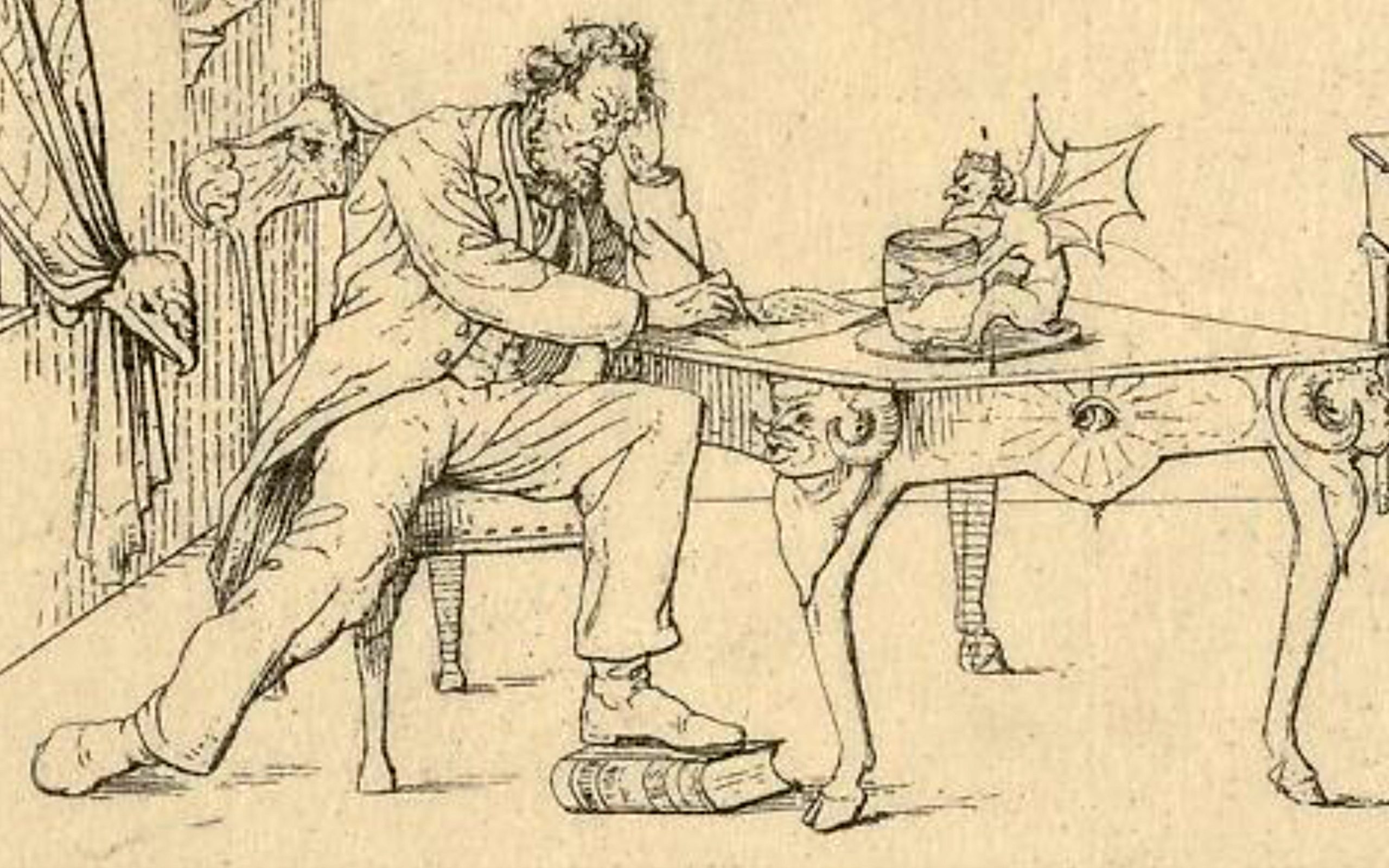
(political cartoon by Adalbert Volck)
I’m highlighting some images from the Lincoln era because that ties in with a story below (which, please trust me, will have reason to be in the pages of this musical monthly). But one can go back to the founding of the country, forward to any era that included a war (most generations from the Civil War forward have ended up going through one, no matter the semantics) and find examples—visual or otherwise— of disagreement growing nasty, intolerance becoming widespread, and discontent turning violent.
However, I think there’s a silver lining…and I think we who enjoy swinging jazz (and its related forms of music) are the ones painting it. It seems appropriate during the month that celebrates our country’s independence (and during our semiquincentennial, to boot!) to share my theory. But first, my story.
It happened one July 4th
In previous installments, I’ve shared the setting and some anecdotes of the great restaurant/bar/inn in Essex, CT called The Griswold Inn. I played there four nights a week throughout most of the 1990’s: midweek with the Hot Cat Jazz Band, as a soloist one weekend night, and two nights weekly with the Griswold Inn Banjo Band. The establishment always did the holidays up proper. Even Groundhog Day turned into a major town-wide féte with the “Gris” as the hub; Punxatawney Phil became Essex Ed, and an actor would parade through the bar and dining rooms in a full-scale groundhog costume while the band performed well-known tunes with rewritten lyrics! So you can only imagine what a mammoth event took place every Independence Day. After all, legend (most likely more than that; it’s never been disproved) was that the Inn was opened on July 4, 1776, so this annual date not only commemorates the symbolic beginning of the US, but also of the hallowed grounds of the Griswold.
One particular July 4th fell on Banjo Band night. Management marveled that the crowd in every room and the bar was the biggest turnout they’d ever had. What, they wondered, could be the cause? They espoused views of the nice weather, the (then) pretty good economy, the tony town of Essex, the well-appointed dock 500 feet away from the bar that supplied ample room for the super yachts that were in residence that night, and so forth. They missed the real reason for such unprecedented attendance. What could be more patriotic than two banjos, a tuba, and an out-of-tune piano? The Gris was obviously the only place to be on July 4th.
I must momentarily set the scene. In New England, battle re-creationists proliferate, annually revisiting major battle sites throughout our country’s history, whether or not those events took place anywhere near where the reenactment is occurring. The Northeast corners the market on old historical stuff so people participating in these field battles always sport the proper uniforms and weaponry (both often authentic), parade around, yell a lot, and get real muddy. It’s all in good fun. [My friend was a piper in one of the fife-and-drum corps outfits and told me these soirées often featured less violence then the average wedding the group would be booked to play.]
So it was no surprise to us in the band when about 9 pm, dozens of bedraggled historian/thespian/minutemen arrived at the inn, thirsty enough to drink the Connecticut River (if it were by some miracle made of whiskey). This particular year had been devoted to a battle from the Civil War, so the bar was awash in Union uniforms. We started playing the hits from the Revolutionary War on up, went into our George M. Cohan Medley and were sure to do the themes from each of the branches of the armed services. All was going well until the door behind the band leading to the side patio of the inn opened and a man in a Confederate uniform stepped in.
No movie western will ever compare with the scene that followed. One by one, the voices ceased, the music died out, and people turned toward this fellow, drinks halfway to their lips, all eyes on him and his outfit.
He worked his way to the bar, ordered a beer and proceeded to converse with the “union soldiers” around him about why the Civil War was really a war of Northern Aggression. He cited the failure and hypocrisy of the Reconstruction Era following the war and his viewpoint that the country really was still divided. The people around him listened and did not interrupt. It was only when he got around to using the dreaded “N” word that everyone had had enough. It being too crowded in the bar to actually start a fight, they hoisted him up and passed him over their heads towards the door behind the band. We supplied the soundtrack to the scene with “The Battle Hymn of the Republic” and they (literally) threw him out.
I gave that event a lot of thought. The people in the bar listened to the guy in the gray get-up who had a different point of view, only stopping when he went too far. Had he not overstepped, he’d likely have been able to finish his beer and go peacefully out into the good night. I realized that extremists from every camp are the ones that severely limit honest healthy communication and dialogue, neither of which can exist without equal doses of speaking and listening. As it has in the past, right now our country (really our world) needs dialogue, communication, and…dare I say it?…Healing.
Why do I think we writers and readers of the TST can be the front-runners of healing in our country? Because performers and audiences of that font of collective creativity called Jazz have to be good listeners. Without our ears, the music will be silent.

Listening is what’s missing from almost all altercations, disagreements, fights, and feuds. The people who receive the most attention, whether in the political, entertainment, or “news” worlds, are those with the biggest mouths, and its in their best interests to keep their maws open, spewing their individual worldview even as their ears remain closed. Their jibber-jabber keeps the camera on them, and of course the more extreme and “fringe” their message, the more they inundate our lives. For the good of our civilization, these people need to shut their gobs and listen for a change!
That most American of art forms, Jazz—along with Ragtime and the Blues—is a place where good listening can begin. No-one dispossessed of good listening skills will ever understand jazz or play it—or any other kind of music—convincingly. We who enjoy this publication can change the world, one person at a time, by teaching it to once again listen!
Start small. Invite a friend who has no connection with jazz to sit down for a refreshing drink and about 15 minutes of listening to what you love and why you love it! Maybe your listening duo will increase to a trio, then larger. Many prominent jazz clubs (as well as jazz ensembles) throughout the world started as “clubs” where the sole purpose of congregating was to listen to music. LISTEN to music.
Listen. Listen. Do you hear that? It’s the sound of dialogue resuming, of people working together, not trying to shout each other down. I believe the most potent symbol of this dialectic possibility is jazz. Many voices contributing to create a greater whole. It really can begin with us. Open your front window, prop your victrola in front of it, pop on a 78 by Pops, blast it out into the street and see what happens. Maybe people will listen. Isn’t it worth a try?

Jeff Barnhart is an internationally renowned pianist, vocalist, arranger, bandleader, recording artist, ASCAP composer, educator and entertainer. Visit him online atwww.jeffbarnhart.com. Email: Mysticrag@aol.com