There’s an adage in show business that says “always leave ’em wanting more.” That, in two ways, sums up my reaction to the Durango Ragtime and Early Jazz Festival. First, three of the four concerts ran short of their advertised times, including intermissions. And second, even if they had gone the full time, it wasn’t enough given the caliber of the talent performing.
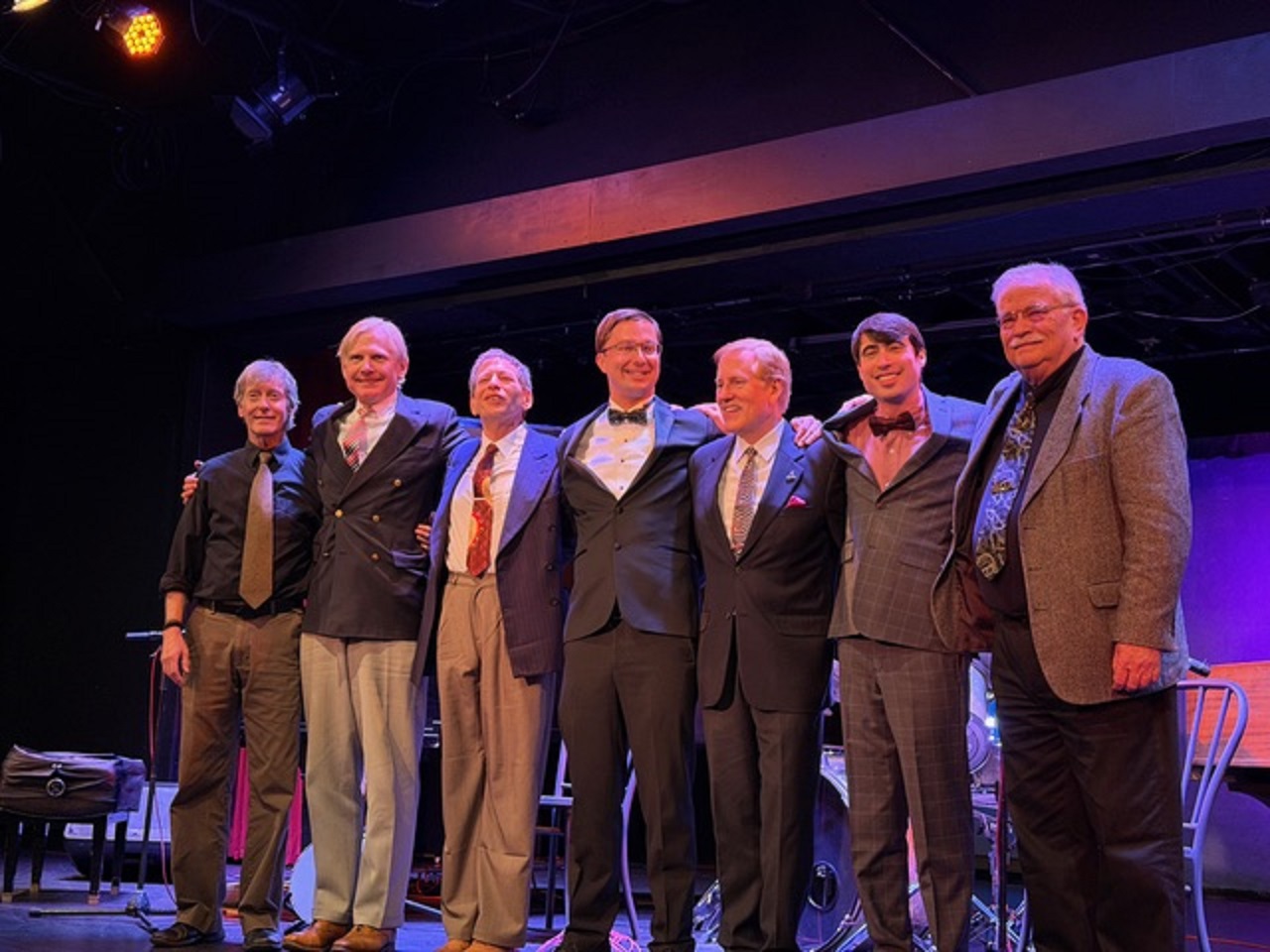
Attendees started arriving on Wednesday, April 15, although no activities were scheduled until Thursday. This was the second year, after an extended hiatus, that pianist Adam Swanson has organized this event, which is operated as a not-for-profit operation (that makes any donations tax-deductible—hint!). This year’s lineup included these pianists: Adam, Domingo Mancuello, Frederick Hodges, and Richard Dowling. They were accompanied by drummer Danny Coots, guitarist Craig Ventresco, and reed man Don Neely. Domingo doubled on guitar and vocals.
There were two special guests this year; one was Dr. Scott Brown, biographer of pianist James P. Johnson. His updated biography of Johnson, titled Speakeasies to Symphonies, was recently released after years of painstaking research, and was reviewed in the April TST by Scott Yanow. The second was Regina Whitcomb, widow of British rock star turned ragtime player and composer Ian Whitcomb, who died a few years ago. Ian performed at the first Durango ragtime festival in 2017.
The headquarters again was the historic Strater Hotel, where Adam has a regular gig six nights a week in season and less frequently in the winter. The seminars, midday music sets and after-hours jams were held at the hotel, while the concerts and silent movie were at the Durango Arts Center two blocks away.
This year, an optional ride on the narrow-gauge Durango & Silverton RR was offered Thursday, which I took and was glad I did. Most of the festival non-pianist musicians, supplemented by locals, entertained passengers on this run to Cascade Canyon (full trips to Silverton start later due to the risk of avalanches). Following the train ride there was a 30-minute free concert at the museum on the premises of the train station, which has recently acquired a 1913 Becker Bros. upright player piano that the pianists played.

The museum itself is quite interesting and I spent an additional half hour there. It’s in a former roundhouse and has several Denver & Rio Grande steam locomotives, two HO and HnO3 layouts, and other transportation-related artifacts including a few 1920s-era cars and trucks, a boat and bicycle. All the displays are well documented.
Thursday evening’s concert began the pattern of running little shorter than advertised. I think each pianist could have played one additional number, with or without accompaniment. As he did last year, Don Neely played one tune on his cross-cut saw, though not without some glitches. The saw saw duty (sorry, I couldn’t resist!) in each of Don’s subsequent sets.
Friday and Saturday mornings featured 1-hour seminars. The first was Frederick examining the history of silent film music. Frederick often accompanies silent films, as he did Saturday afternoon (the film was “The Circus” (1928) starring Charlie Chaplin. Despite being made a year after sound debuted, this one was silent.). Films were not the first form of entertainment to have musical accompaniment; it originated with opera and other plays before the development of film media.
Saturday’s presentation by Adam was about the life and career of Blossom Seeley, a less well-known singer and actress whose career extended from the vaudeville era to television. Adam has an extensive collection of Seeley photographs, sheet music covers and recordings.
Also on Friday and Saturday, for 90 minutes following the seminars there were three music sets starring one or more performers. On Friday we had Richard, who played a suite from “The Sting,” followed by a duo of Craig and Danny on guitar and drums, respectively. Craig sang a number of little-known tunes dealing with, shall I say, domesticity failings. Very entertaining. Frederick and Danny rounded out the morning with eight ’20s and early ’30s tunes from Broadway and Hollywood. Those two never fail to present a delightful program. On Saturday, Domingo, Don and Adam led the 30-minute sets. Craig and Danny supplemented the pianists.
There was the usual after-hours jam each night starting at 9:30. This year, to better accommodate the crowds, the hotel’s other bar, The Office, was also pressed into service. I spent about half an hour at the Belle Thursday night, but did not attend any other jams. Part of my issue with the jams, in addition to cutting into sleep time, is that non-festival customers who did not come for the music were in the room, jabbering away to the displeasure of those wanting to enjoy the music. I suppose little can be done about this, since those people have a right to be there, and their money is as good as anyone else’s.
Friday afternoon’s concert theme was “Red, White and Blue Ragtime” to commemorate America’s 250th birthday. Therefore, the show consisted mainly of patriotic songs, many from World War I, which was near the end of the ragtime era. Seldom-heard tunes like “When Alexander Brings His Ragtime Band to France,” “I’ve Got the Red White and Blues,” and from Adam, his George M. Cohan medley, were played. The concert began with Frederick playing and singing the national anthem and ended with everybody, including the audience, taking part in “God Bless America.”
The Friday evening concert featured early jazz, so most of the songs were from the 1920s, several of them quite obscure. To wit: “I’m Sure of Everything But You,” “Henry’s Made a Lady Out of Lizzie,” and “I’m No Angel.” Special emphasis was paid to James P. Johnson in honor of Scott Brown, whose Johnson biography enjoyed brisk sales.

I attended the Saturday afternoon silent movie mainly to see and hear Frederick’s accompaniment, always a treat. The film itself held no particular interest for me, although I enjoyed it.
Saturday evening’s Grand Finale concert, to me, was the best of the weekend. It was imaginatively and creatively put together, the musicianship was impeccable, and it did not end with the free-for-all that usually closes ragtime festivals. Instead, there was a duo of Frederick and Richard performing “I’ll Be Seeing You,” “Kansas City Rag,” and “Grand Tarantela” by Louis Moreau Gottschalk, a powerful anthem that was new to me.
One event missing this year was the Saturday evening banquet at the Strater. In its place was the optional Sunday brunch which was held in the Mahogany Grill, a larger space than the Diamond Belle, the site of last year’s brunch. Not everyone with all-access tickets attended. Several of the pianists entertained the diners.
I should give a plug to Adam’s live-streamed concerts on Sundays from 6 to about 7:45PM Mountain Time. This, and similar events began with the onset of Covid in 2020 by many musicians who were forced out of work. Most of them gave up these fundraisers when things opened up, but Adam has continued. You can watch him on YouTube, Facebook, or Twitch. For the seven or eight months a year when he is not playing six nights a week at the Diamond Belle, the concerts occur weekly unless he’s out of town. In the warmer months they usually air every other Sunday.
Adam has a website and a YouTube channel you can subscribe to and get notices of these concerts. Tips for the performances can be sent online or by check to his post office box. The concerts are usually viewed by anywhere from 150 to over 200 people among the three websites, and are archived on YouTube in case you miss a particular week. Over a dozen regular viewers, many of whom post comments in the chat during the concerts, were at the festival, and we cornered as many as we could for a group photo during Friday evening’s concert. Adam does these concerts from home on his 1913 Apollo player piano.
As I wrote about last year’s festival, it will be hard to find a reason not to make a trip two-thirds of the way across the country to attend next year. The dates are April 8-11, 2027.
Bill Hoffman is a travel writer, an avid jazz fan and a supporter of musicians keeping traditional jazz alive in performance. He is the concert booker for the Tri-State Jazz Society in greater Philadelphia. Bill lives in Lancaster, PA. He is the author of Going Dutch: A Visitors Guide to the Pennsylvania Dutch Country, Unique and Unusual Places in the Mid-Atlantic Region, and The New York Bicycle Touring Guide. Bill lives in Lancaster, PA.