In this column I have written much about trombonist Arthur Pryor, and while he did lead his own band, his long time assistant was fellow low brass man Simone Mantia. Mantia was one of these figures who ended up being on a lot of records uncredited, much like Pryor’s brother Sam and Jimmy Hager. Mantia has a similar story to that of Frank Mazziotta, but he originated from a different part of Italy.
Mantia was from Sicily, where a good percentage of Italian immigrants came from. Legend says that he was already an accomplished musician back in Italy before he moved to the United States. According to his naturalization record of 1897, he moved in 1890. It is very possible he played in brass bands in Italy as a young man before moving to New York (though his father wasn’t a musician). He first took up the alto horn, but he would soon stick to low brass for the rest of his life. Little is known of his family and his upbringing, but it is likely he settled in Brooklyn with his family.

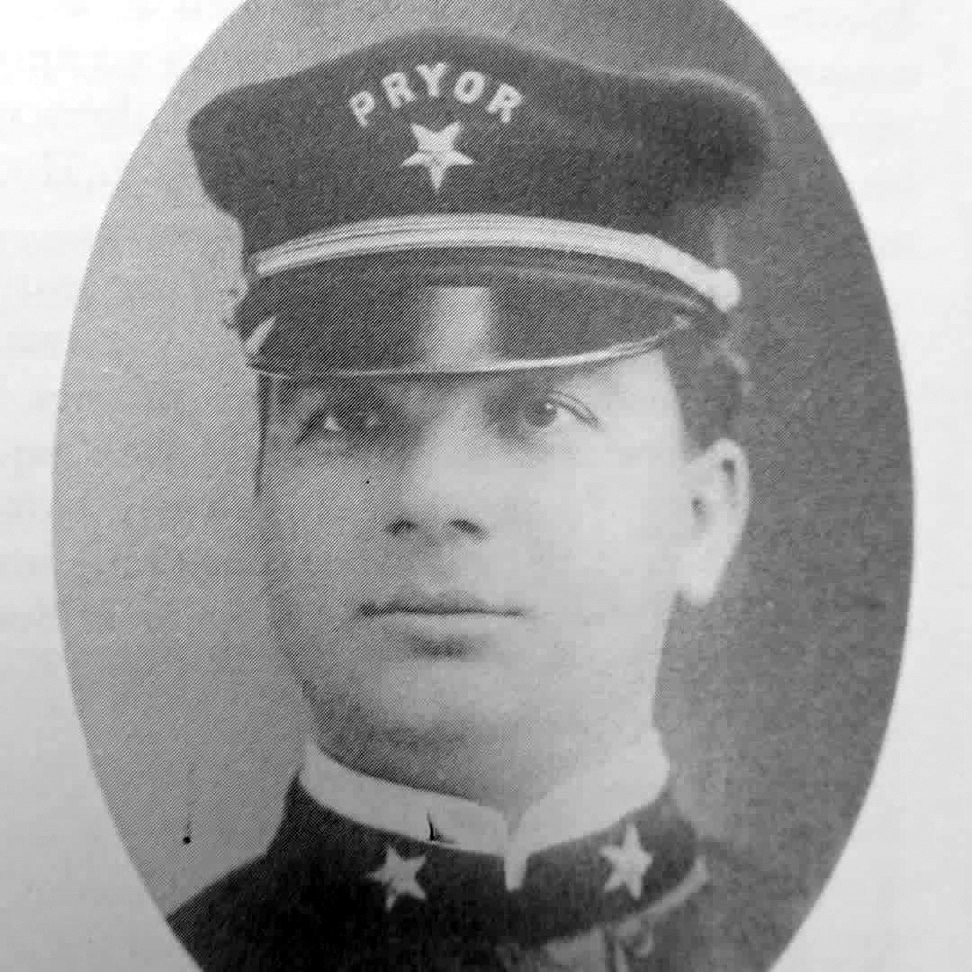
Around the time he moved to New York, he studied euphonium with Patrick Gilmore’s Italian horn player Joseph Raffayolo. His first big gig in the US was working in Jules Levy’s band(the famous cornetist). Not long after blowing away audiences with his talent on the euphonium, he was in the Sousa band after Raffayolo died in 1896. He showed immense talent on the instrument, and quickly became among the popular soloists of the band.
Surely as Mantia was freaking people out with his ability on the euphonium, Arthur Pryor was taking notice, as they often would have sat together in the low brass section. All while he was becoming famous, he was making a lot of records with the Sousa band, he’s likely on hundreds of Sousa band recorded between 1896 and 1902, just an invisible voice in the brass section.
His name shows up on a variety of labels, starting on Berliner, later Victor, Zon-O-Phone, and Edison. Considering how many labels he worked for, he likely was truly freelance for them, working under various orchestra leaders other than Sousa. He made a few solos for Zon-O-Phone, so he likely worked under Fred Hager as well. Unfortunately, there aren’t many recordings of him playing solos on euphonium or trombone. There are just enough, however, for us today to understand what made his playing so extraordinary.

He had mastered the euphonium and valve trombone, but while working in an orchestra in Brooklyn (it is possible that he first settled there when he moved to the US, but I haven’t been able to locate any directories that indicate this), he was forced to learn the new-fangled slide trombone with very short notice. It is said that he learned the instrument well enough to play it within a week.
When the Sousa band went on their European tour in 1903, musicians in Germany were perplexed by Mantia’s ability on the euphonium, much like they did with Arthur Pryor, they insisted on examining his instrument, as they assumed no one could play it so well. Around the time of this tour Conn had built him a custom double bell euphonium, which soon became his signature instrument. Like Pryor, he promoted Conn’s instruments throughout his career, even into as late as the 1930’s. You can find him on many advertisements for their instruments.
It was after that tour that Pryor started his own band, and Mantia immediately followed, not just as part of the low brass, but as an assistant director. As the Pryor band became more famous, Pryor himself was spending more time in New Jersey, especially in Asbury park. As Pryor was slowly migrating there, Mantia soon followed. It is unclear when exactly when he moved there, but by the beginning of world war I he had moved there with his wife Elgie.
While he did live in New Jersey for awhile to work with Pryor, he did move around every few years depending on gigs. He stayed there at least into the mid 1920s, as he organized his own short lived band there. In each subsequent census record he was living in a different place. He was truly living a working musician’s life. In 1909, he was hired by the Met opera orchestra, and played with them for over three decades. Because he was well employed, it can be difficult to keep track of where he was at any given time.
According to the census records, it is great to see that Mantia continued to work consistently for the rest of his life, even as technology and tastes changed. In 1930 he was back in Manhattan, this time all the way up on Riverside drive, in 1940 he was back in Jersey, and in 1950 he was in midtown at 45th street. He must have worked consistently enough to where he probably hadn’t much time to have students.

Pryor and other members of the Sousa band famously created their own lineages of talented students, but Mantia is not known to have had many, though he did teach at a music school in White Plains, New York in the 1930s. He was a well recognized figure in the New York music scene, even as an old man. He performed regularly on the radio throughout the later part of his life. People young and old would have been familiar with him through the radio.
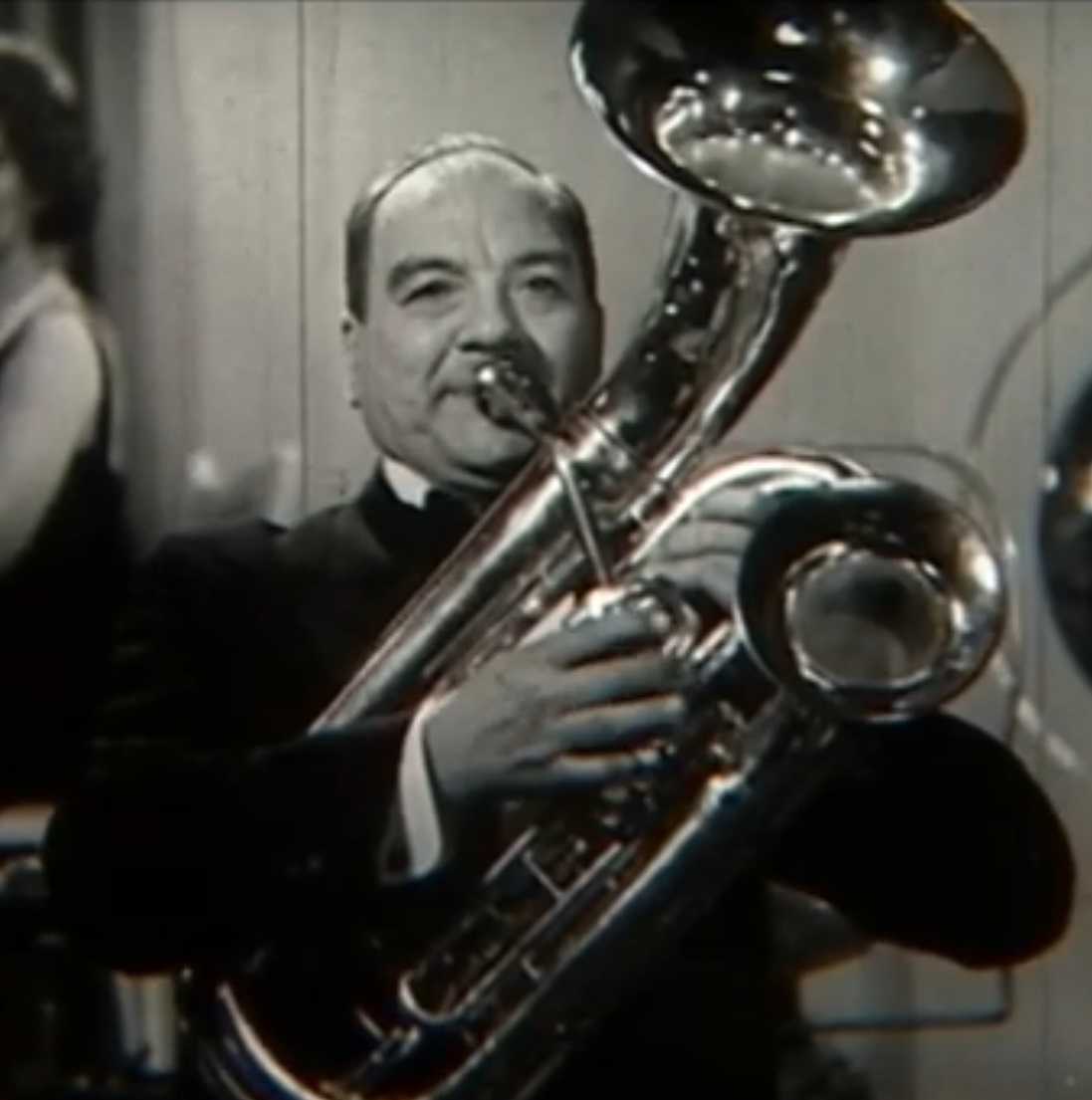
While there aren’t a lot of his solos for us to study, there is miraculously a film where he is briefly featured from 1938. This film is a short promotional film showing Conn’s instruments, introducing us to its most famous players of the time. He only gets about 15 seconds, but it is invaluable to understanding his ability on the instrument. If you’re not expecting it, it can be quite a shock to see such an old master on film. The film is freely available online.
He truly worked until the day he died practically. Just a few months after the 1950 census indicated he was still working consistently, he died in 1951. Mantia is buried alongside hundreds of thousands in Flushing, Queens.

He’s a very obscure figure to most, but if you were in the music scene in New York between the 1890s and 1940s you would have heard of or seen Simone Mantia. Even if you went to the Met opera between 1909 and 1935 you would have seen his name on the program, and heard his low brass playing.
R. S. Baker has appeared at several Ragtime festivals as a pianist and lecturer. Her particular interest lies in the brown wax cylinder era of the recording industry, and in the study of the earliest studio pianists, such as Fred Hylands, Frank P. Banta, and Frederick W. Hager.