When one thinks of the classic Count Basie Orchestra of 1936-40, the tenor-saxophonists (Lester Young and either Herschel Evans or Buddy Tate), the trumpeters (most notably Buck Clayton, Harry “Sweets” Edison and Shad Collins) and the famous rhythm section (pianist Basie, rhythm guitarist Freddie Green, bassist Walter Page, and drummer Jo Jones) come immediately to mind. But what about the trombonists? While not as influential as the other parts of the band, the trombone section was tight, swinging, and included a few notable individuals.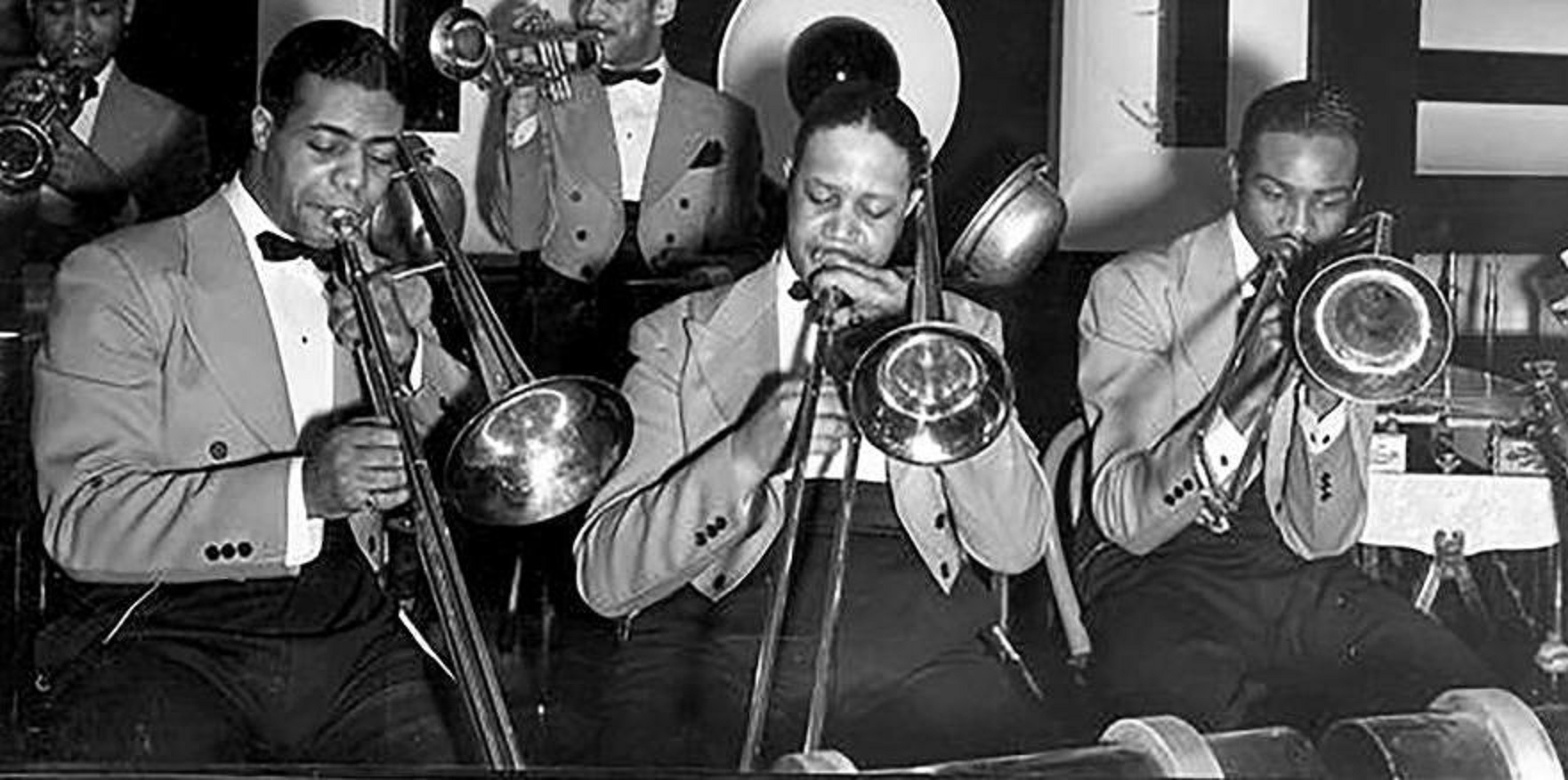
When the Basie band was discovered by John Hammond on a radio broadcast from Kansas City and brought East, they just had two trombonists (George Hunt and Dan Minor), neither of whom were known as significant soloists. Very little is known about Hunt (1906-46). He was born in Chicago and joined the Bennie Moten Orchestra shortly after their last recording session in 1932. After Moten’s unexpected passing in 1935, Hunt joined the new Count Basie Orchestra. While he was with the band during its early successes, appearing on four recording dates including the one resulting in “One O’Clock Jump,” he only lasted until the fall of 1937. In 1938 he was briefly with the Fletcher Henderson Orchestra before joining the Earl Hines band, appearing in Hines’ trombone section on recordings during 1938-42. Nothing much is known about his whereabouts after that and unfortunately Hunt committed suicide in Chicago in 1946.
Dan Minor (1909-72) had a longer and (hopefully) happier life although, for much of the time that he was with Basie, he was the least known of all of Count’s musicians. He was born in Dallas, Texas and, played his trombone early on in a church orchestra. Minor was part of a local band (the Blue Moon Chasers) and during 1927-29 he was a member of Walter Page’s Blue Devils, appearing on their only record date. Minor freelanced in the Midwest for a period, playing with Alphonso Trent and recording with Hunter’s Serenaders in 1931.
Later in 1931 he joined Bennie Moten and, like George Hunt he stayed with Moten during the years before the bandleader’s death in 1935. Minor next joined Basie, staying six years. But despite being on nearly all of the Count Basie Orchestra’s recordings of the era, Minor does not seem to have ever been featured. He had a similar anonymous role with the big bands of Buddy Johnson (1941-42), Cab Calloway, Mercer Ellington, Lucky Millinder, and Willie Bryant. Dan Minor’s last recording was in 1946 although he remained active into the 1960s, passing away in 1972 at the age of 72.
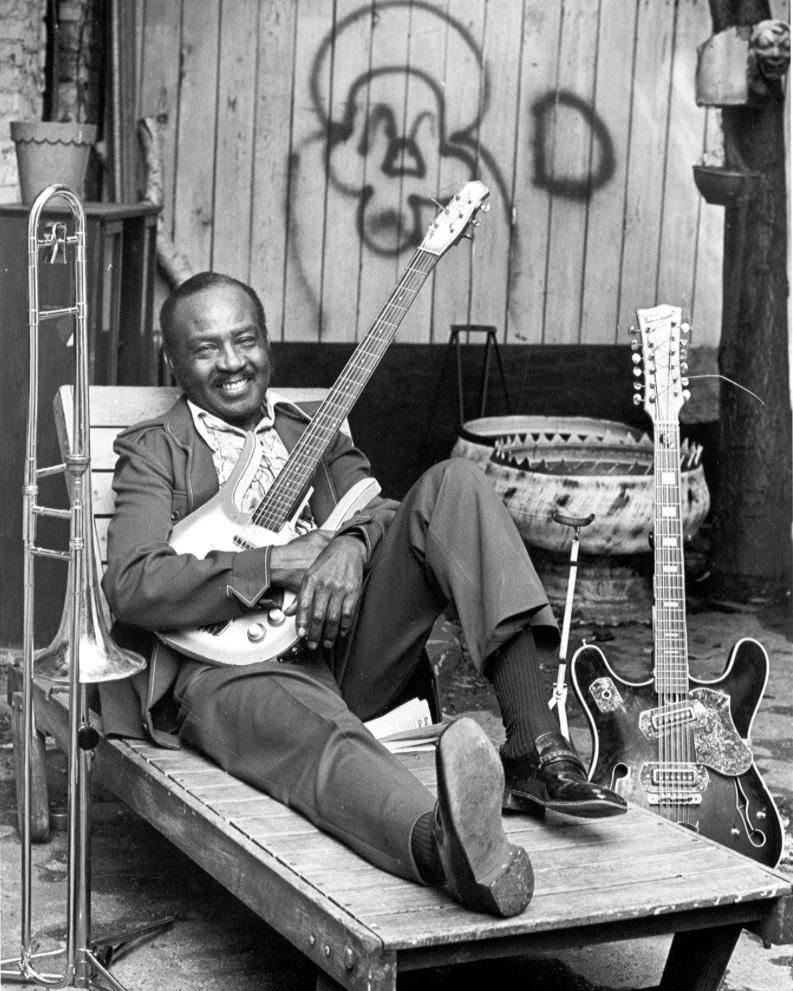
Eddie Durham (1906-87) had quite an illustrious and productive career. His accomplishments as a trombonist, a pioneering electric guitarist, an arranger-composer, and a bandleader deserve to be discussed at much greater length in the future. He crossed paths with Count Basie many times through the years and they were both members of the Bennie Moten Orchestra during 1929-32. Durham contributed some arrangements for the Basie band during 1937-42 including at least part of “One O’Clock Jump. But while he played trombone on Basie’s recording session of Aug. 9, 1937, that included his “Topsy” and he was with him for a month in 1938, his association with the Basie band was primarily through his writing.
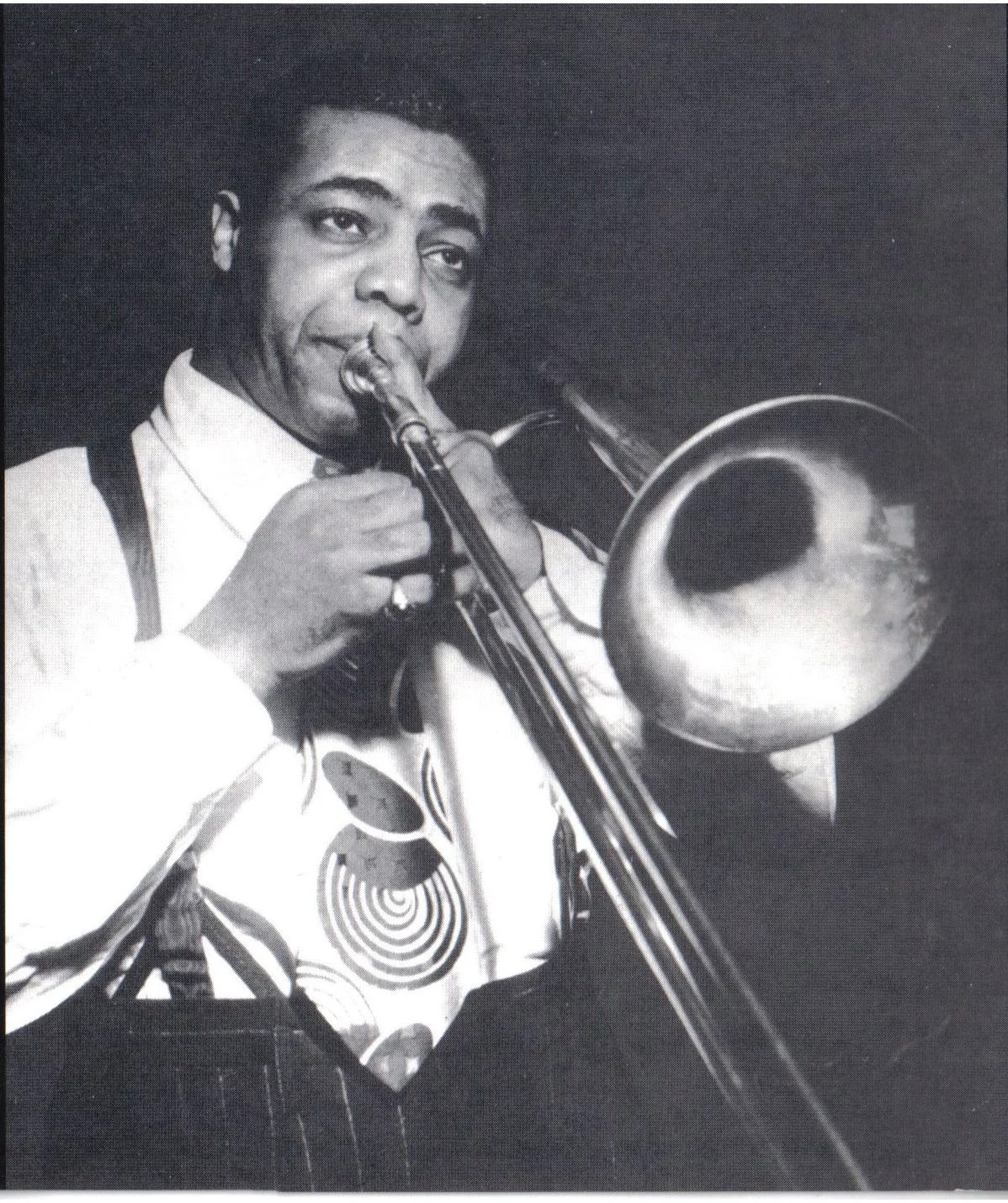
Benny Morton was Count Basie’s first major trombonist and was already quite well known in the jazz world before joining Count. He was born in New York on Jan. 31, 1907, was largely self-taught, and gained experience playing with the Jenkins Orphanage Band and in 1923 with a group led by Clarence Holiday. Morton joined the Fletcher Henderson Orchestra in 1926 and quickly proved to be a fluent and inventive soloist, sharing solo duties with Jimmy Harrison during 1927-28.
He was with Don Redman’s orchestra during 1931-37, appeared on record dates led by Henry “Red” Allen, Ben Pollack, Benny Carter, and Teddy Wilson, and had a four-song session of his own in 1934. By Oct. 1937, he was George Hunt’s replacement with the Count Basie Orchestra. Morton was the band’s lone trombone soloist up until mid-1938 when Dicky Wells joined and they started both being featured. While Wells was more colorful, Morton was always very dependable and consistent.
In early 1940, Morton went out on his own. His reputation was so strong that he was constantly in demand for record dates including for Joe Sullivan, Henry “Red” Allen, Zutty Singleton, Eddy Howard (the crooner’s lone jazz session), Benny Carter, Billie Holiday, Chick Bullock and Teddy Wilson (with Helen Ward). Other associations of the first half of the 1940s included Bobby Hackett, Fletcher Henderson again (for a record date in 1941), the Teddy Wilson Sextet (with whom he appeared in the classic film short Boogie Woogie Dream), Eddie Condon (many of his famed Town Hall concerts), Edmond Hall’s Swingtet, and, surprisingly, the Raymond Scott Orchestra. Morton also led an unusual four-trombone septet (with Vic Dickenson, Bill Harris and Claude Jones) for a four-song session in 1944 and had one date apiece for Blue Note (teaming him with clarinetist Barney Bigard and tenor-saxophonist Ben Webster) and Stinson.
When things slowed down later in the 1940s, Benny Morton worked in more anonymous sessions in theater pit bands, on radio, and in larger orchestras. John Hammond hired him for Vanguard recordings in 1954 with Buck Clayton and Sir Charles Thompson, there were albums with Charlie Shavers, Roy Eldridge and Ruby Braff, and during 1957-58 he was part of the short-lived Fletcher Henderson All-Stars led by Rex Stewart. Morton had a reunion that year with Basie (for the Sound Of Jazz television special), and in 1958 joined in with Vic Dickenson’s and Dicky Wells on the latter’s Bones For The King album.
But mostly Morton had a low-profile career, overshadowed by flashier soloists but always hired for his technical skills and reliability. Among those who utilized his talents on recordings during his last quarter century were Butterbeans & Susie, Sol Yaged, Jimmy Rushing, Capt. John Handy, Wild Bill Davison, Roy Eldridge, the World’s Greatest Jazz Band (1974), Earl Hines, and Doc Cheatham. Benny Morton was less active after the mid-1970s and passed away on Dec. 28, 1985, at the age of 78.

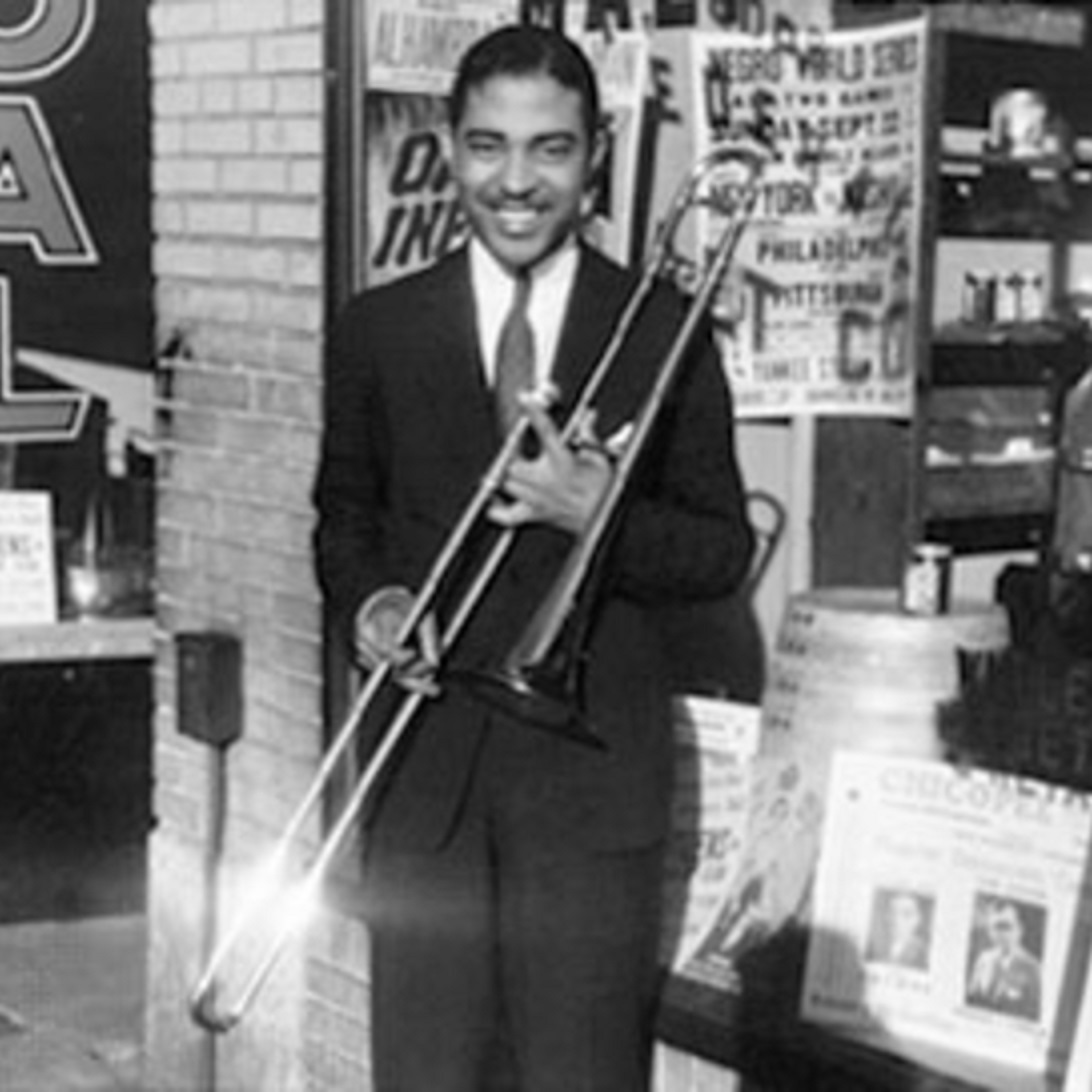
Of all of the trombonists from the early era, Dickie Wells (he changed his first name to Dicky later in life) is the one most associated with Count Basie. He was born in Centerville, Tennessee, on June 10, 1907, grew up in Louisville, and originally played baritone horn. Wells switched to trombone when he was 16 in 1925. Soon afterwards he moved to New York where he spent four years playing with Cecil and Lloyd Scott’s Bright Boys.
His already-eccentric style and wide range can be heard on 1929’s “In a Corner.” Wells next worked with Elmer Snowden (1930-31), Russell Wooding, Benny Carter (1932-33), Fletcher Henderson (1933), Carter again, and Teddy Hill (1934-37). He also recorded with Spike Hughes, Henry “Red” Allen, and Wingy Manone. During a 1937 European tour with Hill, he made some impressive recordings as a leader.
In mid-1938, Wells joined Dan Minor and Benny Morton in the Count Basie trombone section. He starred with Basie until the band broke up in 1949 other than taking a period off during 1945-47 when he took a hiatus due to health problems. His very expressive style can be heard on many Basie recordings with the big band (often playing wittily behind Jimmy Rushing’s vocals) and in small groups. The latter dates include the original versions of “Lester Leaps In” and the trombonist’s “Dickie’s Dream.” Wells is heard at the peak of his powers on a 1943 septet date that he led that featured Lester Young and trumpeter Bill Coleman. His speechlike playing, particularly on his blues “I’m Fer It Too,” includes some screaming high notes and lots of emotion.
For Wells, who was briefly with the Count Basie Octet in 1950 before going out on his own, the 1950s and ‘60s were largely anti-climactic after all of the activity with Basie. He played and recorded with some of his fellow swing musicians including Jimmy Rushing, Paul Quinichette, Earl Hines, Buck Clayton, Buddy Tate, Rex Stewart (including with the Fletcher Henderson All-Stars during 1957-58), and Bill Coleman (with whom he gigged in Europe in 1952), appeared on the Sound Of Jazz telecast, and toured Europe in 1959 and 1961 with a Basie alumni group headed by Clayton.
But his health began to decline, cutting short his stint with the Ray Charles Big Band after three months in 1962. Wells’ solo style by then seemed anachronistic although he could rise to the occasion when inspired. In 1965 he played and recorded in England with Alex Welsh’s band, during 1967-68 Jimmy Rushing used him on three albums, there were later recordings with Helen Humes (1978) and Jay McShann, and he sometimes teamed up with altoist Earle Warren who headed a combo called The Countsmen. But Wells often had to take day jobs during those years to get by. Although long past his prime, Dicky Wells led a final album (Lonesome Road) in 1981 that showed that he still had plenty of spirit left. He passed away on Nov. 12, 1985, at the age of 78.
The Basie trombonist with the most notable post-Basie career was Vic Dickenson. The ironic part was that, although his association with Basie really helped him evolve quickly from being a journeyman to a major soloist, Dickenson’s period with Count’s orchestra was so brief that few fans could probably say when it was.
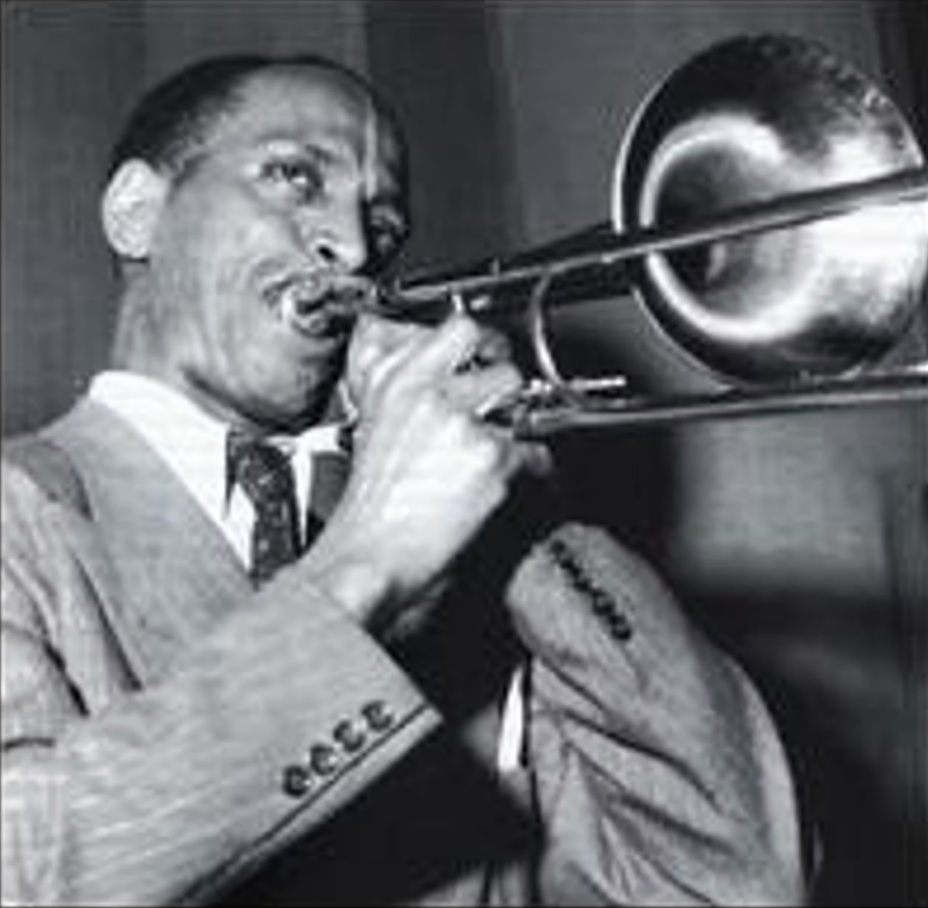
Vic Dickenson was born Aug. 6, 1906, in Xenia, Ohio. Starting with the Elite Syncopators in 1921 when he was 15, Dickenson worked with many long-forgotten Midwest bands including groups led by Roy Brown, Don Phillips, Willie Jones (with whom he made his recording debut in 1927), Bill Broadhus, Wesley Helvey, and Leonard Gay. He eventually worked with better-known territory bands including Speed Webb, Zack Whyte, Thamon Hayes’ Kansas City Skyrockets, and Clarence Paige’s Royal Syncopators. Following were stints with Blanche Calloway (1933-36), Claude Hopkins (1936-39) and Benny Carter (1939). But when he replaced Benny Morton in February 1940, Dickenson was still an unknown to the jazz public.
During his ten months with Basie, Dickenson’s sound and approach to soloing matured. He could play with the smoothness and facility of a trumpeter, often displayed a subtle wit, and he could distort his sound tastefully while sometimes sounding as if he were playing underwater! His style proved to be a very effective contrast with that of Dicky Wells.
Dickenson was flexible enough to sound quite comfortable in both swing and Dixieland settings, and that would make his prolific career possible. After leaving Basie in early 1941, he spent most of the many years that he had left performing with small groups. Sidney Bechet loved his playing and Dickenson proved to be a perfect musical partner or the soprano-saxophonist on numerous occasions during 1941-58. He worked with clarinetist Edmond Hall, was part of the very popular Eddie Heywood Sextet during 1943-46, and in 1944 alone he recorded with Albert Ammons, James P. Johnson, Mary Lou Williams, Art Hodes, Sidney DeParis, Hot Lips Page, Red Norvo, and Roy Eldridge.
Whether it was Coleman Hawkins, the Gerald Wilson Orchestra, Slim Gaillard, Howard McGhee, Kay Starr, Lester Young, Pee Wee Russell, Leo Watson, Wardell Gray, Julia Lee, or Jimmy McPartland, Dickenson was always able to uplift their music with his joyful musical personality and swinging style. He was particularly proud to be featured on a septet session with Louis Armstrong in 1946. While he led occasional sessions of his own, the trombonist was just as happy to be a sideman with top-notch and compatible musicians.
Musical trends came and went but Dickenson stayed busy playing in his unchanged but versatile style. Among his most rewarding associations in the 1950s were Bechet, Lester Young (including being on the tenor’s Jazz Giants ’56 album), Ruby Braff, George Wein, and his longtime friend Bobby Hackett. Dickenson was one of the stars of the Sound Of Jazz television special, playing with Henry “Red” Allen and Billie Holiday. Occasionally he crossed paths with fellow Basie alumni (as on some Buck Clayton and Jimmy Rushing albums in 1956-57), but he was just as likely to be jamming with Eddie Condon.
While the 1960s found Benny Morton and particularly Dicky Wells (both of whom were a year younger) slowing down a bit, Dickenson was as busy as ever, playing with Bob Wilber, Wild Bill Davison, and many all-star groups. He was a member of the Saints And Sinners during 1964-68 and in 1968 began co-leading a wonderful quintet with Bobby Hackett that made a series of rewarding recordings including the four albums titled Live At The Roosevelt Grill in 1970. Dickenson was Cutty Cutshall’s successor with The World’s Greatest Jazz Band during 1970-74 and helped recreate Louis Armstrong recordings from the 1920s with Dick Hyman and the New York Jazz Repertory Company while playing in his own style. Whether it was Alberta Hunter or Tony Bennett, Dickenson remained in great demand through the 1970s.
At the 1977 Montreux Jazz Festival, Dickenson had a rare reunion with Count Basie as part of an all-star group that recorded music later released as Count Basie Jam. Even as his contemporaries faded from the scene, Dickenson stayed busy, recording with Illinois Jacquet in 1980, heading a trio album in 1981 (Just Friends), recording with Bob Wilber’s Bechet Legacy and making a little-known but rewarding duet album with Ralph Sutton in 1982 (Blowin’ Bubbles). Barbara Lea’s Do It Again from Nov. 1983 was the trombonist’s final recording and he shows no sign of decline during those performances, 43 years after leaving the Count Basie Orchestra. Vic Dickenson passed away on Nov. 16, 1984, at the age of 78 after a very full musical life.
Most of the trombonists who joined the Count Basie Orchestra later in the 1940s, while talented section players, are largely forgotten today. Those include Ed Cuffee (Dickenson’s replacement who was with Basie during the first half of 1941), Robert Scott (1941-44), Eli Robinson (1941-47), Louis Taylor (1943-45), Ted Donnelly (1944-49), George Matthews (1946-49), and Bill Johnson (1947-48). The one exception was J.J. Johnson (1945-46) who set the standard for bebop trombonists, but that is another story altogether.

Since 1975 Scott Yanow has been a regular reviewer of albums in many jazz styles. He has written for many jazz and arts magazines, including JazzTimes, Jazziz, Down Beat, Cadence, CODA, and the Los Angeles Jazz Scene, and was the jazz editor for Record Review. He has written an in-depth biography on Dizzy Gillespie for AllMusic.com. He has authored 11 books on jazz, over 900 liner notes for CDs and over 20,000 reviews of jazz recordings. Yanow was a contributor to and co-editor of the third edition of the All Music Guide to Jazz. He continues to write for Downbeat, Jazziz, the Los Angeles Jazz Scene, the Jazz Rag, the New York City Jazz Record and other publications.