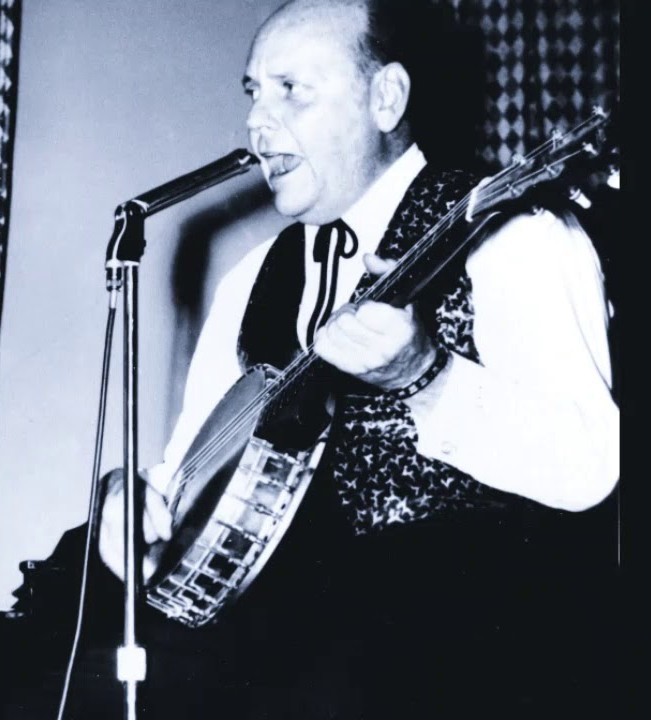
Jeff Barnhart: Hal, after a month off, I’m excited to return to the music and vocals of the great troubadour and spreader of joy, Clancy Hayes! We suspended our exploration shortly after Clancy and Bob Scobey began their long and fruitful musical relationship. There are so many songs we could choose, and I hope you might get us started with a couple of selections from the 1952-1953 period.
Hal Smith: It’s difficult to choose just a couple of selections, however, “Big Butter And Egg Man” has always knocked me out—not only for Clancy’s engaging vocal but for Scobey’s bouncy trumpet playing and especially for Fred Higuera’s propulsive drumming! The same metrics apply to “Hindustan” (with that unbelievably good Latin percussion by Fred). “Long Gone” is another favorite, with a wonderful elastic rhythm feel and Clancy’s unbeatable swing as he sings the humorous lyrics. He is much more serious-sounding on “Do You Know What It Means?” and “Of All The Wrongs.” He handles the tricky double-time vocal on “Blues My Naughty Sweetie” with ease and sails over the top of a thundering ensemble on “Peoria.” The augmented band on those four tracks makes the music even better, with three trombones (including Bob Mielke) and the fantastic tuba playing by Bob Short.

“Ace In The Hole” and “Silver Dollar” are two of the songs most associated with Clancy, and for good reason. He owns both of them! They were issued as a 45 rpm single by Good Time Jazz and as I understand, it was one of GTJ’s best sellers. I remember hearing it on a juke box in Wisconsin in the late 1980s! We have a lot to discuss in this installment, so I will refrain from going into more detail about the sides mentioned above. What do you like about them, Jeff? Which of the other sides appeal to you?
JB: On “Big Butter and Egg Man” I dig Wally Rose’s ragtime piano behind Clancy’s vocal, as well as George Probert’s quirky yet swinging clarinet ride. Higuera’s drumming on all these sides simply demand you swing with abandon!! Hal, was the Scobey outfit the first to take a hot ’20s tune like “Hindustan” and play it with a Latin feel? I love how after Clancy’s vocal, the horns are swinging while Higuera keeps the Latin feel going and it doesn’t clash! Really versatile bunch of musicians. On this one, we’re treated to two choruses of Clancy’s golden voice. The song “Long Gone” should’ve crossed into the pop charts; with its propulsive chorus I can almost hear any of the early acoustic Rock ’n’ Roll groups doing this! Clancy revels in the fun story and lyrics. I enjoyed hearing him sing the two slower tunes even more. And I agree with you, the added brass on both ballads, “Peoria,” and “Naughty Sweetie” add so much depth. It’s too bad the clarinet is so far back on these sides, but that’s my only gripe.”
On “DYKWIM” Scobey’s terrific phrasing on the melody chorus and Wally Rose’s Teddy Wilson-like flourishes behind Clancy on the first half of his vocal floored me! The intro to “All the Wrongs” is perfect! Scobey plays the verse to the tune so beautifully; heat, lyricism, tone: they’re all abundant. He’s certainly one of the most underrated trumpeters in Classic Jazz. Clancy proves with “Naughty Sweetie” that having fun with a tune in no way diminishes the quality of the jazz, forever silencing certain nay-sayers who refer to bands that play this tune as “Hi Bill” bands. Bunk to them!
All I can say regarding “Ace” and “Silver” is that it was from Turk Murphy’s band that I was introduced to these great barroom tunes. . .Then I learned how to sing them from Clancy.

I’ll end my review of these sides with a rhetorical question and an observation. Did the trombonists have their parts written out or did they work out their voicings before recording each side? I love how they have a chance to open up on “Peoria,” as well as Bob Short getting to “dig in!” My observation is that no matter the material, Clancy Hayes has an effortless delivery with perfect phrasing, rhythm, and tone. A singer’s singer!!
Where shall we go now, Hal?
HS: Jeff, there are some albums by Scobey and Clancy from 1955 that are excellent, but I want to move forward to a group of recordings made in 1956—either for Good Time Jazz or Verve—that were not issued until Scobey’s widow Jan put them on LP many years later. Now they are available on George Buck’s Jazzology label. These tracks are performed by a small combo from the Scobey band, with the leader on trumpet; Clancy on guitar and vocals; Ralph Sutton on piano; Bob Short on string bass and Fred Higuera on drums. These have such a happy, carefree sound and everyone plays (and sings) so well that I can’t imagine they weren’t issued at the time!
First is possibly the best of the bunch: “My Honey’s Lovin’ Arms” played with an overwhelmingly joyful spirit.
“Then I’ll Be Happy” is more of the same, with some Bob Zurke-like phases from Ralph on the intro.
This little group’s version of “I Can’t Give You Anything But Love” is one of the most enjoyable I have ever heard.
Finally, there is the old New Orleans classic “I’m Sorry I Made You Cry”—played in a style closer to Fats Waller and his Rhythm than to Alexander’s Jazz Band. And Clancy’s vocal is sung with exactly the right amount of sadness and gladness, as dictated by the lyrics.
What are the highlights for you on these tracks?

JB: Well, hell, Hal! I know this is supposed to be an article on Clancy, but I was salivating listening to sides my hero Ralph Sutton is on that I’d not heard before. THANK YOU for including these terrific tracks. Sutton’s intros into the tunes alone provide a masterclass in how to play swing piano, perfectly bringing the band in with just the right feel. The whole quintet effortlessly and joyously swings on each track.
On “My Honey’s Lovin’ Arms,” in addition to his loose and solid vocal turns, Clancy provides some righteous guitar licks behind Sutton’s masterful solo. Bob Scobey plays magnificent trumpet, and he was a generous band leader. Other than the initial melody chorus, he’s content to beautifully back up Clancy’s two vocal choruses. The moderate-tempo rendition of “Then I’ll Be Happy” offers a chance to hear Higuera’s lovely brush work and some sweet backing by Sutton on Scobey’s opening chorus. Clancy’s vocal makes you believe the words of this tune; his phrasing and swing are augmented here by such a sincere delivery (I’d like to think he was singing in his mind and heart to his wife Ann).
Clancy’s vocal on “Can’t Give You” reminds us that this is one of the great torch songs. This track begins with the verse sung rubato by Clancy with exquisite accompaniment by King Ralph. I agree, Hal, this is one of the best versions of this standard I’ve ever listened to. Scobey supplies some Armstrong licks and phrasing during his solo. In spite of what I hear as a couple splices coming both into and out of Scobey’s solo, I listened to this one several times and never tired of it.

One of my top ten favorite tunes ever is “I’m Sorry I Made You Cry!” And this is now one of my favorite two or three versions. Just listen to Scobey’s lyricism, Sutton chewing up that juicy chord progression on his solo, and Clancy’s two vocal choruses. As we continue exploring the musical magic of Mr. Hayes, I’m gaining fresh appreciation for the way he handles a vocal. We’ve talked a great deal already about his natural phrasing and swing, but I’d like to point out that he always serves the tune, never letting his interpretation overshadow the source material. Nowhere is this more clear than when you compare the two vocals on this tune. Another beloved vocalist who I felt always accomplished this is the recently departed great lady Rebecca Kilgore.
Hal, I defer to the fellow who contributed so much to Chris Reid’s seminal biography, Clancy Hayes – The Swinging Minstrel, to take us to the next tunes. Fire away!
HS: A few years ago, Becky Kilgore told me that she really liked the Clancy Hayes Good Time Jazz Swingin’ Minstrel album. It is a great feature for Clancy as bandleader, vocalist, guitarist, banjoist and drummer! Though it was not released until 1963, the album consists of a recording session from 1956 and a second from 1958. Clancy was still performing with Bob Scobey when the first session was recorded and so were his bandmates Bill Napier, Ralph Sutton and Bob Short. That is definitely a winning combination! The first track is “When You and I Were Young, Maggie” with a double-time variation on the lyrics. Note that Clancy couldn’t resist scatting over Ralph’s chorus!
Clancy’s vocal on “Willie The Weeper” is marvelous. The instrumental choruses by Napier, Sutton and Short are sublime.
“Honeysuckle Rose” is a feature for Ralph Sutton, starting with a beautiful rubato verse. Bill Napier sounds especially inspired and the bandleader contributes some understated, subtle drumming in addition to an and swinging first chorus by Ralph, more swing on the clarinet solo, light and lifting tuba and subtle drums (and another excellent vocal) by the bandleader.
“Limehouse Blues” allows us to hear the rarely-sung lyrics at a moderate tempo.
“Wolverine Blues” is the final number from the 1956 date. Each musician is at the top of his game on this track. Just listen to the interplay between Napier and Short on the modulation back to Bb and Napier’s creativity on his solo. Clancy sings verse and chorus, as did the composer on his famous Library of Congress recording. Ralph’s solo and Napier’s playing on the penultimate chorus—not to mention the perfectly-sung vocal and the peerless tuba playing—makes me wish that this quartet had made a lot more records!
Jeff, before we move on to the second “Swingin’ Minstrel” date, what do you like about these five tracks?
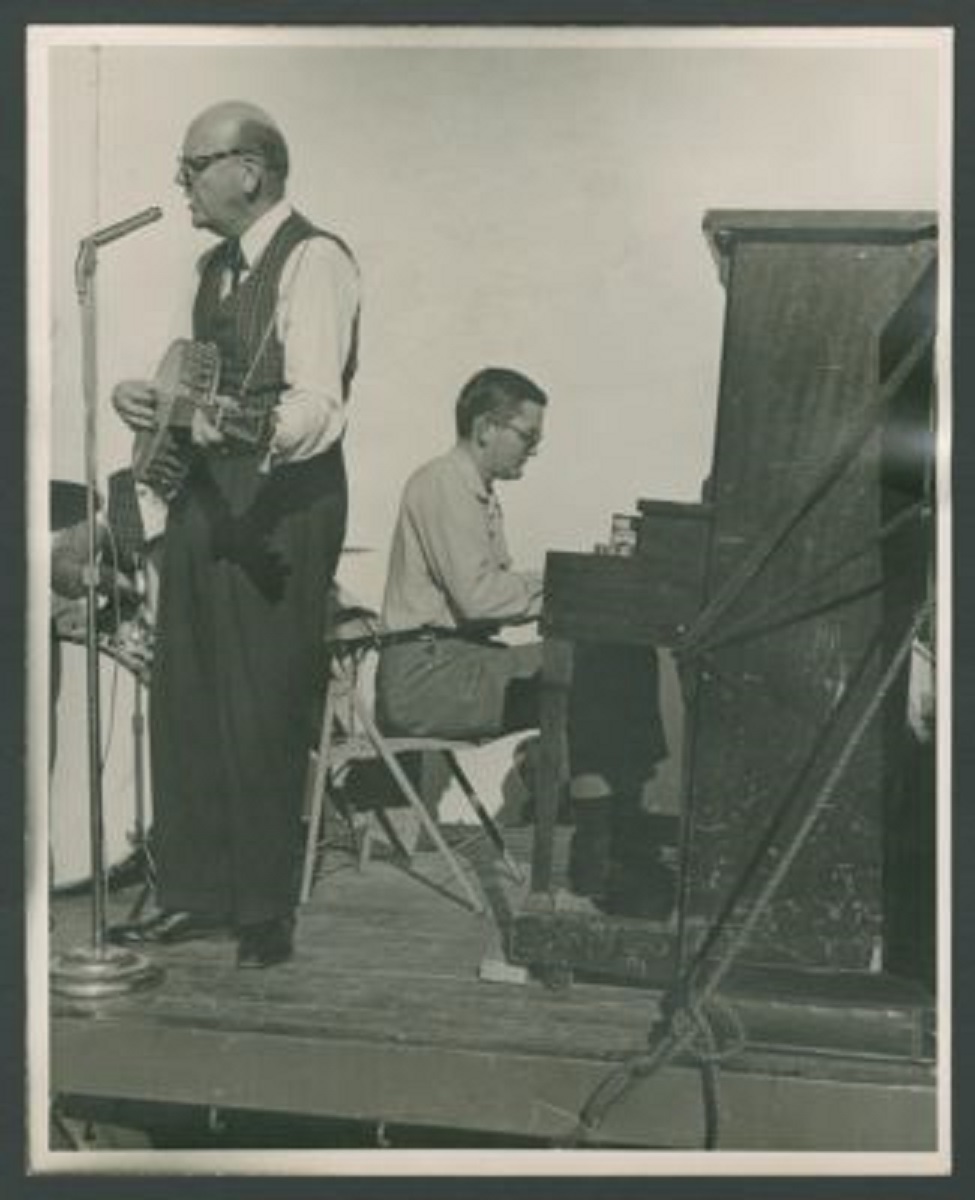
JB: Hal, I could save reams of space by I describe what I don’t like…NOTHING! “Maggie” is a classic track and nobody did it better than Clancy. The entire framework takes the listener on a beautiful journey. His vocal verse is accompanied only by his lilting guitar and Bob Short’s solid, dancing tuba. For the chorus, Bill Napier plays the old folk melody (so prettily) while Clancy flawlessly assays the tongue-twisting patter. Sutton feathers in toward the end of that vocal chorus and performs a steady build throughout. I think he’d tolerate such an interpolation from no-one else but Clancy. Again, a small group that sounds larger than its number. Each subsequent track you’ve presented has that similar off-the-cuff, “we’re just sitting here in some comfortable lounge enjoying each other and you’re invited” feeling. On “Willie the Weeper” I can find no better word than your evaluation for the instrumental solos as being “sublime.” I’d extend that description to both Clancy’s incredible vocal and that swingin’ instrumental chorus preceding Clancy’s final vocal chorus.
Ralph Sutton playing with a tuba for “Honeysuckle Rose” only works because of Bob Short’s bouyant style of playing. Clancy turns this (sometimes over-) familiar tune into his own personal statement, referencing Fats with some nice asides but singing it his own way: infectiously, joyously, impishly…lovingly!
Hearing “Limehouse Blues” at this moderate tempo and with Bill Napier playing so soulfully illustrates how pretty the melody of this old tune is. Clancy is as always in fine form, but Ralph Sutton’s solo knocked me back on my heels! Some stride, yes, but some very free stuff as well. What a versatile pianist he was!
“Wolverine Blues” is a thing of beauty and heat. In addition to the highlights you illuminated, I’ll add Napier’s clarinet during the first chorus after the dog-fight referencing “High Society” is delightful, as is Sutton’s backing behind Clancy’s vocal during that same strain. Clancy’s spoken “I’ve got ’em” leading into Ralph’s solo (which, incidentally, is a masterclass in about a dozen styles of classic jazz piano in 32 bars) lends to the free-wheeling, relaxed feeling that permeates all these sides. And I LOVE Bob Short’s reprising the intro phrase on the tuba during the closing couple of bars! Hal, did this quartet do any gigging or was this a special for the studios?
HS: Unless there are some unissued sides by this combo in the GOOD TIME JAZZ vaults, “That’s all there is. There isn’t any more!” It’s a shame that we can’t hear more by this all-star group, but at least we can enjoy these five sides.
There was a follow-up session in 1958 by a different lineup, with only Clancy and Bob Short held over from the previous date. Pud Brown (who had played with Jack Teagarden, Kid Ory, Pete Daily and the Firehouse Five Plus Two) was on clarinet. The GOAT of band pianists, Jess Stacy, was at the keyboard and one of the most tasteful drummers in any style—Shelly Manne—completed the rhythm section with Clancy and Short. Clancy stayed with the banjo on this occasion and it didn’t seem to bother Stacy or Manne at all, despite their associations with swing and “modern” jazz.
“You Took Advantage Of Me” stars with a bluesy intro by Jess, his trademark “oinkly-oinkly” vocal accompaniment, incredibly light tuba and swinging brushwork. Stacy and Brown split a chorus after a modulation to Eb, then return to the original key of C for Clancy’s inspired improvisations on the melody. I can’t get enough of those Stacy tremolos!
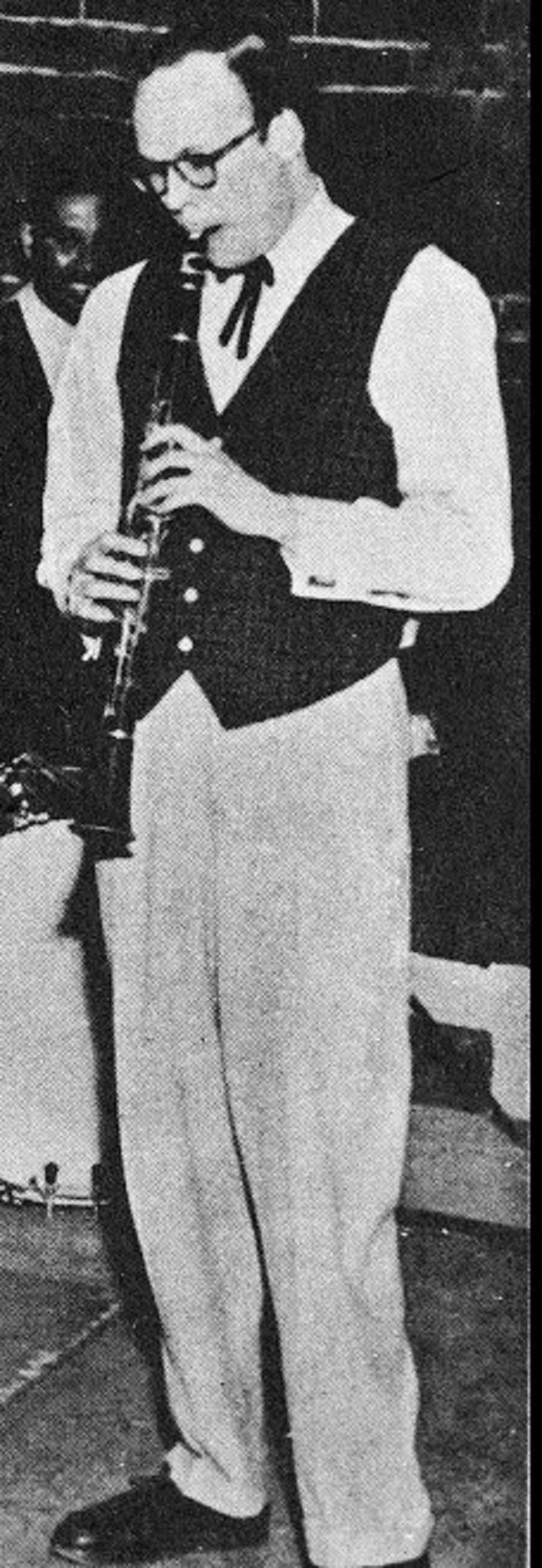
“Dancing Fool” is taken at a tempo that is bouncy and stomping at the same time. It has another swinging piano solo, lower-register clarinet, melodic tuba and a modern but subtle brush solo. What a great quintet!
Jess starts “After You’ve Gone” with a pretty intro, leading into Clancy’s vocal verse (with nice single-string self-accompaniment). There is a gentle pickup to a brighter tempo, but it does not sound rushed at all. Manne keeps flawless time and brings the song back to the original slower tempo for Clancy to take it out.
The singing and choice of tempo on “Oceana Roll” call to mind what Jess Stacy said regarding Clancy’s talents (quoted in Chris Reid’s “Swingin’ Minstrel” on p. 223): “Clancy had the right conception of a song plus an unerring instinct for setting the perfect swinging tempo, which combined to make him a great jazz singer—the best I ever played for…”
“Waitin’ For The Evenin’ Mail” is lowdown and bluesy, made more so by Shelly Manne’s crisp press rolls (he was a very versatile “modern” drummer)! Clancy plays some nice single-string counterpoint behind Pud Brown’s solo and keeps it going into the vocal patter and last chorus.
“Ain’t She Sweet” is unusual in that Clancy scats, rather than sings, the first chorus! The accompanists turn the heat up to a boil behind the vocal and increase the temperature on an ensemble. Clancy sings the lyrics, followed by Jess on a romping piano solo and another vocal chorus with Bob Short almost stealing the show. Pud Brown stays in the lower register throughout and Shelly Manne, using sticks, swings but never intrudes.
This is a very different sound from the 1956 session, but I really like it a lot. What do you think, Jeff?
JB: Hal, your comment about the line-up of musicians in this session from 1958 (tuba mixing it up with piano and drums more known for their post-trad styles) brings home to me that the best musicians play well together regardless of the various styles; it’s usually the critics and the audiences that drive wedges. This stuff is simply divine. “You Took Advantage of Me,” usually associated with Bing Crosby, is transformed by Clancy’s rough-and-ready—yet pleading—vocal. Stacy’s swinging solo is augmented by Clancy’s tasty strumming and picking, and Pud Brown executes the rapid harmonic changes on the bridge with ease. I’d never heard “Dancing Fool” before. The words save what seems to me to be a boring melody with repetitive chord changes, but the world-class playing throughout made me go back to listen to it several times in a row. Yes, Manne’s solo is “modern,” especially the way he comes out of it that might have derailed the ensemble except for Stacy’s right-hand octave hit anchoring the beat to bring Clancy and Bob back in. Great stuff!

It’s revealing to me how unique Clancy was when he would take an old warhorse and transform it into a personal statement. I’ve never heard anyone sing the lyrics to the verse or the more-familiar chorus to “After You’ve Gone” with greater genuine feeling than he does here. He never “phoned it in,” did he? Each song became a situational story to share with the audience. What a great communicator of the meaning and emotion in these tunes! You’ve already described the highlights of this song, so I’ll just add this feels so loose it might have taken place in one of their living rooms. Pure aural poetry.
If anyone told me I’d hear Jess Stacy and Shelly Manne on a recording of “Oceana Roll,” I’d look into the sky searching for the Pope flying by on a pig! Good music transcends labels or styles. I confess not liking this tune when I’ve heard others do it (including a couple of others by Mr. Hayes himself), but this one I like!! It might be because of the relaxed swing and the lack of busyness behind the vocal so we can savor every syllable of the spell Clancy is weaving. The tempo is also perfect!
The opposite of my opinion of the previous tune can be heard on “Waitin’ For The Evenin’ Mail:” I’ve never heard a version I didn’t like, the song is so wonderful. Stacy sets it up with a bluesy intro and Clancy’s singing captures that melancholy spirit. The lines both Pud Brown and Stacy play behind Clancy’s plaintive warbling adds to the sound of sadness and Pud’s solo is as blues-drenched as can be. Clancy continues the story of the tune and the abrupt return to the title finishing the lyrics of this second part is a kick in the gut. These cats sound like they managed to drag a piano onto the street corner with this one!
Most people purchasing this album in 1963 would’ve grown up with the insanely popular 1927 chestnut “Ain’t She Sweet,” so it’s a nice artistic touch that Clancy scats at the top rather than singing the words which, when he gets to them, are almost upstaged by the spectacular accompaniment provided by pianist Stacy! I’ll mention that some of Clancy’s scatting is reminiscent of a troubadour of yore, the great ukulele-strumming vocalist Cliff Edwards.
Hal, we’ve run out of space this time around, but I suggest we wrap up our discussion of the multi-talented Clancy Hayes with a part III next month. We can start with one of my top-ten favorite traditional jazz albums and move onto one you suggested with a true All-Star line-up, then finish with some individual tracks from the final years of Clancy’s life and career. Does this sound good to you, my friend?
HS: Yes! There are several outstanding Clancy recordings from the 1960s that deserve to be highlighted. I look forward to writing about them and to hearing your insightful comments. ’Til next time…
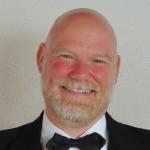
Jeff Barnhart is an internationally renowned pianist, vocalist, arranger, bandleader, recording artist, ASCAP composer, educator and entertainer. Visit him online atwww.jeffbarnhart.com. Email: Mysticrag@aol.com