Jeff Barnhart: Hal, our advertised plan following our month off was to continue our exploration of the music and vocals of the great troubadour Clancy Hayes. However, as seems to be happening more often these days, we just lost a giant of traditional jazz, as well as one of the nicest people on the planet. Cornetist Bill Mason has passed away at the enviable age of 97, leaving behind a legacy of audio and video recordings for us to savor. A key member of the St. Louis Ragtimers, he was an integral part of the vibrant jazz scene of St. Louis for many years. I had limited encounters with him (although one is a doozy I’ll share herein) but I know you had many opportunities to both hear AND play with him. So I suggest we continue with Clancy next month, and devote this edition to the memory and music of the great cornetist Bill Mason. Would you please start us on our journey?
Hal Smith: Thanks, Jeff. I met Bill in 1971, at a ragtime concert in Los Angeles called “Where It Was.” Bill was performing with the St. Louis Ragtimers and I was playing washboard in a trio led by pianist Dave Bourne. Pete Clute played solo piano and Eubie Blake was the headliner! During Pete’s set I was listening backstage along with Bill, Trebor Tichenor, Al Stricker and Don Franz from the Ragtimers. Bill noticed that I was absent-mindedly moving my fingers in time with Pete and he asked, “Do you play piano too?” That led to a conversation about the instruments we played and our influences. Bill told me that his main inspirations were Louis Armstrong, Bix Beiderbecke, and Bob Scobey. I hear a lot of Scobey in Bill’s playing—a wonderful bouncy rhythm and subtle but very effective improvisations.
As I recall, one of the numbers that the St. Louis Ragtimers played at the concert that night was Scott Joplin’s “Pine Apple Rag.” Let’s listen to a live recording of that rag from the St. Louis Ragtime Festival in 1986. You can hear how Bill respects the melody and also plays some nice variations that add to—rather than detract from—Scott Joplin’s wonderful composition.
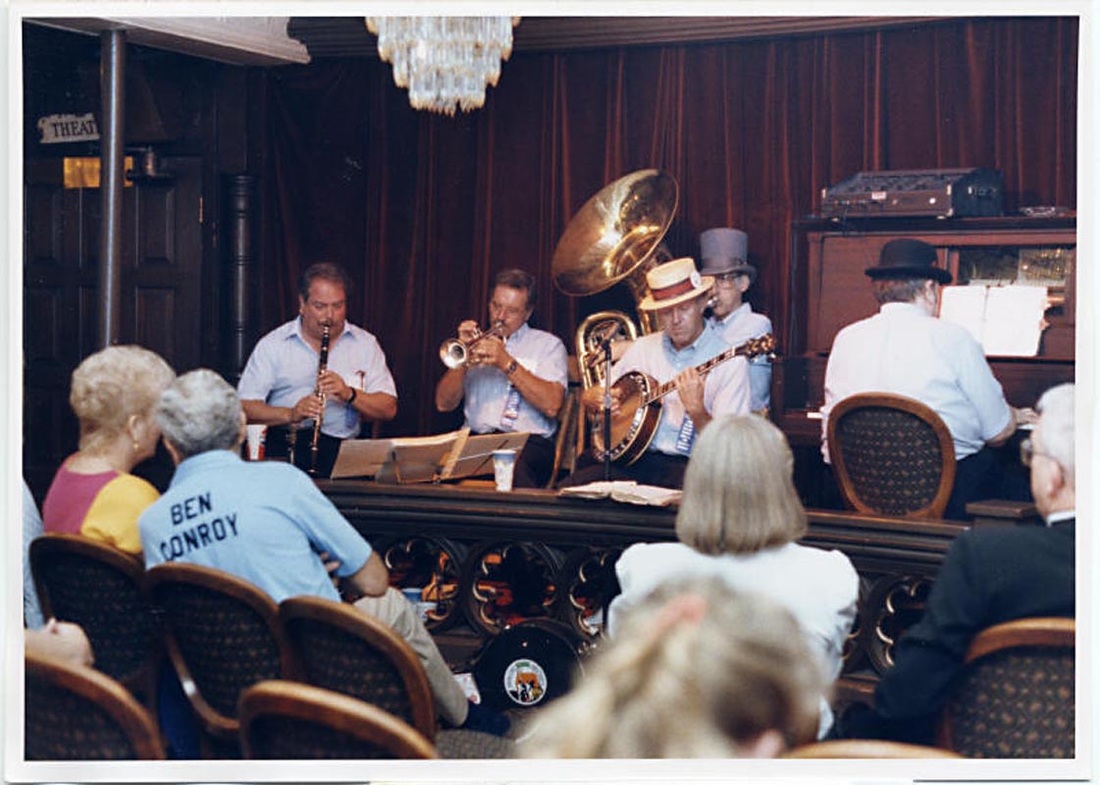
JB: Hal, it’s amazing that you chose the very tune I first heard Bill play with the SLR ensemble! It was in the late 1990’s at the Scott Joplin Festival in Sedalia, MO. Having listened a great deal to ensembles play rags using the Red Back Book (a collection of orchestrations of piano rags published by John Stark from his catalogue in 1912), I was expecting the cornet to play melody only on the stompy, easy sections found in these pieces, leaving the hard stuff to the reed player, but NO! Bill was playing ALL of the melodies of this rag and all that followed.
He also wasn’t playing any of them “straight-laced,” as you pointed out. There was a looseness of phrasing, a gentle, effortless two-beat SWING that I imagine the best of the small bands of the ragtime-era played with—as opposed to the groups that got recorded like the military ensembles such as James Reese Europe’s “Hellfighters” Band, or one of his Society Orchestras, or (reluctantly until the demand for ragtime was too strong to keep refusing) John Philip Sousa’s Band. I should point out that Bill was playing arrangements he and the band created during rehearsals. These cornet lines were not from a book!

HS: When Bill recorded with my New Orleans Night Owls in 2024, he played four of the St. Louis Ragtimers arrangements from memory; NO music at all! [See:The New Orleans Night Owls • St. Louis Rag]
JB: Hal, I know we’ll have plenty more listening to do, but Bill isn’t in any jazz books; there are no websites or blogs about him. Can you please fill in the blanks regarding who he was and how he became one of the most important ragtime/jazz musicians in the history of St. Louis?
Don Franz, Al Stricker, Trebor Tichenor.
HS: Even though I worked with Bill several times, I didn’t manage to find out a lot about his background. He did mention that he was born in Cincinnati in 1929 and his family moved to St. Louis in the 1930s. Bill served in the U.S. Navy and later became a long-distance truck driver. At least one of his runs ended in New Orleans and he was able to hear some great music during his short stay there.
Our mutual friend T.J. Müller hired Bill to play with the “Gaslight Squares” in St. Louis and had many conversations with him over the years. T.J. was kind enough to provide some additional information. He mentioned that Bill started out playing accordion but switched to trumpet within a short time. Bill went to the Palladium in St. Louis where he heard several “name” bands including the famous Jeter-Pillars Orchestra.
T.J. writes, “In the 1940s Bill played in some swing groups with other high school aged kids, reading stock arrangements. He told me that he remembers taking one of his first solos on ‘Whispering.’

“Bill’s first riverboat job was playing with a band (I believe in 1949) on the Gordon C. Greene.
“When he was still cutting his teeth on early jazz, he went to see Santo Pecora play at what is now Uncle Bill’s Pancakes. He sat in and the band called ‘Sweet Sue’. Bill didn’t then know it so had to fake it.
“In 1957, Bill led a group called ‘Bill Mason’s Hot Seven’ that included Singleton Palmer on tuba and Gus Perryman on piano. They were featured in collaboration with the St. Louis Symphony for a special program at the Kiel Auditorium.”

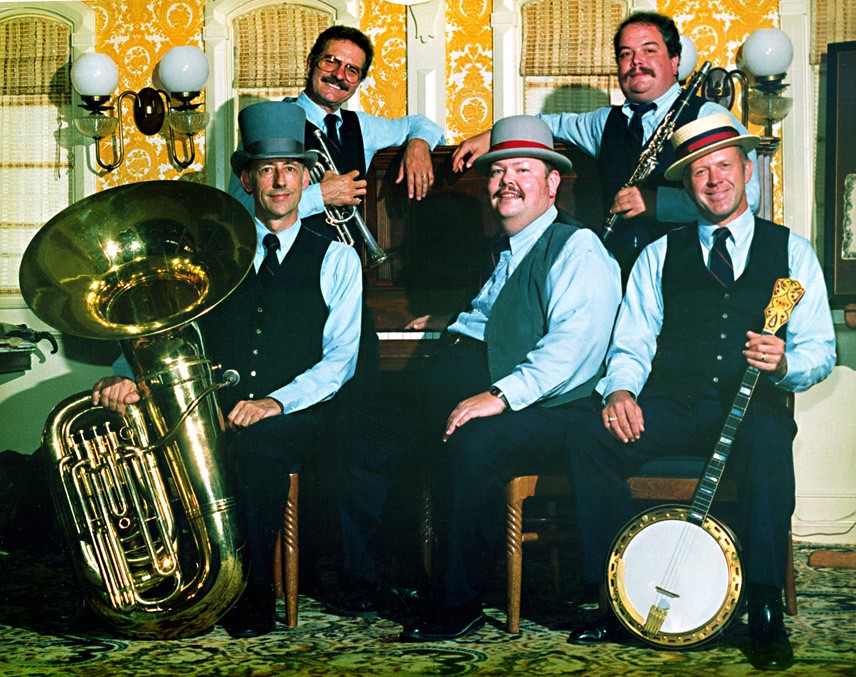
Stricker.
I think Bill’s first appearance on record was with a group called the Dixie Stompers. They played a concert in 1957 at Westminster College in Fulton, Missouri which was recorded and released on Bob Koester’s Delmar label (later Delmark). The band included clarinetist Norman Mason (who played on riverboats with Fate Marable) and banjoist Pete Patterson, who also worked on riverboats with Charles Creath and his Orchestra.
Bill joined the St. Louis Ragtimers in the early 1960s and can be heard on their first LP, recorded for the Audiophile label. Although clarinet was added to the ensemble in the 1970s, Bill was the only front line instrument for several years. That is a tricky situation for a cornetist or trumpeter, as there could be a tendency to play too many notes in order to compensate for the missing trombone and clarinet. However, Bill struck the perfect balance with just the right amount of “busy-ness.” We can hear a great demonstration of just how well he pulled this off on “Chattanooga Stomp” from the first Ragtimers LP.
JB: Hal, that is some wonderful background about Bill, and thanks to T.J. for fleshing out his story! Regarding the SLR version of “Chattanooga Stomp,” what an intro! Bill had such technique! I hear what you’re saying about his not over-playing to offset being the only horn. In addition to his impeccable taste, I have to point out that the rhythm provided by Al Stricker on the banjo and the lilting tuba from Don Franz (just LISTEN to those facile breaks usually reserved for trombone as on the original by King Oliver and subsequent recordings) are so solid and full, Bill must have felt NO need to fill in too many gaps! As well, Trebor Tichenor’s fantastic pianistics cover a lot of ground; his harmonies with Bill on the A section act like a horn. It’s a mark of how wonderfully they fit together, even at this early stage, that I don’t miss the missing instruments! Drummer Ed Freund does his job well, but I can see how the SLR would soon go drumless (Hal, they didn’t have YOU available!).

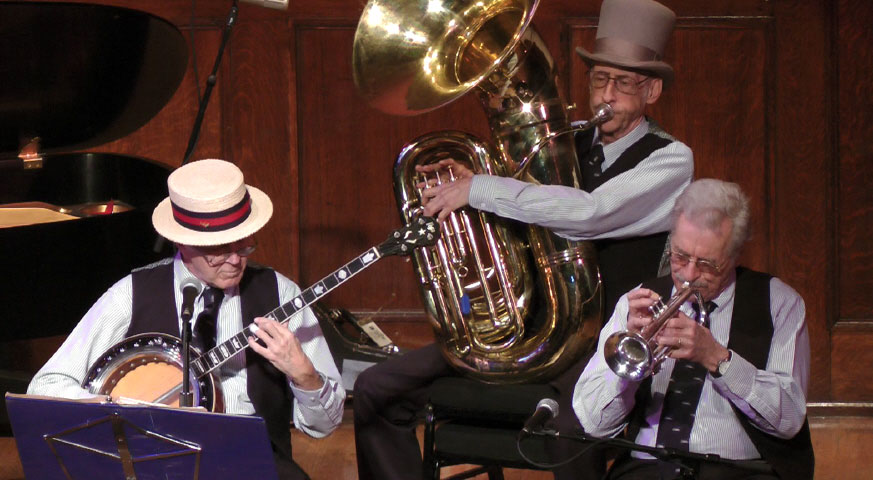
I’d like to return a moment to Bill playing a classic rag with the Ragtimers. In this exquisite arrangement of Joplin’s towering 1904 accomplishment “The Cascades,” the SLR in quintet form sounds like more than five players! It goes without saying that Trebor Tichenor’s piano playing is nonpareil, but Don Franz’s tone on the tuba is beautifully captured here: rich, full-bodied, and with an admirable control of dynamics. What a masterful player. Al Stricker just keeps time, but it is perfect!!
As wonderful as this tight rhythm section is, for me the stars are Glenn Meyer on clarinet, and of course Bill on cornet. The carefully arranged interplay between the two horns is like a ballet danced by bouyant notes in an intricate choreography. Their work lives up to the title “The Cascades!” Again, we hear Bill Mason expertly navigating complex melodies with precision, tone and, yes, swing! It’s honestly astounding. For this performance, after the piano solo on the final (D) section, the band plays two choruses out and we very quickly learn why this ensemble was a favorite for both ragtime and traditional jazz fans! The group reverently performs the ragtime repertoire, but that final chorus stomps!
Hal, where would you like to take us now?
HS: Jeff, that is a magnificent performance of “The Cascades.” Perfect tempo, perfect dynamics and a lilt in the rhythm. The St. Louis Ragtimers were such an important part of the ragtime and classic jazz world that maybe we should devote a future column to them. What do you think?
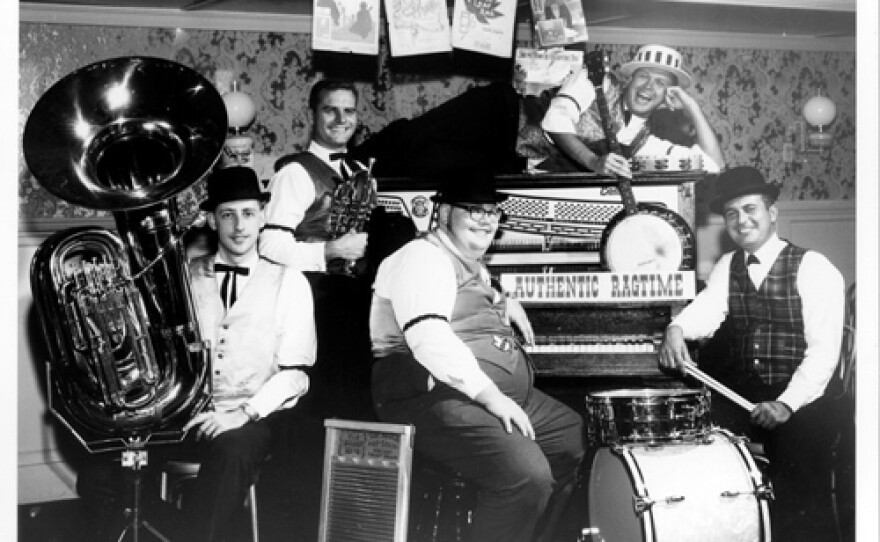
While you ponder that concept, here is one of my favorite recordings by the band: the 1914 Albert Gumble – Seymour Brown song “At The Mississippi Cabaret,” with a terrific vocal by Bill Mason and exceptionally good contributions from clarinetist Glenn Meyer and Messrs. Tichenor, Stricker and Franz.
JB: First, no pondering necessary: YES to an article about the SLR!! I’m already happy. Second, the tune you’ve chosen is one of the rarer of the scores of “copycat” numbers that were penned to try and capitalize on 1912’s monster-hit “Waiting For the Robert E Lee.” It’s really a great number! In old-style fashion, the band plays the final eight bars of the chorus and then vamps straight from the sheet music. A rollicking ensemble verse and chorus is replete with—as we’ve now come to expect—dynamics, expert articulation, and heat! Bill has perfect diction on his smiling vocal and his style is so distinct from Al Stricker’s it’s a wonder he wasn’t featured as a vocalist more often. Towards the end of both the ensemble and the vocal verses, Don Franz groans a note that sounds like a low-pitched steamboat whistle! He is rock-solid steady! Trebor’s piano playing behind Bill’s vocal and Al’s half-chorus banjo solo is the epitome of barrelhouse, rompin’-stompin’ RAGTIME!
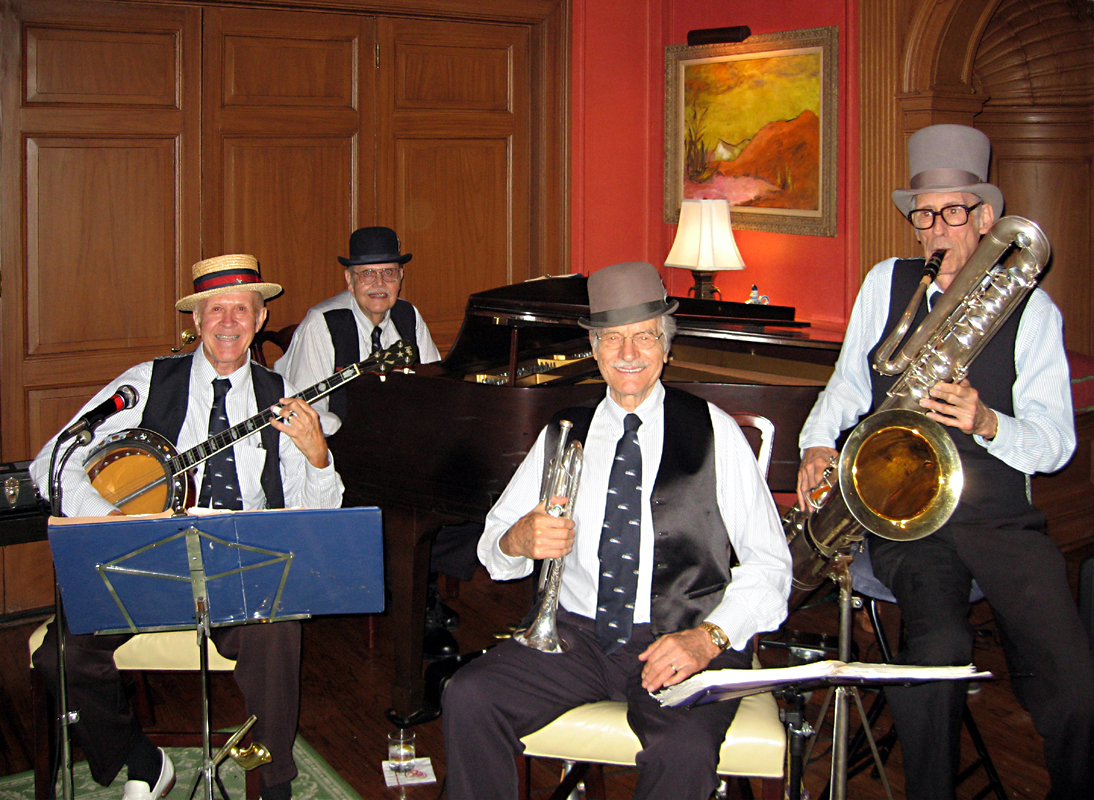
sax).
As we disembark, where are we headed now, Hal?
HS: Let’s listen to Bill Mason displaying two additional talents: playing washboard and jaw harp! “Crooked Stove Pipe” is a little different from the rags, cakewalks, stomps and blues that the St. Louis Ragtimers normally played. But it gives Eric Sager (clarinet) and Trebor on piano a chance to make the old folk song swing! Bill’s washboard solo is a keeper and his jaw harp is a nice foil for the clarinet on a chorus where Al Stricker is the only rhythmic accompaniment. There is another raggy chorus by Trebor and three more loosely-played choruses with Don Franz’s tuba goosing things along and Bill keeping excellent time on washboard.
JB: Hal, this is such a wonderful, folksy, hoedown-type piece! I love how both Eric and Don change their ways of playing to adapt to the style. After Bill’s fun washboard solo, Trebor romps along, both he and Don bowing out for that wonderful “breakdown” chorus you describe! I can see the dance floor filled with giddy two-steppers during this tune. The final chorus is jubilant!
I love the tunes you’re selecting to highlight Bill’s versatility, Hal! Keep ’em coming!
HS: Next is an unusual version of the King Oliver classic “Snag It.” There are some nice variations on the melody by Trebor before Al’s vocal and then—instead of the usual stoptime for cornet—we hear Bill take two choruses on harmonica! He could really get “in the gutter” on that instrument! And catch the harmonica-like vibrato on the cornet at the very end. This performance is so loose that it makes me wonder if they just winged it instead of using a routine. In any case, it sure is different from all the other recordings of “Snag It,” wouldn’t you say?
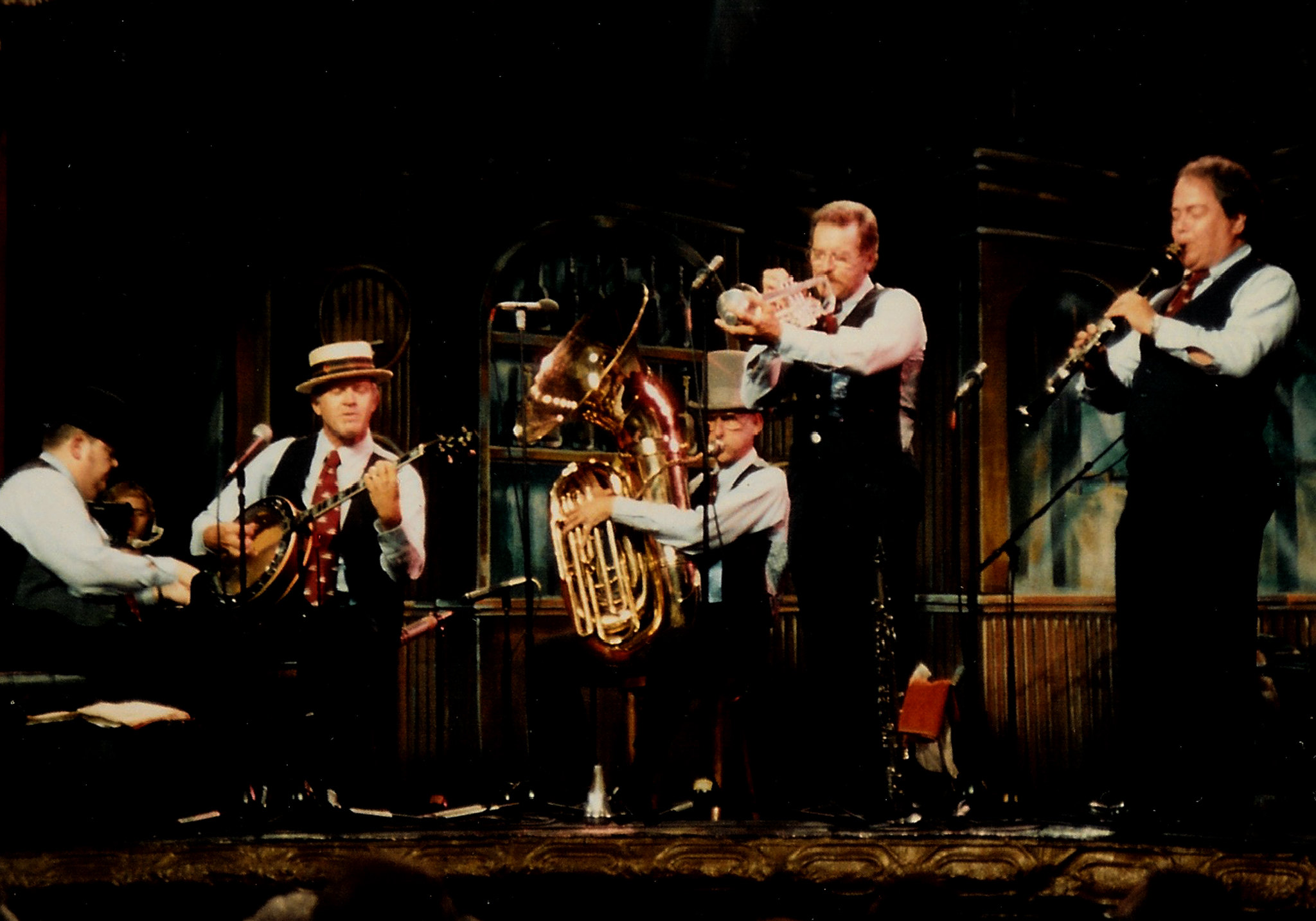
Sager.
JB: This is hypnotizing and it does sound spontaneous rather than carefully worked out. Al’s single string picking on the banjo, Trebor’s left hand ostinato, and that tempo made me close my eyes and start swaying. It’s funny, I’ve heard Al Stricker sing so many upbeat ragtime songs it took some getting used to hearing him sing a blues at this tempo. After Don’s sonorous solo, I love Bill’s wailing on the harmonica. This is not only different from other renderings of “Snag It;” it’s markedly different from anything I’ve ever heard from this band. Another gem I’ll keep going back to.
Hal, while I’m grieving the loss of Bill Mason, I know your relationship was deeper, both musically and personally. In fact, I think you might have led his final recording session when he guested for a few numbers with your New Orleans Night Owls! I thought it might be fitting to pause from talking about Bill’s recordings and share a story or two. My most memorable personal and musical encounter took place in the early 2000’s at the West Coast Ragtime Festival (at that time held at the Red Lion in Sacramento). My friend Brian Holland and I were appearing as were the St. Louis Ragtimers.
Unlike traditional jazz festivals, ragtime festivals host an “after-hours,” presumably for those rabid fans who feel that 12 hours of ragtime a day isn’t enough, but actually for the performers to socialize, steal tricks from one another, and especially for the young up-and-comers to have more chances to show off, soak up the atmosphere, and hang with the veterans. When you’re in your teens and even up into your thirties, these post-show events are great fun. When you’re older, they can be exhausting.
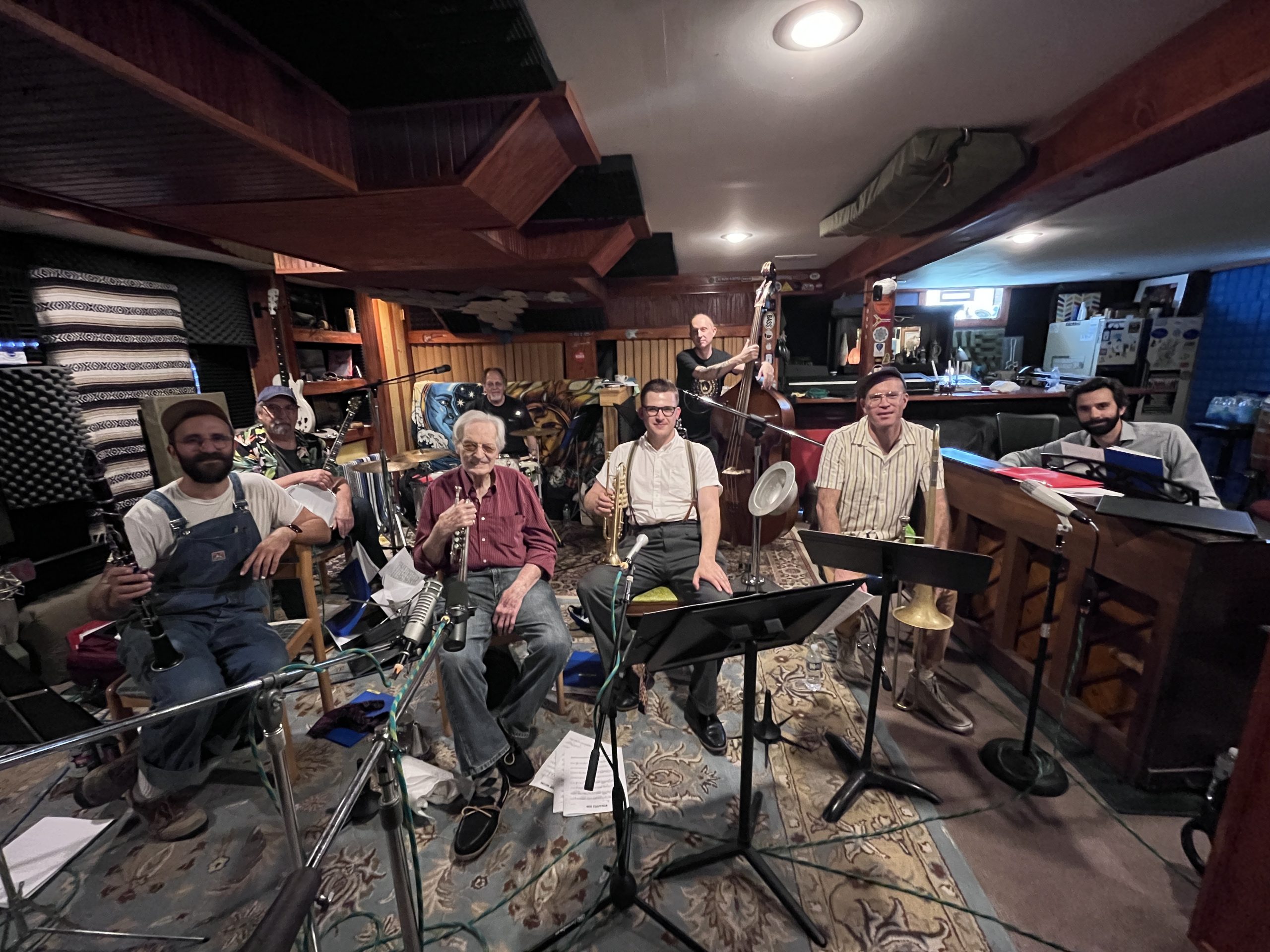
Reinhart, Bill Mason, Hal Smith, T.J. Müller, Michael Gamble, Charlie Halloran,
Kris Tokarski.
Anyhow, Brian and I had just closed one of the venues with a dual-piano set. At this point, every venue was closed and the after-hours were to commence in the center bar. We were so high from the set we’d played, we selfishly didn’t want to go in and spend 95% of the time listening and 5% playing, so with the volunteer captain’s and the then-festival director’s gracious permission, we waited about 10 minutes and kept playing in the venue we’d just closed. Pretty soon we had a crowd to rival the scheduled after-hours.
About 30 minutes into it, Bill Mason wandered past the open door, listened for a moment, then came up onstage, sat down, took out his cornet, and proceeded to play with us for the next 2 1/2 hours. In-between tunes, he’d tell stories, ask questions, offer suggestions, call tunes, learn tunes he’d never heard, teach us some we didn’t know, and it was a true highlight of my entire life. Brian felt the same way. Bill quietly concluded as we covered the pianos and he was putting away his horn, “Boy, this was lots of fun!”
HS: That sounds like Bill!!! Actually, I wish there had been more opportunities to hang out with Bill and just talk. Except for that initial meeting in Los Angeles, all of our subsequent encounters were on the bandstand. And until he played with the Night Owls on that ragtime recording session, the only times I heard Bill were with the St. Louis Ragtimers. (John Gill told me that Bill sat in with the Turk Murphy Jazz Band when Turk played at the St. Louis Ragtime Festival. Can you imagine how great that must have sounded? I would give a pretty penny to have heard Bill with Turk’s band)!
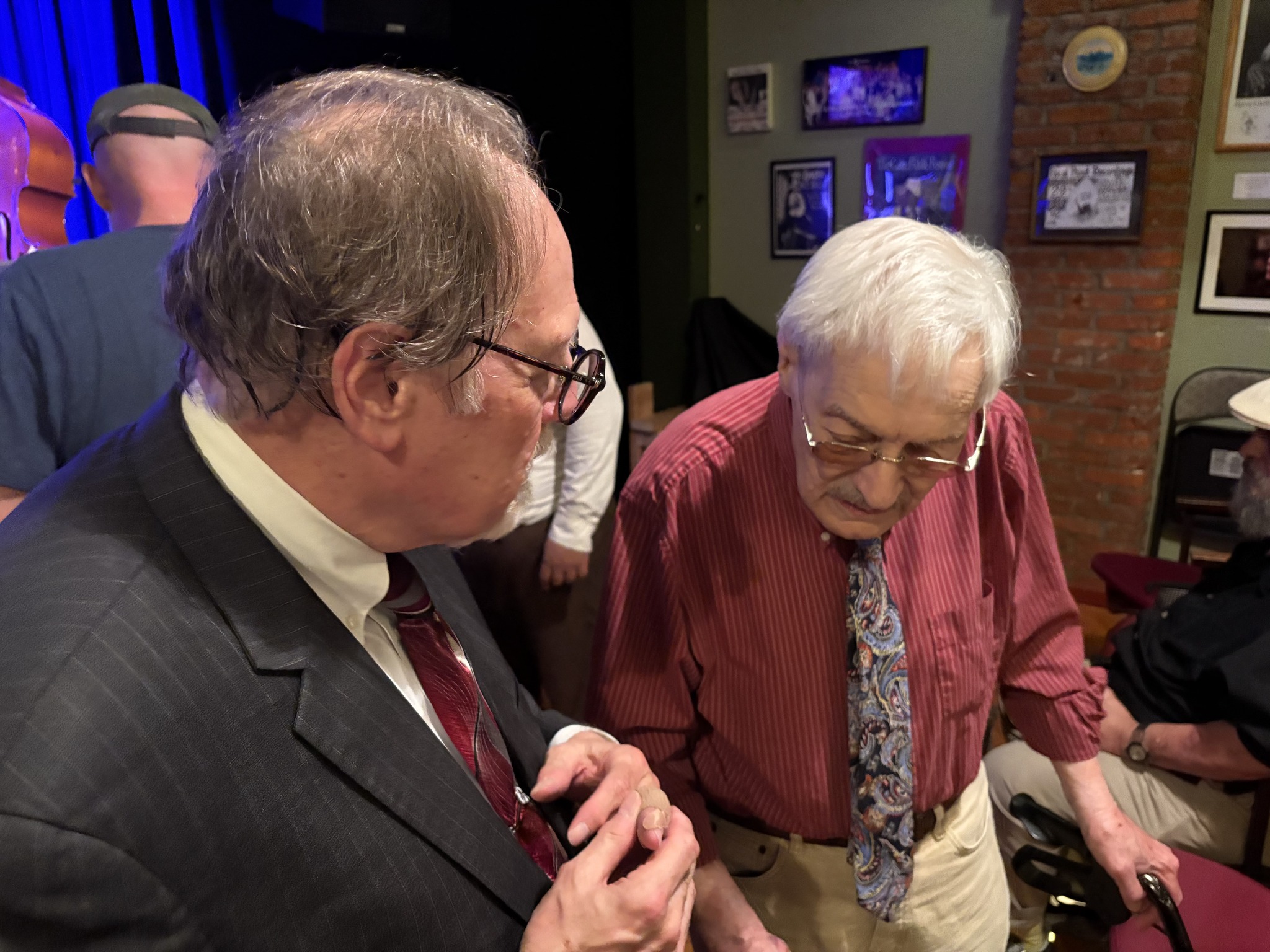
Schumm.
With the Ragtimers, Bill was the perfect cornetist. His lead was always a pleasure to hear (and to play with) and he never played too loud—even when the Ragtimers were accommodating a gang of musicians sitting in.
Personally, Bill was always pleasant and quick to wave a friendly greeting. He had a phenomenal memory too—people, places, dates, bands, songs played… When he came to the studio for the Night Owls session in 2024, I went to greet him. He smiled and said, “Mister Hal Smith! I remember meeting you at a concert in Los Angeles in 1971!” At my age, I often misplace my bifocals. But Bill Mason at age 95 remembered that first meeting!
Going back to that occasion: Bill mentioned Bix Beiderbecke as an inspiration. Let’s listen to the St. Louis Ragtimers’ recording of “Sorry” and hear some of Bix’s influence in Bill Mason’s cornet playing.
JB: Ya know, once in a while we get lucky; someone reading our column knows where a photo or recording is. So to you readers out there, if you or anyone you know has a bootleg recording of Turk Murphy and Co. with Bill Mason guesting from the St. Louis Ragtime Festival—or anyplace else—please get in touch with us!
For me, the SLR version of “Sorry,” anchored by Bill Mason, is refreshingly unique—nodding in style to the original greats who recorded the tune, but not overly copying the 1927 recording. Aside from Al Stricker’s oddly earnest vocal (which I’m glad is here as I didn’t know the lyrics and they’re wonderful) I’d call this one of my favorites so far (although there have been no duds!). Bill plays with more force than Bix usually used—really a hybrid of Armstrong and Beiderbecke—but some of his figures are definitely Bixian! I also love the “silent cowbell” ending! Lead on, Mr. Smith!
HS: I definitely hear some Bixian phrases coming out of the cornet on that track. And the band nailed the silent cowbell ending from the original 1927 recording by Bix and his Gang.
We have heard some outstanding jazz (and blues) from Mr. Mason. Let’s go back to 1909 and “Kerry Mills’ Rag Time Dance”—with the seldom-played third strain! The St. Louis Ragtimers sound absolutely joyful on this track. Bill’s embellishments on the melody and his jaunty phrasing really make this track go.
JB: This has always been one of my favorite ragtime pieces. I’d never heard it until I listened to the Original Salty Dogs recording on their album On the Right Track (GHB-BCD-62) and they didn’t do that trio strain! You reminded me that Turk Murphy was the first to resurrect this rag in 1950 for Good Time Jazz (rereleased in 1986 by Fantasy Records FCD-60-01). They also skipped the third section! We get to hear it on the SLR version. We’re stomping from the start and Al Stricker’s banjo picking behind Trebor’s solos throughout the recording is simply divine. What an underrated player he was! In true ragtime fashion, after the return of A, we move into that trio section. Here it becomes a chase chorus between the cornet/clarinet and the tuba! More piano playing on sections C and B and they end on a final ensemble A section! All the versions I describe above are on YouTube. I invite everyone to listen to them all back-to-back.
“Kerry Mills’ Rag Time Dance” – Turk Murphy’s Jazz Band
“Kerry Mills’ Rag Time Dance” – Original Salty Dogs
AND, Hal, anyone who would care to listen to how great Bill sounded two years ago at age 95 would do well to check out your recording on Rivermont with your New Orleans Night Owls where he guests for a few tunes, playing alongside his protogé, T. J. Müller! As you mentioned, that recording includes “Kerry Mills’ Ragtime Dance” (although Bill is not on that one) which, fascinatingly for me, means there’s a 74 year spread between recordings of a tune that is now 117 years old!!
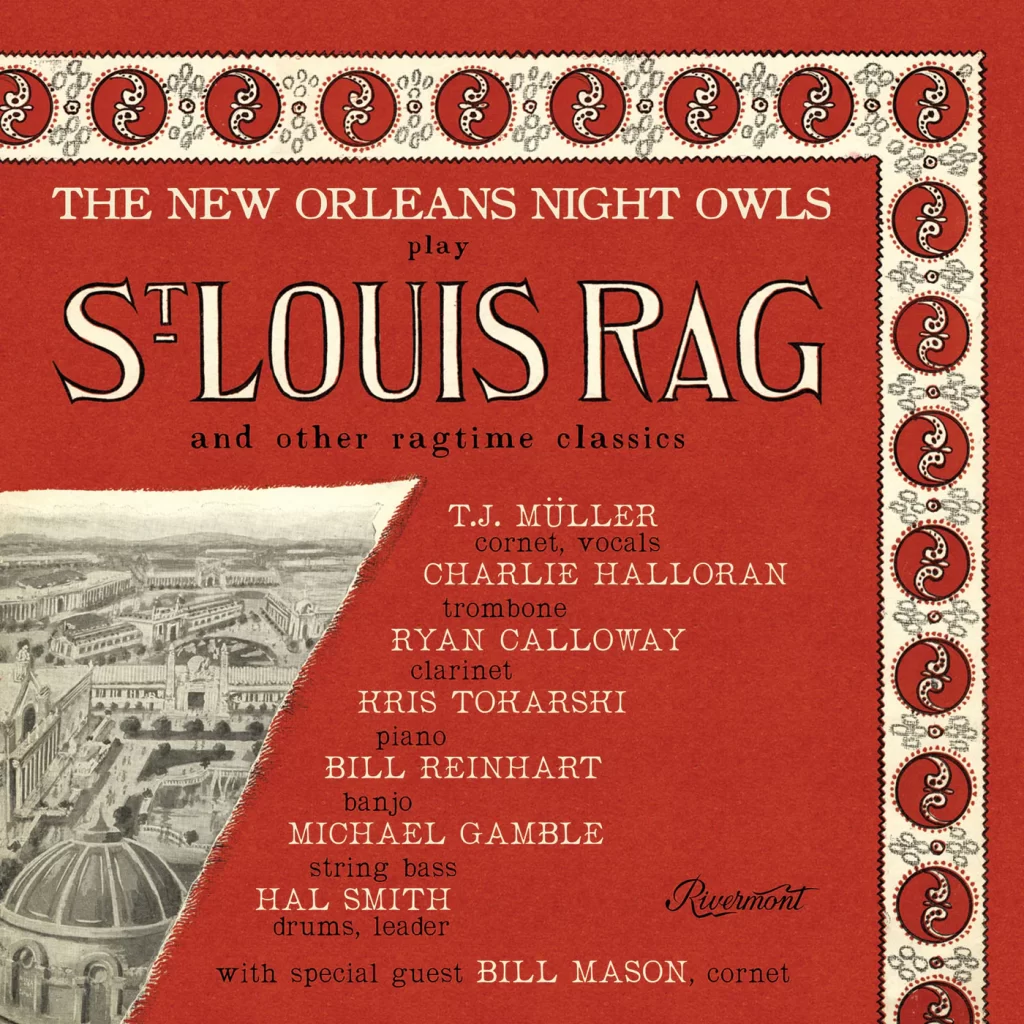 HS: Thanks for mentioning that, Jeff. I will include a link to RIVERMONT records in case any of our readers would like to purchase the St. Louis Rag album by the New Orleans Night Owls with Bill as a guest artist. Bill’s son Mark just played “At A Georgia Camp Meeting” from the Night Owls CD on his “Howzit Bayou” radio program on CRSTL.FM. (Mark and brother Thomas are also musicians).
JB: Nice! Returning to Bill, he had such a command of his horn in terms of tone, range, dynamics, and expression. His confidence and authority were a big part of what the SLR sound so spectacular! We have space for one more tune. Hal, what would you like to end with?
HS: Jeff, before we wrap up…in addition to the video performances we have discussed, I will also include links to Bill Mason’s albums with the Dixie Stompers for the online version of this article.
Bill Mason with the Dixie Stompers
The Dixie Stompers at Westminster College (1957)
I think it would be fitting to end this article with the St. Louis Ragtimers’ recording of “I’ll Be A Friend With Pleasure.” That is certainly the sentiment of everyone who ever met, heard or played with Bill Mason! And although we can easily hear Bix’s influence on Bill’s cornet playing, his improvised solo and his distinctive, beautiful tone make this one of his very best recordings.
JB: Undeniably. The entire side is performed with such beauty and simmering heat. So sweet. The band performed it live in 2012 for the St. Louis Jazz Club and it’s virtually the same arrangement, played with the same sensitivity and—dare I say it,—love, for the music; for the crowd; for each other. Bill Mason’s passing has left a hole that will not be filled in our lifetime, although worthy disciples like Andy Schumm, T. J. Müller, and Dave Kosmyna are carrying the torch!
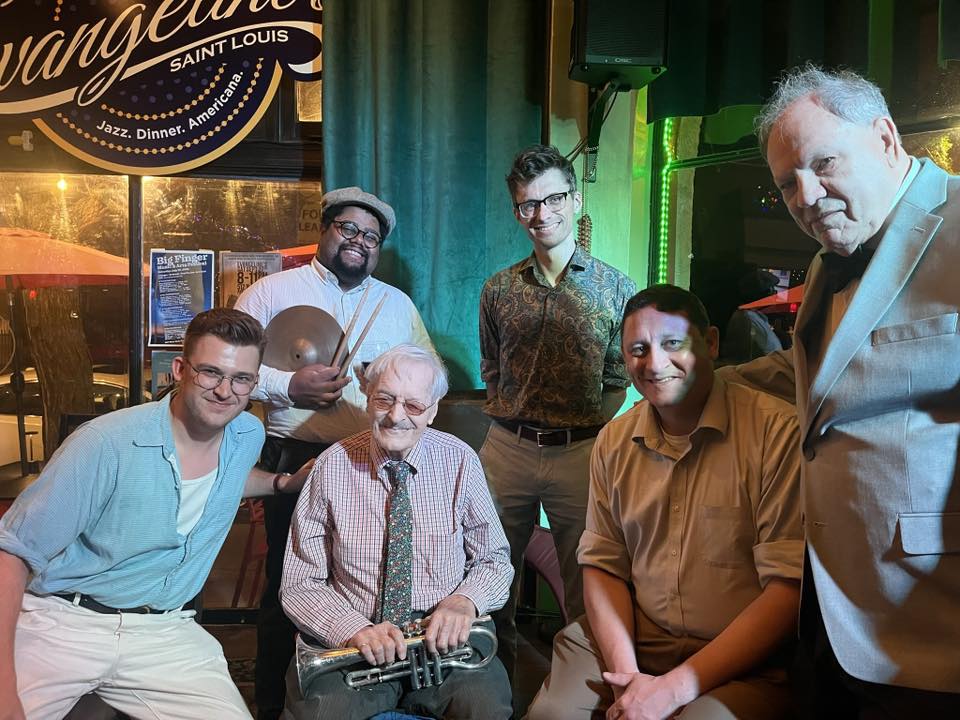
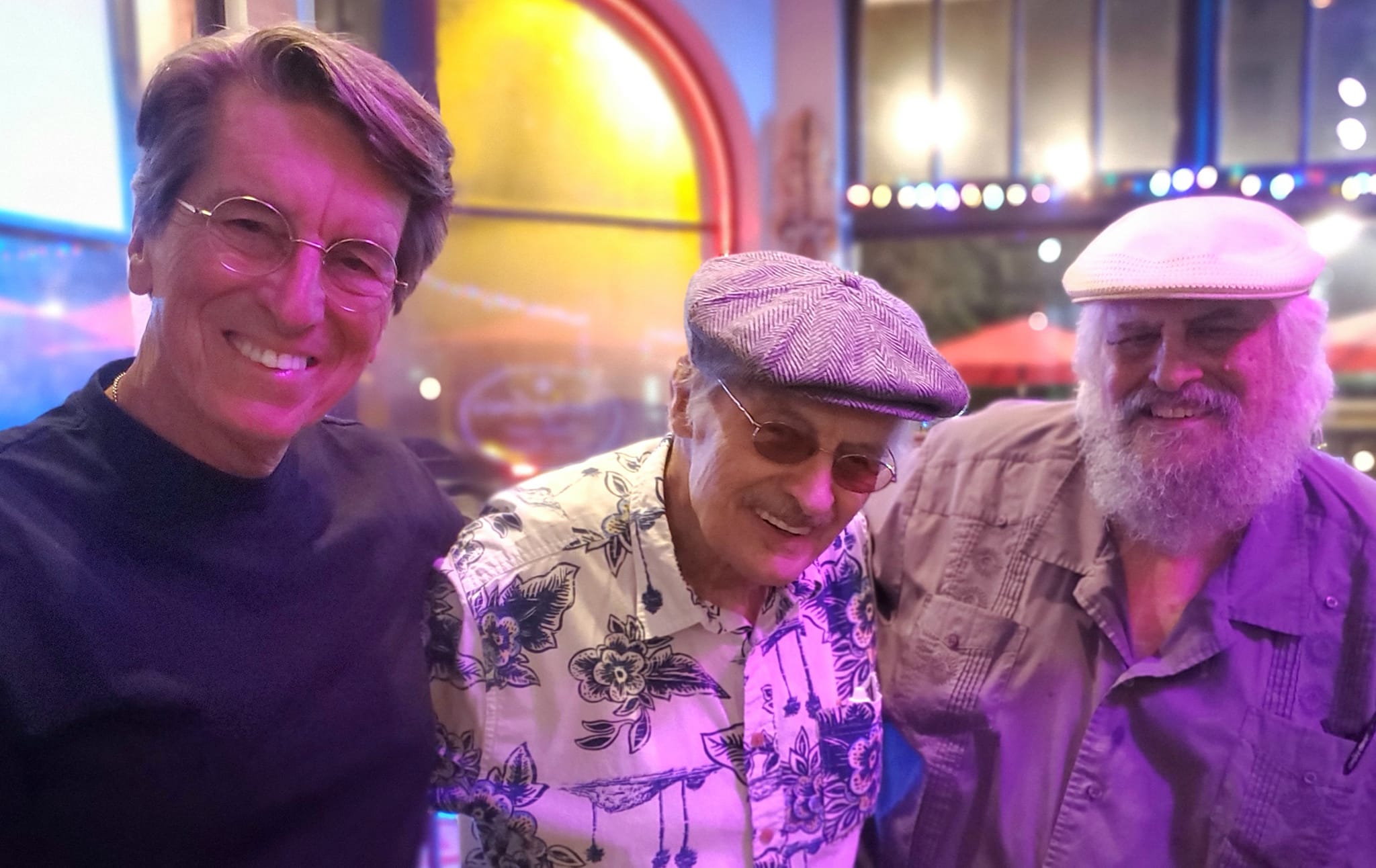
Meyer – “Gaslight Squares” at Evangeline’s, St. Louis, August, 2025.
HS: Yes, Sir. “Wild Bill Mason” was also an influence on Andy Tichenor (Trebor’s son), and our cornetist friend Colin Hancock is a fan of Bill’s playing too. Bill will be greatly missed, but at least he inspired all the hornmen we mentioned. I hope the people who read this article will enjoy the music in the links provided for the online edition of TST. And if you’ve never heard Bill play…now is your chance!
We will spotlight more great traditional jazz next month when we resume our conversation regarding Clancy Hayes’ recordings. I’m looking forward to it!
Bill Mason with the New Orleans Night Owls (CD or digital download for purchase)
Jeff Barnhart is an internationally renowned pianist, vocalist, arranger, bandleader, recording artist, ASCAP composer, educator and entertainer. Visit him online atwww.jeffbarnhart.com. Email: Mysticrag@aol.com