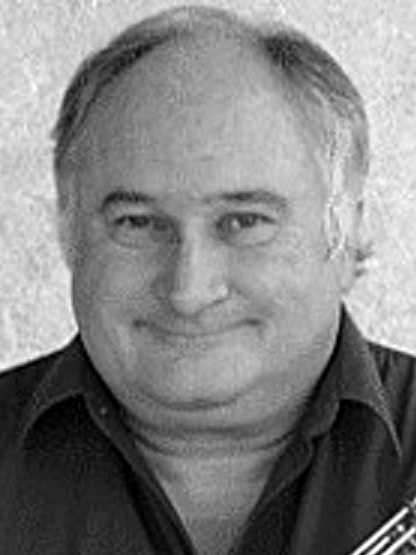
 French reed player Daniel Huck, a joyful presence in European hot jazz, died April 25, 2026, in Saint-Christol-lez-Alès, France. He was 78. Born in Paris in 1948, he became one of the most distinctive alto saxophonists and scat singers on the French jazz scene, known for a powerful, vibrato-rich sound, encyclopedic knowledge of early jazz, and a performing spirit that treated jazz as an ongoing celebration.
Huck took up the alto saxophone in the late 1960s after earlier attempts at the trombone, teaching himself by ear and through obsessive listening. He often described himself as an “amateur professional,” meaning not that he lacked skill, but that he refused to surrender the enthusiasm, freedom, and curiosity of the devoted listener. That independence became central to his career. He had little interest in operating a band as a business enterprise, preferring instead to be invited into musical situations that promised adventure, pleasure, and swing.

His discography and associations place him squarely in the world of French traditional, hot, and vintage-informed jazz. Huck recorded or appeared with Charquet & Co, the Anachronic Jazz Band, Orphéon Célesta, Les Primitifs du Futur, Les Haricots Rouges, Miss Lulu White’s Red Hot Creole Jazzband, Michel Pastre, Slapscat, and many others. He also worked across broader French jazz circles, including collaborations with Eddy Louiss, Cat Anderson, Dave Burrell, and Dominique Cravic. His recordings appeared on many European labels including Ida, Nocturne, Coda, Passage Clouté, Paris Jazz Corner Productions, Night & Day, and Open.
Huck received the Prix Sidney Bechet in 1982 and the Prix Django Reinhardt in 1997, two significant French jazz honors. He was also included in The New Grove Dictionary of Jazz, an acknowledgment of his importance beyond the circle of European musicians and listeners who already knew the size of his gift.
Daniel Huck’s reputation rested on drive, wit, generosity, and the refusal to be bored. He would move from Jelly Roll Morton tributes to musette-colored hot jazz, from scat exuberance to alto saxophone fire, without losing his identity. His death removes a singular figure from the French jazz landscape, a traditionalist whose deepest loyalty was to joy.

Joe Bebco is the Associate Editor of The Syncopated Times and Webmaster of SyncopatedTimes.com