Here the unusual recording system for Berliner is illustrated. Throughout Berliner’s existence in the United States, he did not use recording methods typical of the time. The typical setup was that a performer would stand in front of a horn and sing or play into it. The horns used for recording in the acoustic era were almost always one specific shape. The ones that we get on our regular phonographs can work for recording but they aren’t ideal. Recording horns were usually quite long and very narrow, with no flared bell at the end. This was truly ideal for precisely magnifying the sound to the much smaller reproducer.
Berliner came up with a very different method, and thankfully for us, this was documented by Fred Gaisberg who had seen it first hand barely out of his teen’s. He described it thusly in his book The Music Goes Round:

I was introduced to the inventor and invited to witness the making of the first gramophone record. Berliner placed a muzzle over [Billy] Golden’s mouth and connected this up by a rubber hose to a diaphragm. I was at the piano, the sounding board of which was also boxed up and connected to the diaphragm by a hose resembling an elephant’s trunk. Berliner said “are you ready?” upon our answering “yes” he began to crank like a barrel organ, and said go.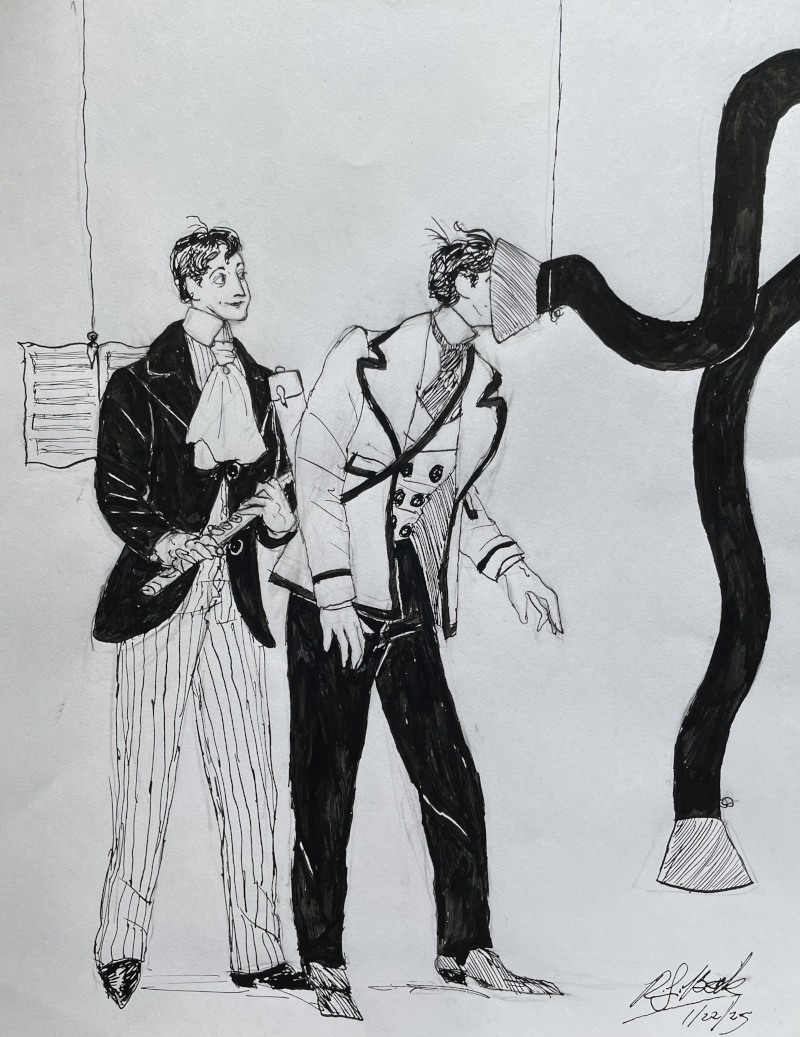
This setup was very odd and could seem incredibly inconvenient compared to the standard method of recording, but the results don’t lie. The earliest Berliner records are some of the best sounding of the entire acoustic era. While the quality of the sound can often sound electric, the speed was often inconsistent. The earliest Berliner machines were entirely hand cranked. In the earliest days of Zon-O-phone, they used this tube method as well, and the sound quality is just as impressive, if not more so. After this, the tube method was not used again in the acoustic era, at least in this sort of manner.
Here Frank P. Banta and his brother John, who was a flautist, are entertained by the recording equipment they are to use—dressed dandyish, as they both were.

R. S. Baker has appeared at several Ragtime festivals as a pianist and lecturer. Her particular interest lies in the brown wax cylinder era of the recording industry, and in the study of the earliest studio pianists, such as Fred Hylands, Frank P. Banta, and Frederick W. Hager.