Unlike most normal people, I’ve never been a fan of holidays. I regard Christmas and Thanksgiving with particular distaste, since they’re all about overeating and feeling rotten for several days afterward. I’d much rather avoid having to ingest all that gloop and glucose and telling the provider how absolutely wonderful it is. To those with a functional metabolism and greater resilience it may indeed be delightful, but it makes my gut feel like the Strait of Hormuz, with ships backed up for miles and occasional explosions.
Christmas and Thanksgiving also interfere with my publication schedule, forcing me to work harder to get my layout to press early. Additionally, those occasions, and all other federal holidays, interfere with mail and banking schedules. Though it’s nice everyone gets that Monday off, that makes two days when no checks drop through my mail slot and I’m unable to send papers to new subscribers or to those who request replacement copies.
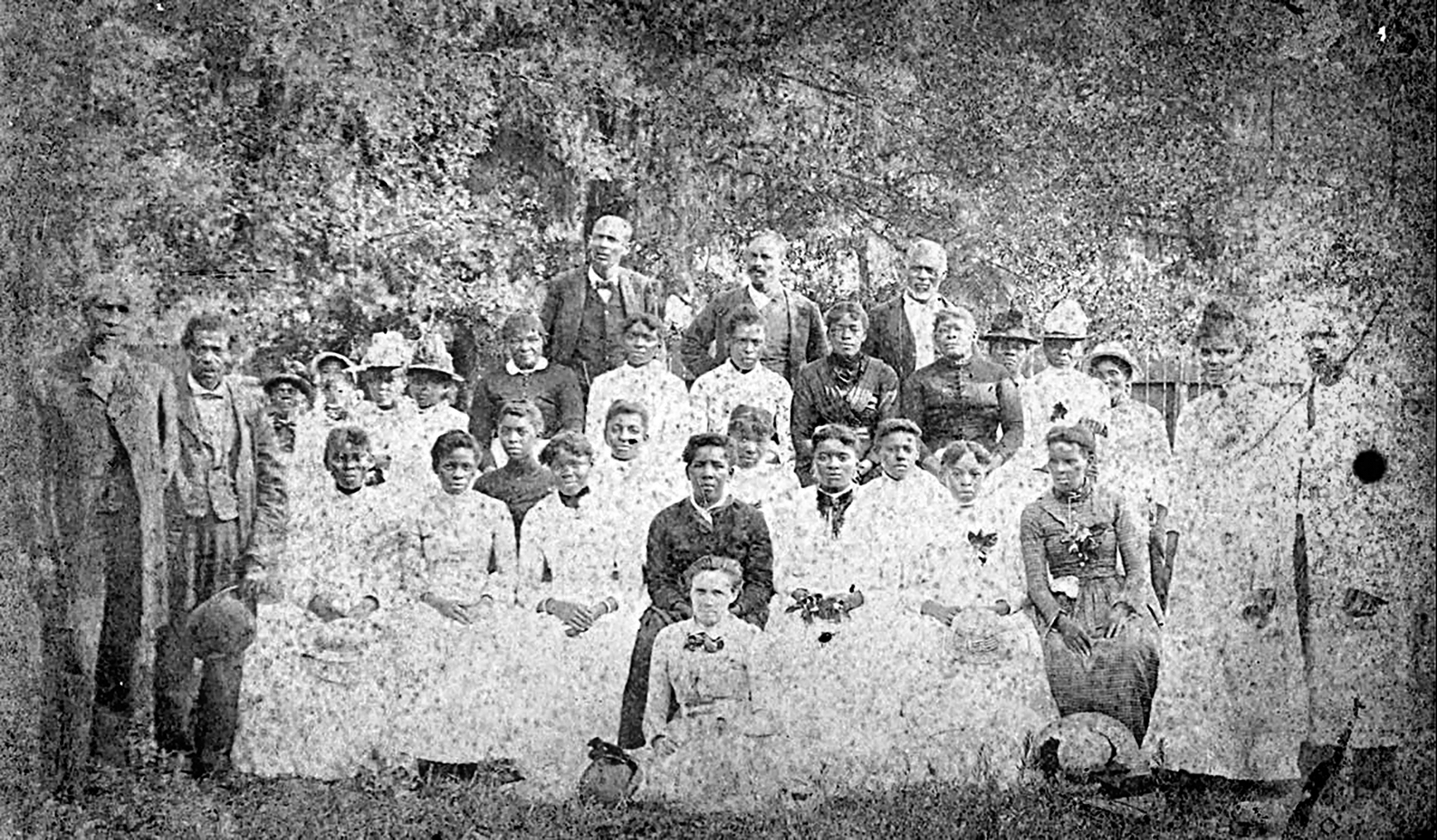
Even so, there is one new national holiday I do heartily endorse, and that is Juneteenth. On June 19, 1865, Major General Gordon Granger signed General Order Number Three, stating that, “The people of Texas are informed that, in accordance with a proclamation from the Executive of the United States, all slaves are free. This involves an absolute equality of personal rights and rights of property between former masters and slaves, and the connection heretofore existing between them becomes that between employer and hired labor.”
Juneteenth was celebrated in Texas as early as 1866. Celebrations, mostly church-centered at first, spread across the South in African-American communities, becoming more organized in the 1920s and 1930s. Food increasingly played a significant part in the festivities. And those migrating from the South brought these celebrations to the rest of the country.
After decades of campaigning by various Black activists (including Opal Lee, the “grandmother of Juneteenth,” who walked from Fort Worth, Texas, to Washington, D.C., at the age of 89), Juneteenth achieved the status of a federal holiday status on June 17, 2021. Juneteenth is a date-specific holiday, observed each June 19 with the closure of post offices, banks, the stock exchanges, most government offices, and many schools, universities, and private businesses.

So much can change in a few years. Clouds appeared on the horizon in January 2025, when newly-inaugurated President Donald Trump signed an executive order banning federal diversity, equity, and inclusion initiatives, which many agencies interpret to include Juneteenth, among other cultural remembrance events. In December 2025, free admission to national parks on Martin Luther King Day and Juneteenth was ended and replaced by free entry on Flag Day (June 14), which, coincidentally, is Donald Trump’s birthday.
Admittedly, holidays (even ones I approve of) are chiefly symbolic. Only one day every year is fraught with real consequences for our life as a nation, the first Tuesday after the first Monday in November. People have fought and died for the right to be allowed access to the polls on Election Day, and to have their votes counted. After a century of struggle against racial discrimination in voting, The Voting Rights Act of 1965 was signed into law by President Lyndon B. Johnson on August 6 of that year, during the height of the civil rights movement. Congress later amended the Act five times to expand its protections.
In May, the reactionary majority of the US Supreme Court, gutted key provisions of the Voting Rights Act, allowing for openly racist gerrymandering of several states. After the 6-3 ruling, Louisiana suspended its already active congressional primary, throwing out cast ballots. The one district of Tennessee (containing Memphis) in which Black voters stood to make a difference was gerrymandered out of existence.
If you look at such trickery in politics as part of the game of Republicans versus Democrats, and you can win by rigging the board (and Boo Hoo to the losers), that, I suppose, is a point of view. Wear your team jerseys and shout your slogans and trash-talk the opposition. If it’s just team sports, no real harm done. Thinking about greater implications is too much of headache.
But if you’re reading this paper (and still reading this essay through furious eyes) I would ask you to remember where Ragtime, Jazz, and Blues came from and what you owe to those who created it. My Juneteenth reflection is that it is unconscionable to abrogate the rights of the originators of the music we love even as we appropriate it into our own lives. Our gratitude does not consist of winking at the continuance of a long history of oppression of those who have given us so much. I put fans of Black music who applaud the recent voting rights decision in the same category as those who support ICE raids and then expect to be served at a Mexican restaurant.
What would Louis Armstrong do? In September 1957, even as he as traveled the world for the US State Department, he saw what was happening in Little Rock, Arkansas. In a newspaper interview, he tore into Governor Orville Faubus, calling him an “ignorant plowboy,” and rebuked President Eisenhower for not acting to intervene in the segregation crisis. He was angrily told to “shut up and sing.” He didn’t back down.
Over the past year I’ve made what I knew were valid observations of how our country is headed toward tyranny. After various negative responses from subscribers, editorial contributors, and Syncopated Media board members, I retreated into levity. Despite the inevitable backlash, I should have doubled down on the truth.
I’m not here to facilitate anyone’s denial or cater to anyone’s preconceived notions. Unlike partisan news silos, which agree with everything you think and tell you what you want to hear, I am bound to give you the readings of my inner compass, calibrated by long years of introspection and experience.

My bearings may not coincide with yours, but I offer them sincerely and with deep concern for our shared future.
Andy Senior is the Publisher of The Syncopated Times and on occasion he still gets out a Radiola! podcast for our listening pleasure.