Bob Wilber was born in New York City on March 15, 1928. He began performing professionally while still in high school, playing clarinet and saxophone and leading The Wildcats. Bob became a protégé of Sidney Bechet and is a leading exponent of classic jazz on the soprano sax and clarinet. His extensive list of recordings include collaborations with Kenny Davern, Teddy Wilson and Dick Wellstood. He was a prolific composer and arranger and produced critically acclaimed tribute albums highlighting the music of Duke Ellington, Coleman Hawkins and Sidney Bechet. In May of 1998 Bob received an honorary doctorate degree from Hamilton College.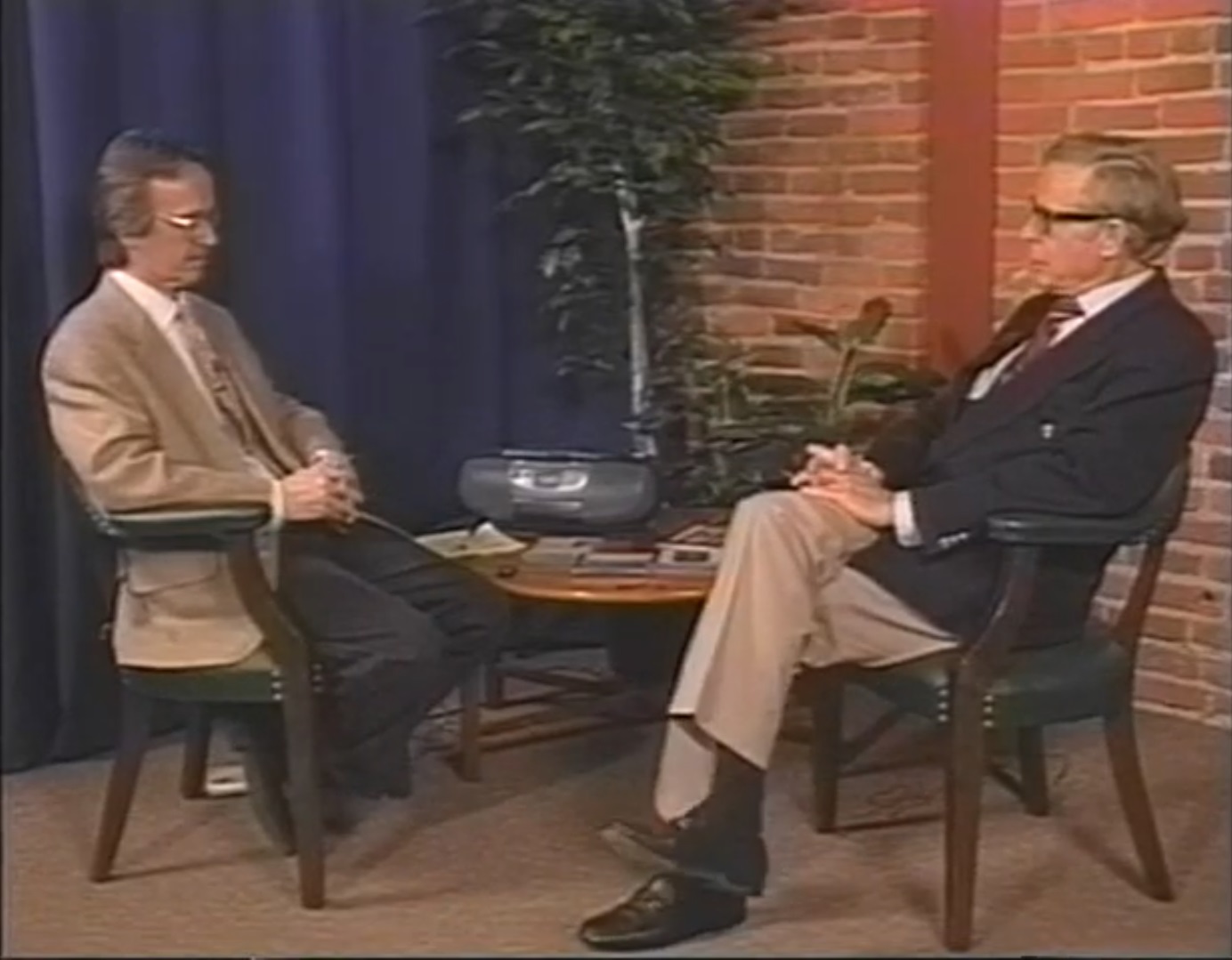
Bob was interviewed on May 22, 1998, by Monk Rowe, Director of the Fillius Jazz Archive at Hamilton College.
First musical influences
BW: The late ’30s and early ’40s of course was the big band era and the music was in the air, it was on the radio all the time, and that was my first love, particularly on clarinet was Benny Goodman, who was truly the “King of Swing,” I mean he just really was, it just wasn’t a name. When they called Paul Whiteman the “King of Jazz” in the ’20s, that was a platitude. But Benny Goodman was the “King of Swing.” He was certainly my first great influence.
MR: When you got to be old enough to start gigging professionally then, it was more of a small ensemble opportunity?

BW: Yes. When I was starting to get out there about 1946, ’47, ’48, this is when the whole big band thing fell apart, partially for economic reasons, and partially because you had a whole new generation of young people coming up and it wasn’t their thing.
MR: Was there a particular reason that you were more attracted to the classic jazz than bop?
BW: My discovery of earlier jazz really was because the big companies, Columbia and Victor, started re-issuing the old records of Louis Armstrong, Jelly Roll Morton, Bix Beiderbecke, the people of the ‘20s. So I went backwards from the Swing Era to discover the roots. And I was always interested in history. I wanted to know, well how did this come about and where did it come from, it naturally led me back to the early movement.
Satchmo, Diz, and Bird
BW: I remember listening to the re-issue of Armstrong’s “Hot Five.” At that time, to me the greatest trumpet player in the world was Harry James, that was undoubtedly, hands down, no question about it. And I was totally puzzled by the “Hot Five.” It was so complex, this music, with the trumpet, clarinet and trombone with those interweaving lines. It took me a long time to understand it. Big band music with the riffs and everything was much simpler. But the more I listened to Louis I realized, this is where Harry James comes from, and this is the man. And once I discovered that Louis Armstrong was the greatest, I never changed my opinion, he still is the greatest.

I also was intrigued by Charlie Parker and Dizzy Gillespie. I remember the first record I got was “Groovin’ High,” and “Salt Peanuts” came out at that same time. A bunch of us in our gang, we thought it was very clever. And the musicianship was obviously great. But it didn’t have the soul that we felt in the music of Armstrong and of Bechet, and Goodman too. It was clever but it didn’t hit us in our heart, it hit us in the head.
I remember the first time that I heard Dizzy and Charlie on 32nd street. These servicemen were coming back from the war and they’d gone away remembering Glenn Miller or Benny Goodman. And they’re sitting at the bar in this club where Charlie and Dizzy were playing. I remember the band playing “Groovin’ High.”, they’re not hearing a melody that they recognize and they weren’t happy. They’d had a few beers and they were getting angry and Charlie and Dizzy were standing there saying, “This is what we play, if you don’t like it the hell with you.” I felt this hostility and it was a new feeling to me in jazz. Because jazz to me was where everybody in the joint was having a ball you know, the joint was jumping. And it kind of upset me, although I realized they were great musicians, I felt this lack of communication between the musicians and the audience. The idea of entertaining the audience, they were rebelling against that concept.
MR: Louis Armstrong certainly never rebelled against that.

BW: No not at all. He was a great entertainer. In fact, his ability to be a marvelous entertainer got in the way of musicians being able to appreciate his music. A lot of the young players of that era wouldn’t take Armstrong seriously because they weren’t acquainted with the groundbreaking things he did in the ‘20s which were absolutely revolutionary. Armstrong really in a sense invented swing. He was the first jazz musician to realize how to swing perfectly, every bar. His music was the basis for the whole Swing Era of the ’30s.
Hooked on jazz
BW: Well of course in those days we had 52nd Street, which was this marvelous block between 5th and 6th Avenue, which had, at any given time there was at least four or five different jazz clubs. Nick’s in the Village where the Eddie Condon groups played, Pee Wee Russell, Max Kaminsky, Bobby Hackett, Brad Gowans, the whole so-called Chicago style. All the major hotels had bands. Tommy Dorsey would be at the Astor, Benny Goodman at the Manhattan Room, Glenn Miller, all the bands. I started hanging out on 52nd Street.
The first time I went there with my pal, Denny Strong, who was a drummer, we had told our parents we were going up to White Plains to watch a movie, and instead of going to White Plains we took the train into town. We started in the Village and then we took the subway up to 52nd Street, going from club to club, and suddenly we looked at our watch, and oh my God, we’ve only got ten minutes to make that one o’clock train at Grand Central back to Scarsdale. We ran as fast as we could, of course we missed the train, so Denny says, “What are we going to do, Bob?” I said, “Well let’s go back to 52nd Street, what the heck.” So we went back and that was the most exciting experience, of walking into Kelly’s Stable, where Coleman Hawkins was playing, it must have been by then 2:30, 3 in the morning. Practically empty, maybe a few people. And the waiter said, “Boys, where do you want to sit?” “Oh, right up next to the bandstand.” So we were sitting at a little table as close as I am to you.
The band is playing away, and we looked around and there’s Coleman Hawkins coming down the aisle. He gets on the stand, picks up his tenor, I remember one of the guys in the band said, “What do you want to play, Hawk?” He said, “Body” one, two. He started playing “Body and Soul.” And here Denny and I were sitting there and it’s Coleman Hawkins, one of our idols, playing “Body and Soul.” That was very exciting. So we went back to the station, I remember sleeping on one of those marble benches, and we woke up and people were going in to work. We caught the first train out, 6:30, I go home and I take my shoes off and sneak into the house and upstairs, I go past my parents’ room. “Is that you, son?” “Yeah, Dad, it’s me.” “Well where have you been?” And I had to tell him. So by then they began to realize that I was absolutely hooked on jazz totally.
Beginnings
MR: Now you managed to get your own group together in high school?
BW: Yeah. I was playing with these older fellas and then I gradually found out about other musicians around the county. Eddie Fife was in Larchmont and up in Greenwich there was a piano player, Dick Wellstood, and the bass player, Charlie Traeger. We had jam sessions and eventually got a group together, we called ourselves The Wildcats and we started playing around. We all went down to Jimmy Ryan’s for one of their Sunday sessions and we got friendly with Milt Gabler who was the founder of Commodore Records. We’d go down there every Sunday, “Milt, hey man, we’ve got a little band, can’t we get up and just play one number?” “Oh don’t bother us kid, just sit down and listen to music.”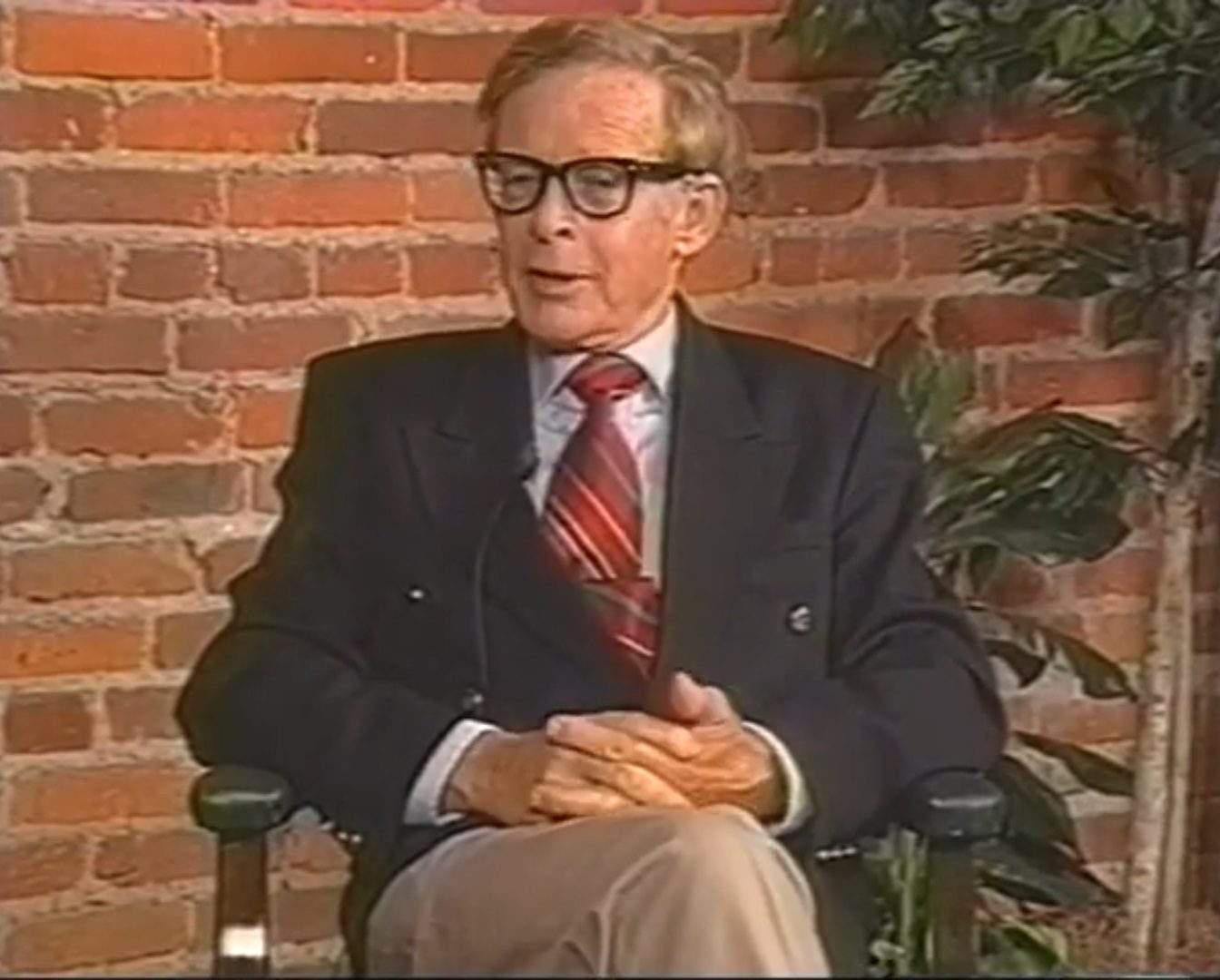
Finally he says, “Okay you guys, I’ve got a little opening here, get up there and play a bit.” So we got up there, and it was a sensation, the people loved it. And he said, “You kids are all right.” So he let us come back and play and then he said “you know you kids are really something else, I’d like to record you for Commodore.” So this was a great opportunity. I remember we took about six hours to record four titles. I mean we were so nervous. Now this is 1947, you still had a waxed disk with that stylus that cut the grooves. When that red light went on you had three minutes and that’s it. If you made a mistake you know, you spoil it. There’s no splicing tapes together, none of that. We made four sides and at that point is when I started studying with Sidney Bechet.
MR: This has been a fascinating conversation. On behalf of Hamilton College, I want to thank you for joining us.
BW: Monk, it’s been a pleasure.
MR: And congratulations on the honorary degree you received this weekend.
BW: Oh I’m honored, I really am.
View the full interview HERE.
As Director of the Fillius Jazz Archive at Hamilton College, Monk Rowe has interviewed over 500 jazz artists since 1995. The videos can be viewed on the Fillius JazzYouTube channel, audio excerpts can be heard on his podcast Jazz Backstory and read in print in the book Jazz Tales from Jazz Legends, authored by Monk and Romy Britell. Monk is a board member of SyncopatedMedia, Inc. Interview transcriptions by Romy’s Creative Services.