Not much has been written about Carlos Alberto Saco Herrera—but a century ago, his music was everywhere in Lima. The scarcity of sustained scholarship is itself revealing: Saco’s life and work emerge not through continuous biography, but through fragments scattered across civil records, press accounts, musical catalogues, and oral tradition. What we find is not a linear narrative, but a constellation of traces that, when assembled, reveal a musician deeply embedded in the emergence of modern urban sound in Lima during the early twentieth century.
In his Historia de la canción criolla, Aurelio Collantes—known as “La Voz de la Tradición”—offered one of the earliest attempts to summarize Saco’s presence. He described him briefly as a pianist and guitarist of distinction, a recognizable figure in Lima’s social entertainment circuit, identifiable by his cream-colored poncho and blue jacket, and a frequent participant in Sunday dances held at the old Baños del Barranco. Collantes credited him with compositions such as Cuando el Indio llora and Rosa Elvira, situating him within the early canon of criollo song. Yet even this early gesture toward canonization remains partial, and often anecdotal.

A second layer of Collantes’s writing, published later in 1972, adds further fragments: the memory of a modest upbringing in Callao, employment in a pharmacy known as “La Misión,” later work at Backus & Johnson, and residence in a small room in the Rímac district. These details, however, do not form a coherent biography so much as a set of situational markers—points of contact between Saco and the rapidly modernizing urban environment of Lima. They suggest a life lived across multiple social and occupational worlds, none of which fully contain his musical identity.
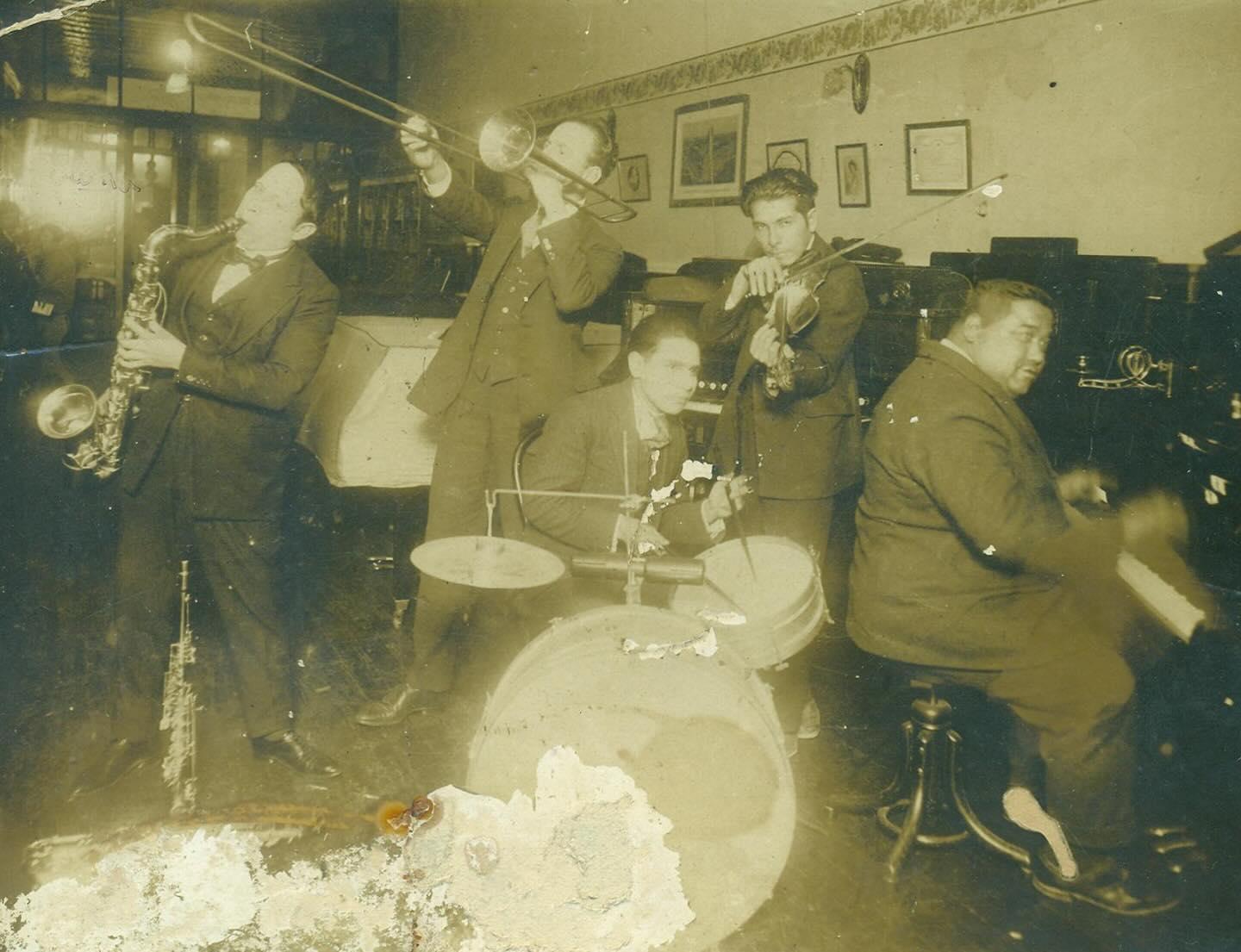
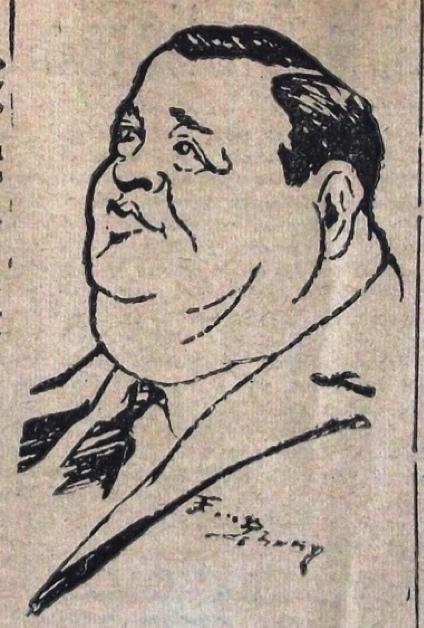
To reconstruct Saco’s beginnings more precisely, one must return to archival documentation. According to his baptismal record, Carlos Alberto Saco Herrera was born on November 4, 1895, in Callao, near Lima, and baptized in the church of San Sebastián in April 1896. His parents were Ricardina Herrera and Julio H. Saco, and his baptism was witnessed by José Lino Vallesteros and Sara Arciniega as godparents. Even this apparently stable origin point already opens onto uncertainty: genealogical speculation has suggested possible descent from the Lambayeque colonel Juan Pascual Saco Oliveros, a figure associated with Peru’s independence, though such connections remain unconfirmed.

From this starting point, Saco’s biography dissolves into archival discontinuity. Civil registry documents offer isolated but revealing snapshots. At age twenty, he appears as a single man identifying himself as a musician in the birth record of his daughter Obdulia Artemia in 1915. By 1918, in another registry entry, he is listed as an ironworker; in 1920, as a mechanic; by 1927, again as an artist and already married; and in 1933, finally as a pianist. These shifting occupational designations do not simply reflect instability; rather, they point to a fluid cultural economy in which musical practice, labor, and identity were not yet clearly separated. Saco was, at different moments, worker and performer, craftsman and musician—categories that overlapped within the urban life of early twentieth-century Lima.

Collantes also preserved a semi-legendary account of Saco’s musical formation. According to this narrative, his artistic vocation emerged in the billiard hall of the Plazuelita del Teatro, located near the Teatro Municipal, where he came into contact with performers, musicians, and theatrical workers. Conversations about zarzuelas, singers, and touring musicians allegedly awakened his interest in music. It was in this environment that he supposedly learned guitar from a Spanish musician known as “El Tuerto Chalao,” in exchange for billiards lessons. While clearly anecdotal in tone, this narrative situates Saco’s musical formation within informal spaces of urban entertainment rather than institutional training.
By 1917, at just twenty-two years old, Saco was already participating in Columbia recording sessions in Lima, accompanying various vocal duos and salon ensembles. These early recordings place him at the very beginning of commercial sound reproduction in Peru. Shortly thereafter, he appears in Victor recordings and begins to circulate within a growing ecosystem of recorded and published popular music.
The period between his first recordings and the mid-1920s marks a crucial transformation. In December 1924, his composition Cuando el indio llora appeared in Revista Mundial, accompanied by an advertisement for its sheet music published by the Brandes house. By 1925, according to Collantes, he had been invited to perform at the inauguration of Radio Nacional, and shortly thereafter recorded again for Victor. In 1926, his song Cuando las rosas caen was broadcast by OAX4A Radio Nacional, marking one of the earliest instances of radio dissemination of popular music in Lima.
It was also in 1926 that the newspaper La Crónica published a notable interview under the pseudonym Don Máximo, explicitly presenting Saco to the public as a musical author. The interview is remarkable not only for its tone but for its framing: Saco is portrayed as an autodidact who “knows nothing of music” beyond the notes of the staff, a claim that becomes the basis for a paradoxical elevation to genius. The article insists that academic training is irrelevant to his creativity, positioning him instead as a “spontaneous” composer whose music captivates through immediacy and popular appeal.
The rhetorical operation is clear: lack of formal education is not a deficit but a marker of authenticity. Saco’s legitimacy is constructed through his reception among dancers, listeners, and popular audiences. The article even compares him—ambivalently but provocatively—to Wagner, while simultaneously emphasizing the distance between academic music and popular entertainment. His compositions, described as “light, lively, and mischievous,” are valued precisely because they function within the social spaces of dance halls, cinemas, and public festivities.

This social dimension is crucial. Saco’s music circulated through a rapidly expanding infrastructure of modern entertainment: theater performances, sheet music publishing, piano rolls, commercial recordings, and radio broadcasts. He was a visible figure in Lima’s nightlife economy, performing in venues such as the Baños del Barranco, where dance, leisure, and popular sociability converged. His economic success derived not from institutional patronage but from circulation within these emergent cultural markets.
By the mid-1920s, his repertoire had expanded significantly. According to the press, he had composed at least twenty-five dance pieces circulating throughout Lima, including Cecilia, En las alturas, El quitasueño, among others. These works were performed in salons, played on pianolas, and distributed by publishing houses such as Guillermo Brandes and René Fort.
At the same time, his music entered an increasingly global recording network. The Victor Orchestra recorded several of his compositions, including Cecilia and El caprichoso. The Castillians recorded works such as Cuando el indio llora and La chulapita for Brunswick. The Sándor Józsi Orchestra recorded multiple titles for Odeon in Germany, including Las cautivas, Atahualpa, and El zancudito, sometimes featuring Cuban baritone Alfonso Beltrán. These recordings situate Saco’s work within a transnational circuit of early popular music that extended well beyond Peru.

Rather than viewing this circulation as a peripheral echo of US jazz, it is more productive to situate Saco within a broader hemispheric formation: the Jazz Age as a distributed phenomenon. In this framework, syncopated music did not simply spread outward from New Orleans; it took shape simultaneously across multiple urban centers in the Americas, shaped by shared technological, social, and economic conditions. Lima, in this sense, was not a passive recipient but an active site of musical modernity.
Saco’s public image also became increasingly corporeal and performative. Press accounts and popular songs emphasized his physical presence, his participation in dance events, and even humorous references to his body. Anecdotes describe him joking about his weight during interviews, while later recollections by figures such as Chabuca Granda portray him as a larger-than-life pianist whose fingers were so big, he could only play the black keys. Whether anecdotal or metaphorical, these descriptions reinforce the idea that his music belonged to the embodied space of dance and performance.
Despite occasional incursions into genres such as yaraví or huayno, contemporary sources consistently identified him primarily as a composer of dance music. His idiom was associated with fox-trots, camel trots, one-steps, and other forms aligned with international popular styles of the 1920s. His music, in this sense, was understood as modern, urban, and fundamentally tied to entertainment culture, even as it was recognized by his peers as a form of folklore. Felipe Pinglo, one of Lima’s most beloved composers, would later describe him as a “fiel exponente del folklore nacional” in a song dedicated to his memory.

Carlos Alberto Saco died in Lima on February 18, 1935. His death was reported in La Crónica, which highlighted his participation in radio broadcasts, competitions, and public performances. The press emphasized his popularity and his role in shaping contemporary musical life. However, his death also immediately became a site of symbolic construction. Composers wrote musical tributes, and newspapers reported large funeral gatherings, transforming his passing into a public event of cultural significance.
In the years following his death, his memory was institutionalized. Admirers founded the Centro Musical Carlos Saco just a few weeks after his passing, an organization dedicated to preserving his legacy and promoting criollo music. This institution later played a role in the establishment of October 31 as Peru’s “Day of the Criollo Song,” linking Saco’s figure to the broader construction of national musical heritage.
Nearly a century later, his music has been revisited in a new project titled SACO: A Tribute to Peruvian Jazz of the 1920s, conceived by researcher and musician Rodrigo Sarmiento Herencia and performed in collaboration with virtuoso violinist Pedro Tecco. The EP reimagines selected works through historically informed performance practice, using period instrumentation and a stripped-down duo format of banjo and violin. It was recorded in mono through a single ribbon microphone, in an effort to evoke early recording aesthetics. Rather than offering a nostalgic reconstruction, the project approaches Saco’s repertoire as a living archive—one that reveals the complexity of early twentieth-century musical modernity across the Americas.
In this sense, Carlos A. Saco’s work invites a reconsideration of the Jazz Age itself. It was not a single-origin movement radiating outward, but a field of simultaneous musical formations across the hemisphere. Within this broader landscape, Saco emerges not as a peripheral figure, but as one of its articulate and revealing participants: a composer whose music once moved through the circuits of Lima’s modern life, and whose sound, now recovered, allows us to hear the Jazz Age again—beyond New Orleans, across the Americas.
Rodrigo Sarmiento Herencia (Peru, 1983) is a researcher and musician specializing in early twentieth-century popular music in the Americas. A PhD candidate in ethnomusicology at UNAM (Mexico), his work explores transnational repertoires, historiography, and the relationship between musical practice and research.