For the past 40 years, SherriLynn Colby-Bottel has led two lives: one in education and research in the field of anthropology, the study of what makes us human—and the other in music, the soundtrack of life that makes us happy. On occasion, the two have even overlapped.
Sherri grew up in Fresno, California where at an early age, she would often sing for family gatherings. In 1984 when Sherri was 13 years old, Woody Laughnan, a columnist for The Fresno Bee and president of the Central California Traditional Jazz Society (He also was the founding publisher-editor of this newspaper that was then known as The West Coast Rag), heard her at an anniversary party.
Just a year earlier, two local musicians, 31-year-old Fresno High School band director Dave Ruffner and 25-year-old Fresno State music education major Forrest Helmick, decided to organize a Dixieland jazz band that was to become the Blue Street Jazz Band. The High Sierra Jazz Band from Three Rivers was to be their model, so the co-leaders scurried to recruit four other musicians who would be familiar with the 22 tunes in their repertoire. On Woody Laughnan’s recommendation, Sherri Colby became the band’s singer and soon was known as “the Sirene of the San Joaquin.”
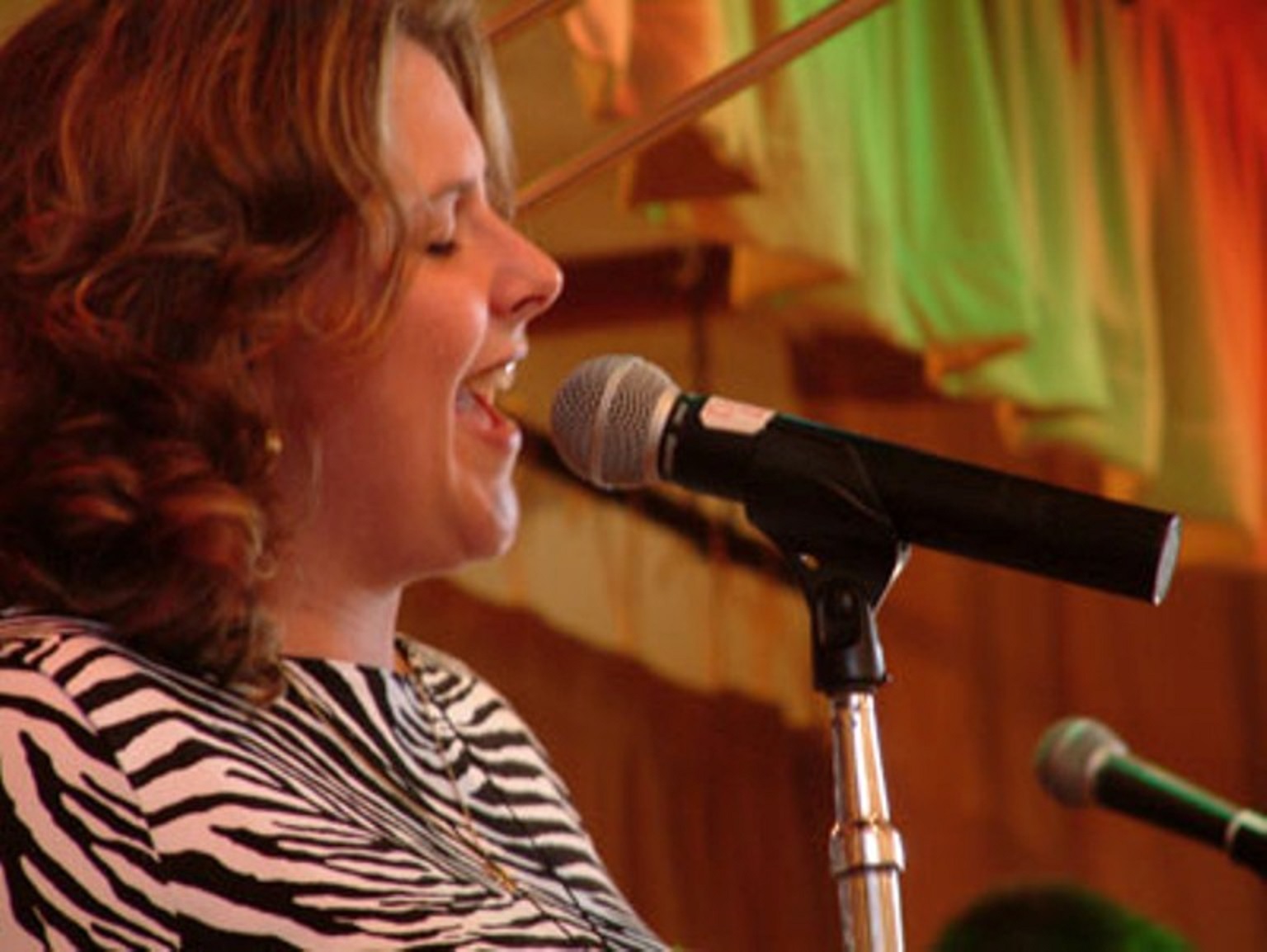
On Wednesday nights for the next four years, Sherri’s parents transported her to Blue Street rehearsals at Fresno High School and accompanied her when the band went on the road. In 1986, the band cruised the Mississippi River aboard the Delta Queen to New Orleans and made its first appearance at the Sacramento Jubilee. Sherri attended the Sacramento Traditional Jazz Society’s summer camp for three summers where she met 14-year-old Matt Bottel whom she would marry 15 years later.

When Sherri graduated from high school, her parents allowed her to travel alone with the band, and the members took her under their collective protective wings. Blue Street soon became a major force on the festival circuit and was known as “The Bad Boys of Dixieland” for their eclectic tastes in music.
Band’s Busy Schedule
The band has since played every major jazz festival in the United States, performed in Canada, Mexico and Europe, and recorded 24 top-selling albums. In 2008, Dave Ruffner wrote a book titled Our Turn to Dance, Celebrating 25 years of the Blue Street Jazz Band in which he listed the 366 weekend festivals and 274 jazz societies where the band had performed up to that time.
After graduating from Bullard High School, Sherri went on to earn a Bachelor’s degree in anthropology (1998) and a Master’s in music (2001) at Fresno State University. Her Master’s thesis dealt with the life stories of four current jazz singers: Yve Evans, Wende Harston, Sue Kroninger and Brady McKay. It was at Fresno State that Sherri developed a love for teaching when her academic mentor asked her to take over her classes, which she did for three years.
Her education continued at the University of Virginia in Charlottesville as a doctoral candidate in anthropology where she was named an outstanding graduate teaching assistant and received a National Science Foundation fellowship among several awards that enabled Sherri to earn her doctorate in 2012. Research on her doctoral dissertation took Sherri and Matt to Louisiana to examine the local management of traditional jazz in post-Katrina New Orleans.
Doctoral Dissertation
When she received a UVA Faculty Senate dissertation-year fellowship for excellence in scholarship and teaching to assist in her final year of doctoral work at UV, she wrote: “Locals often explain traditional jazz as they explain the city: the culmination of centuries of blended peoples and cultures making New Orleans and its music unique. While ‘cultural mixture’ is credited in the development of New Orleans traditional jazz, that same music is now a century-long tradition—replete with expectations of historical authenticity and requirements of sincere musical engagement that must be upheld if the tradition is to be maintained.

“The stakes are high. The jazz iconography is a central element of New Orleans’ tourism economy. It is also emblematic of a city where not so long ago, locals faced a disaster that sparked the fear of losing it all and becoming an inauthentic, corporatized caricature of itself.”
New Orleans Recovery
 “The culture of New Orleans is the people. It is the hallmark of the city. In many ways, New Orleans is different than the rest of the United States. New Orleans has always been a port city with constant comings and goings. People came back after Katrina because of their commitment to the city. A new generation of young musicians have settled in New Orleans, seeking to live an authentic life. Many are working on street corners for tips and surviving. It has become cool to be ‘old-timey.’
“Traditional New Orleans jazz is having a renaissance in the Big Easy. The music may not sound like it did in 1917 or 1929, but we are drawing from a whole century of sounds. Traditional jazz is a real living thing, not a historic relic. It is constantly changing, making for enjoyment in many ways.

“In some respects, it is a backlash against the Digital Age. It counters the non-tactile coldness of much of what is so impersonal in today’s society, filling the void and need for social contact and doing something together.”
Sherri’s husband: Matt Bottel
While remaining friends over the years, that Sacramento summer camp friendship picked up in late 1999. Sherri and Matt Bottel became formally engaged on Tax Day 2001 and were married on September 29, 2001, with Dave Ruffner officiating.
Matt’s introduction to music also occurred at an early age when, at age nine, his grandparents gave him a banjo for Christmas that they had purchased at an antique store. Two months later, he started taking lessons from Jack Martin in Sacramento that would continue for the next seven years. Matt recalls, “Jack was a terrific teacher who taught me a lot, but warned that I should not expect to make a living playing the instrument.”

At age 10, he became a member of the Sacramento Banjo Band and gained the distinction of being the youngest musician to have performed at the annual Sacramento Jubilee up to that time. In 1985, he joined the Rocklin Quarry Cats, a group of junior and high school students who were regulars at the Jubilee for the next seven years.
Has IT Degree
He attended the STJS camp for four summers, and his grandparents would take him to festivals where Grandpa Stub Mattlin had no compunction in promoting his grandson and asking the leaders of performing bands if the young banjo player could sit in. In 1990, Matt entered California Polytechnic State University at San Luis Obispo as an engineering student, but graduated four years later with a degree in Industrial Technology. Throughout his college days he had a regular gig at a pizza parlor and also got to play with the Basin Street Regulars.
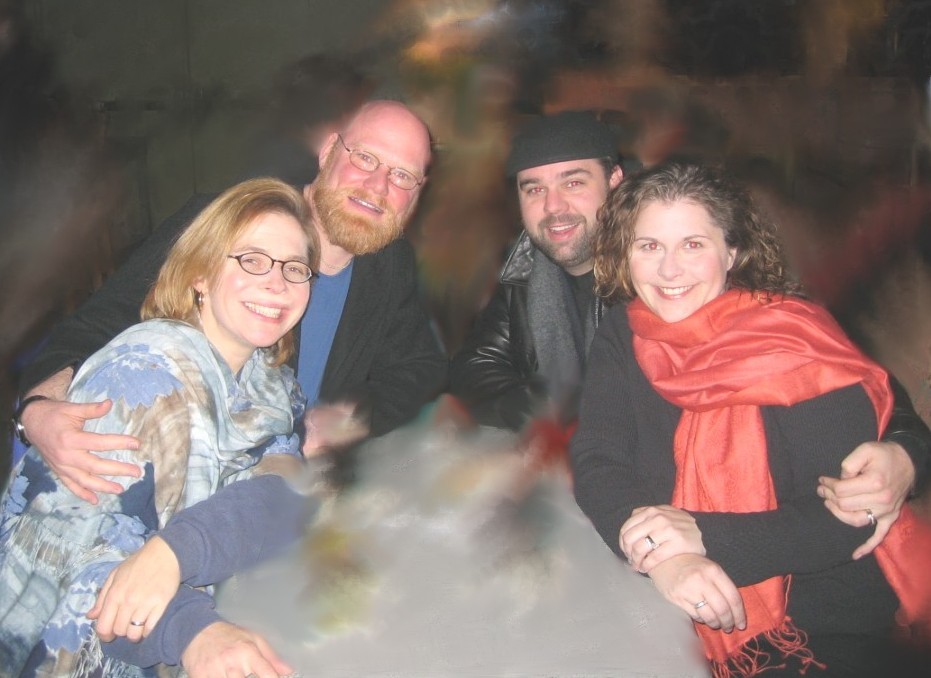
Not knowing for sure what he wanted to do professionally, he worked at a variety of jobs, joined the Cats ’n’ Jammers jazz band led by Gene Berthelsen, and earned his Master’s degree in Business Administration at Sacramento State. In 1997, both his Dad and Bob Williams of the Wooden Nickel Jazz Band were working at Electronic Data Systems and urged Matt to apply for an apprentice system engineer position. In spite of not having any experience, he was hired, saying “EDS actually had a policy of hiring musicians and artists as they found them to make good engineers and programmers.”
The Sacramento EDS office had several musicians on staff, and Matt joined Williams, Paul Edgerton and Tom Lopes to form Ed’s Quartet. They played for company functions and at nearby wineries, prompting Matt to say, “There’s nothing like getting paid with a case of great California wine.”
Joined BSJB in 2001
Matt became an official member of the Blue Street Jazz Band in 2001, replacing Robert Bennett, the band’s original banjo man. When Sherri and Matt moved to Virginia in 2003, EDS allowed Matt to become a full-time telecommuter, and he has since continued to work at home. He is now a 25-year veteran in systems engineering and leads a team of engineers, designers and programmers who work on large-scale projects with national implications.
Matt had his first gig four days after moving to New Orleans and maintained a busy performing schedule playing clubs, jazz brunches, private parties, riverboats and corporate events. Looking back, he said, “There is no other place in the world like New Orleans where 10 full-time banjo players and another five part-timers could all make a living.”
Sherri and Matt have a teenage daughter, Nevabelle Helen Colby Bottel, whose musical interest is more along classical lines. Called “NB” by her immediate family, Nevabelle is named after Sherri’s great-great grandmother and Matt’s grandmother, Helen Bottel who penned an advice column, “Helen Help Us” for over 20 years.
Sherri’s Research Prowess
Now working for an academic research company based in Washington, DC, Dr. SherriLynn Colby-Bottel has had a fulfilling career, combining a great love of music and her academic work as an anthropologist. “Anthropology is the science of what it is to be human, understanding the world in which we live,” she states. “Recognizing what has happened in New Orleans, how the city responded to a major catastrophe, and how music, specifically traditional jazz, played a major role as the city struggled to reclaim its heritage is a fascinating story.”
She has worked in higher education for more than 25 years as both faculty and administrator in four distinct university settings and volunteered for several nonprofit organizations while researching how nonprofit organizations retain and reward labor.
She has conducted ethnographic research on disaster recovery, nonprofits, urban traditions, authenticity and sincerity in the local production of music, and community-based musical activities in New Orleans, Louisiana and also explored issues highlighted by disaster and recovery: how racial inequities align with health disparities, how the built environment and social policy act as determinants of recovery, and the vital role of community in one’s ability to achieve well-being.
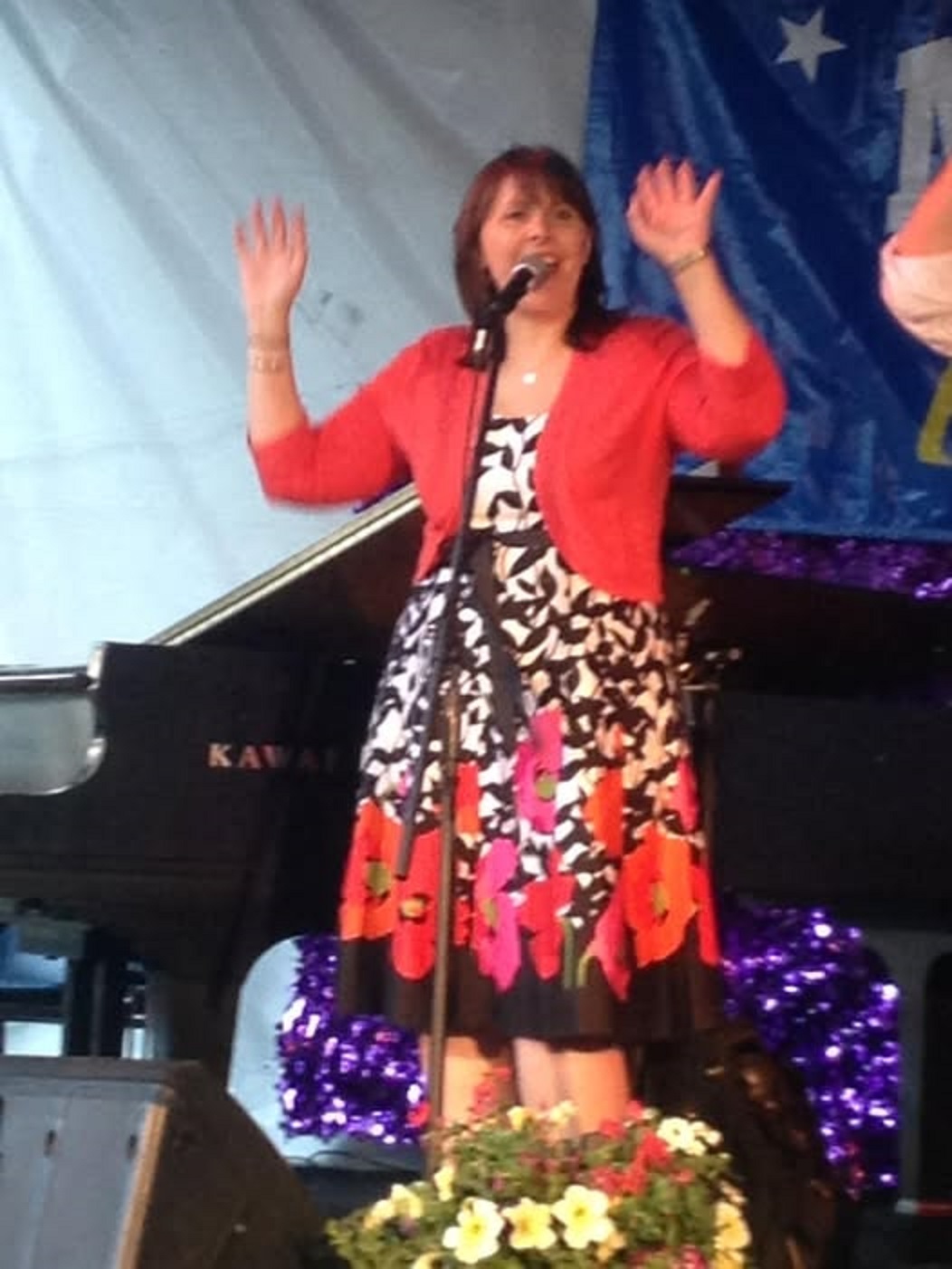
SherriLynn Colby-Bottel still performs with the Blue Street band whenever they make an infrequent reunion appearance at a festival, for which we are most grateful because she has “a voice that shouldn’t be silent!”
Read more about Sherri Colby’s research at anthropology.as.virginia.edu/people/sherri-lynn-colby-bottel. Visit the Blue Street Jazz Band online at bluestreetjazzband.net.
Lew Shaw started writing about music as the publicist for the famous Berkshire Music Barn in the 1960s. He joined the West Coast Rag in 1989 and has been a guiding light to this paper through the two name changes since then as we grew to become The Syncopated Times. 47 of his profiles of today's top musicians are collected in Jazz Beat: Notes on Classic Jazz.Volume two, Jazz Beat Encore: More Notes on Classic Jazz contains 43 more! Lew taps his extensive network of connections and friends throughout the traditional jazz world to bring us his Jazz Jottings column every month.