It has been said, way too often, that “jazz is America’s only indigenous art form.” That cliched statement is inaccurate in two ways. Jazz is not the United States’ only art form unless one does not count ragtime, the blues, tap dancing, and films to name just four other art forms that come immediately to mind. And, ever since recordings became widely available in the early 1920s, jazz has not belonged exclusively to Americans.
While there were a handful of non-American jazz musicians of note in the 1920s (including pianist Fred Elizalde), the 1930s found the ranks greatly expanding, most notably with the rise of guitarist Django Reinhardt and violinist Stephane Grappelli. The brilliant musicianship of those two overshadowed the equally talented guitarist Oscar Alemán and violinist Svend Asmussen, a pair of musicians who could easily hold their own with their American counterparts. Alemán and Asmussen only met up in the recording studios once but there are some similarities in their productive lives and careers.
Oscar Alemán arrived first, being born on Feb. 20, 1909 in Machagai, Argentina. His father was a pianist while his mother played guitar. At six, Alemán became part of the family band (which also included his three older siblings) as a dancer, tap dancer, and juggler. The Moreira Sextet performed in Buenos Aires and toured Brazil. Tragedy struck the family when Oscar was ten. His mother died and his depressed father soon committed suicide. The youth survived by becoming a street musician and a dancer. He taught himself the cavaquinho (a four-stringed Brazilian ukulele) by ear (never learning to read music), saved his money, and bought his first guitar. That allowed him to play professionally in a duo called Les Loups with Brazilian guitarist Gastón Bueno Lobo.
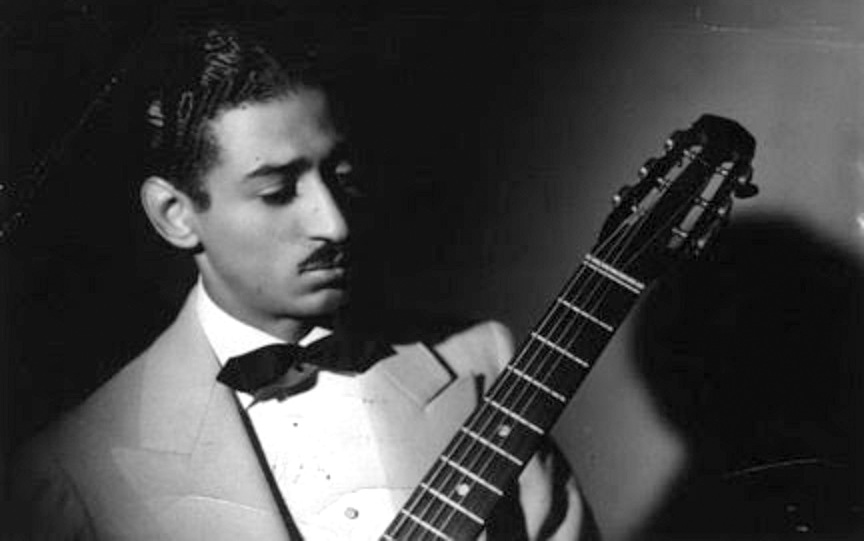
The two youths moved to Buenos Aires in 1925, were popular enough to appear on the radio, and during 1927-29 recorded for the Victor label as Trio Victor, often playing tangos as a trio with violinist Elvino Vardaro. Although he had not developed yet as a jazz soloist, Alemán already loved the music, particularly the recordings of Eddie Lang and Joe Venuti. In Feb. 1929, the 20-year old guitarist went to Europe as part of the group led by dancer Harry Fleming. In 1931 the act split up and Alemán moved to Madrid, Spain where he worked as a soloist. During this period, he developed into a top-notch jazz player, so much so that the following year he was discovered by Josephine Baker who hired him to be the leader of her backup band in Paris, the Baker Boys.
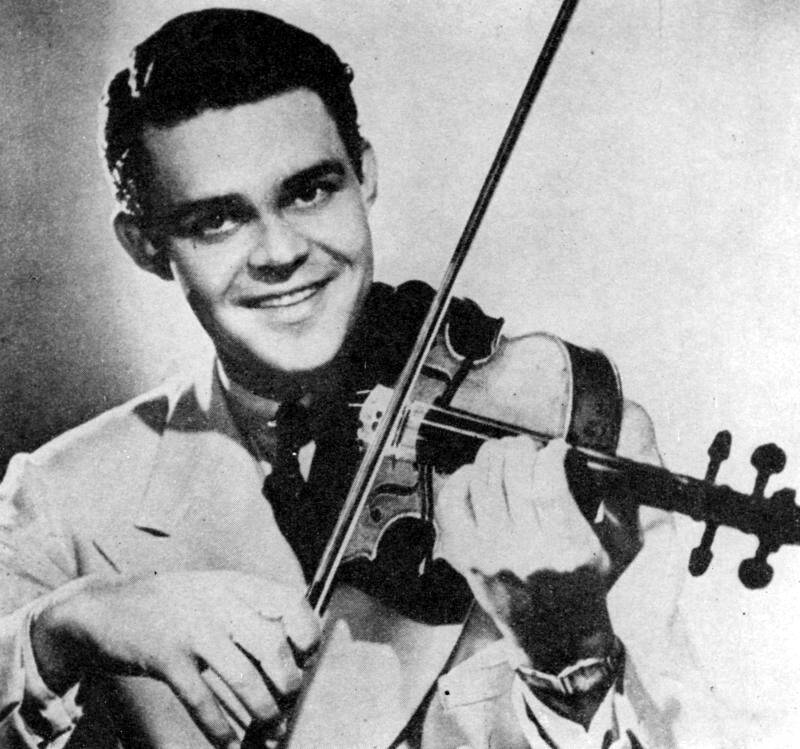 Svend Asmussen was born on Feb. 28, 1916 in Copenhagen, Denmark. As with Alemán, he came from a musical family, but his early life was much more stable. He began taking classical violin lessons when he was seven and, although he studied sculpture, after hearing Joe Venuti’s recordings in 1932, he became a professional jazz violinist. When Louis Armstrong performed in Copenhagen in 1933, Asmussen was in the audience for all five of the concerts.

At 17, Asmussen was already working as a violinist, vibraphonist and singer, often playing on cruise ships. After discovering the recordings of Stuff Smith, he considered him to be the ultimate swinging violinist although he also admired Stephane Grappelli. Asmussen made his recording debut on Nov. 6, 1935, leading a combo through four jazz standards including “Tiger Rag” and “Muskrat Ramble.” At this early stage, he was already playing on the level of Grappelli. But because he was primarily based in Copenhagen (all of his recordings would be in that city until 1945), Asmussen tended to be overlooked by American and even many European jazz fans despite his steady stream of impressive recordings.
Oscar Alemán gained a strong reputation in France and Europe during the 1930s and this was the period when he had his highest visibility outside of Argentina. As the leader of the Baker Boys with Josephine Baker at the Café de Paris, he met many American musicians who came to see Baker and he crossed paths with Django Reinhardt. Alemán had a very similar style and sound and, although he was actually 11 months older than Django, it has often been thought that he was strongly influenced by him. Actually they were good friends, they often played duets for the fun of it (although unfortunately never in a recording studio), and they probably were mutual influences on each other.
In addition to performing with Josephine Baker off and on until 1939 (including directing the orchestra, singing, dancing, and playing several instruments in addition to guitar), Alemán had opportunities to perform with Louis Armstrong and Duke Ellington when they visited Paris. Ellington actually offered him a job in his orchestra in 1933, but Baker talked both the guitarist and Duke out of it, saying that he was too important to her shows. The guitarist also worked with Freddie Taylor’s orchestra and Willie Lewis’ group, led his own nine-piece band at Paris’ Le Chantilly, and had opportunities to tour the Continent.
Oscar Alemán also had opportunities to record as a studio musician on commercial dates and on jazz sets including with Freddy Taylor’s Swing Men From Harlem (1935), trumpeter Bill Coleman (who Aleman considered a major influence on his jazz playing), tenor-saxophonists Alix Combelle and Eddie Burnner, clarinetist Danny Polo, and as a leader on three sessions during 1938-39. Of the latter, Aleman headed a trio on one date and, while visiting Copenhagen on Dec. 5, 1938, he recorded unaccompanied solo versions of “Nobody’s Sweetheart” and “Whispering.” On the same day as the solos, he met up with Svend Asmussen and they co-starred on swinging renditions of “Sweet Sue” and “Limehouse Blues.” But with the outbreak of World War II, Oscar Aleman permanently left Europe and returned to his native Argentina.
Svend Asmussen meanwhile stayed quite busy in Copenhagen. He led a regular swing-oriented sextet until 1943 and recorded prolifically from 1937 on, mostly as a leader. In addition to swing standards, he played Danish songs, some dance music and took occasional good-humored vocals. Particularly impressive were duets that he recorded in 1943 with guitarist Ulrik Neumann who became a longtime associate. And before World War II, whenever American jazzmen visited Scandinavia, they sought Asmussen out. He even had the chance to play with Fats Waller.

Nicknamed “The Fiddling Viking,” somehow Asmussen made it through the war years unscathed. He continued developing his playing and, while keeping an open mind towards bebop (he liked the music of Charlie Parker), he essentially remained a swing stylist throughout his life. Asmussen alternated between Copenhagen and Stockholm, Sweden starting in the mid-1940s and remained a popular figure in Scandinavia even as styles changed and music evolved. When critic Leonard Feather organized a session in 1951 that featured top Swedish jazz artists, Asmussen was included. It helped that the violinist often displayed a humorous personality while onstage and a flair for comedy that made his performances entertaining and accessible beyond a jazz audience. He even worked a bit as an actor.
Asmussen had success with a group called “The Swe-Danes” in the late 1950s. In addition to guitarist Ulrik Neumann, a bassist and a drummer, the unit also featured the great Swedish jazz singer Alice Babs. Touring with the group gave Asmussen his first opportunity to perform in the United States.
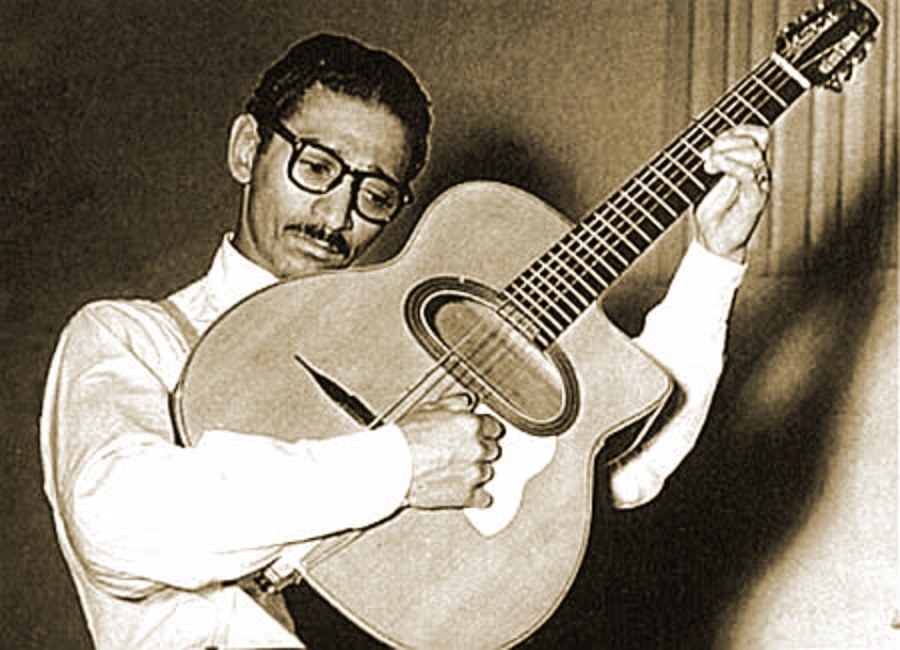
In contrast, Oscar Alemán does not seem to have ever been to the U.S. Having settled permanently in Argentina, all of his recordings from 1941 on were made in Buenos Aires. Although he was largely forgotten in Europe and never too well known worldwide other than by record collectors in the United States, Alemán stayed busy throughout much of the rest of his life. He worked regularly in nightclubs, made many recordings, and even appeared in a few movies where his guitar playing, scat-singing and dancing were featured. He recorded 48 songs as a leader during 1941-47, many of which featured him in a quintet with violin, rhythm guitar, bass, and drums. Unlike Reinhardt who switched to electric guitar in 1946, Alemán mostly stuck throughout his career to acoustic guitar although he admired Charlie Christian and Oscar Moore.

In the 1950s, Alemán often led a nine-piece group that was comprised of two guitars, three violins (Raul Casanova was the violin soloist), clarinet, piano, bass, and drums. He performed swing standards, some tangos, and pop tunes, all in a style that entertained audiences. With the rise of rock and roll, the recordings stopped after 1957 and he made only two records in the 1960s, a period when Alemán worked as a teacher and just played now and then. However, he survived long enough to have a comeback starting in 1972. In the 1970s he appeared on television, toured Argentina, and recorded four albums which ranged from a big band record to five unaccompanied guitar solos. Oscar Alemán stayed active up until his death on Oct. 14, 1980 at the age of 71. Many of his best recordings from 1941-54 plus his European dates as a leader were reissued on the two-CD set Swing Guitar Masterpieces (Acoustic Disc 29) although his later recordings will take a search to find.
Svend Asmussen’s career never really slowed down until it stopped. In the 1960s he began to have more of an international presence. He recorded with American pianist John Lewis in 1962 (European Encounter), switched to viola to play next to fellow violinists Stephane Grappelli and Ray Nance on Duke Ellington’s Jazz Violin Session, was on South African singer Sathima Bea Benjamin’s debut recording A Morning In Paris (which had Ellington, Billy Strayhorn, and Abdullah Ibrahim alternating on piano), teamed up with Grappelli on two albums, shared a record with Stuff Smith (Hot Violins), was on the 1966 Violin Summit album with Grappelli, Smith and Jean-Luc Ponty, and appeared at the 1967 Monterey Jazz Festival with Nance and Ponty.
Other highlights of Asmussen’s later years included albums with Alice Babs (1972), harmonica great Toots Thielemans (also 1972), pianist Kenny Drew’s trio (1978), Lionel Hampton in a quartet (1978), and concerts (some of which were recorded) with Benny Goodman (1981). He recorded a swing album with pianist Derek Smith and guitarist Bucky Pizzarelli (June Night) in 1983, played hot swing with mandolist David Grisman (1986’s Svingin’ With Svend), and recorded the accurately titled Fiddler Supreme (1989). There were also albums in the 1990s titled Fiddling Around, Fit As a Fiddle, and Still Fiddling. His final recording, 2009’s Makin’ Whoopee…and Music (Arbors) was made when he was 93 and still playing in his prime.

Svend Asmussen had to stop playing the following year due to a blood clot. He settled in Florida during his quiet final years, passing away on Feb. 7, 2017, three weeks before his 101st birthday. In addition to his many recordings, the definitive DVD Svend Asmussen: The Extraordinary Life and Music Of a Jazz Legend (Shanachie 6334) includes a one-hour documentary plus two additional hours of filmed performances dating from 1938-2003.

Since 1975 Scott Yanow has been a regular reviewer of albums in many jazz styles. He has written for many jazz and arts magazines, including JazzTimes, Jazziz, Down Beat, Cadence, CODA, and the Los Angeles Jazz Scene, and was the jazz editor for Record Review. He has written an in-depth biography on Dizzy Gillespie for AllMusic.com. He has authored 11 books on jazz, over 900 liner notes for CDs and over 20,000 reviews of jazz recordings. Yanow was a contributor to and co-editor of the third edition of the All Music Guide to Jazz. He continues to write for Downbeat, Jazziz, the Los Angeles Jazz Scene, the Jazz Rag, the New York City Jazz Record and other publications.